






What warranty and support to expect for wireless HVAC thermostats?
1. How long should a wireless HVAC thermostat's warranty cover the Wi‑Fi radio and cloud services, and what clauses commonly exclude coverage?
Wireless HVAC thermostats combine hardware (relays, sensors, radio chips) with software (firmware and cloud services). Typical consumer warranties for hardware range from 1–3 years, while professional/enterprise-grade devices often provide 3–5 years or custom SLA add‑ons. However, two critical points are frequently under-documented online:
Radio and cloud-service continuity are not the same as hardware warranty. A manufacturer may warrant the physical radio against defects but will not guarantee indefinite cloud service operation, API availability, or third‑party integrations. Expect cloud-service terms to be governed by a separate Terms of Service and subject to change or discontinuation.
Exclusions commonly include damage from improper installation, power surges, HVAC-driven electrical faults, water ingress, tampering, and use outside specified environmental ranges. Check for explicit exclusions such as “not covered if external network credentials or router changes cause disconnection.”
Buying checklist:
- Confirm hardware warranty length (1–5 years) and whether it requires registration within a set window.
- Read cloud and firmware terms: is remote control dependent on the manufacturer cloud (closed), or does local control (LAN) remain when cloud stops?
- Verify FCC (Part 15) certification for RF in the U.S., CE/RED for EU markets, and UL/ETL/other safety listings that apply to your region.
Why it matters: If remote control is business‑critical (e.g., rental properties or commercial systems), require documented cloud‑service SLAs or choose devices that support local/edge control to avoid single‑vendor lock‑in.
2. Will replacing my contractor-installed thermostat with a wireless model void my HVAC system's equipment warranty?
This is a common buyer fear with real consequences. HVAC OEMs generally warranty their equipment against manufacturing defects, but many require installation by a licensed technician to retain coverage. The key considerations:
Manufacturer policy: Some HVAC manufacturers explicitly state that modification by non‑authorized parties can void parts of the system warranty, especially if installation causes damage. Others only require proper installation by a qualified technician.
Documented installation: To protect existing equipment warranties, have a licensed HVAC technician perform the thermostat replacement and provide a dated invoice and installation notes. This evidences that no damage resulted from DIY wiring mistakes.
Use compatible controls: Ensure the wireless thermostat supports required functions (e.g., heat pump lockouts, staged heating/cooling, fan control, dehumidification). Using an incompatible thermostat that forces equipment into unsafe cycling could lead to denied claims.
Best practice:
- Ask the HVAC manufacturer or installer in writing whether a third‑party thermostat affects coverage.
- Keep photographic evidence of wiring and the old thermostat if disputes arise.
3. What SLA, response times and spare-unit policies should I expect from manufacturers and resellers for critical remote HVAC controls?
Home consumer support often focuses on ticketed online support and replacement shipping. For critical commercial or multi-site remote control, expect and negotiate different levels:
- Basic consumer: Email/ticket support, next‑business‑day replacement shipping for valid RMAs, and phone support during business hours.
- Pro/Installer tier: Priority phone support, direct B2B technical line, provisioning assistance, and possible advanced‑replacement (ship a replacement before receiving the faulty unit) as part of an installer program.
- Enterprise SLA: Guaranteed response times (e.g., 4‑hour phone response, 24‑hour onsite dispatch or next‑day courier), dedicated account manager, diagnostics access, and spare inventory management.
What to confirm before purchase:
- RMA turnaround times and whether advanced swap is available (and at what cost).
- Who performs on‑site troubleshooting: vendor, reseller, or certified installers.
- Availability of local technical partners or certified installers in your GEO (region) for fast response.
Operational tip: For buildings where HVAC control is mission‑critical, maintain a small spare inventory of thermostats (or contract advanced replacement) to eliminate downtime during RMA cycles.
4. How do firmware updates and end-of-life (EOL) policies affect long-term support and security for Wi‑Fi thermostats?
Firmware and lifecycle policies are among the least transparent areas. Key facts buyers need:
Updates matter: Thermostat firmware updates provide security patches (Wi‑Fi stack vulnerabilities), compatibility fixes (new router security), and HVAC control improvements. Lack of updates can leave devices exposed or nonfunctional after router upgrades.
Supported window: Vendors typically support consumer hardware actively for 2–5 years; enterprise devices may have longer support commitments. However, explicit EOL dates and a published timeline are rare for consumer products.
Service dependency: If the thermostat requires cloud services for operation, EOL or cloud discontinuation can render the device partially or fully unusable even if the hardware still functions.
Buyer actions:
- Ask the vendor for an update and EOL policy in writing and for the typical frequency of security updates.
- Prefer thermostats that support local control protocols or open APIs and that allow OTA firmware with a changelog and rollback option.
- For installations requiring long-term stability (multi‑year commercial contracts), include firmware support and EOL clauses in procurement contracts.
Security note: Confirm whether the vendor follows secure update practices (signed firmware, encrypted channels) and whether they publish CVE responses or security advisories.
5. What proof and process do manufacturers require for warranty claims on thermostats damaged by HVAC electrical faults (shorts, surges)?
Thermostats can be damaged by HVAC-side electrical faults (e.g., relay failures, transformer surges, direct shorts). Manufacturers typically require evidence to process such claims because the root cause determines coverage.
Typical documentation requested:
- Proof of purchase (invoice with serial number and date).
- Installation details: wiring photos, mounting location, and whether a qualified technician installed it.
- Diagnostic report from an HVAC technician showing root cause (e.g., failed relay on the air handler, shorted transformer), often including multimeter readings or photos of the damaged HVAC component.
- Photos of the damaged thermostat (internal board, burn marks), original packaging, and any error logs (app/firmware).
Why this matters: If the thermostat failed due to an external electrical event or HVAC equipment fault, the manufacturer may classify it as “installed environment” damage and exclude it from warranty, even if the thermostat itself was defective.
How to reduce claim denial risk:
- Use surge protection at the HVAC control board and as recommended for the thermostat circuit.
- Keep installation records and have a licensed technician perform and sign off on work.
- For fleets/sites, enroll devices in an installer or enterprise program that includes diagnostic support and claims handling.
6. What on-site vs remote diagnostics and commissioning support should an HVAC installer expect when buying a wireless thermostat for multi-zone commercial systems?
Multi‑zone or commercial systems add complexity: multiple thermostats, BACnet/Modbus gateways, and coordinated scheduling. Installer support expectations should be explicit at purchase.
Remote diagnostics available from advanced thermostat vendors typically include:
- Live connection status and signal strength, device logs, and error codes.
- Remote configuration pushes to multiple devices and bulk firmware updates.
- Remote commissioning assistance (screen sharing, guided steps, or vendor-initiated configuration import).
On‑site support remains essential when:
- Integrating with legacy controls, communicating with building automation systems (BAS), or dealing with proprietary HVAC controls.
- Diagnosing electrical issues, wiring conflicts, or physical constraints (wire runs, transformers).
What to contract for:
- A documented commissioning checklist and an installation guide aligned with your HVAC brand and model families.
- Vendor or reseller support for BACnet/Modbus gateways, API integrations, and certificate provisioning for secure Wi‑Fi.
- Training for technicians and access to an installer portal that provides batch tools for provisioning, device assignment, and certificate or token management.
Operational recommendation: For multi‑site rollouts, require an installer support package that includes remote commissioning, scheduled on‑site turn‑ups for initial sites, and a clear escalation path to vendor engineering.
Concluding summary: Choosing a wireless HVAC thermostat with robust warranty and support protects uptime, security, and equipment warranties. Prioritize devices with clear hardware warranty terms (preferably 2–5 years), transparent cloud and EOL policies, FCC/CE/UL certifications, documented RMA and SLA commitments, and strong installer/enterprise support for diagnostics and commissioning. For mission‑critical or commercial deployments, insist on advanced replacement options, local‑control capability, signed firmware updates, and written confirmation that installing the thermostat will not void existing HVAC equipment warranties.
Advantages at a glance: reduced downtime through advanced-replacement SLAs, better long-term security via signed OTA updates, preservation of HVAC warranties through qualified installation, and clearer RMA outcomes when documentation and surge protections are in place.
Contact us for a quote: www.systoremote.com • [email protected]
QD-U08PGC+
Does QD-U08PGC+ work with all wall-mounted air conditioners?
It supports most split-type wall-mounted units using PG motors. Please verify motor type before installation.
About Company
When was your company established?
Founded in 1998, we have over 27 years of manufacturing experience.
KS-DK02V
Can I customize the logo or packaging?
Yes, we offer full OEM/ODM customization services.
CRC2304V
What’s the estimated delivery time?
In-stock items ship immediately; non-stock within 15–25 working days.
PU01
Does the pump include a level gauge?
Yes, both include. The PU01 is equipped with a built-in level gauge for easy and precise installation.
Recommended For You
The CRC2621V AI Universal Air Conditioner Remote is designed for the Southeast Asian market. With an AI search function and compatibility with 99% of air conditioner brands, it provides faster setup and a better user experience.
Infrared LED light remote for Panasonic Japan market. No setup required. Supports dimming, color adjustment, timer, and 3-channel switching.
Do solar remote controls still use lithium batteries? Learn how modern solar-powered remotes now adopt supercapacitors with USB Type-C fast charging for improved safety, durability, and long lifespan.
Learn how to check whether a garage door remote control bought online is compatible with your opener. Frequency, learning type, and easy tips explained.
Having trouble setting up a universal remote even though your TV brand is listed in the manual? Learn the real reason, common mistakes, and how to improve success by using precise TV codes.
You May Also Like

QD-HVAC23 Qunda Touch-Screen Thermostat for Air Conditioner

QD-HVAC06E Qunda Digital Thermostat for Central Air Conditioner
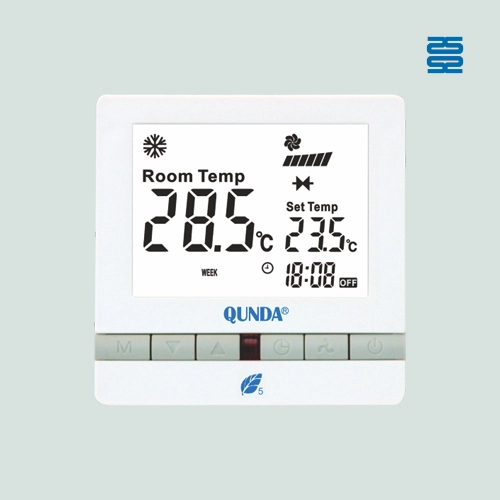
QD-HVAC05E Qunda Digital Thermostat for Central Air Conditioner

QD-HVAC03E Qunda Digital Thermostat for Central Air Conditioner
◼ Let’s Build Together
Get in Touch with SYSTO
If you have any comments or good suggestions, please leave us a message, later our professional staff will contact you as soon as possible.


Contact
Email us
Text or Call us
Address
Room 1606, No. 65, Zhongshan Seven Road, Liwan District, Guangzhou, Guangdong, China.

Facebook
Instagram
YouTube
Tik Tok
VK