






How much can wireless HVAC thermostats reduce energy costs?
Wireless HVAC Thermostat: Remote Control Answers for Buyers
Choosing a wireless HVAC thermostat for remote control involves technical compatibility, security, installation constraints and realistic expectations for energy savings. Below are six specific, pain‑point oriented questions beginners (and some installers) ask but rarely find complete answers to. Each answer references best practices and industry guidance from sources such as the U.S. Department of Energy and ENERGY STAR, and explains what to test or request from vendors and contractors.
1. How do I verify a wireless HVAC thermostat will work with my two‑stage heat pump and variable‑speed blower?
Why this matters: Two‑stage compressors, heat pump reversing valves (O/B), and variable‑speed blowers require precise control signals. A mismatch can cause hunting, reduced comfort, or equipment faults.
Checklist and steps to verify compatibility:
- Identify the control terminals on your existing thermostat: look for R/Rh/Rc, C, Y1, Y2, O/B, W1, W2/Aux, G, and (if present) E/Heat Pump Emergency. Two‑stage systems commonly use Y1 and Y2 (or staged Y and compressor signals) and may use separate fan control (G) for variable blower control.
- Confirm whether your system is line‑voltage (electric baseboard) or low‑voltage (24 VAC). Most wireless HVAC thermostats are low‑voltage; line‑voltage systems require specialized thermostats or relay modules.
- Check the thermostat specification sheet: it must explicitly list support for two‑stage cooling/heating, heat pumps, and variable‑speed fans. Some smart Wi‑Fi thermostats support staged systems but only through firmware modes or with an installer setup for 'staged heat pump'.
- Ask the vendor whether the thermostat supports 'compressor staging' vs 'pump relay staging'—some older smart thermostats emulate staging by cycling a single output which is not acceptable for systems that need discrete Y1/Y2 outputs.
- For variable‑speed blowers, confirm the thermostat either provides a fan relay (G) compatible with your blower control board or the blower uses a separate ECM controller that accepts a simple G signal. If the blower needs a 0–10 V or BACnet input, you will need a gateway or an HVAC control upgrade.
- When in doubt, take photos of the control board and thermostat wiring, and consult an HVAC technician. Many modern thermostats provide an online compatibility checker—use it and then verify against the wiring on the furnace/air handler control board.
Red flags: vendor claims of 'universal compatibility' without listing supported terminals; reliance on a single Y output for staged compressors; lack of clear documentation for heat pump reversing valve logic.
2. My system has no C‑wire. Can I still get reliable remote HVAC control and long‑term savings from a wireless thermostat?
Why this matters: Wi‑Fi thermostats need continuous low‑voltage power. Without a C (common) wire you can see intermittent reboots, flaky Wi‑Fi, or drained batteries — all of which break remote control and scheduling.
Solutions and tradeoffs:
- C‑wire is the most reliable solution. Running a C from the air handler control board to the thermostat is usually a 30–90 minute job for an installer and ensures stable 24 VAC power for the Wi‑Fi radio, display, and sensors.
- Power‑extender kits (PEKs) or jumper modules: many thermostat manufacturers offer PEKs that install at the air handler and allocate existing wires to create a virtual C. Works in many homes but can conflict with some control boards or systems that use proprietary communication (check vendor compatibility).
- USB/plug‑in power adapters are available for some models (retrofitted into the wall behind the thermostat) but are less elegant and may violate local code if not installed properly.
- Battery‑only or 'battery + intermittent charging' thermostats: they can operate, but Wi‑Fi radios drain batteries quickly if the unit attempts constant cloud sync. Expect unreliable remote control and more frequent battery replacements; not recommended for commercial systems or homes relying on remote schedules for energy savings.
Recommendation: For dependable remote HVAC control and the best chance of real energy savings, install a proper C‑wire or a manufacturer‑approved power‑extender kit. This ensures continuous connectivity (geofencing, schedules, demand‑response) and avoids thermostat restarts that break optimization routines.
3. How much can wireless HVAC thermostats reduce energy costs in real homes (with sample calculations)?
Why this matters: Buyers see headline savings (manufacturer claims or marketing) but need realistic expectations for ROI given installation costs and local climate.
What authoritative sources say:
- The U.S. Department of Energy estimates that using programmable or smart controls to set back temperatures can save about 10% a year on heating and cooling costs when used properly (adjusting 7–10°F for 8 hours a day). Energy savings vary by climate, building envelope, HVAC efficiency and occupant behavior.
- Manufacturer studies (for example, Nest and Ecobee) report roughly 10–12% heating and up to 15% cooling savings in their user populations. These figures reflect user behavior change plus automation (schedules, learning, geofencing) and are not guaranteed for every site.
Practical sample calculation (transparent method):
- Step 1 — establish baseline: estimate annual heating + cooling expense. Example conservative baseline: $1,200/yr (this combines fuel/electricity for HVAC; use your utility bills to get the real number).
- Step 2 — apply realistic savings range: 8–12% typical, with best‑case up to 15% in optimized homes. So your annual savings = baseline × percent.
- Step 3 — calculate:
- At 8%: $1,200 × 0.08 = $96/year
- At 12%: $1,200 × 0.12 = $144/year
- At 15%: $1,200 × 0.15 = $180/year
- Step 4 — estimate payback: if thermostat costs $200–$300 plus $100–$200 for pro installation, total outlay $300–$500. Payback = outlay / annual savings. Example: $400 / $144 ≈ 2.8 years.
Factors that shift savings higher or lower:
- Higher savings: poorly controlled homes, large temperature setbacks, participating in demand response/time‑of‑use programs, multi‑family units with centralized control, and homes with consistent occupancy patterns that automation can address.
- Lower savings: already well‑programmed thermostats, homes with poor insulation (where thermostat setbacks cause comfort issues), occupants overriding schedules frequently, or HVAC systems with very low overall usage (mild climates).
Conclusion: Expect single‑digit to low‑teens percentage reductions in HVAC energy use; compute ROI using actual utility bills and your local climate. For commercial buyers, model savings using metered HVAC baselines and consider integration with building automation for greater gains.
4. What remote‑control security risks should I evaluate before choosing a wireless HVAC thermostat, and how do I mitigate them?
Why this matters: A remote‑connected thermostat is part of your attack surface. Weak devices or poor deployment can allow attackers to access networks, manipulate building temperatures, or harvest data about occupancy.
Primary risks and mitigations:
- Insecure Wi‑Fi: Use strong Wi‑Fi security (WPA2/WPA3), a unique SSID/password, and change default credentials on the thermostat. Put IoT devices on a separate VLAN or guest network to isolate them from sensitive systems.
- Default/cloud credentials and vendor access: Create unique, strong passwords for cloud accounts; enable two‑factor authentication where available. Review vendor privacy policies about data retention and third‑party sharing.
- Unpatched firmware: Choose vendors with a track record of regular security patches. Require over‑the‑air update capabilities and a clear lifecycle support policy (how long the vendor provides security updates).
- Local vs cloud control: Devices that offer local API access (MQTT, OpenThermostat) or BACnet gateways reduce cloud dependence and can be integrated into secure BMS networks. If cloud control is required, ensure TLS encryption and audit logs are available.
- Physical access: Lock or secure thermostat enclosures in commercial settings. For residential, consider tamper alarms or restricted installer pins to prevent unauthorized configuration changes.
Vendor selection checklist: provide firmware update cadence, list supported encryption standards, document whether remote APIs are local or cloud, and explain how user credentials and telemetry are protected. For enterprise deployments, require SOC reports or third‑party security assessments where available.
5. How does adding wireless remote control affect multi‑zone (zoning) HVAC systems — will wireless thermostats cause temperature conflicts or zoning inefficiencies?
Why this matters: Zoning systems coordinate dampers and a central controller. Adding wireless thermostats without proper commissioning can create control conflicts, short‑cycling, or pressure problems.
Best practices:
- Use thermostats and a zoning controller designed to work together. Some zoning systems require thermostats that communicate through a proprietary bus or a specific protocol. Replacing thermostats with generic Wi‑Fi models without replacing or updating the zone controller often fails.
- Retain a central zone controller: Wireless thermostats can be deployed as remote sensors if the zone controller accepts external inputs (some vendors provide wireless sensor kits that integrate into the controller).
- Ensure correct staging and interlocks: Confirm that the wireless thermostat supports the zone control logic required — e.g., fan interlock, minimum run times, damper sequencing, and minimum on/off cycles to prevent short cycling of multi‑stage compressors.
- Sensor placement and averaging: For rooms with variable conditions, use remote temperature sensors (wireless or wired) to avoid a single thermostat misrepresenting zone conditions. Many smart thermostats support sensor averaging or prioritized sensors to improve comfort and efficiency.
- Commissioning: After installation, perform a commissioning sequence to verify damper responses, verify temperature differentials, and test sequences for staging. Document the control logic and provide occupants with simple instructions for overrides so manual changes don’t defeat zone coordination.
Summary: Wireless thermostats can work well with zoning if integrated at the controller level or used as sensors. Avoid piecemeal swaps that replace thermostats but leave old zoning logic unchanged.
6. What real‑world performance differences should I expect between RF mesh (Zigbee/Z‑Wave), proprietary RF, and Wi‑Fi/cloud thermostats for remote HVAC control?
Why this matters: Performance affects reliability of schedules, latency for remote commands, range, and how well the thermostat integrates with automation or building systems.
Comparison and guidance:
- Wi‑Fi/cloud thermostats (common in residential smart thermostats): Pros — direct remote control from vendor app, easy OTA updates, rich cloud features (learning, energy reports, geofencing). Cons — dependent on home Wi‑Fi and vendor cloud; higher power consumption; potential privacy concerns.
- RF mesh (Zigbee/Z‑Wave): Pros — low power consumption, good for battery sensors, mesh extends range via other nodes, local network operation possible for faster response. Cons — usually requires a gateway or hub to connect to the internet; gateway adds complexity but often provides local API/BMS connectivity.
- Proprietary RF: Pros — vendors optimize range and battery life for their ecosystem. Cons — vendor lock‑in, limited interoperability, and sometimes opaque security practices.
Latency and reliability notes:
- For critical commercial controls, local protocols (BACnet/IP, Modbus, or local Zigbee with a gateway) provide deterministic behavior and limited cloud dependency.
- For residential use where convenience and features are top priorities, Wi‑Fi/cloud devices offer the richest user experience but require good Wi‑Fi planning (strong signal at thermostat and redundancy for gateway devices).
- Mesh networks can provide superior coverage in large or multi‑story homes/buildings, but ensure the mesh nodes are powered or placed so the mesh does not lose connectivity overnight (battery node depletion can break the chain).
Recommendation: Match the technology to your priorities. Use Wi‑Fi/cloud for consumer features and analytics, RF mesh or BACnet/Modbus for reliability and local BMS integration in commercial deployments.
Concluding summary — advantages of remote‑control wireless HVAC thermostats
Remote‑control wireless HVAC thermostats deliver greater occupant comfort, schedule flexibility, load shifting for demand response, and measurable energy savings when correctly specified and installed. The key advantages are automated setback and recovery, geofencing and occupancy sensing, remote diagnostics to reduce service calls, and integration options from consumer cloud services to professional BMS gateways (BACnet/Modbus). Proper selection—matching compatibility (multi‑stage, heat pumps, variable fans), ensuring reliable power (C‑wire), and applying security best practices—maximizes savings and reduces operational risk.
For a site assessment, compatibility check, or installation quote, contact us at www.systoremote.com or email [email protected] — we provide wiring audits, compatibility reports, and professional installation services tailored to smart thermostats and remote HVAC control.
CRC1130V
Does it work with smart TVs?
Yes, it works with most IR-compatible smart TVs from major brands.
Can I order a small batch?
Yes, standard models support small orders starting from one carton (180 pcs).
QD-U08PGC+
Is the transformer included?
Yes, an updated quick-plug transformer is enclosed for easy setup.
About Company
What markets do you serve?
Products are exported to over 100 countries worldwide.
PU01
How noisy is the pump during operation?
It features an ultra-silent design suitable for bedrooms, offices, and hotels.
Recommended For You
Infrared LED light remote for Panasonic Japan market. No setup required. Supports dimming, color adjustment, timer, and 3-channel switching.
Do solar remote controls still use lithium batteries? Learn how modern solar-powered remotes now adopt supercapacitors with USB Type-C fast charging for improved safety, durability, and long lifespan.
Learn how to check whether a garage door remote control bought online is compatible with your opener. Frequency, learning type, and easy tips explained.
Having trouble setting up a universal remote even though your TV brand is listed in the manual? Learn the real reason, common mistakes, and how to improve success by using precise TV codes.
Learn how to set up and program the CRC1130V universal remote control for your TV. This step-by-step guide covers direct brand buttons, code input, and auto search methods for quick and easy pairing.
You May Also Like
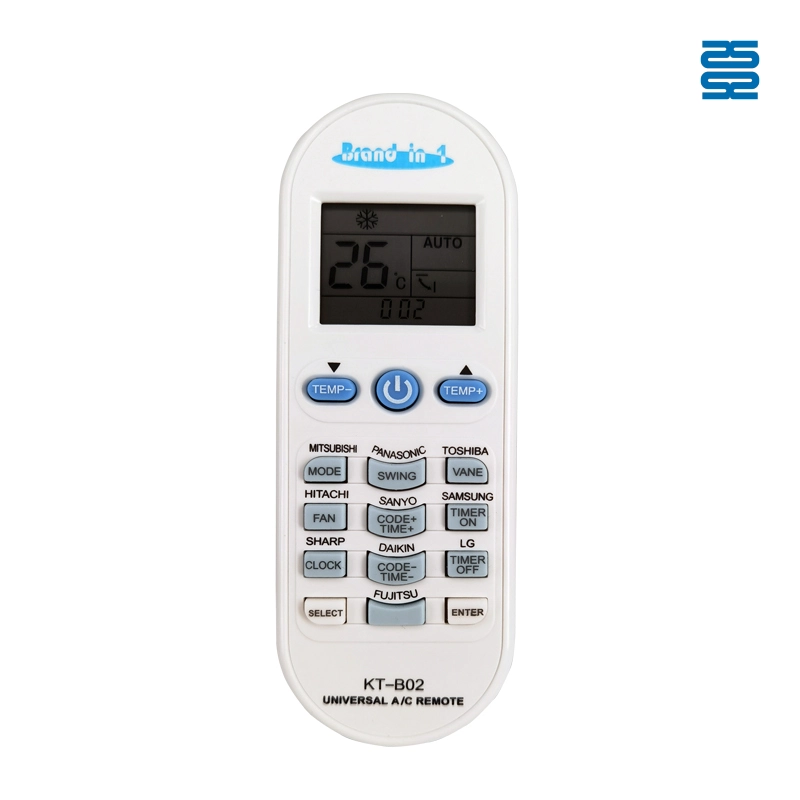
KT-B02 Universal Air Conditioner Remote Control Compatible with All Brands
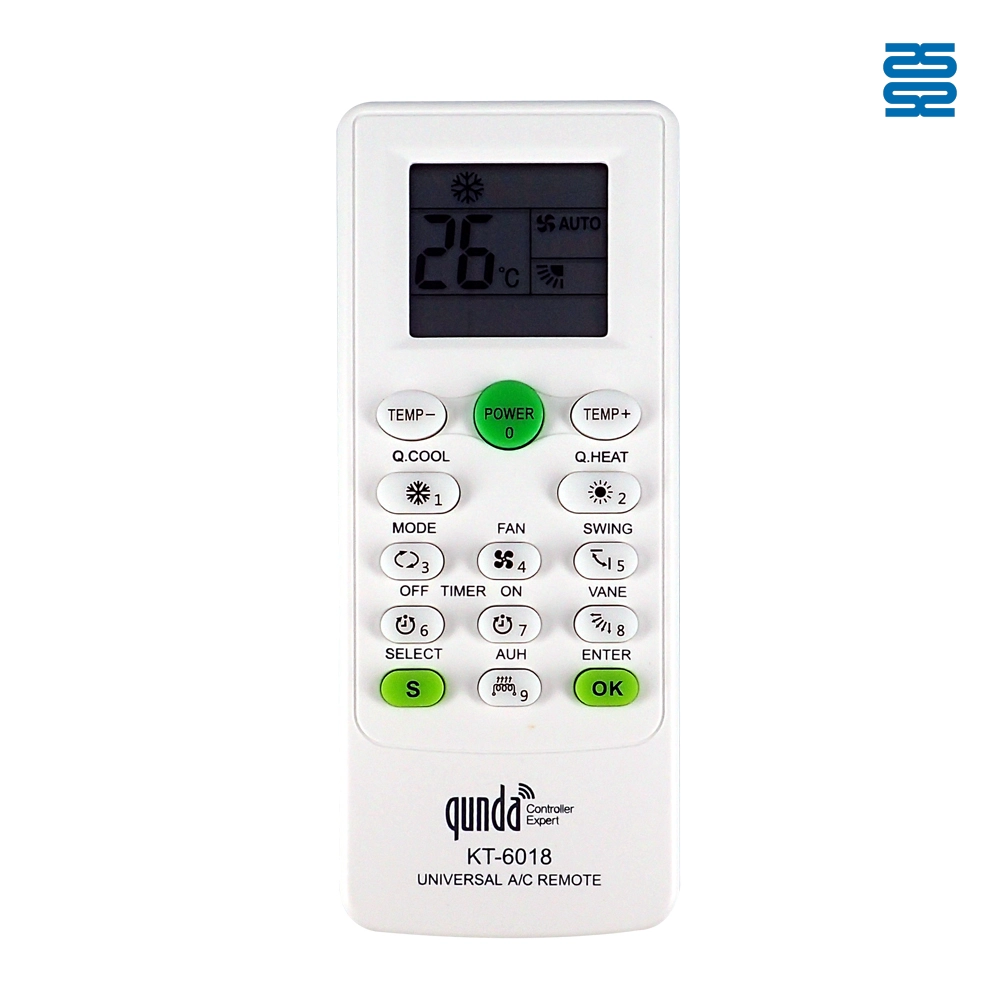
KT-6018 6000 in 1 Universal Air Conditioner Remote Control Compatible with All Brands

QD-1000 IN 1 1000 Code in 1 Universal Air Conditioner Remote Control Compatible with All Brands

KT-N828 Universal Air Conditioner Remote Control Compatible with All Brands
◼ Let’s Build Together
Get in Touch with SYSTO
If you have any comments or good suggestions, please leave us a message, later our professional staff will contact you as soon as possible.


Contact
Email us
Text or Call us
Address
Room 1606, No. 65, Zhongshan Seven Road, Liwan District, Guangzhou, Guangdong, China.

Facebook
Instagram
YouTube
Tik Tok
VK