






What wireless protocols should a HVAC thermostat support?
1) If my wireless HVAC thermostat only supports 2.4 GHz Wi‑Fi, will it reliably control multi‑floor homes and how can I improve signal?
Most consumer thermostats that advertise Wi‑Fi connectivity use 2.4 GHz (802.11 b/g/n). 2.4 GHz offers better wall penetration and range than 5 GHz, which is why many thermostat vendors select it. Realistic indoor ranges vary with building materials: typical 2.4 GHz indoor range is tens of meters, but metal ductwork, concrete walls and interference from other devices (microwaves, baby monitors, IoT devices) can reduce performance.
Practical steps to improve reliability:
- Prefer 2.4 GHz compatibility (or dual‑band where available) for better range; 5 GHz helps only if the thermostat is close to your router. Many thermostats do not support 5 GHz at all, so check the spec sheet.
- Use an existing home mesh Wi‑Fi system or place a 2.4 GHz AP/mesh node on the same floor as the thermostat to reduce packet loss. Mesh systems also automatically route around interference.
- Avoid placing the thermostat near large metal objects or inside cabinetry. Metal HVAC plenums and air returns are common culprits.
- For extreme cases, consider a bridge device: some vendors offer Zigbee/Z‑Wave thermostats that use a small gateway to present a local Wi‑Fi interface to the cloud while keeping low‑power sensors on mesh radios.
Why this matters: Unlike short‑pulse sensor systems, HVAC commands and temperature telemetry are low bandwidth but must be reliable. A thermostat that loses cloud connectivity frequently can still operate locally (call for heat/cool), but remote scheduling and notifications require stable connectivity.
2) Should I insist on local control protocols (Thread/Zigbee/Matter) vs cloud‑only Wi‑Fi for privacy and reliability?
Cloud‑only Wi‑Fi thermostats are common because they’re easy to set up and reach via vendor apps. However, local control and support for modern local‑IP protocols improves privacy, reliability and cross‑brand interoperability.
Protocol tradeoffs:
- Thread + Matter: Thread (IEEE 802.15.4 mesh, IPv6) combined with Matter (an application layer standard backed by the Connectivity Standards Alliance) enables secure local control and interoperable device discovery across ecosystems. Thermostats that support Matter can be controlled locally by different smart home platforms without requiring vendor cloud services.
- Zigbee (Zigbee 3.0): Mature mesh with many existing smart home devices. Good for battery‑powered sensors. Integration sometimes requires a hub and vendor bridging.
- Z‑Wave: Operates at sub‑GHz (better range in some homes) with a strong ecosystem for older smart‑home users; Z‑Wave S2 provides modern security.
- Wi‑Fi local control: Some platforms support local LAN control via APIs or LAN‑based protocols; otherwise Wi‑Fi devices often rely on cloud backends.
Recommendation: For long‑term privacy, choose a thermostat that supports local control (either via local Wi‑Fi APIs or Matter/Thread). If your priority is immediate vendor features (learning algorithms, cloud analytics), ensure that the device offers a clear local‑control fallback so HVAC operation remains unaffected by cloud outages.
3) Which wireless protocols give the best battery life for remote temperature sensors and multi‑zone setups?
Battery life is protocol‑sensitive because radios consume varying amounts of power and radio duty cycles differ.
Typical behavior:
- Zigbee and Thread: Designed for low‑power end devices. Remote sensors that report every few minutes often last months to years on common coin or AA batteries. Mesh routers (thermostats, smart plugs) provide the backbone.
- Z‑Wave LR (and S2 devices): Also optimized for low power; Z‑Wave’s sub‑GHz operation can give good range and battery life, especially for simple sensors.
- Bluetooth LE: Excellent for short‑range, ultra‑low‑power sensors. BLE 5.x improves range and throughput and is commonly used for direct smartphone commissioning and some sensor links.
- Wi‑Fi: Poor choice for battery‑only remote sensors. Wi‑Fi requires longer radio on‑time and tends to drain batteries rapidly unless the device is mains‑powered.
Practical advice for multi‑zone control:
- Use battery‑friendly protocols (Zigbee/Thread/Z‑Wave/BLE) for remote sensors and let the main thermostat or a gateway be mains powered and act as a mesh router/bridge.
- Verify mesh support: Adding more powered mesh nodes (smart thermostats, plugs) improves connectivity and helps remote sensors conserve power.
4) What security features and encryption should I require when buying a wireless HVAC thermostat?
Security is critical because thermostats are networked devices that can expose occupancy patterns and potentially provide lateral access to your network.
Minimum security checklist:
- Wi‑Fi: WPA2 is baseline; prefer WPA3 support where available. Ensure the vendor uses TLS 1.2+/TLS 1.3 for cloud communication and enforces certificate verification.
- Zigbee: Confirm Zigbee 3.0 compliance and AES‑128 CCM encryption for application payloads. Ask about secure commissioning practices.
- Z‑Wave: Look for S2 security framework (AES‑128) and secure inclusion/firmware update processes.
- Thread/Matter: Matter mandates secure device attestation, authenticated commissioning, and standard strong crypto (e.g., TLS/AEAD). Matter devices typically use secure on‑boarding flows.
- OTA updates: Devices must support authenticated, signed firmware updates and have rollback protection. Verify vendor policy for update frequency and vulnerability disclosure.
- Local network isolation: Prefer devices that support VLANs or can be placed on a guest IoT network to limit lateral movement.
Request a security whitepaper or SOC/third‑party audit results from vendors when evaluating enterprise or multi‑unit installations.
5) Can thermostats using proprietary RF (433 MHz, 868 MHz) integrate with modern smart home ecosystems—and when is a proprietary RF thermostat acceptable?
Proprietary sub‑GHz RF radios often exist because they are low‑power, simple and have longer line‑of‑sight range. However, they typically lack broad ecosystem support and may require a vendor hub.
When proprietary RF is acceptable:
- Closed HVAC systems or commercial installations where the thermostat talks directly to the HVAC controller and cloud integration is unnecessary.
- Environments with heavy Wi‑Fi interference where a simple reliable RF command channel is all that’s required.
Integration limitations:
- Proprietary RF devices often require vendor gateways to translate into Wi‑Fi, Zigbee or cloud APIs. This adds a single point of failure and vendor lock‑in.
- Upgrading or replacing devices across brands becomes harder because there’s no standard application layer.
Recommendation: For future interoperability and ease of remote control, prefer thermostats using recognized smart‑home standards (Zigbee, Z‑Wave, Thread/Matter, Bluetooth LE or Wi‑Fi). Proprietary RF can be used when you need simple, hard‑wired local control and you accept vendor dependency.
6) What wireless protocols should a HVAC thermostat support to ensure compatibility with future standards like Matter and multi‑brand smart vents/remote sensors?
To future‑proof an HVAC thermostat for cross‑brand remote control and integration with smart vents, sensors and building automation, prioritize the following protocol capabilities:
- Matter support (over Thread and/or Wi‑Fi): Matter is the industry’s interoperability layer. A Matter‑capable thermostat can work across ecosystems (Apple Home, Google Home, Amazon Alexa) and interoperate with other Matter devices such as smart vents and sensors. Thread as a low‑power mesh is ideal for battery sensors and reliable local control; Wi‑Fi Matter support helps with direct cloud bridging.
- Thread (IEEE 802.15.4, IPv6): Enables low‑power mesh for remote sensors and ensures local connectivity with Matter. Thermostats that are Thread Border Routers or support an external border router will integrate with Thread sensor networks.
- Zigbee or Z‑Wave (for existing ecosystems): If your deployment already uses these ecosystems, ensure the thermostat offers compatible versions (Zigbee 3.0 or modern Z‑Wave with S2). Many existing smart vents and sensors still use these protocols.
- Bluetooth LE (for commissioning and BLE sensors): Useful for secure, easy setup via smartphone and for short‑range sensor links.
- Robust Wi‑Fi (2.4 GHz and preferably WPA3 support): Many cloud features and remote control scenarios still rely on Wi‑Fi; look for local APIs or Matter over IP to avoid cloud dependency.
Why this mix: Matter + Thread gives best forward compatibility for local, secure, multi‑brand control. Backwards compatibility with Zigbee/Z‑Wave ensures you can reuse existing sensors/vents. Bluetooth LE and Wi‑Fi cover commissioning, diagnostics and vendor cloud features.
Concluding paragraph:Wireless HVAC thermostats that combine 2.4 GHz Wi‑Fi (with local control fallback), Matter/Thread support, low‑power mesh compatibility (Zigbee/Z‑Wave where needed), Bluetooth LE commissioning, and modern security (WPA3/TLS/AES‑128, signed OTA) give the best blend of remote control reliability, privacy, battery life and future interoperability. For multi‑zone and sensor‑heavy installations, use mesh‑capable protocols for remote sensors and mains‑powered bridge devices for cloud access. These choices minimize downtime, protect occupant privacy and simplify multi‑brand automation.
Contact us for a quote or integration consultation: visit www.systoremote.com or email [email protected].
QD-U08PGC+
Is OEM customization available?
Yes, we support OEM/ODM customization for different control logic, panel design, and packaging.
About Contact
Do you offer international delivery?
Yes, via DHL, FedEx, UPS, or sea/air freight.
QD-U03C+
Can I adjust fan speed and temperature manually?
Yes. Fan speed (3 levels) and temperature (16°C–30°C) can be adjusted.
CRC2304V
What’s the MOQ for bulk purchase?
Regular stock supports small quantities. Custom orders depend on requirements.
About Products
Do you sell both universal and dedicated remote models?
Yes, we offer universal, brand-specific, single-code remotes to fit different user needs.
Recommended For You
The CRC2621V AI Universal Air Conditioner Remote is designed for the Southeast Asian market. With an AI search function and compatibility with 99% of air conditioner brands, it provides faster setup and a better user experience.
Infrared LED light remote for Panasonic Japan market. No setup required. Supports dimming, color adjustment, timer, and 3-channel switching.
Do solar remote controls still use lithium batteries? Learn how modern solar-powered remotes now adopt supercapacitors with USB Type-C fast charging for improved safety, durability, and long lifespan.
Learn how to check whether a garage door remote control bought online is compatible with your opener. Frequency, learning type, and easy tips explained.
Having trouble setting up a universal remote even though your TV brand is listed in the manual? Learn the real reason, common mistakes, and how to improve success by using precise TV codes.
You May Also Like

QD-HVAC23 Qunda Touch-Screen Thermostat for Air Conditioner

QD-HVAC06E Qunda Digital Thermostat for Central Air Conditioner
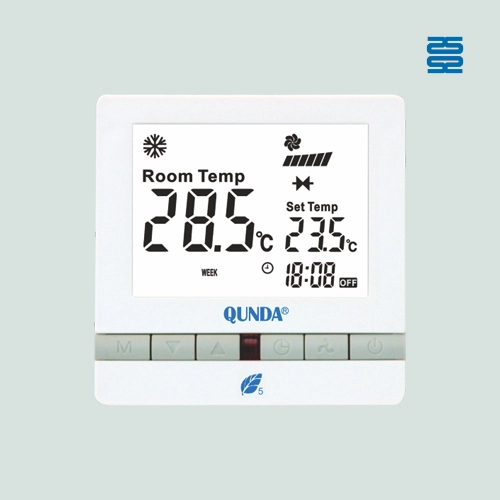
QD-HVAC05E Qunda Digital Thermostat for Central Air Conditioner

QD-HVAC03E Qunda Digital Thermostat for Central Air Conditioner
◼ Let’s Build Together
Get in Touch with SYSTO
If you have any comments or good suggestions, please leave us a message, later our professional staff will contact you as soon as possible.


Contact
Email us
Text or Call us
Address
Room 1606, No. 65, Zhongshan Seven Road, Liwan District, Guangzhou, Guangdong, China.

Facebook
Instagram
YouTube
Tik Tok
VK