






Wireless HVAC thermostat vs wired: which is better for procurement?
1. How do I verify a wireless HVAC thermostat will work with my existing 24VAC furnace, multi-stage equipment and zone dampers before purchase?
Problem: Many buyers discover incompatibility only at installation — missing common wires, unsupported staging, or insufficient relay capacity cause repeated site visits and change orders.
Checklist and steps to verify compatibility:
- Confirm control voltage and wiring type: verify the site uses low-voltage 24VAC control, line-voltage, or direct digital control (DDC). Most wireless HVAC thermostats target 24VAC systems; line-voltage systems require specific line-voltage thermostats or relay modules.
- Count heating/cooling stages and fan/aux outputs: map your current thermostat terminals (R, C, W1/W2, Y1/Y2, G, O/B, AUX) to the candidate thermostat’s supported terminals. If the wireless thermostat is battery-powered with no relay terminals, ensure it supports the number of stages and provides compatible control signals (or uses an external relay/controller).
- Assess the need for a C-wire or power adapter: Wi‑Fi and cloud-connected thermostats typically require a common (C) wire or an inline power module. Identify if your board has an unused C terminal, or whether you must run a wire or fit a power adapter. Include the cost and lead time of pulling a C-wire in procurement estimates.
- Zone damper and zone controller compatibility: if your system uses a zone controller (modular damper panels), ensure the thermostat can either control the zone controller directly (via standard low-voltage terminals) or via an approved interface. For wireless room sensors controlling dampers, confirm the vendor supplies a certified gateway or uses BMS protocols like BACnet/Modbus where required.
- Transformer capacity and inrush current: verify the HVAC transformer can handle additional draw (thermostat relays, add-on modules). Some wireless thermostats use power-stealing techniques; if transformer VA rating is marginal, thermostats may misbehave. When in doubt, plan for an external 24VAC transformer or power module installed in the closet.
- Vendor-supplied wiring matrix: require vendors to provide a wiring compatibility matrix and a signed compatibility statement for your exact make/model of air handler, furnace, condensing units, and zone controllers as part of the RFQ.
Result: Use the wiring matrix and a pre-install phone check with site photos to reduce on-site surprises. Require vendors to include a C-wire solution option in their proposal.
2. What realistic on-site wireless signal and interference tests should procurement demand to ensure stable remote control in a large building?
Problem: Wi‑Fi congestion, metal stud walls, elevator shafts and HVAC ductwork kill RF signals; generic claims like “250 ft range” are meaningless in a real building.
Minimum on-site testing protocol to include in procurement specifications:
- Wi‑Fi site survey: perform an active site survey using tools such as NetSpot, Ekahau, or a qualified Wi‑Fi engineer. Document SSID coverage, channel occupancy, and client density during peak hours. Acceptable baseline for reliable thermostat control: average RSSI better than -67 dBm at thermostat locations for Wi‑Fi control; anything weaker should be mitigated or a different radio chosen.
- Interference scan: identify co-channel interference and non‑Wi‑Fi interferers (microwave ovens, harmonics from VFDs). If environments have heavy EMI or industrial noise, consider Zigbee/Thread mesh or a wired solution.
- Latency and packet loss testing: perform repeated pings or application-layer transactions between the thermostat/gateway and cloud or local BMS. Define maximum acceptable round-trip latency (e.g., <250 ms for comfort control) and packet loss (<1% sustained). For critical actuation loops, require deterministic wired paths.
- Physical obstruction verification: test in the actual thermostat mounting position; walls, metal studs, and glass-coated windows attenuate differently. Document signal level, and if below threshold, specify additional APs, repeaters, or a low-power mesh radio.
- Range and hop count for mesh radios: for Zigbee/Thread deployments, verify mesh density with at least 2–3 routers per 100–150 linear feet or per floor slab area depending on building materials. Require vendors to provide mesh planning and a validated map post-install.
- Acceptance test report: require a final acceptance report showing recorded RSSI/throughput/latency at all thermostat locations during peak building occupancy before final payment.
Result: Make site surveys and documented RF acceptance tests contractual deliverables. This prevents later claims of “network issues” and accelerates reliable remote control commissioning.
3. How should I calculate total cost of ownership (TCO) for wireless HVAC thermostats vs wired in a 50-unit apartment retrofit?
Problem: Buyers often compare only unit MSRP and ignore installation wiring, subscription/cloud fees, batteries, maintenance, and downtime.
Cost categories to include in a TCO model (multi-year):
- Hardware cost per unit (device price, gateway if required)
- Installation labor (standard stat replacement vs. C-wire pull or relay module install). For retrofits, include average electrician hours per unit and potential access constraints.
- Network infrastructure upgrades (additional Wi‑Fi APs, wired switches, VLAN segmentation)
- Ongoing consumables (batteries for battery-powered thermostats; expected replacement interval 6–24 months depending on radio/usage)
- Software and cloud fees (monthly/annual subscriptions for advanced remote control, analytics, API access)
- Maintenance and warranty (extended warranty costs, swap-out spares inventory)
- Energy savings and service benefits (estimated based on DOE guidance of up to ~10% HVAC energy savings from smarter setpoint control; actual results vary by building and occupant behavior)
- Lifecycle replacement (expected device life 5–10 years, with major firmware/platform shifts possibly sooner for cloud-dependent devices)
Example TCO approach (conceptual):
TCO (5 years) = (#units × device cost) + installation + network upgrade + (battery replacements) + cloud fees + maintenance - estimated energy savings - operational savings (reduced service calls).
How to use it practically: obtain line-item quotes for each category from vendors and your telecom/IT team, then run sensitivity scenarios (e.g., conservative 5% energy savings vs aggressive 12%). For large retrofits, remote-control benefits (fewer truck rolls, remote lockouts) often offset higher upfront costs within 2–4 years if the solution includes robust remote diagnostics and OTA management.
4. What cybersecurity and firmware-update requirements must be in the procurement spec so wireless HVAC thermostats don’t become an attack vector?
Problem: IoT devices with weak security create entry points into corporate networks and BMS; many product pages omit detailed security controls.
Specify these mandatory security clauses:
- Protocol and encryption: require Wi‑Fi WPA2/WPA3 support, TLS 1.2/1.3 for cloud APIs, and encryption of stored credentials. For local BMS integrations, require mutual TLS or IPsec for BACnet/Modbus gateways.
- Secure boot & firmware signing: firmware must be cryptographically signed and verified on boot to prevent unauthorized code. OTA updates should be delivered over an encrypted channel and support rollback to a trusted image.
- Vulnerability management: the vendor must maintain a published vulnerability disclosure policy, track CVEs, and commit to security patches within a defined SLA (e.g., critical patches within 14 days of disclosure).
- Authentication and access control: support for enterprise SSO (SAML/OAuth2) or integration with corporate identity providers; role-based access control (RBAC) for tenant, operator, and installer roles.
- Local control option: require the ability to operate locally (on-premises) without cloud dependence in case of internet outage or vendor cloud failure.
- Data residency and privacy: specify where telemetry and logs are stored (region/country) to comply with local data protection regulations and procurement policies.
- Third-party penetration testing and attestation: require recent 3rd-party security assessment reports (e.g., SOC 2 for vendor cloud, penetration test summaries) and IoT security baseline compliance (reference NIST IoT guidelines or ENISA recommendations).
Result: Include pass/fail security criteria in the RFP and make security documentation part of the technical evaluation. Avoid vendor lock-in by insisting on documented APIs and the option for on-prem integration.
5. For mission-critical HVAC loops (data centers, pharma), is wireless reliable enough — or should procurement insist on wired control? What hybrid architectures mitigate risk?
Problem: Stakeholders worry about wireless latency/dropouts in critical environments; the choice affects uptime SLA and regulatory compliance.
Guidance by risk profile:
- Fail-safe / life-safety and regulatory-critical loops: insist on wired control or redundant hardwired pathways. Examples: AHU safety shutdowns, fire-related interlocks, and process control in regulated manufacturing should remain wired and local to the controller.
- High-availability comfort control in critical spaces: use hybrid designs — wired primary control for AHUs and chillers, with wireless room-level thermostats for non-essential comfort zones. Ensure local logic on the AHU controller prevents unsafe setpoints in case of wireless failure.
- Redundant architectures: implement dual-path communications (primary wired BACnet/IP and secondary wireless telemetry), local fallback control (embedded controllers with autonomous schedules), and watch-dog timers that revert to safe profiles on comms loss.
- Industrial wireless options: for environments where standard Wi‑Fi is unsuitable, consider industrial wireless (licensed or private LTE/5G) or resilient mesh networks designed for deterministic links. These require telecom collaboration and are more costly but provide stronger SLAs.
- Acceptance and periodic failover testing: include tests where wireless links are intentionally disabled to validate local control fallback and recovery times as part of commissioning.
Result: For mission-critical systems, procurement should default to wired control for control loops that affect safety or product quality, and use wireless where it adds flexibility without increasing risk — layered by redundancy and tested fallbacks.
6. What procurement acceptance tests and contractual clauses will verify battery life, OTA reliability, and remote diagnostics before final payment?
Problem: Vendors promise “2-year battery life” or “reliable OTA” without measurable acceptance criteria, leaving owners exposed to hidden maintenance costs.
Minimum acceptance tests and contract clauses to include:
- Battery life validation: require a 60–90 day accelerated acceptance test in representative conditions (with typical screen use, Wi‑Fi polling rates, and heating/cooling cycles) and supply extrapolated battery-life estimates with measurement data. Acceptable deviation: vendor must meet ≥80% of projected life or provide replacement units under warranty.
- OTA update validation: require a staged OTA rollout test — schedule an update to a subset of units, confirm successful install and automatic rollback capability in case of failures. Acceptance criteria: ≥99% success in the targeted cohort and documented rollback procedure.
- Remote diagnostics and telemetry: specify required telemetry items (RSSI, battery voltage, firmware version, runtime hours, error codes) and require these metrics to be available via API or BMS gateway. Test retrieval and alerting during acceptance.
- MTTR and spare policy: contractually define mean-time-to-repair/replacement for field failures, spare unit provisioning (e.g., 5% spares inventory), and on-site swap timelines for high-occupancy properties.
- Performance burn-in: require a 30–90 day burn-in period where the devices must meet defined uptimes (e.g., >99% online availability) and maintain control commands without manual resets. Failure thresholds should trigger defined remedies (unit replacement, extended warranty, or price adjustments).
- Service level agreements (SLAs): include SLAs for security patching, cloud availability, and remote support response times. Link final payment or retention to successful completion of acceptance tests.
Result: Make measured performance and corrective remedies contractual. Acceptance based on data beats subjective “it seems fine” approvals and reduces lifecycle surprises.
Advantages summary: Wireless HVAC thermostats offer faster retrofit deployment, improved remote control and analytics, and the flexibility to add wireless sensors without running new conductors. When procured with a robust RF site survey, clear compatibility checks, strong cybersecurity requirements, and explicit acceptance tests (battery life, OTA, diagnostics), wireless solutions can lower operational costs and reduce truck rolls while preserving reliability. For mission-critical loops, combine wired primary control with wireless endpoints and redundant fallbacks to balance uptime risk and installation cost.
For a customized quote, system design, or site survey, contact us: www.systoremote.com or email [email protected].
CRC2605V
Can I customize the logo or packaging?
Yes, OEM/ODM customization is available, including logo, key layout, and packaging.
KS-PN03V
What’s the MOQ and delivery time?
Regular stock supports small quantities; custom MOQ and lead time depend on specific requirements.
About Company
What markets do you serve?
Products are exported to over 100 countries worldwide.
AKB75095308
What is the MOQ for custom orders?
For regular stock, small quantities are available. For custom designs, MOQ depends on the customization level (usually 500–1000 units).
CRC014V LITE
Are batteries included?
No, batteries are not included. Please use 2×AAA batteries.
Recommended For You
Infrared LED light remote for Panasonic Japan market. No setup required. Supports dimming, color adjustment, timer, and 3-channel switching.
Do solar remote controls still use lithium batteries? Learn how modern solar-powered remotes now adopt supercapacitors with USB Type-C fast charging for improved safety, durability, and long lifespan.
Learn how to check whether a garage door remote control bought online is compatible with your opener. Frequency, learning type, and easy tips explained.
Having trouble setting up a universal remote even though your TV brand is listed in the manual? Learn the real reason, common mistakes, and how to improve success by using precise TV codes.
Learn how to set up and program the CRC1130V universal remote control for your TV. This step-by-step guide covers direct brand buttons, code input, and auto search methods for quick and easy pairing.
You May Also Like
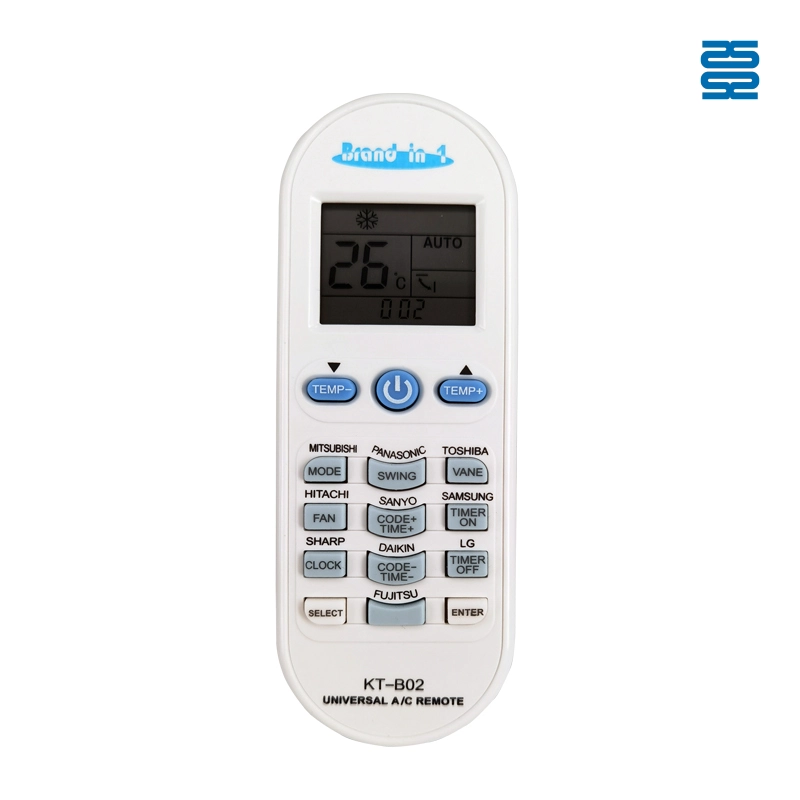
KT-B02 Universal Air Conditioner Remote Control Compatible with All Brands
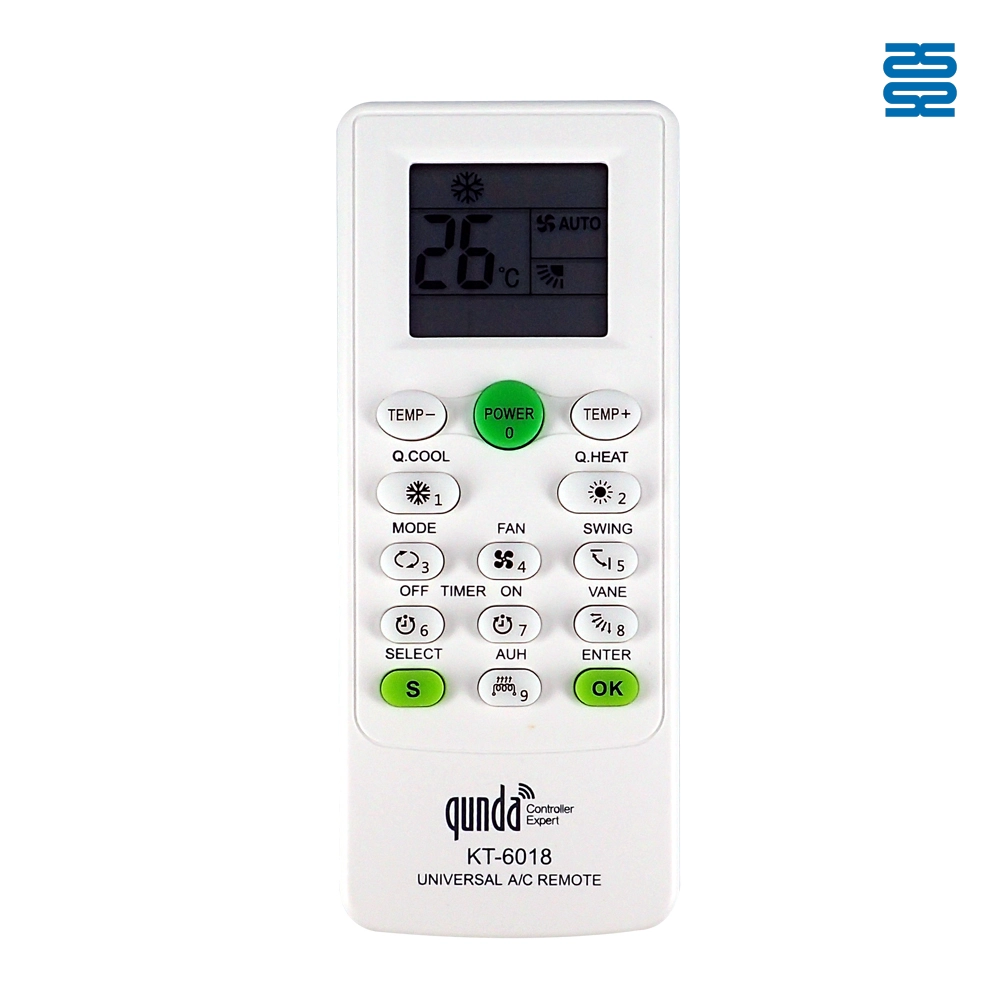
KT-6018 6000 in 1 Universal Air Conditioner Remote Control Compatible with All Brands

QD-1000 IN 1 1000 Code in 1 Universal Air Conditioner Remote Control Compatible with All Brands

KT-N828 Universal Air Conditioner Remote Control Compatible with All Brands
◼ Let’s Build Together
Get in Touch with SYSTO
If you have any comments or good suggestions, please leave us a message, later our professional staff will contact you as soon as possible.


Contact
Email us
Text or Call us
Address
Room 1606, No. 65, Zhongshan Seven Road, Liwan District, Guangzhou, Guangdong, China.

Facebook
Instagram
YouTube
Tik Tok
VK