






What features should buyers demand in a wireless HVAC thermostat?
Wireless HVAC Thermostat: What Features Buyers Must Demand
As remote control and smart building technologies become standard, buyers need precise, up‑to‑date guidance on what to demand from a wireless HVAC thermostat. Below are six specific, pain‑point oriented questions beginners and facility buyers frequently ask — paired with in‑depth, actionable answers based on current industry standards and interoperability practices.
1. How do I verify my HVAC system compatibility (multi‑stage, heat pump, zoning) before buying a wireless thermostat?
Problem: Buyers often discover after purchase that the new thermostat doesn’t control their multi‑stage system, heat pump with auxiliary heat, or zone damper system.
Actionable verification steps:
- Identify your current system type. Look behind the thermostat for wiring labels (R, Rc, Rh, C, W, W2, Y, Y2, G, O/B, AUX, E). Take a clear photo of the wiring and the existing thermostat model.
- Count stages and functions. “Y” (compressor stage), “W/W2” (heat stages), “O/B” (heat pump reversing), “AUX/E” (auxiliary heat), “G” (fan), and zone control wires tell you how many stages and whether you have forced‑air or hydronic equipment. Zone damper systems may have a separate controller instead of multiple thermostats.
- Check compatibility lists. Use the thermostat manufacturer’s compatibility matrix or support chat to confirm support for the exact combination: single‑stage, multi‑stage, heat pump, dual fuel, or hydronic systems. For commercial installs, confirm support for zone dampers and VAV/VRF control if needed.
- C‑wire requirement. Many Wi‑Fi thermostats need a common (C) wire or an external power adapter. If a C‑wire is missing, demand models that include a power‑stealing option or a power‑extender kit; otherwise budget for a C‑wire run or adapter installation.
- When in doubt, consult the install guide or the vendor’s technical support with your wiring photo and HVAC equipment model. Ask for a written confirmation of compatibility to avoid returns.
- 2.4GHz vs 5GHz Wi‑Fi: Many HVAC thermostats only support 2.4GHz because it has better range and penetration through walls. If your building network is 5GHz‑only or uses SSID isolation, demand a thermostat that explicitly supports your band(s) or an Ethernet/Wi‑Fi gateway.
- Mesh & local protocols: For large homes or buildings, Zigbee or Z‑Wave (mesh protocols) can provide stable local connectivity and battery‑efficient sensor networks. If you plan to integrate occupancy sensors or door/window sensors, check for native Zigbee/Thread/Z‑Wave support or available sensor bridges.
- Commercial BMS integration: Commercial and multi‑tenant buildings should demand BACnet/IP or Modbus TCP/RTU support or at least an available gateway. Native BACnet/Modbus gives deterministic control, scheduler visibility, and easier integration into EMS/DMS systems.
- Network segmentation & IT requirements: If IT requires devices only on an isolated IoT VLAN, ensure the thermostat supports VLAN tagging or static IP configuration and can work with captive‑portal or enterprise WPA2/WPA3‑Enterprise provisioning.
- Fallback options: Prefer thermostats with a local control fallback (local web UI or physical interface) so HVAC control persists during cloud outages or network troubleshooting.
- Wi‑Fi security: Support for WPA2‑PSK minimum; WPA3 recommended. For enterprise deployments, support for WPA2/WPA3‑Enterprise (802.1X) is important.
- Transport encryption: TLS 1.2+ (prefer TLS 1.3) for all cloud communications and API calls. Ensure certificate pinning or strong CA validation is used.
- Authentication and access control: Multi‑factor authentication (MFA) support for cloud accounts and role‑based access control (RBAC) for multi‑user sites. Demand session timeout settings and audit logging for commercial installs.
- Local control options: Ability to operate independently of cloud services (local control, LAN API, or on‑premises gateway) so building control remains during cloud outages or if vendor services are discontinued.
- Data privacy policy: A clear privacy policy detailing telemetry, retention period, third‑party sharing, and opt‑out options. For commercial projects, request a Data Processing Agreement (DPA) and SOC/ISO security attestations if handling tenant data.
- Secure update mechanism: OTA firmware updates signed and delivered over encrypted channels to prevent supply‑chain attacks.
- Ask the vendor for typical round‑trip remote command latency (mobile app → cloud → device) from your region. Vendors can provide average latencies from common cloud regions; for mission‑critical deployments, prefer vendors with regional cloud endpoints.
- Check whether the thermostat exposes a local LAN API or supports direct (local) control via the app when on the same network—this yields sub‑second response times and keeps schedules running during outages.
- Verify the device’s behavior during cloud outages: Does it keep schedules, zone logic, humidity control, and failover modes? Demand written behavior statements and test scenarios from the vendor (e.g., simulate internet outage to confirm local scheduling continues).
- Evaluate the mobile app workflow: operations that look instantaneous in the UI may only be queued locally and synced later; confirm the app shows real‑time device status vs cached values.
- For commercial systems, demand deterministic control via BACnet/Modbus or on‑prem BMS integration to avoid cloud latency for critical functions like economizer control or demand response events.
- Warranty and lifecycle: Demand a clear warranty (length and what it covers—hardware, sensors, wireless module) and published expected support lifecycle. For commercial installs, consider extended warranties and SLAs for replacement or repair.
- OTA policy and changelog: Require an update policy that includes advance notice for major changes, a public changelog, and the ability to schedule/update maintenance windows (critical for managed facilities).
- Rollback and test channels: For large deployments, demand features for staged rollouts and rollback of firmware in case of regressions. Request a staging/test firmware stream for pilot testing.
- API stability and export: If you integrate data into analytics or BMS, demand a stable API or agreed deprecation timeline and local data export options so you maintain operational continuity if the vendor changes cloud services.
- End‑of‑life (EOL) terms: Get written EOL terms—how long the vendor will provide cloud services, security updates, and replacement options. For building projects lasting decades, EOL terms are crucial for budgeting future upgrades.
- Power sources: Identify whether the thermostat is powered by the C‑wire, a built‑in rechargeable battery, or replaceable AA/AAA batteries. Thermostats that use constant power (C‑wire) are preferable for stable Wi‑Fi connectivity and continuous remote control.
- Battery life expectations: For battery‑powered Wi‑Fi thermostats, battery life varies widely. Demand vendor‑provided realistic battery life for a typical deployment profile (active Wi‑Fi, hourly polling, backlight usage). Where possible, choose thermostats that minimize Wi‑Fi radio on‑time or support power‑saving modes.
- Power‑stealing vs power extender: If you lack a C‑wire, ask whether the thermostat uses power stealing (which can cause furnace short‑cycling on older systems) or includes a power‑extender kit (PEK). For sensitive or older HVAC controls, prefer a physical C‑wire/adapter install to avoid control anomalies.
- Installation and electrician scope: For multi‑stage or commercial systems, budget electrician/HVAC tech time for verifying stage wiring, running a C‑wire, and integrating zone controllers. Demand professional installation for hydronic, VRF, and air‑handler systems to preserve sensor calibration and safeties.
- Sensor placement and remote sensors: If you plan to use remote temperature/humidity/occupancy sensors, confirm compatibility (wireless vs wired), battery expectations for sensors, and the effect on remote control logic (averaging, prioritization, or room‑level control).
Why this matters: Incorrect compatibility is the leading cause of returns and function loss (e.g., inability to control auxiliary heat or stage separation), and some systems—especially commercial VRF and hydronic boilers—require vendor‑specific interfaces or gateways.
2. Which wireless connectivity should I demand — 2.4GHz Wi‑Fi, 5GHz, Zigbee/Z‑Wave, or a wired BACnet/Modbus option?
Problem: Thermostat loses remote control or can't join building networks; buyers select devices that don’t match network infrastructure or IT policy.
Decision factors and recommendations:
Why this matters: Matching connectivity to your network avoids flaky remote control, daily re‑pairing, and security conflicts with enterprise Wi‑Fi policies.
3. What security standards and privacy controls should buyers require for remote control and cloud services?
Problem: Buyers unknowingly install thermostats with weak encryption, unsecured cloud APIs, or indefinite data retention policies.
Minimum security requirements to demand:
Why this matters: HVAC systems are sensitive OT assets; insecure thermostats can expose networks or allow attackers to manipulate building temperature, causing occupant discomfort, energy waste, or HVAC equipment damage.
4. How can I evaluate remote control responsiveness, cloud latency, and offline behavior before purchase?
Problem: Buyers assume “instant” remote control; in reality cloud hops, mobile app design, and local fallback determine responsiveness.
What to test or ask before buying:
Why this matters: Poor responsiveness can lead to repeated commands, confusing users and creating unnecessary wear on HVAC equipment. Offline robustness ensures occupant comfort even when cloud services are unavailable.
5. What warranty, OTA update policy, and long‑term support should buyers insist on to protect remote control functionality?
Problem: Thermostats get firmware updates that change APIs or cloud terms; discontinued support can leave devices exposed or nonfunctional.
Key contractual and technical protections to require:
Why this matters: Firmware changes and canceled cloud services are a real operational risk. Contractual assurances and technical safeguards prevent sudden loss of remote control or data access.
6. How should buyers evaluate power options, battery life, and installation requirements for remote control features?
Problem: Poor power planning leads to frequent battery changes or thermostat reboots, breaking remote control and schedules.
Evaluation checklist and installation guidance:
Why this matters: Stable power is foundational to reliable remote control. Poor installations or insufficient power planning are common root causes of device resets, Wi‑Fi re‑registration, and lost schedules.
Concluding summary: Advantages of selecting a wireless HVAC thermostat built for robust remote control
Choosing a wireless HVAC thermostat with verified system compatibility, correct wireless protocol support, modern security (WPA3/TLS), local‑control failover, deterministic commercial protocols (BACnet/Modbus) and clear warranty/OTA policies reduces risk, improves occupant comfort, and preserves operational continuity. Proper attention to C‑wire/power options, battery/PEK tradeoffs, and documented API/cloud policies ensures remote control works reliably over the long term and integrates cleanly with building management or energy‑optimization programs.
For a free compatibility check and a quote tailored to your site (residential or commercial), contact us: www.systoremote.com or email [email protected].
CRC2201V
Are batteries included?
No, the remote requires 2 × AAA batteries (not included).
FAN-2989W
Can this replace my original KDK or Panasonic fan remote?
Yes, if your fan uses infrared control (please check before purchase).
KS-DK02V
What’s the working range?
Effective signal range is approximately 8–10 meters.
KS-PN03V
Can I customize the logo or packaging?
Yes, we offer full OEM/ODM customization services.
QD-U08PGC+
What makes PG motor control special?
PG motors allow precise speed control, smoother airflow, and lower noise compared to traditional AC motors.
Recommended For You
The CRC2621V AI Universal Air Conditioner Remote is designed for the Southeast Asian market. With an AI search function and compatibility with 99% of air conditioner brands, it provides faster setup and a better user experience.
Infrared LED light remote for Panasonic Japan market. No setup required. Supports dimming, color adjustment, timer, and 3-channel switching.
Do solar remote controls still use lithium batteries? Learn how modern solar-powered remotes now adopt supercapacitors with USB Type-C fast charging for improved safety, durability, and long lifespan.
Learn how to check whether a garage door remote control bought online is compatible with your opener. Frequency, learning type, and easy tips explained.
Having trouble setting up a universal remote even though your TV brand is listed in the manual? Learn the real reason, common mistakes, and how to improve success by using precise TV codes.
You May Also Like
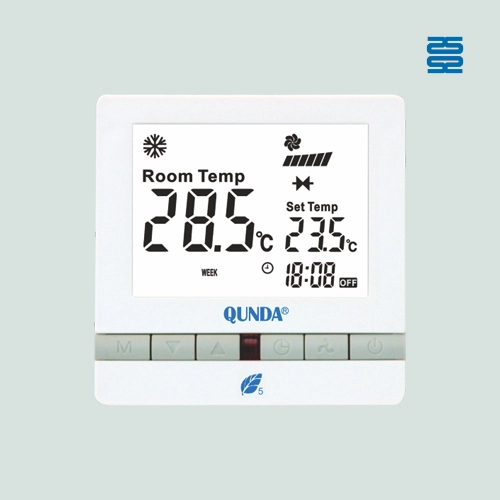
QD-HVAC05E Qunda Digital Thermostat for Central Air Conditioner

QD-HVAC03E Qunda Digital Thermostat for Central Air Conditioner
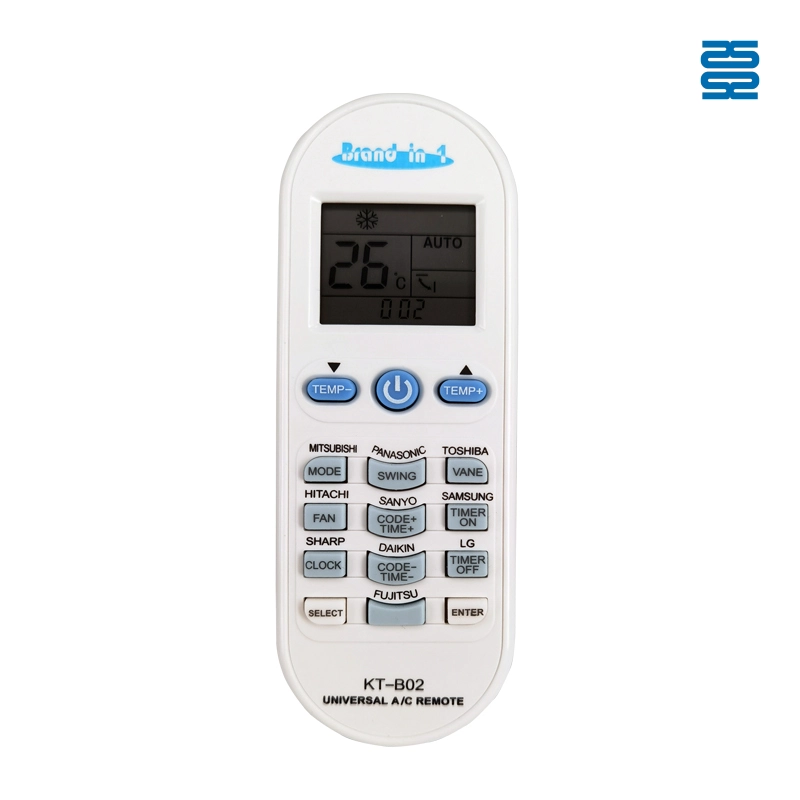
KT-B02 Universal Air Conditioner Remote Control Compatible with All Brands
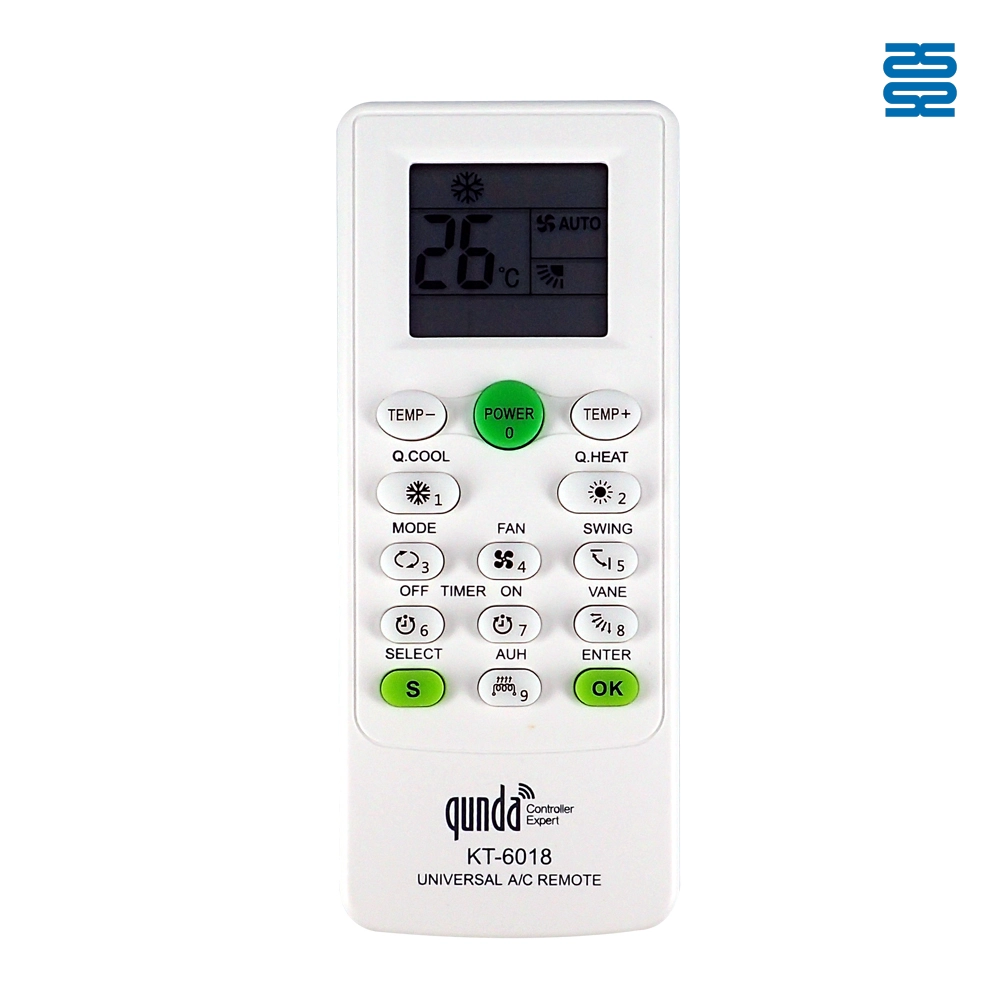
KT-6018 6000 in 1 Universal Air Conditioner Remote Control Compatible with All Brands
◼ Let’s Build Together
Get in Touch with SYSTO
If you have any comments or good suggestions, please leave us a message, later our professional staff will contact you as soon as possible.


Contact
Email us
Text or Call us
Address
Room 1606, No. 65, Zhongshan Seven Road, Liwan District, Guangzhou, Guangdong, China.

Facebook
Instagram
YouTube
Tik Tok
VK