






Can wireless HVAC thermostats integrate with BMS?
1) How can I ensure reliable wireless HVAC thermostat signal through concrete floors and metal shafts in a multi-floor building?
Problem: Beginners assume Wi‑Fi reaches everywhere. In reality, dense concrete, rebar, elevator shafts and metal ductwork severely attenuate signals and create multipath issues.
Actionable checklist:
- Perform a site RF survey before purchase. Use a Wi‑Fi analyzer (e.g., Ekahau, AirCheck) or a basic RF field‑strength tool to map signal strength (RSSI) at proposed thermostat and sensor locations. For Zigbee/Z‑Wave use a specialized coordinator-based survey or a portable gateway.
- Choose the appropriate wireless layer: Wi‑Fi (2.4/5 GHz) offers bandwidth for cloud and firmware updates but has limited indoor penetration; Zigbee/Z‑Wave form mesh networks so edge devices can relay between nodes; LoRaWAN/Proprietary sub‑GHz solutions provide far better penetration and range for sensor/telemetry data but usually require gateways for control.
- Design a mesh where needed: With Zigbee/Z‑Wave, site plan nodes (repeaters, powered thermostats) at ~10–30 m line‑of‑sight; put powered devices (fan coils, powered VAV controllers) in positions that double as routers.
- Place a gateway or access point near the air handler or mechanical room; BACnet/IP or Modbus/TCP gateways should be wired to the BMS to minimize wireless hops for critical control points.
- Test fail conditions: simulate AP/gateway loss and ensure the thermostat falls back to local control. Document reachable setpoints and schedules available offline.
Why it matters: Proper RF planning reduces thermostat oscillation, reduces HVAC short‑cycling, and prevents false occupancy triggers from intermittent data.
2) Can wireless HVAC thermostats integrate with BMS, and what integration methods are reliable today?
Short answer: Yes — but success depends on protocol compatibility, network architecture, and how you map control/override priorities.
Common, reliable integration approaches:
- BACnet/IP or BACnet MS/TP via a wireless gateway: Many commercial controllers expose BACnet objects (AI/AO/AV/BV) for temperature, setpoints, mode, occupancy and alarms. For wireless devices that don’t speak BACnet natively, use a certified gateway to translate device points to BACnet objects.
- Modbus TCP/RTU gateways: Often used for simple point maps. Modbus is low overhead but lacks rich object semantics (e.g., command priorities) so be explicit about write privileges and scanning frequency.
- REST/Cloud API + Cloud‑to‑BMS middleware: Useful for large portfolios, but adds latency and requires secure cloud links and an API‑based gateway (Niagara/Tridium or custom middleware) to map cloud endpoints into BMS objects.
- OPC UA: Emerging in newer deployments where semantic modeling and secure endpoint discovery are needed; good for federated systems but requires OPC UA support on both ends.
Best practices:
- Verify vendor support for BACnet Device/Object IDs and ensure they follow recommended naming conventions (e.g., building.floor.zone.point) so your BMS auto‑discovery and history logs remain clean.
- Map critical control points natively (setpoint, mode, occupied/unoccupied, fan state) and keep override commands atomic with clear priority rules (BMS override, local priority, user app, schedule).
- Performance: Set sane polling intervals (e.g., 30–60s for temperature telemetry, 1–5s for critical alarms only when necessary) to avoid network and BMS processor load.
- Test integration in a lab or pilot zone before mass deployment — include fault injection (gateway down, wireless drop, device reboot) to confirm graceful degradation.
3) How do I securely put wireless HVAC thermostats onto a building network without exposing the BMS to cyber risk?
Security is a top concern — connecting wireless devices to a building IT network without segmentation is risky.
Concrete steps to secure integration:
- Network segmentation: Place wireless thermostats on a dedicated VLAN with firewall rules that permit only necessary traffic (e.g., to a gateway or specific BMS IP addresses and required cloud endpoints).
- Use secure gateways: Gateways translating Wi‑Fi/Zigbee to BACnet/Modbus must support TLS for cloud communications and at a minimum AES‑128/256 for local radio links (Zigbee uses AES‑128). Disable default passwords and enforce certificate‑based authentication where available.
- Harden devices: Enforce firmware update processes, disable unused services (Telnet, UPnP), and change default credentials. Where possible, enable WPA2/WPA3 enterprise (802.1X) authentication for Wi‑Fi devices in commercial deployments.
- Access control and logging: Implement role‑based access in the BMS and gateway, log all writes to setpoints/overrides, and audit logs periodically. Use write protections in BACnet (e.g., command priority) to avoid accidental overrides.
- Pen‑test and vendor assessment: Request security whitepapers and common vulnerability disclosures from thermostat vendors; run a basic vulnerability scan on new devices before production deployment.
4) What is the expected battery life for wireless thermostats with remote sensors and how do I size replacement intervals for maintenance?
Battery life depends on radio technology, reporting intervals, sensor types, UI usage and ambient temperature. Beginners often under‑estimate maintenance cost and replacement logistics.
Typical ranges and factors:
- Wi‑Fi thermostats: Many are line‑powered; battery backups (for RTC/backup) last months. If battery‑only Wi‑Fi devices are used, expect 1–6 months depending on reporting frequency and screen use.
- Zigbee/Z‑Wave battery sensors/thermostats: Commonly achieve 1–3 years on AA/AAA batteries with reporting intervals of 5–15 minutes; coin cell sensors may be 6–18 months.
- Sub‑GHz (LoRaWAN): Optimized for long life — many devices report monthly or hourly and can achieve 3–5+ years on primary cells.
Sizing and maintenance advice:
- Specify reporting intervals based on use case: 5–15 min for energy analytics may be fine; fast control loops need faster telemetry and usually wired or line‑powered devices.
- Include battery health telemetry as a standard point exported to the BMS (battery percentage, last check‑in). Schedule automated alerts at 30% and 15% remaining.
- Plan cycles: For commercial buildings, estimate replacement windows per device type and group by battery type to optimize service visits (e.g., replace all Zigbee AA devices during annual HVAC maintenance).
- Consider hybrid power: Use power stealing or power modules for retrofit thermostats so they become line‑powered and remove frequent battery replacements.
5) If the wireless thermostat loses connection to the BMS or cloud, what local controls must remain and how should failover be configured?
Users worry about zone comfort and equipment safety when connectivity fails. Correct behavior is crucial: maintain safe operation locally and ensure smooth reconnection.
Functional requirements during loss of connectivity:
- Local scheduling and setpoint control: Thermostat must continue to run stored schedules, setpoints and local overrides even when disconnected.
- Local safety limits: Maintain minimum/maximum setpoint limits and anti‑short‑cycling logic for compressors/fans to protect equipment.
- Graceful failover rules: Define priority order (local schedule > last BMS command vs. BMS override > local). Common pattern: if BMS is absent, local schedule takes precedence; when BMS returns, it either resumes control or logs a conflict for operator resolution.
- Alarm buffering and replay: Store alarm and occupancy changes locally and push buffered events when connectivity is restored to avoid data gaps in trend logs.
Testing recommendations:
- Simulate gateway/BMS failure and validate local behavior for at least 48 hours of typical occupancy cycles.
- Confirm the thermostat enforces safety limits while offline (no unlimited setpoint changes allowed).
- Validate the reconciliation process when BMS reconnects: Does the BMS accept current state, or does it override? Ensure documented operator workflows to resolve conflicts.
6) Can wireless thermostats support multi‑sensor zoning and maintain proper staging and dead‑band control for complex HVAC systems?
Many projects need multiple remote sensors per zone and precise staging for multi‑compressor or multi‑stage systems. Not all wireless thermostats handle this well out of the box.
Key capabilities to verify before purchase:
- Multi‑sensor averaging or priority: Ensure the thermostat or gateway supports weighted averaging of temperature sensors or a defined priority sensor for control. Some systems allow minimum/maximum sensor logic (e.g., take the coldest sensor in a corridor to prevent hot spots).
- Staging and dead band configuration: For multi‑compressor or multi‑stage equipment, the controller must support configurable dead bands, temperature differential per stage, and inter‑stage minimum run times to avoid short cycling.
- Sensor reporting rate and latency: Faster control loops need lower latency; ensure wireless reporting intervals and mesh hops do not introduce oscillation. For critical staging, prefer wired or line‑powered sensors where possible.
- Integration of remote sensors into BMS: Map each physical sensor to an explicit BMS point (e.g., ZoneA_Sensor1, ZoneA_Sensor2) so analytics and fault detection tools can run on raw sensor data rather than aggregated values alone.
Commissioning checklist:
- Define control logic in a written sequence of operations (SoO) before tuning sensors and dead bands.
- Commission in occupied conditions, use datalogging to verify differential across sensors and adjust averaging weights or priority rules.
- Set alarms for sensor divergence (e.g., >2°C difference) to detect failed or misplaced sensors early.
Advantages of wireless HVAC thermostats summarized:
Wireless thermostats reduce installation cost and enable flexible zoning and remote monitoring. When specified correctly they provide easier retrofit paths, support advanced IoT analytics, and allow BMS integration via BACnet/Modbus/gateway approaches with secure network segmentation. Proper RF design, battery planning, security hardening, and clear point mapping ensure reliable control, fault tolerance and easier maintenance.
For a tailored solution, network survey, or quotation contact us for a quote at www.systoremote.com or email [email protected].
QD-U03C+
How does the Auto Mode work?
In Auto mode, if room temperature is below 21°C, it heats; if above 27°C, it cools automatically.
What type of air conditioners can the QD-U03C+ control?
It is designed for wall-mounted split A/C units. We also have other control system supporting multiple system types. Pls contact us for more details.
CRC2303V
What’s the MOQ for bulk purchase?
Regular stock supports small quantities. Custom orders depend on requirements.
CRC86E
What devices does this remote support?
CRC86E supports TVs, set-top boxes, DVD players, satellite receivers, and other IR-controlled devices.
AN-MR25GA
Does it work with all LG TVs?
It is compatible with LG 2025 TV models including OLED G5/C5/B5 and QNED 92A/85A/80A/UA77 series.
Recommended For You
Infrared LED light remote for Panasonic Japan market. No setup required. Supports dimming, color adjustment, timer, and 3-channel switching.
Do solar remote controls still use lithium batteries? Learn how modern solar-powered remotes now adopt supercapacitors with USB Type-C fast charging for improved safety, durability, and long lifespan.
Learn how to check whether a garage door remote control bought online is compatible with your opener. Frequency, learning type, and easy tips explained.
Having trouble setting up a universal remote even though your TV brand is listed in the manual? Learn the real reason, common mistakes, and how to improve success by using precise TV codes.
Learn how to set up and program the CRC1130V universal remote control for your TV. This step-by-step guide covers direct brand buttons, code input, and auto search methods for quick and easy pairing.
You May Also Like
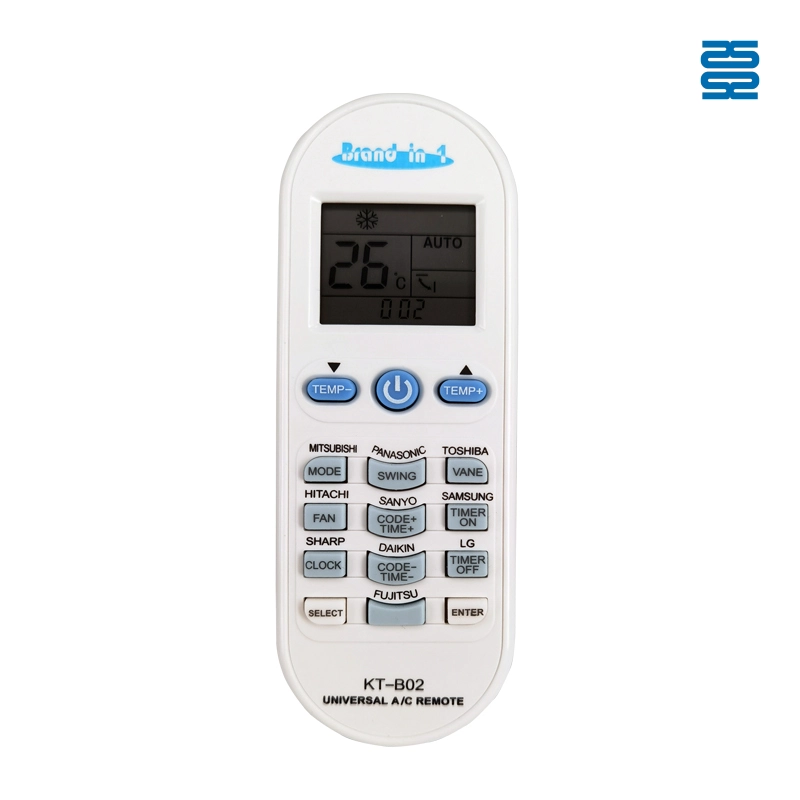
KT-B02 Universal Air Conditioner Remote Control Compatible with All Brands
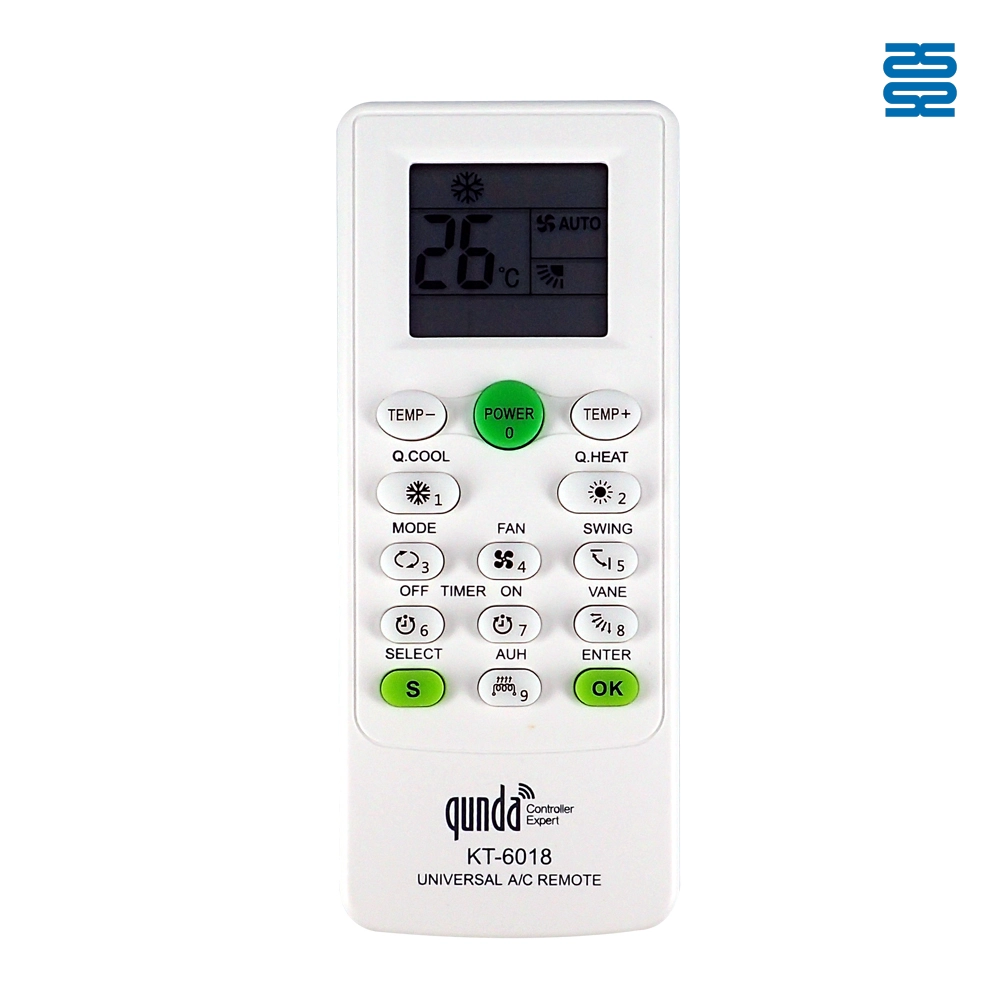
KT-6018 6000 in 1 Universal Air Conditioner Remote Control Compatible with All Brands

QD-1000 IN 1 1000 Code in 1 Universal Air Conditioner Remote Control Compatible with All Brands

KT-N828 Universal Air Conditioner Remote Control Compatible with All Brands
◼ Let’s Build Together
Get in Touch with SYSTO
If you have any comments or good suggestions, please leave us a message, later our professional staff will contact you as soon as possible.


Contact
Email us
Text or Call us
Address
Room 1606, No. 65, Zhongshan Seven Road, Liwan District, Guangzhou, Guangdong, China.

Facebook
Instagram
YouTube
Tik Tok
VK