






Smart remotes: Are Wi-Fi window AC controllers worth it?
1) How can I verify a Wi‑Fi controller will reliably work with my exact window AC model when the manufacturer isn’t listed?
Problem: Many beginner buyers see a list of supported brands or vague “most IR models” claims. Pain point: buying a smart Wi‑Fi AC controller only to find it can’t send the specific IR codes (or RF signals) your unit needs.
Step‑by‑step verification that avoids guesswork:
- Find the model code on the AC’s data plate (usually behind the grille). That exact model code is what vendors and code databases map to IR command sets—brand names alone are insufficient.
- Check if your unit uses infrared (IR) or radio frequency (RF). If you see an IR receiver (small dark plastic window) on the front, it’s IR. If the remote says 433MHz/315MHz or there’s no IR window, it’s RF.
- Look up the controller’s device database: established vendors (Sensibo, Tado, Ambi Climate, BroadLink) publish supported model lists or have learning mode. If your model is listed, compatibility is likely high. If not listed, a learning‑mode or universal IR option is required.
- Test with a universal IR remote first (under $15). If the universal can replicate all functions, a Wi‑Fi IR‑based controller that either uses the same codebook or supports learning will work.
- If it’s RF: ask the vendor for the supported RF frequencies and modulation (ASK/OOK on 315/433 MHz). Many smart remotes don’t support proprietary RF. In that case options include an RF‑learning remote, an RF‑to‑IR bridge, or a hardware retrofit by a technician.
- For absolute certainty, request a short return policy or compatibility guarantee from the seller before purchase. Document the AC model and take photos of the front panel/receiver.
Result: Following these steps reduces failed purchases—IR learning and model code matching are the two most reliable predictors of success.
2) Will adding a Wi‑Fi remote or controller void my window AC warranty or impact safety/certifications?
Problem: Buyers worry about losing warranty coverage or creating safety hazards by adding third‑party smart remotes.
Short answer: Passive, non‑invasive controllers that only transmit IR or RF signals without modifying the AC’s electrical system typically do not void the appliance’s UL/NRTL listing nor the manufacturer’s warranty. However, wiring into the unit’s mains, adding relays inside the chassis, or replacing internal controls can.
Key points & best practices:
- IR/RF bridges (they only emulate the handheld remote) do not alter the AC internals and are safe from a certification standpoint. Keep the original remote and documentation to show there was no internal modification if warranty disputes arise.
- Hardwired solutions that tap into the control board, replace the PCB, or add relays do change the product and can void warranty and affect UL/NRTL compliance. Only licensed technicians should perform these and only with manufacturer approval.
- Smart plugs used to power cycle a unit are non‑invasive but not recommended as primary control—they risk short‑cycling the compressor. If used, combine with minimum run‑time automations (see Q5).
- Document everything: photos of the installed controller, serial number, and installation steps. If unsure, contact your manufacturer’s support with the AC model and ask whether adding an IR/Wi‑Fi controller affects warranty.
Conclusion: Use plug‑and‑play IR/RF bridges for minimal risk. Avoid internal wiring changes unless authorized.
3) How accurate are the energy‑use readings reported by Wi‑Fi controllers for window units, and how should I validate them?
Problem: Many smart remotes claim “energy monitoring” or “energy savings” but use estimates rather than direct measurements. Buyers need to know if the reported kWh figures are trustworthy for cost calculations.
How Wi‑Fi controllers estimate energy:
- Algorithmic estimate: Many controllers estimate power draw from mode, set temperature, runtime, and a preset wattage for a given BTU rating (e.g., 5,000–12,000 BTU). They often assume a fixed EER/SEER value—this introduces error because part‑load efficiency varies with ambient temperature and compressor cycling.
- Direct measurement: Some solutions pair with a smart plug or a clamp CT sensor that measures real power (Watts) at the plug or line. This is far more accurate and captures startup surges and duty cycle.
Real‑world accuracy guidance (based on typical window AC specs):
- A 5,000 BTU window AC commonly draws roughly 400–600 W while running; a 12,000 BTU model typically draws 900–1,400 W. Runtime and compressor duty cycle alter actual energy use.
- If a cloud service estimates based only on BTU and runtime, expect ±15–40% error depending on local conditions and unit age. If the controller uses a plug‑in power meter or CT clamp, accuracy is typically within ±2–5% for steady loads.
How to validate:
- Measure with a verified power meter (Kill‑A‑Watt or an inline CT + energy monitor) for a representative 24–72 hour period.
- Compare the meter’s kWh to the controller’s report; if discrepancy >10–15%, rely on the physical meter for billing or ROI calculations.
- Ensure the smart controller’s firmware is updated—some vendors push calibration updates that improve estimates.
Bottom line: Use controllers with direct power measurement for accurate billing and ROI. Estimates are useful for trend detection but not exact cost calculations.
4) Can Wi‑Fi smart remotes replicate advanced manufacturer functions (sleep, turbo, dehumidify, eco) or only basic on/off/temp/fan?
Problem: Users buy a smart remote expecting every original remote feature to be available via app or voice. Disappointment happens when only basic commands are supported.
Function coverage depends on three factors:
- Command database completeness: Vendors that map full IR code sets for specific models can replicate almost every function, including sleep, turbo, dehumidify, and swing positions.
- Learning mode: If the smart controller supports IR learning, it can capture and reproduce any function visible on the original remote (including sequences or long‑press behaviors).
- App UX and cloud logic: Some controllers map advanced functions into presets (e.g., “eco mode”) while others expose each button. Macros or scenes can chain commands (set temp then set fan speed) to emulate manufacturer modes.
How to ensure the features you need are supported:
- Before purchase, list the exact remote buttons and sequences you rely on (e.g., “Sleep + swing + fan low at night”).
- Ask the vendor whether those specific buttons are in the device database for your model or whether the controller supports IR learning of long‑press macros.
- After installation, test extended features and document any missing behaviors. If the vendor allows firmware updates, request support for additional commands if needed.
Note: Some advanced functions like internal dehumidification cycles or compressor protection algorithms are controlled internally and cannot be improved by a remote—only toggled on/off.
5) How do I integrate a Wi‑Fi window AC controller into home automation (scheduling, geofencing) without causing short cycling or reducing compressor life?
Problem: Smart schedules or geofencing can create frequent on/off cycles, risking compressor damage or inefficient operation. Beginners need a rule set that balances responsiveness and compressor protection.
Rules and best practices:
- Respect minimum off time: Most HVAC manufacturers recommend a minimum off time between compressor starts—commonly 3–5 minutes. Enforce this in automations by adding a delay or using the controller’s native anti‑short‑cycle feature.
- Use mode‑aware automations: Don’t repeatedly power‑cycle the unit via smart plugs to change temperature. Use the IR command set to change setpoints and modes instead—this avoids the harmful hard power cycling of compressors.
- Implement a hysteresis (deadband) of at least 0.5–1°C (1–2°F) to prevent rapid toggling near the setpoint. For example, set temperature to 24°C with hysteresis 1°C: only send a cool command when ambient exceeds 24.5°C and turn off when it drops below 23.5°C.
- Use runtime enforcement: Require a minimum runtime (e.g., 10–15 minutes) before allowing an automation to turn the unit off. This ensures the compressor completes useful dehumidification and heat exchange cycles.
- Integration methods: Prefer vendors that provide local APIs, MQTT, or Home Assistant integrations rather than cloud‑only controls so automations remain responsive and privacy is better protected. Popular integrations include Sensibo, Ambi Climate, Tado (limited HomeKit), and third‑party bridges like BroadLink with local mode.
Example automation that’s safe and effective:
- Geofence trigger: When last occupant leaves home, check if unit has been running >15 minutes. If yes, set to Eco mode and reduce setpoint by 2°C; do not power‑off immediately.
- Return geofence: When someone approaches, if compressor has been off <5 minutes, wait until 5 minutes elapsed, then send preheat/pre‑cool command (set mode and target temp) instead of power pulsing.
Result: Proper anti‑short‑cycle safeguards and using IR setpoint commands maintain compressor health while enabling smart behavior.
6) My older window AC uses a proprietary RF remote—what realistic retrofit options exist for smart control?
Problem: Older units with RF remotes (e.g., 433MHz) or proprietary rolling codes often aren’t supported by mainstream smart remotes. Beginners need practical retrofit paths without replacing the entire AC.
Feasible options ranked by invasiveness and reliability:
- RF‑learning universal remotes: Some universal RF remotes can learn and re‑transmit your remote’s RF signals. Pair that universal remote with a Wi‑Fi bridge that supports RF (limited set of bridges do). Reliability depends on whether the remote uses fixed codes or rolling codes.
- RF‑to‑IR bridge + IR emitter: If the unit has any IR-receivable interface or you can add an IR receiver to the control board (low invasiveness—requires a service tech), convert RF signals to IR and use a standard Wi‑Fi IR controller. This may require a technician to add an IR receiver or a microcontroller to the PCB.
- Replace the receiver module: Some technicians can swap the RF receiver on the unit’s PCB for a standardized one that accepts common protocols. This is invasive, can void warranty, and must meet safety/certification rules, but it yields a robust solution.
- Use a power‑control workaround (least recommended): Smart plug automations to simulate remote functions are risky—power cycling is not a proper substitute for commands and can damage the compressor if used frequently. If used only as a last resort, ensure automations include minimum off/on times and only use for infrequent manual overrides.
Actionable next steps:
- Identify the RF frequency printed on the remote (315MHz or 433MHz are common) and whether the remote uses rolling codes. Rolling codes typically can’t be learned by universal devices.
- Consult with an HVAC service technician for PCB‑level solutions if you need robust integration—this is common in commercial retrofits.
- Consider replacing the external remote module with a modern IR‑compatible receiver if the AC model supports it or consider replacing the unit if integration is critical and the unit is old and inefficient (ROI often favors replacement for units older than 10 years).
Conclusion — Advantages of Wi‑Fi Smart Remotes and Proper Remote Control for Window ACs
When selected and configured correctly, Wi‑Fi window AC controllers and smart remotes deliver clear advantages: remote scheduling and geo‑aware comfort, better data for energy management when coupled with direct power measurement, voice and automation integration, and the ability to consolidate multiple units under one management console. The main tradeoffs are compatibility gaps (IR vs RF), potential warranty effects for invasive installs, and accuracy limits in algorithmic energy estimates. By verifying model codes, preferring plug‑and‑play IR bridges, enforcing anti‑short‑cycle automation rules, and validating energy use with a physical meter, buyers and installers can capture energy savings and improved comfort without risking equipment health.
For professional quotes, compatibility checks, and OEM‑grade retrofit options, contact us for a quote at www.systoremote.com or email [email protected].
QD-HVAC20
How do I set the timer for my QD-HVAC20 thermostat?
Press the "TIMER" key on the thermostat to activate the timer function. You can then set the desired on/off times using the up/down arrows.
QD85U
Can it be customized for OEM/ODM production?
Yes, we provide firmware, branding, and wiring customization.
QD-U03C+
How does the Auto Mode work?
In Auto mode, if room temperature is below 21°C, it heats; if above 27°C, it cools automatically.
What is the function of the “Sleep” key?
It gradually adjusts the temperature for comfortable sleeping and shuts off after 5 hours.
KS-PN03V
What’s the MOQ and delivery time?
Regular stock supports small quantities; custom MOQ and lead time depend on specific requirements.
Recommended For You
Infrared LED light remote for Panasonic Japan market. No setup required. Supports dimming, color adjustment, timer, and 3-channel switching.
Do solar remote controls still use lithium batteries? Learn how modern solar-powered remotes now adopt supercapacitors with USB Type-C fast charging for improved safety, durability, and long lifespan.
Learn how to check whether a garage door remote control bought online is compatible with your opener. Frequency, learning type, and easy tips explained.
Having trouble setting up a universal remote even though your TV brand is listed in the manual? Learn the real reason, common mistakes, and how to improve success by using precise TV codes.
Learn how to set up and program the CRC1130V universal remote control for your TV. This step-by-step guide covers direct brand buttons, code input, and auto search methods for quick and easy pairing.
You May Also Like
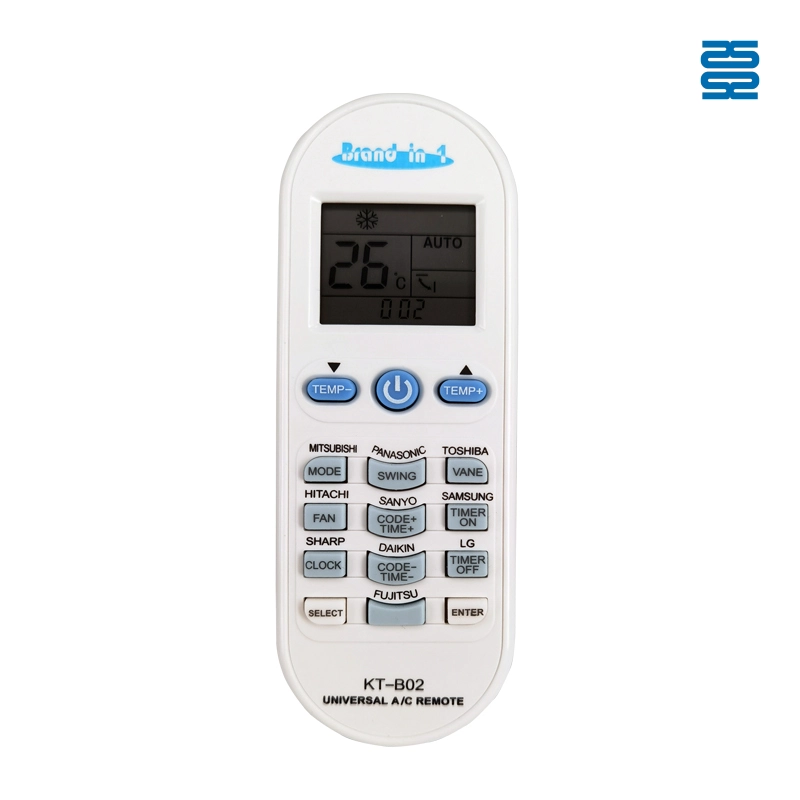
KT-B02 Universal Air Conditioner Remote Control Compatible with All Brands
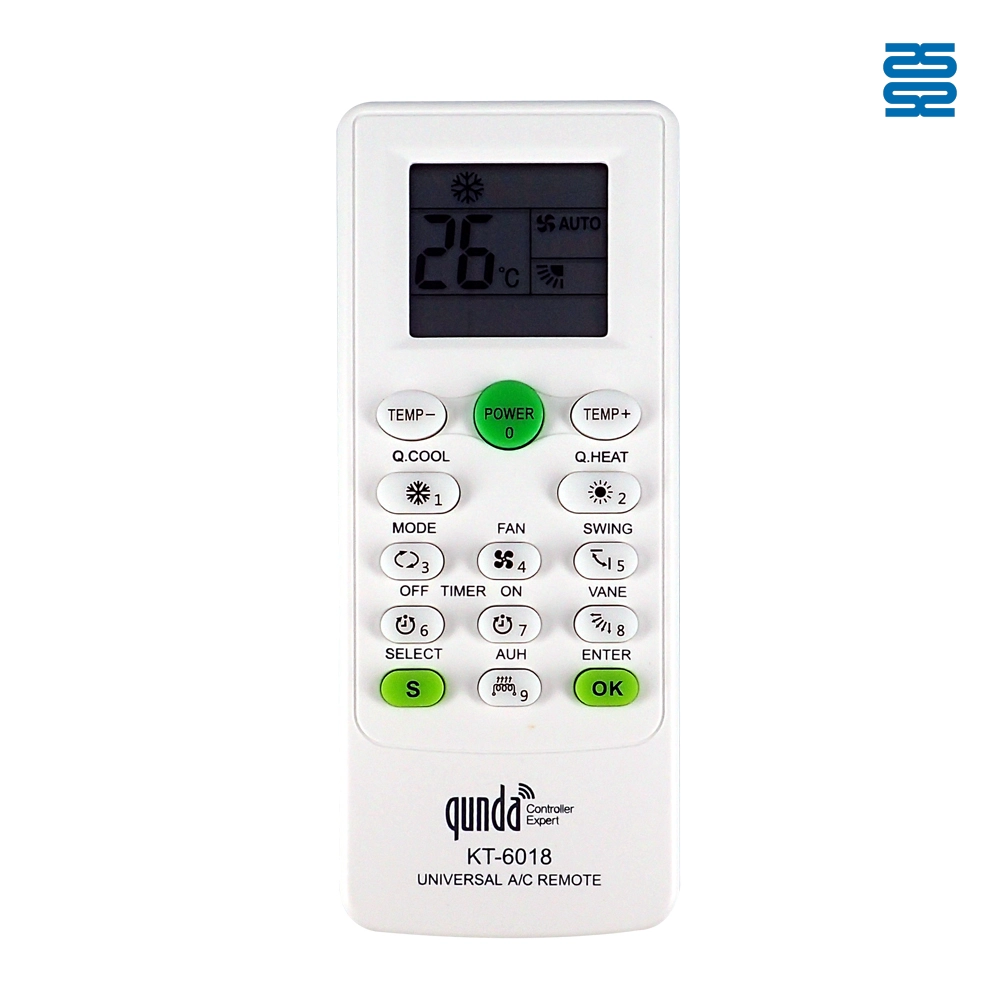
KT-6018 6000 in 1 Universal Air Conditioner Remote Control Compatible with All Brands

QD-1000 IN 1 1000 Code in 1 Universal Air Conditioner Remote Control Compatible with All Brands

KT-N828 Universal Air Conditioner Remote Control Compatible with All Brands
◼ Let’s Build Together
Get in Touch with SYSTO
If you have any comments or good suggestions, please leave us a message, later our professional staff will contact you as soon as possible.


Contact
Email us
Text or Call us
Address
Room 1606, No. 65, Zhongshan Seven Road, Liwan District, Guangzhou, Guangdong, China.

Facebook
Instagram
YouTube
Tik Tok
VK