






How do programmable window air conditioner remotes save energy?
1. How do I match and program a universal remote to a window air conditioner that uses undocumented or nonstandard IR/RF codes?
Most online guides stop at “try codes 1–500” and leave users guessing. For window ACs, the difference between a working universal AC remote and a useless one is understanding the signaling layer (IR carrier, code protocol, or RF band) and having a systematic approach.
Step-by-step practical method:
- Identify the exact model number on the unit’s rating plate (not the retail model). That leads to service manuals with OEM remote codes in many cases.
- Determine interface type: most window ACs use an infrared (IR) remote modulated at ~38 kHz (common) but some brands use 36/40 kHz or proprietary RF (315/433 MHz or sub-GHz). If the remote requires line-of-sight and works only within a ~6–8 m corridor, it’s likely IR.
- Use a universal AC remote with a code-search or “auto-search” feature. Follow the universal remote’s code-search routine while standing in line-of-sight. Pause on a candidate code long enough to test all functions (mode, temp up/down, fan speeds, swing). Don’t only test ON/OFF.
- If auto-search fails, consider a “learning” universal remote that can capture signals from the OEM remote (if you have it) or a PC-based infrared capture tool. Learning requires a working OEM handset.
- For undocumented RF protocols: universal remotes rarely support proprietary RF. Options: (a) purchase the OEM remote, (b) install a Wi‑Fi or IR bridge (smart controller) that supports learning via a hub, or (c) get a professional RF/IR cloning tool or service.
- If you must decode signals (advanced): use a TSOP-series IR receiver + Arduino or USB IR dongle to capture raw bursts and compare carrier frequency and bit timing. This helps if you want to program a custom controller or verify the protocol before buying a universal remote.
Pitfalls and tips:
- Brand families may share codes across models—search using full model + service manual.
- Some remotes use rolling or encrypted RF—these cannot be cloned by consumer-grade devices.
- Keep a photo of the AC’s board label; technicians can sometimes read remote codes or DIP settings from chassis prints.
When to call a pro: if the unit uses proprietary RF or if code capture shows nonstandard framing (often indicative of encryption). In those cases the most reliable option is OEM replacement or a vendor-supported smart module.
2. Why does the temperature on my window AC remote differ from the unit’s built-in sensor, and how can I fix it?
This mismatch is a common comfort and control problem but often misdiagnosed. There are two sensor systems: the unit’s air/evaporator sensor (controls cycling), and the remote's ambient or virtual sensor (used for setpoint display). Differences arise from sensor placement, calibration, and algorithmic offsets.
Root causes:
- Sensor location: the indoor sensor sits near airflow or the evaporator and reads return air or coil temp. A handheld remote is usually held in room core or near a wall—readings vary.
- Radiant and direct-sun heating: remote in sunlight reads warmer than shaded unit sensor.
- Calibration drift: low-cost thermistors in remotes and boards can have ±1–2 °F error. Over years this drift increases.
- Control algorithm: many window ACs use the unit sensor for compressor control but display the remote reading. If the remote reading is cooler, the unit will run longer than expected (and vice versa).
How to diagnose accurately:
- Place a calibrated room thermometer beside both the AC intake grill and next to where you usually hold the remote. Compare within a 30-minute steady-state run.
- If differences are >1.5 °F, you have a sensor placement or calibration issue.
Fixes and mitigation:
- Use the unit’s sensor for control where possible: some remotes and service menus let you switch control source or apply a temperature offset. Check the service manual for “temperature correction” or “remote offset” entries.
- Apply a user-set offset: if the remote reads 2 °F low, add +2 °F offset if the remote supports it. Many programmable remotes include a +/- offset in 0.5 °F increments.
- Reposition the remote or use a remote/micro-sensor placed in the representative room location (some smart remotes include wireless temperature sensors and return the sensor readings to the unit controller).
- For persistent calibration drift: consider replacing the remote battery (low voltage can affect readings), replacing the remote sensor assembly, or using a Wi‑Fi thermostat/controller that polls a calibrated sensor.
Operational advice:
- Leave a 1–2 °F deadband (hysteresis) in your schedule to prevent unnecessary on/off cycling.
- For precise temperature control in bedrooms, use remotes or smart sensors that support 0.5 °F resolution.
3. Can programmable window AC remotes prevent compressor short-cycling on non-inverter units without reducing comfort?
Yes—when configured correctly. Short-cycling (compressor restarting too frequently) is harmful to lifespan and reduces efficiency on non-inverter window units. Programmable remotes can help, but you must use features designed to protect the compressor.
How remotes help:
- Minimum runtime enforcement: programming the remote to maintain a minimum ON time (commonly 3–5 minutes) prevents frequent starts.
- Minimum-off delay (compressor anti-short-cycle delay): some remotes or internal unit firmware delay restarts for 2–10 minutes after shutdown—preventing immediate restart from transient temperature shifts.
- Deadband or hysteresis: setting a 1–2 °F deadband around the setpoint reduces rapid toggling due to sensor noise or minor oscillations.
Practical settings:
- Set a minimum run time of 5 minutes if available. This is a common compressor-protection value and balances life vs comfort.
- Set a deadband of at least 1 °F (0.5 °F if your system and sensors are high-quality). Larger deadbands lower energy use and cycles but broaden temperature swings.
- Use “eco” or “fan-first” modes in moderate conditions to avoid activating the compressor unnecessarily.
Trade-offs:
- A tighter temperature band improves comfort but increases cycles. If you have frequent occupancy changes, use schedule-based setbacks rather than tight continuous setpoints.
- For inverter-capable window ACs, short-cycling is less of an issue because the compressor modulates; here, programmable remotes should favor longer, steadier setpoints and leverage variable-speed benefits.
Outcome: Properly set programmable remotes reduce startup stress, lower maintenance risks, and can extend compressor life while maintaining acceptable comfort.
4. How much energy will programmable window AC remotes realistically save? Can you show a calculation example?
Many articles give vague percentages. Real savings depend on unit efficiency (EER or SEER), usage hours, setpoint differences, and whether the unit is inverter-based.
Rule-of-thumb factors:
- Each 1 °F increase in steady setpoint can reduce cooling energy by roughly 3–5% (industry rule-of-thumb; actual varies by climate and building envelope).
- For schedule-based hourly runtime reductions, savings are roughly proportional to reduced compressor run-hours, adjusted for part-load efficiency.
Example conservative calculation (realistic):
- Unit: 10,000 BTU window AC with EER = 10.0 ⇒ power ≈ 10,000 BTU / 10 = 1,000 W (1.0 kW) when compressing.
- Baseline use: 8 hours/day operation at setpoint 72 °F ⇒ daily energy ≈ 8 kWh.
- Programmable strategy A: daytime setback to 78 °F (6 °F higher) for 8 hours, then pre-cool 30 minutes before occupancy to 74 °F.
Estimate savings:
- Using 3–5% rule-of-thumb per °F, a 6 °F daytime setback yields 18–30% less cooling energy during setback hours. If baseline used 8 kWh/day, contribution of daytime 8 hr was, say, 6 kWh; reducing that by 18–30% saves 1.08–1.8 kWh/day.
- Net daily energy may drop from 8 kWh to 6.7–7 kWh (13–16% overall reduction). Annualized (200 cooling days) at 1 kW per run and $0.16/kWh: 1.3 kWh/day average savings ≈ $41–$57/yr. (Local utilities and climate change numbers.)
Example for inverter window ACs:
- Inverter units are more efficient at part-load; schedule and setback that keep compressor at low steady output can be more efficient than frequent on/off cycles, possibly increasing savings beyond simple hour reductions.
Caveats:
- Savings scale with difference between setback setpoint and baseline setpoint, the duration of setback hours, and local electricity rates.
- Poorly configured pre-cooling can negate savings (overcooling for short periods uses more energy than steady running).
Bottom line: Real-life energy savings for programmable remotes typically range from ~10–30% of cooling energy depending on how aggressive the setbacks are and system efficiency. The best results come from well-chosen setbacks, pre-cool windows, and compressor-safe minimum runtime settings.
5. Are third-party smart Wi‑Fi adapters and aftermarket programmable remotes safe for privacy, firmware integrity, and warranty on window AC units?
Short answer: It depends. Consumers often trade convenience for risk unknowingly. Consider three fronts—security/privacy, firmware interactions, and warranty/FCC compliance.
Security and privacy:
- Cloud-based remotes: many Wi‑Fi adapters rely on cloud services to broker commands. This introduces privacy and availability risks if the vendor discontinues service.
- Local-only controllers: devices supporting local LAN control (MQTT, local API, or Zigbee/Z-Wave) are preferable for privacy and reliability.
- Data exposure: confirm vendor privacy policy. Avoid adapters that require broad OAuth scopes or send unencrypted telemetry.
Firmware and interoperability:
- Non‑OEM adapters that send rapid on/off commands or incorrectly emulate remote timing can create short-cycling or stress the compressor. Use devices from reputable vendors that implement proper command timing and minimum runtime protections.
- Firmware updates: choose devices with signed firmware updates to limit tampering risk. Regular vendor updates are important for security.
Warranty and regulatory concerns:
- Most manufacturers allow third-party remotes; physically modifying the AC (cutting jumper pins, altering board wiring) can void warranty.
- Adding a wireless module that plugs into a documented remote port or uses the external IR input is usually non-destructive. Document the installation and keep original parts.
- Ensure any RF adapter is FCC/CE certified in your jurisdiction (radio devices must meet local standards).
Practical purchasing checklist:
- Prefer solutions that offer local control modes and documented APIs.
- Verify minimum runtime and anti-short-cycle protections are implemented.
- Check vendor reputation, warranty terms, and whether they publish security practices.
If privacy and warranty are major concerns, OEM smart modules or manufacturer-approved accessories are safest.
6. When choosing a new window AC, which remote-control features genuinely improve long-term energy efficiency and which are mostly marketing fluff?
Focus on features that affect control strategy and compressor behavior, not cosmetic bells.
High-value features (prioritize):
- Programmable scheduling with multiple daily/weekly events and temperature setbacks (essential).
- Minimum run-time and compressor anti-short-cycle delay settings (protects life and efficiency).
- Support for remote temperature sensors or wireless remote sensors (ensures setpoint matches room core temperature).
- 0.5 °F temperature resolution and configurable deadband (finer control, lower overshoot).
- Compatibility with inverter-type window units (allows remotes/controllers to leverage variable-speed efficiency).
- Local control protocols (Zigbee/Z-Wave, local Wi‑Fi) and documented APIs—avoid cloud-only lock-in if possible.
- Eco and adaptive pre-cool modes that modulate fan/compressor behavior intelligently.
Medium-value features (useful but not critical):
- Geofencing or occupancy-based scheduling (saves when integrated properly—depends on reliable sensing).
- Multi-zone or multi-sensor averaging for rooms with uneven loads.
- Remote learning/universal capabilities if you need to consolidate multiple units with one remote.
Low-value or marketing features (often fluff):
- Fancy color displays, LED animations, and nonfunctional smartphone “stat” dashboards that don’t offer scheduling or local control.
- Voice control that merely proxies cloud commands (introduces latency and security exposure with no added energy benefit).
- “Auto-clean” lights or cosmetic ionizers—limited energy or comfort impact; check if they add power draw.
Buying checklist summary:
- Ensure the remote supports minimum runtime and anti-short-cycle logic.
- Prefer remotes with external sensor support and fine temperature resolution.
- For long-term energy savings, prioritize inverter compatibility and robust scheduling over cosmetic extras.
Concluding summary: advantages of programmable window AC remotes for buyers and installers
Programmable remotes are a cost-effective way to improve comfort, reduce energy use, and extend equipment life when chosen and configured correctly. Key advantages include schedule-based setpoints that lower run-hours, minimum-run and anti-short-cycle protections that reduce wear, and external sensor support that aligns setpoints with true room conditions. For inverter units, programmable control enables steady low-power operation that maximizes part-load efficiency. When purchasing, prioritize proven control features (scheduling, sensor support, anti-short-cycle logic, 0.5 °F resolution, and local-control options) over cosmetic extras or cloud-only ecosystems.
For professional procurement or bulk orders of programmable remotes, universal AC remotes, smart Wi‑Fi adapters, and OEM replacements, contact us for a quote at www.systoremote.com or [email protected].
BN59-01432A
Does this replacement remote work the same as the original Samsung BN59-01432A?
Yes, it has the same features, layout, and functions — including voice recognition, Bluetooth, and solar charging.
FAN-2989W
How do I set up the remote for my fan?
You can use Auto Search or Manual Setup following the included user manual.
Can I buy in small quantities?
Yes. We support small MOQ for regular models; OEM MOQ depends on customization needs.
About Customized Service
Can you develop remotes compatible with specific brands or models?
Yes, we can develop IR codes for most global brands and devices.
AN-MR25GA
Does it work with all LG TVs?
It is compatible with LG 2025 TV models including OLED G5/C5/B5 and QNED 92A/85A/80A/UA77 series.
Recommended For You
Infrared LED light remote for Panasonic Japan market. No setup required. Supports dimming, color adjustment, timer, and 3-channel switching.
Do solar remote controls still use lithium batteries? Learn how modern solar-powered remotes now adopt supercapacitors with USB Type-C fast charging for improved safety, durability, and long lifespan.
Learn how to check whether a garage door remote control bought online is compatible with your opener. Frequency, learning type, and easy tips explained.
Having trouble setting up a universal remote even though your TV brand is listed in the manual? Learn the real reason, common mistakes, and how to improve success by using precise TV codes.
Learn how to set up and program the CRC1130V universal remote control for your TV. This step-by-step guide covers direct brand buttons, code input, and auto search methods for quick and easy pairing.
You May Also Like
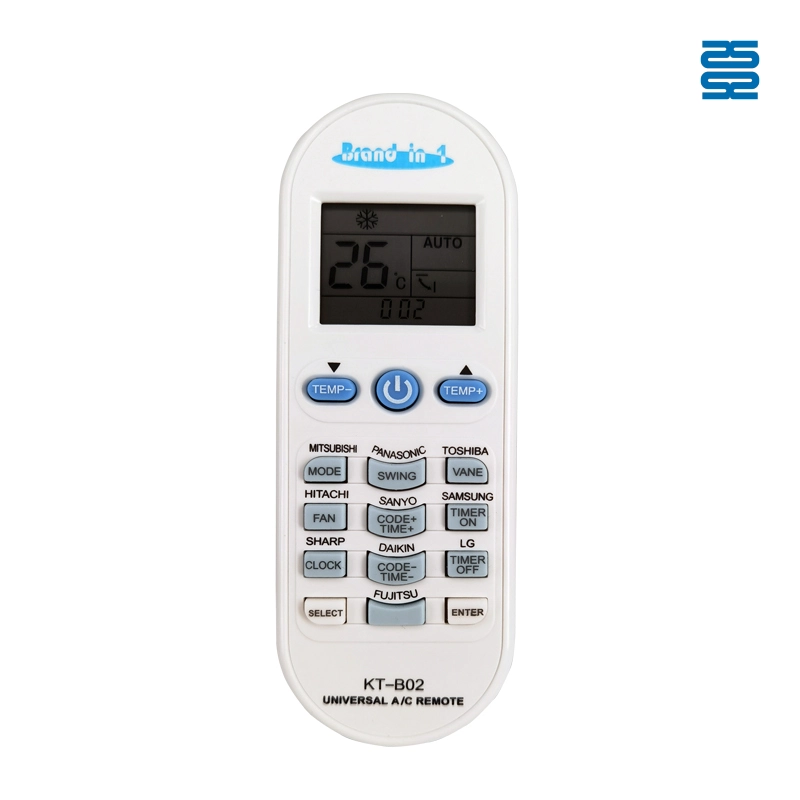
KT-B02 Universal Air Conditioner Remote Control Compatible with All Brands
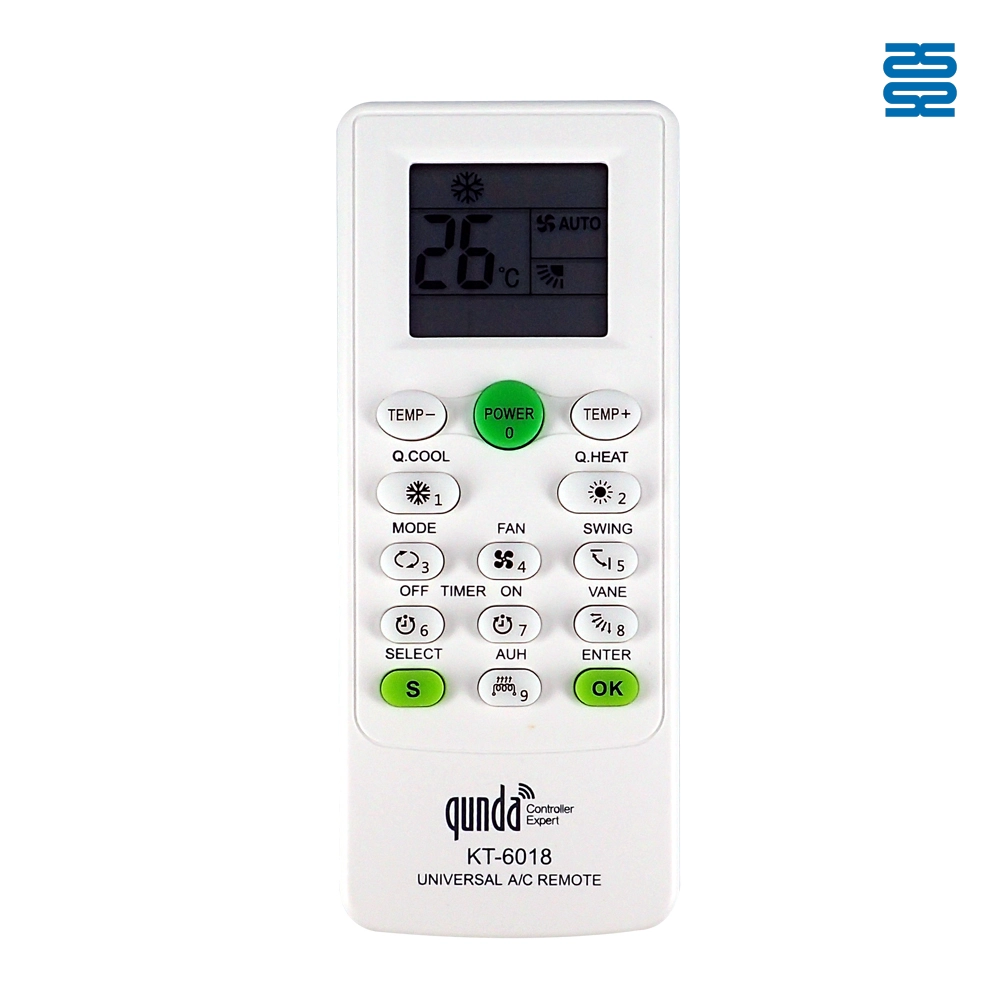
KT-6018 6000 in 1 Universal Air Conditioner Remote Control Compatible with All Brands

QD-1000 IN 1 1000 Code in 1 Universal Air Conditioner Remote Control Compatible with All Brands

KT-N828 Universal Air Conditioner Remote Control Compatible with All Brands
◼ Let’s Build Together
Get in Touch with SYSTO
If you have any comments or good suggestions, please leave us a message, later our professional staff will contact you as soon as possible.


Contact
Email us
Text or Call us
Address
Room 1606, No. 65, Zhongshan Seven Road, Liwan District, Guangzhou, Guangdong, China.

Facebook
Instagram
YouTube
Tik Tok
VK