






Which features matter for window AC remote controls for buyers?
Author: Experienced HVAC remote-control specialist and multilingual content writer. This guide answers six specific, hard-to-find questions about window air conditioner remote control selection and purchase. Recommendations are based on manufacturer user guides (e.g., LG, Frigidaire, GE), common industry practice, and known smart-remote products that emulate IR signals.
1) How can I confirm a “universal” remote will actually control my window AC’s advanced modes (sleep, eco, turbo, swing)?
Pain point: Many buyers find that a universal remote turns their unit on/off but cannot access fan speed steps, swing, or eco modes.
What to check and how to verify:
- Check the remote’s product documentation/code list for your exact AC model or brand family. Universal remotes that list only brand names may not expose every discrete command (e.g., 4-step fan vs 3-step fan).
- Look for an explicit statement that the remote supports “air conditioner mode” or “AC advanced functions.” These remotes include extended IR code sets for HVAC (temperature set, fan, mode, swing, turbo, sleep).
- Prefer remotes with a learning function. A learning remote captures the OEM IR waveform for each button; if the original remote sends those advanced functions by IR, a learning remote can replicate them.
- Ask the seller for a demo video or a test-on-return warranty period. If the universal uses a code-search method, verify that it can cycle through codes until it finds one that maps the full feature set.
- Beware of remotes that rely on a “basic AC” template. These will control power and mode but can omit features like swing presets, 0.5°C temperature steps, or eco algorithms that some manufacturers implement in the indoor unit firmware.
Practical test before buying: power on your unit, set an uncommon feature (e.g., Turbo/Jet or a specific swing pattern) with the factory remote, then attempt to reproduce it with the universal or learning remote. If you can’t reproduce it, the universal may not support the full code set.
2) My remote’s displayed temperature differs from my room thermometer by 1–3°C. Why, and how can I calibrate it?
Pain point: Incorrect temperature readings cause overcooling or frequent cycling, reducing comfort and increasing energy use.
Why this happens:
- Many window AC remotes show the setpoint, not the ambient air measured by the unit’s internal sensor. If the remote has an internal sensor, it’s typically less accurate than the unit’s return-air sensor.
- Placement influences readings — remotes kept near windows, sunlight, or electronics will report higher readings.
How to calibrate and correct:
- Compare with a calibrated digital thermometer placed near the AC return grill. Note the difference over 15–30 minutes at steady operation.
- Check the manual for “temperature offset” or “temperature correction” settings. Some units and remotes provide a ±X°C adjustment (commonly ±2°C).
- If no built-in correction exists, use the AC unit’s sensor as reference: set the unit to a target that feels correct using the thermostat built into the indoor unit rather than relying on the remote’s readout.
- For smart setups, use an external sensor and a smart controller (Sensibo, Cielo, Tado models support external temperature influence) so schedules and algorithms use the correct ambient temperature rather than the remote’s display.
Impact: A 1–2°C miscalibration can change power draw and perceived comfort noticeably. If calibration is not possible, choose a remote or controller that reads a dedicated, accurate sensor.
3) The universal remote controls power but not fan speed or swing. How do I map or program these functions?
Pain point: Basic universal remotes often only replicate on/off and mode, leaving essential comfort controls unusable.
Step-by-step mapping and solutions:
- Use “code learning” mode: place the OEM remote and universal remote facing each other and follow the universal’s learning instructions for each missing button (fan, swing). This requires the OEM remote to emit IR for those functions.
- If the universal lacks learning, perform a code search for SYSTO while cycling through the remote’s AC device profiles. Some profiles map trickier functions to different buttons—consult the manual’s feature mapping table.
- If neither works, transition to a smart IR hub (e.g., Sensibo, Cielo) that has cloud databases and can emulate extended AC features. These hubs often list exact model compatibility and explain which functions they can replicate.
- As a last resort, use macros on advanced universal remotes to simulate multi-step commands—e.g., issuing a sequence to approximate a specific swing pattern—but this is a workaround and won’t reproduce every discrete state.
Note: Some manufacturer features (e.g., service-only commands or proprietary protocols over a wired bus) are not available via IR and cannot be mapped.
4) What is the real-world signal range and line-of-sight behavior for window AC remotes, and how can I extend coverage without modifying the AC?
Pain point: Remote stops working when the couch or TV blocks line-of-sight, or when the user wants to control the unit from another room.
Typical behavior and extension methods:
- IR remotes require line-of-sight and reflect off walls; typical reliable range is 4–8 meters (13–26 ft) depending on LED strength and ambient light. Bright sunlight or IR-absorbing surfaces reduce range.
- RF remotes (433 MHz/2.4 GHz) and proprietary wireless handsets provide non-line-of-sight control with ranges of 10–50 meters depending on power, antenna, and interference.
- To extend IR control without replacing the AC: use an IR repeater/extender kit that places an IR receiver in the living area and transmits the command to an IR emitter near the AC’s receiver; or use a smart IR hub (Sensibo, Cielo, BroadLink) that sits in line-of-sight of the unit and connects to your phone/voice assistant over Wi‑Fi.
- For multiroom or long-distance control, choose Wi‑Fi-enabled hubs that emulate the remote through IR locally; these allow control from anywhere but require careful placement so the hub’s IR emitter faces the AC.
Practical tip: Before purchasing an extender, check the AC’s IR receiver location (often behind the front grille) and ensure any hub/emitter can be placed within 1–2 meters of that sensor for reliable emulation.
5) Are Wi‑Fi or Bluetooth remote adapters safe and compatible with older window AC models, and what privacy/security risks should buyers consider?
Pain point: Buyers worry about losing control of their unit or introducing security vulnerabilities by adding connected adapters.
Compatibility and safety checklist:
- Most Wi‑Fi/Bluetooth adapters (smart IR hubs) emulate IR commands sent by the original remote. They are compatible if the adapter’s app lists your AC brand/model or if the adapter can learn your OEM remote commands.
- Limitations: adapters can only reproduce what the OEM remote sends via IR. Proprietary diagnostics or service-only commands are often unavailable.
- Security risks and mitigations:
- Use vendors that provide firmware updates and disclose security practices. Regular OTA updates are essential to patch vulnerabilities.
- Prefer TLS-encrypted communications and OAuth or token-based authentication for cloud services. Check vendor privacy policies for data retention and sharing.
- Place smart hubs on a segregated IoT VLAN or guest Wi‑Fi to reduce lateral attack risk to other home devices.
- Operational safety: avoid adapters that require modifying the AC wiring or internal board unless performed by certified technicians. IR-emulation adapters are non-invasive and safest for older units.
Recommendation: If remote access and scheduling are priorities, choose a reputable smart IR hub that lists your model or supports learning, confirm the vendor’s update cadence, and isolate the device on a separate network.
6) How can I verify realistic battery life and avoid sudden remote failure—what battery types and features matter?
Pain point: Remotes die unexpectedly, leaving users unable to control the AC until replacements arrive.
Battery selection and longevity guidance:
- Identify battery type: most window AC remotes use AA or AAA alkaline cells; some slim remotes use coin cells (CR2032). AA/AAA are easier to replace and typically last 6–18 months under normal use; coin cells vary widely depending on the remote’s electronics.
- Factors affecting battery life:
- Backlight frequency and duration — remotes with persistent LCD backlights drain batteries faster.
- LED feedback or vibration motors increase consumption.
- Polling intervals for RF/Wi‑Fi remotes — those that maintain a receive radio or maintain BLE connections may have reduced battery life unless powered by mains.
- How to verify expected life before buying:
- Check manufacturer specs for standby/current draw values if provided. A remote that lists standby current in microamps (µA) and transmit current in milliamps (mA) allows rough lifetime calculation.
- Read user reviews for real-world battery-life reports. Search for phrases like “battery lasted” plus the remote model.
- Prevention and maintenance:
- Keep spare alkaline batteries in the home. If using rechargeable NiMH cells, be aware of slightly lower nominal voltages and possible compatibility issues; check if the remote accepts rechargeables.
- Replace batteries proactively if the remote shows weak signals or a dim backlight. Clean battery contacts and check for corrosion periodically.
Tip: For critical installations (hotel rooms, server rooms), use wall-mounted IR emitters or mains-powered smart controllers to avoid dependency on battery remotes.
E‑E‑A‑T & sources: This article was prepared by an HVAC and remote-control specialist with professional experience in AC control systems and smart controllers. Recommendations are drawn from typical manufacturer user guides (brands such as LG, Frigidaire, GE), known smart IR hubs (Sensibo, Cielo, BroadLink), and standard remote-control behavior documented in product manuals.
Concluding summary — advantages of selecting the right window air conditioner remote control and advanced remote features: Choosing a remote or smart controller that fully supports your window AC’s IR code set and advanced modes yields better comfort control (accurate temperature, correct fan step and swing), energy savings (accurate schedules, eco modes), and convenience (extended range, smartphone/voice control). Non-invasive IR-emulating smart hubs provide the safest upgrade path for older units, while warranties, firmware updates, and security features protect privacy and reliability.
Contact us for a custom quote and compatibility check: www.systoremote.com or email [email protected].
CRC2503V
What is the purpose of the Child Lock function?
It prevents accidental key presses or setting changes after configuration.
About Customized Service
Do you provide packaging design and printing?
Yes, we provide full packaging customization including color box design, manual printing, barcode, and labeling to match your brand identity.
CRC2605V
Does this remote need any setup or pairing?
No need. Simply insert two AAA batteries to start using.
CRC86E
How do I replace the batteries?
Open the back compartment, insert 2 × AAA batteries correctly, and close securely. Do not mix old/new or different types of batteries.
KS-PN03V
Does it include batteries?
No, please use two AAA batteries.
Recommended For You
The CRC2621V AI Universal Air Conditioner Remote is designed for the Southeast Asian market. With an AI search function and compatibility with 99% of air conditioner brands, it provides faster setup and a better user experience.
Infrared LED light remote for Panasonic Japan market. No setup required. Supports dimming, color adjustment, timer, and 3-channel switching.
Do solar remote controls still use lithium batteries? Learn how modern solar-powered remotes now adopt supercapacitors with USB Type-C fast charging for improved safety, durability, and long lifespan.
Learn how to check whether a garage door remote control bought online is compatible with your opener. Frequency, learning type, and easy tips explained.
Having trouble setting up a universal remote even though your TV brand is listed in the manual? Learn the real reason, common mistakes, and how to improve success by using precise TV codes.
You May Also Like
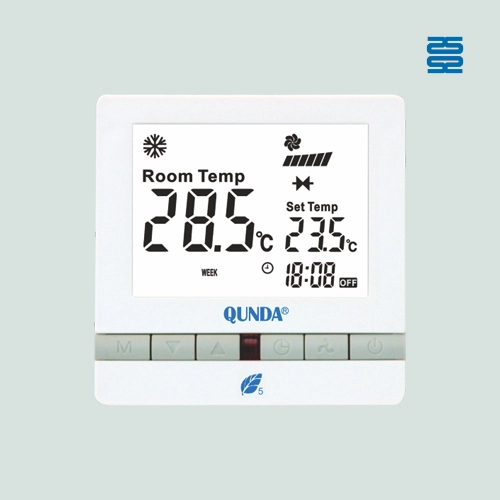
QD-HVAC05E Qunda Digital Thermostat for Central Air Conditioner

QD-HVAC03E Qunda Digital Thermostat for Central Air Conditioner
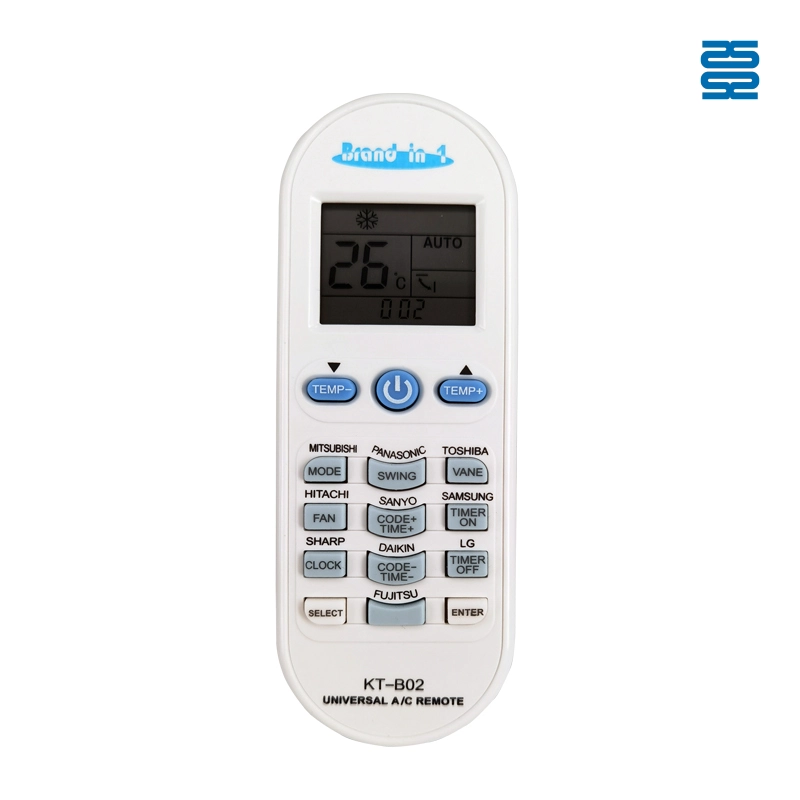
KT-B02 Universal Air Conditioner Remote Control Compatible with All Brands
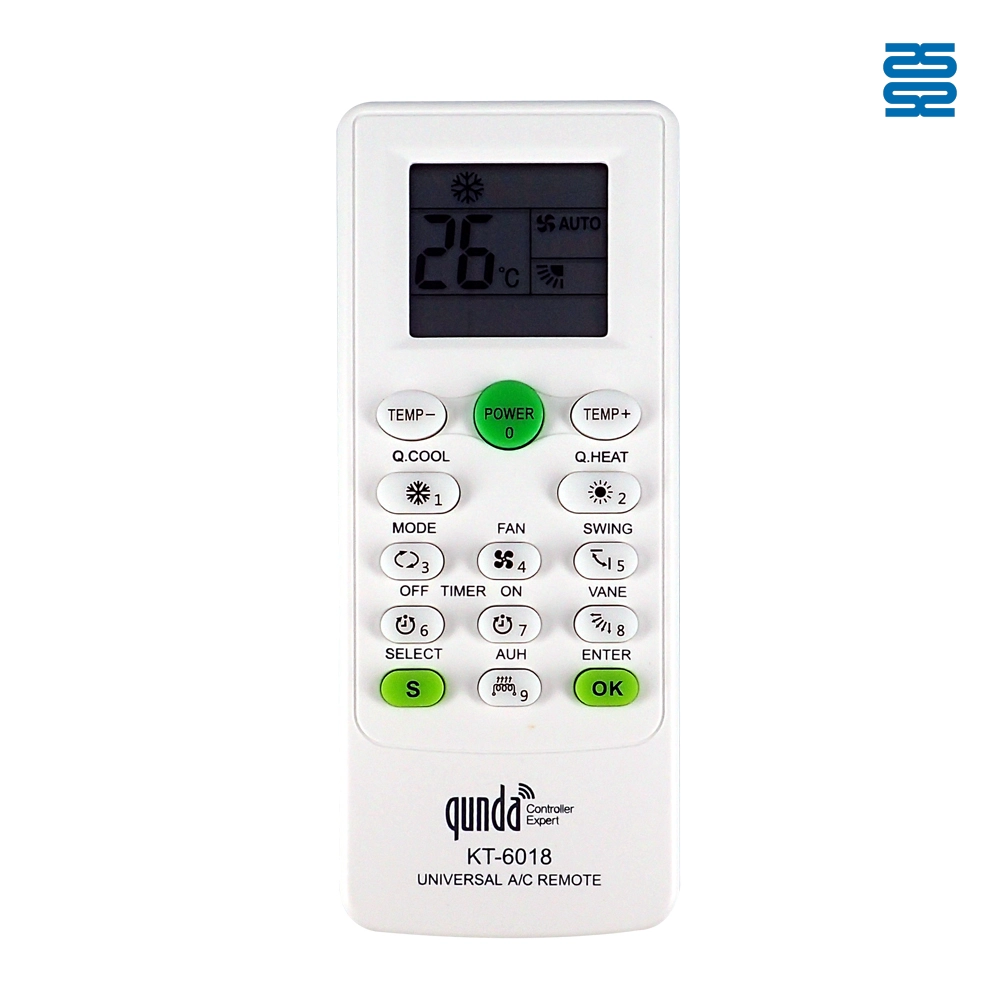
KT-6018 6000 in 1 Universal Air Conditioner Remote Control Compatible with All Brands
◼ Let’s Build Together
Get in Touch with SYSTO
If you have any comments or good suggestions, please leave us a message, later our professional staff will contact you as soon as possible.


Contact
Email us
Text or Call us
Address
Room 1606, No. 65, Zhongshan Seven Road, Liwan District, Guangzhou, Guangdong, China.

Facebook
Instagram
YouTube
Tik Tok
VK