






Which smart thermostat is best for central air conditioners?
1. Can a smart thermostat safely control a 2‑stage or variable‑speed central air compressor without causing short‑cycling or voiding my AC warranty?
Short answer: Yes—if you pick a thermostat explicitly rated for multi‑stage and variable‑speed HVAC systems and wire it correctly. Not all smart thermostats handle multi‑stage cooling or variable‑speed compressors the same way; using the wrong model or incorrect configuration can create frequent cycling, improper sequencing of stages, or unnecessary wear on the compressor.
What to check and how to avoid problems:
- Compatibility: Consult the smart thermostat manufacturer compatibility pages and your central air contractor. As of 2024 many leading models (Ecobee SmartThermostat, Google Nest Learning Thermostat , Honeywell Home T9/T10, Emerson Sensi) support 2‑stage cooling and heat‑pump wiring, but each lists supported stage combinations and required wiring diagrams on their support sites.
- Stage control vs variable speed: True variable‑speed/ECM compressors (inverter-driven) often require a different control strategy. Some smart thermostats will only provide on/off call stages (staging), while inverter systems expect a dedicated HVAC control board and serial/Proprietary communication. If your outdoor unit is inverter-driven, confirm with the manufacturer whether a thermostat can control it directly or whether a dedicated OEM controller is required.
- Configuration and minimum run time: Set minimum on/off runtimes in the thermostat (most advanced units allow this). Proper minimum cycle durations and staging differentials prevent short cycling and reduce compressor stress.
- Warranty considerations: Check your central AC manufacturer’s warranty language. Some manufacturers require OEM control settings or a certified technician to change controls. Document correspondence and, when in doubt, have a licensed HVAC tech install and set the thermostat to manufacturer‑approved parameters.
- Best practice: For 2‑stage or variable systems use a thermostat certified for multi‑stage and heat pump operation, have a pro wire and configure the stage logic, and run post‑install performance checks (cycling, discharge superheat for heat pumps, and run times).
2. How do I tell if my central AC has a reliable C‑wire and what are the pros/cons of using add‑a‑wire or power‑stealing thermostats?
Why it matters: Many smart thermostats need continuous 24 V power (the “C‑wire” or common) to run Wi‑Fi radios and background processes. If a thermostat tries to power itself by “power stealing” from the R and W calls it can cause reboot loops, relays to chatter, and intermittent Wi‑Fi—especially on older systems or when the HVAC board has limited transformer capacity.
How to check for C‑wire:
- Open the thermostat base panel and look for a C terminal with a connected wire in the furnace/air handler control board. Trace the cable from the thermostat to the control board; a blue or brown wire is commonly used as C but colors vary.
- If you see only R, W, Y, G (no C), you don’t have a dedicated common conductor.
Options if no C‑wire:
- Run a new wire: Best long‑term solution—pull a 5‑conductor cable so you have R, C, G, Y, W. Recommended when walls/attic access make it feasible.
- Use the manufacturer’s power‑extender kit (PEK): Models like Ecobee include a PEK that installs at the furnace and uses the extra wire to provide a C signal without running new cable.
- C‑wire adapters / add‑a‑wire: Venstar Add‑a‑Wire, common adapters and third‑party modules can simulate a C or create an extra conductor. These work, but follow vendor wiring diagrams; older systems with weak transformers may still experience issues.
- Hard‑wired 24 V power adapter: Some thermostats offer an external transformer that supplies C to the stat location. This is reliable but requires an electrician for safe installation if no low‑voltage access exists.
- Power stealing: Thermostats that draw power across control circuits (e.g., some Nest builds) can work for many systems but are less reliable on systems with intermittent loads or older contactors. Expect possible rebooting or HVAC relay chatter if the furnace board can’t provide sufficient power.
Recommendation: If you rely on a Wi‑Fi thermostat for remote control and scheduling, prefer a dedicated C‑wire or an OEM power‑extender/adapter to ensure stable connectivity and reduce the chance of control faults.
3. Which smart thermostat is best for central air conditioners that use heat pumps and auxiliary/emergency heat?
Answering “best” requires matching features to system specifics. For central AC systems with heat pumps and auxiliary/emergency heat, choose models that explicitly list multi‑stage heat/cool and heat‑pump/Aux/Emergency support:
- Ecobee SmartThermostat: Known for robust multi‑stage and heat‑pump support, built‑in occupancy sensor and remote room sensors for load balancing and temperature averaging. Ecobee includes a power‑extender kit for C‑wire issues.
- Google Nest Learning Thermostat (latest gen): Supports heat pumps and auxiliary heat; offers learning algorithms and energy reports. Some Nest units have had power‑stealing issues on marginal systems—check compatibility.
- Honeywell Home T9/T10: Supports heat pump configurations and multi‑stage wiring; integrates with Honeywell zone controllers and professional HVAC systems well.
- Emerson Sensi Touch / Sensi Wi‑Fi: Budget‑friendly with heat pump and multi‑stage options; straightforward installer menus and reliable connectivity on many systems.
What to verify before purchase:
- Exact wiring diagram for your system (1H/1C, 2H/2C, heat pump with Aux/E, etc.).
- Manufacturer compatibility list and support documentation for heat pump modes, reversing valve wiring (O/B), and Aux/E stages.
- Whether remote room sensors or external temperature/humidity sensors are needed to control humidity and avoid short cycling when using auxiliary heat.
Final selection tip: If you have a multi‑stage heat pump, prefer thermostats that allow explicit stage timing, configurable differentials, and support for auxiliary/emergency heat sequencing—then have a certified HVAC tech complete the install and test.
4. How do I integrate a smart thermostat with an existing zoning system that uses motorized dampers without rewiring the HVAC control board?
Zoned systems typically use a central zone control panel (with damper relays and a single HVAC call output). The right integration approach depends on the zone controller design:
- Direct zone‑stat replacement: Many zone panels provide thermostat terminals for each zone. You can install a smart thermostat to the zone panel stat terminals (not the damper motors). The smart stat then instructs the zone panel which in turn operates dampers and calls the central HVAC equipment.
- Using the zone panel’s “dry contact” input: If the zone controller accepts dry contact or common low‑voltage stat inputs, the smart thermostat can be wired to those, preserving the panel’s logic for damper sequencing and priority.
- Multiple smart thermostats — one per zone: This is often the cleanest for user experience, but requires the zone panel to support multiple independent thermostat inputs. Ensure each smart stat is wired to the correct zone terminals on the panel; the panel must still manage damper sequencing.
- Controller replacement or adapter modules: For older zone panels with proprietary control logic, you may need a retrofit interface or to replace the zone controller with a modern panel that supports smart stat inputs and can pass thermostat calls to the HVAC equipment safely.
Warnings and practical steps:
- Do not wire a smart thermostat directly to motorized dampers—wire the stat to the zone panel's thermostat inputs only.
- Confirm whether your zone controller expects an isolated dry contact or a 24 V stat call and match the thermostat’s output type.
- If you want remote control of individual zones without multiple Wi‑Fi thermostats, consider smart zone controllers (Z‑Wave/Zigbee/Matter compatible) that provide per‑zone relays and integrate with a single cloud or local hub.
- Always involve an HVAC technician for systems with complex zoning to ensure equipment protection and preserve warranty coverage.
5. What remote‑control latency, reliability, and security risks should I expect when operating central AC remotely, and how do I mitigate them?
Remote control depends on multiple components: the thermostat’s local processing, the home Wi‑Fi, the cloud service, and the mobile app. Typical symptom sources include slow command response, lost connectivity, and potential security exposure.
Latency and reliability:
- Local vs cloud: Thermostats with local LAN control can respond instantly on‑network; cloud commands add round‑trip time. Expect sub‑second to several‑second latency for LAN control, and 1–10+ seconds for cloud commands depending on server load and your internet link.
- Wi‑Fi and router: Poor Wi‑Fi or overloaded routers cause intermittent disconnects. Use a dual‑band router, place the thermostat near a reliable AP signal, or use a mesh Wi‑Fi system for large homes.
- Carrier and backend outages: Cloud services can have outages—check vendor status pages. Consider a thermostat with local fallback schedules to avoid losing essential HVAC control during outages.
Security risks and mitigations:
- Account security: Enable strong, unique passwords and two‑factor authentication (2FA) on thermostat vendor accounts.
- Network segmentation: Place the thermostat on a dedicated IoT VLAN or guest network to reduce lateral movement risk if the device is compromised.
- Firmware updates: Keep thermostat firmware current. Vendors release security patches; enable automatic updates where available.
- Encryption and vendor practices: Choose vendors that use TLS for cloud communications, publish security documentation, and support secure authentication methods. Avoid devices with unclear security practices.
- Privacy: Understand cloud logging—vendor dashboards usually store temperature, runtime, and geofence data. If this is a concern, prefer thermostats with local data retention options or opt‑out features.
Practical controls: Use robust home network security, choose reputable thermostat vendors with transparent security practices, and prefer devices that support both local control and secure cloud APIs. Regularly review vendor security advisories.
6. For large homes with central air, how much real‑world energy savings can I expect from a smart thermostat and what scheduling strategies reduce runtime without creating humidity or comfort issues?
Energy savings are highly dependent on climate, system efficiency (SEER), envelope tightness, and occupant behavior. Manufacturer and third‑party pilots commonly report cooling savings in the single‑digit to low‑teens percentage range when smart schedules and occupancy features are used.
What real‑world users see:
- Typical range: Studies and vendor reports often place cooling savings between ~8–15% when thermostats are used to optimize setpoints and runtime; heating savings vary more by fuel and system type. Results vary; older, inefficient systems show larger percentage gains when properly controlled.
- Factors that reduce savings: Poor ductwork, undersized/oversized equipment, leaky building envelope, or improper thermostat placement can limit savings and comfort improvements.
Scheduling strategies that preserve comfort and humidity:
- Use moderate setbacks: For cooling, avoid large setbacks that force the AC to run hard on recovery and raise indoor humidity. A 2–4°F setback during unoccupied periods reduces runtime while keeping humidity in check.
- Pre‑cooling: Smart thermostats can pre‑cool during off‑peak or cooler periods to lower peak runtime without deep setbacks that trap humidity.
- Humidity control: In humid climates, prioritize humidity setpoints via thermostat/humidity integration or use a dedicated dehumidifier. Running the AC more frequently at lower fan speeds can remove more moisture than short, high‑speed cycles.
- Use remote sensors: Large homes benefit from remote room sensors or multiple thermostats so the system targets occupied spaces and avoids overcooling unused zones.
- Optimize fan control: Use thermostat fan‑on schedules to circulate air and balance temperatures, but avoid continuous fan operation in very humid climates unless air is passing through dehumidifying equipment.
Bottom line: Expect modest but meaningful energy savings when the smart thermostat is correctly matched to the HVAC configuration and used alongside ductwork and envelope improvements. For best results, combine a properly sized, high‑SEER central AC with a multi‑sensor smart thermostat, correct wiring, and a professional tune‑up.
Concluding paragraph — Advantages of remote control for central air conditioners
Remote control via a smart thermostat for air conditioner systems gives centralized scheduling, real‑time diagnostics, and occupant‑aware automation that reduce runtime, improve comfort, and can lower operating costs—especially when paired with correct wiring (C‑wire), HVAC‑rated multi‑stage support, and proper zoning integration. Secure, well‑configured remote control reduces technician visits by enabling diagnostics, but it must be implemented with attention to compatibility, network security, and humidity management in large or variable‑speed systems.
If you want professional assistance selecting, integrating, or quoting a smart thermostat solution for your central air conditioners—particularly for multi‑stage compressors, heat pumps, or zoned systems—contact us for a quote at www.systoremote.com or email [email protected].
CRC2304V
What’s the estimated delivery time?
In-stock items ship immediately; non-stock within 15–25 working days.
QD-HVAC20
How do I set the temperature on the QD-HVAC20 thermostat?
Press the “▲” or “▼” key to adjust the temperature to your desired setting. The LCD display will immediately show the updated temperature value.
CRC1130V
Does it work with smart TVs?
Yes, it works with most IR-compatible smart TVs from major brands.
CRC2201V
Will the settings be lost when replacing the batteries?
No, the remote features a backup memory function, so your settings remain intact even after battery replacement.
About Company
Can I visit your company or factory?
Yes, we welcome global partners to visit. Please make an appointment in advance.
Recommended For You
The CRC2621V AI Universal Air Conditioner Remote is designed for the Southeast Asian market. With an AI search function and compatibility with 99% of air conditioner brands, it provides faster setup and a better user experience.
Infrared LED light remote for Panasonic Japan market. No setup required. Supports dimming, color adjustment, timer, and 3-channel switching.
Do solar remote controls still use lithium batteries? Learn how modern solar-powered remotes now adopt supercapacitors with USB Type-C fast charging for improved safety, durability, and long lifespan.
Learn how to check whether a garage door remote control bought online is compatible with your opener. Frequency, learning type, and easy tips explained.
Having trouble setting up a universal remote even though your TV brand is listed in the manual? Learn the real reason, common mistakes, and how to improve success by using precise TV codes.
You May Also Like

QD-HVAC23 Qunda Touch-Screen Thermostat for Air Conditioner

QD-HVAC06E Qunda Digital Thermostat for Central Air Conditioner
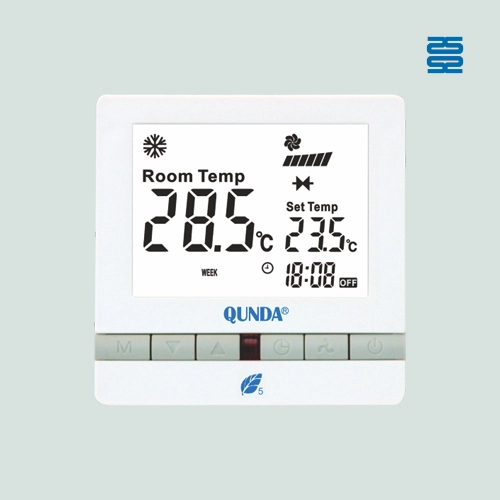
QD-HVAC05E Qunda Digital Thermostat for Central Air Conditioner

QD-HVAC03E Qunda Digital Thermostat for Central Air Conditioner
◼ Let’s Build Together
Get in Touch with SYSTO
If you have any comments or good suggestions, please leave us a message, later our professional staff will contact you as soon as possible.


Contact
Email us
Text or Call us
Address
Room 1606, No. 65, Zhongshan Seven Road, Liwan District, Guangzhou, Guangdong, China.

Facebook
Instagram
YouTube
Tik Tok
VK