






Which smart thermostat for AC saves the most energy?
1. Can I replace my wall thermostat for a ductless mini‑split air conditioner with a conventional smart thermostat, or do I need an IR hub/bridge?
Short answer: Most ductless mini‑split indoor units use proprietary control signals (IR or wired to the outdoor unit) and cannot be driven by a standard hard‑wired 24VAC smart thermostat. For split systems you have two practical approaches:
- Use an IR/Cloud bridge or smart AC controller (Sensibo, Tado, Ambi Climate, or Mitsubishi Kumo Cloud) that emulates the handheld remote. These devices preserve the indoor unit’s native control logic (fan modes, swing, ECO modes) and give Wi‑Fi remote control and scheduling without altering the unit’s internal safety protections.
- If the mini‑split supports a wired wall controller protocol (Modbus, proprietary RS485), integrate through a certified gateway or use the manufacturer’s cloud solution. This is common for commercial Mitsubishi, Daikin, or Fujitsu models where a Kumo/MiniKumo or third‑party BACnet/Modbus gateway exists.
Key considerations before buying: confirm the indoor unit’s control interface (IR, wired low‑voltage, RS485) from the unit’s manual or model spec, and choose a controller that explicitly lists your AC model. IR hubs are ideal for retrofit single‑zone installs; gateways are better for multi‑zone commercial setups where telemetry and fault codes matter.
2. Which smart thermostat for AC saves the most energy on multi‑stage or variable‑speed central systems?
There is no single thermostat that universally saves the most energy across all multi‑stage and variable‑speed systems—savings depend on matched features and correct commissioning. For central systems, look for these technical capabilities to maximize savings:
- Multi‑stage and variable‑speed compatibility: The thermostat must support 2‑stage heating/cooling and variable‑speed compressors or communicate with the air handler’s control board. Ecobee SmartThermostat and Nest Learning Thermostat are often used because they support multi‑stage systems and can manage stage calls intelligently; however, integration testing is critical.
- Remote/room sensors and load balancing: Using temperature/humidity sensors in occupied zones avoids overcooling common in single‑sensor installs. Thermostats that include or support wireless sensors reduce runtime and cycling.
- Adaptive recovery and demand optimization: Thermostats that adapt to building thermal mass and pre‑cool/pre‑heat based on schedule and geofencing reduce runtime. For commercial systems, demand‑response and peak‑shaving features tied to BMS (via BACnet/Modbus) yield larger utility bill reductions.
Bottom line: For residential central AC, a smart thermostat that supports multi‑stage, provides remote sensors, and offers adaptive scheduling typically delivers the largest real‑world savings. For ductless mini‑splits or units with proprietary controls, specialized AC controllers that manage run times and occupancy often outperform a generic smart thermostat.
3. How do I prevent my smart thermostat’s remote control or scheduling from causing compressor short‑cycling or violating manufacture minimum‑on/off protection?
Short‑cycling shortens compressor life and voids warranties. Avoid it by ensuring the thermostat and AC control board cooperate on minimum run times and time delays:
- Use thermostats with configurable compressor protection/delay settings. Many professional models expose minimum‑on, minimum‑off, and anti‑short‑cycle delays in minutes. Set these to match the outdoor unit manufacturer’s specifications.
- Avoid rapid setpoint swings from geofencing or aggressive schedules. Configure geofence thresholds (e.g., only change setpoint when homeowner is >1 km away and for periods longer than X minutes) and allow “reentry delay” before normal operation resumes.
- For IR/bridge solutions (mini‑splits), ensure the bridge doesn’t spam ON/OFF commands. Good IR hubs translate a single user setpoint to the unit’s native setpoint and respect the unit’s internal compressor protection; cheap hubs often send repeated state toggles that cause cycling.
- Commission and log: After install, run a commissioning sequence and log runtime for 1–2 weeks. If you see rapid starts/stops (<5–10 minutes), increase minimum run times or adjust hysteresis (deadband) settings.
Always consult the HVAC manufacturer’s commissioning guide and record the settings used—this protects warranties and creates a traceable installation record for facility managers.
4. What wiring or power solutions are safe for older air handlers when my smart thermostat requires a C‑wire?
Most modern smart thermostats need a 24VAC common (C‑wire) to power Wi‑Fi radios and sensors. For older systems without a C‑wire, safe options are:
- Run a new common conductor from the air handler’s 24VAC transformer to the thermostat location—this is the most reliable long‑term solution and recommended for professional installs.
- Use a verified power‑extender or “add‑a‑wire” kit (e.g., Venstar Add‑A‑Wire) only if compatible with the thermostat and HVAC. These create a pseudo‑C from existing conductors but can interfere with sophisticated control signals like variable‑speed fan modulation.
- Use a thermostat maker’s power adapter (e.g., Nest Power Connector or equivalent) if the HVAC manufacturer and thermostat vendor both document support. Follow vendor wiring diagrams precisely.
Never attempt to connect the thermostat to line voltage. If your air handler uses electronic control boards, verify the board’s transformer capacity (VA rating) to support the thermostat plus other control loads. A weak transformer can cause brownouts and thermostat reboots. When in doubt, replace or augment the transformer with a dedicated 24VAC, adequately rated transformer and fuse per NEC/local codes.
5. How accurate are remote room sensors vs the thermostat’s built‑in sensor for cooling efficiency, and where should sensors be placed for true comfort and energy savings?
Built‑in sensors often sit near return air paths or on interior walls and can give biased readings for the entire home. Wireless remote sensors improve comfort and energy efficiency if deployed correctly:
- Sensor accuracy: Reputable sensors (0.3–0.5°C / 0.5–1°F accuracy) provide meaningful control improvements. Look for sensors with temperature and relative humidity reporting and low drift specs. Calibration and periodic validation against a known thermometer are recommended.
- Placement best practices: Place sensors 1–1.5 m (3–5 ft) above floor level, away from direct sunlight, supply vents, exterior walls, or heat sources (TVs, lamps). For zoned systems, place sensors in typically occupied locations—not hallways or near doors.
- Sensor averaging vs priority: Many thermostats allow averaging multiple sensors or prioritizing an occupied sensor. For energy saving, average sensors in open‑plan areas; for targeted comfort (bedrooms or home offices), prioritize the room where occupants spend most time. Avoid using sensors in isolated microclimates (e.g., sunrooms) as the only control point unless that’s the intended zone.
Proper sensor strategy reduces overcooling and unnecessary runtime by focusing control on where people are, not where the thermostat happens to be mounted.
6. How do I verify Wi‑Fi, Zigbee, or Z‑Wave smart thermostats will work reliably in high‑latency or commercial environments where cloud dependence is a concern?
Reliability questions are common for installations where Wi‑Fi is unstable or where local control is required. Use this checklist:
- Local vs cloud control: Choose thermostats that support local control protocols (Zigbee/Z‑Wave, BACnet, Modbus, or local API) and have documented offline behavior. For mission‑critical HVAC, prefer devices that maintain full local scheduling and control even if cloud services are down.
- Network architecture: Segregate building control traffic from general Wi‑Fi (VLANs). Provide a dedicated, enterprise‑grade access point with QoS and roaming support for multi‑zone installs. For large sites, use mesh backhauls with wired uplinks at strategic points to avoid packet loss.
- Choose devices with dual connectivity where possible (local protocol + cloud). If remote telematics and OTA updates are needed, ensure an onsite gateway caches schedules and enforces failover policies when latency spikes.
- Test with real loads: Run a validation period under peak network conditions. Verify that critical functions (setpoint changes, minimum‑on/off protections, emergency overrides) are executed locally when cloud fails.
For commercial deployments, prefer thermostats and controllers that integrate with BMS via BACnet/IP or Modbus TCP to avoid relying exclusively on vendor cloud services.
Concluding summary — advantages of smart thermostats and remote control for air conditioners
Smart thermostats and AC remote controllers deliver precise temperature control, occupancy‑aware scheduling, remote diagnostics, and integration with building energy management. When matched to equipment type (central multi‑stage vs. ductless mini‑split), correctly wired and commissioned devices reduce runtime, prevent short‑cycling, and improve occupant comfort. For commercial sites, local protocol support (BACnet/Modbus) and enterprise network design maximize reliability and measurable savings.
We are Systoremote — remote control and HVAC integration specialists. Contact us for a custom quote and professional installation guidance: www.systoremote.com or [email protected].
KS-DK02V
Is this model available for other brands?
Only for Daikin. But we offer a full range of universal remotes for different A/C brands. Please contact us for details.
QD-U08PGC+
Does QD-U08PGC+ work with all wall-mounted air conditioners?
It supports most split-type wall-mounted units using PG motors. Please verify motor type before installation.
About Company
When was your company established?
Founded in 1998, we have over 27 years of manufacturing experience.
CRC2605V
Are batteries included?
No, batteries are not included. Please use 2×AAA batteries.
CRC2304V
Is it compatible with LG TVs?
Yes, it can operate LG TVs as an additional compatibility feature.
Recommended For You
The CRC2621V AI Universal Air Conditioner Remote is designed for the Southeast Asian market. With an AI search function and compatibility with 99% of air conditioner brands, it provides faster setup and a better user experience.
Infrared LED light remote for Panasonic Japan market. No setup required. Supports dimming, color adjustment, timer, and 3-channel switching.
Do solar remote controls still use lithium batteries? Learn how modern solar-powered remotes now adopt supercapacitors with USB Type-C fast charging for improved safety, durability, and long lifespan.
Learn how to check whether a garage door remote control bought online is compatible with your opener. Frequency, learning type, and easy tips explained.
Having trouble setting up a universal remote even though your TV brand is listed in the manual? Learn the real reason, common mistakes, and how to improve success by using precise TV codes.
You May Also Like

QD-HVAC23 Qunda Touch-Screen Thermostat for Air Conditioner

QD-HVAC06E Qunda Digital Thermostat for Central Air Conditioner
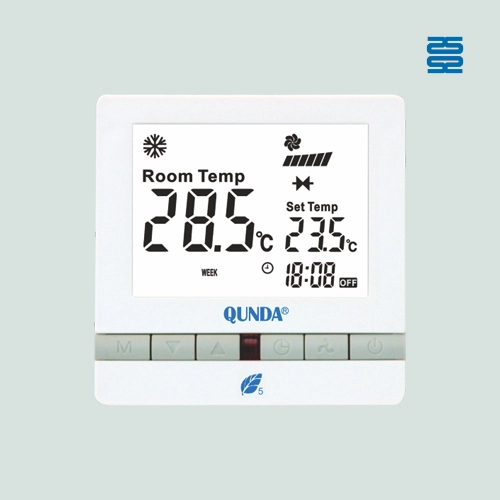
QD-HVAC05E Qunda Digital Thermostat for Central Air Conditioner

QD-HVAC03E Qunda Digital Thermostat for Central Air Conditioner
◼ Let’s Build Together
Get in Touch with SYSTO
If you have any comments or good suggestions, please leave us a message, later our professional staff will contact you as soon as possible.


Contact
Email us
Text or Call us
Address
Room 1606, No. 65, Zhongshan Seven Road, Liwan District, Guangzhou, Guangdong, China.

Facebook
Instagram
YouTube
Tik Tok
VK