






Which smart thermostat models support multi-zone air conditioning?
1) Can I use a single smart thermostat to control a ductless multi‑split (multiple indoor units) system without adding per‑unit hardware?
Most ductless multi‑split systems (multi‑zone indoor units served by one outdoor compressor) use proprietary communication protocols or IR/coded remotes for each head. A single 24V-style smart thermostat (designed for central air handlers) cannot directly command each indoor head or its modes. Practical options are:
- Add one Wi‑Fi/IR smart AC controller per indoor unit (Sensibo, Cielo Breez, Tado Smart AC controller, SwitchBot AC) so each head becomes independently controllable via cloud/local API. This is the most common retrofit approach for mini‑splits and maintains per‑zone control.
- Use the manufacturer's native cloud integration (e.g., Mitsubishi Kumo Cloud, Daikin/Daikin Residential Controller) or their dealer modules. These can expose indoor units to third‑party systems, but often require cloud accounts and licensed gateways.
- For advanced integrations in new installs, work with a manufacturer or BMS gateway that speaks the OEM protocol (Modbus/BACnet gateway or proprietary adapter) to provide central control.
Key considerations: verify whether each indoor head needs its own controller, ensure Wi‑Fi/IR controller supports your remote codes, and confirm latency/automation needs (IR controllers can be less reliable for state feedback). If you need true coordinated multi‑zone control (schedules, occupancy-based setback) without per‑unit hardware, replace the indoor units with a system that supports API/cloud multi‑zone control—this is rare and costly.
2) Which smart thermostat models support multi‑zone air conditioning (damper-based zoning) out of the box and what wiring is required?
No single consumer smart thermostat typically supplies damper actuation directly; instead zoning uses a zoning controller/panel (damper motor relays) plus one thermostat per zone or a single master thermostat commanding the zone controller. Models commonly used in damper‑based systems:
- Ecobee SmartThermostat (ecobee4/SmartThermostat): supports multi‑sensor averaging and can be used alongside commercial zoning panels. For damper systems you wire ecobee thermostats as zone controllers or as remote sensors; the zoning panel handles damper relays. Ecobee supports heat pump and multispeed systems (check stage limits).
- Honeywell Home thermostats (T9/T10/T6 Pro): designed to work with Honeywell zoning panels (e.g., Home zoning kit or the HZ311/Zone Panel family). Many Honeywell thermostats are validated by Honeywell for zone control wiring to their panels.
- Google Nest Learning Thermostat and Nest Thermostat E: Nest can be deployed as multiple thermostats—one per zone—each wired to the zone panel’s thermostat terminals. Nest does not directly drive dampers.
- Flair Home Zoning system: uses a central Flair Hub + Smart Vents and Pucks (sensors). Flair provides a consumer‑grade damper alternative using motorized vents to redistribute airflow — simpler installs but different from powered dampers.
Wiring checklist for damper zoning:
- Each thermostat still needs common power (C‑wire) or a power adapter.
- The zone panel requires a thermostat input (R, G, Y, W, O/B) and outputs to damper actuators and the air handler/furnace/fan relays.
- Confirm thermostat supports the number of stages your air handler uses (e.g., 2 heat / 2 cool) and the zone panel wiring scheme.
If you are specifying for an install, choose thermostats that the zoning panel manufacturer lists as compatible and verify the panel’s control logic (priority zones, bypass damper behavior).
3) Will remote sensors alone balance temperatures across zones, or do I still need dampers or smart vents?
Remote sensors and smart thermostats solve temperature measurement, not airflow. Differences:
- Remote sensors (Ecobee sensors, Honeywell sensors) provide room‑level temperature/humidity and occupancy data so the thermostat can adjust setpoints or average readings. They reduce hot/cold complaints caused by measurement location but do not alter the quantity of conditioned air delivered to a room.
- Dampers or motorized smart vents physically change airflow to each zone/room. To actively balance temperature between rooms with different loads, you need active airflow control (dampers in ducts or motorized vents).
Practical guidance:
- Use sensors when imbalance is due to inaccurate sensing (thermostat in hallway, under sun). This is inexpensive and often fixes perceived comfort issues.
- Use dampers/smart vents when rooms consistently receive too much/too little conditioned air (e.g., long duct runs, upstairs vs downstairs load differences). Combine sensors + dampers for automated, closed‑loop multi‑zone control.
- Note: smart vents are lower cost but can impair HVAC static pressure and increase fan runtime; professional assessment of total external static pressure and fan capacity is required for whole‑house deployments.
4) How do smart thermostats integrate with VRF/VRV commercial systems and building BMS for multi‑zone remote control?
VRF/VRV systems typically use proprietary controllers and can manage dozens of indoor units. For professional multi‑zone control and remote monitoring you should avoid consumer thermostats and use industry integrations:
- Use the OEM gateway: Many VRF manufacturers offer BACnet/IP, LonWorks or Modbus gateways to expose VRF indoor unit status and control points to a BMS. This is the standard approach for commercial multi‑zone control.
- Use a protocol gateway or middleware (e.g., Modbus/BACnet to cloud APIs) to integrate with facility management platforms or cloud‑based energy management. This preserves control granularity (setpoint per head, mode, error codes).
- Consumer smart thermostats rarely support VRF/VRV. If you need cloud features (schedules, remote access), use the OEM cloud solution or certified third‑party BMS/cloud partners.
For specifying: require a BACnet/Modbus gateway certified by the VRF manufacturer. Verify support for required points (on/off, setpoint, mode, fault codes, airflow, compressor stages) and whether the gateway supports supervisory control vs local autonomy.
5) What wiring and power issues should I verify before buying a smart thermostat for air conditioner remote control (C‑wire, heat pump reversing valve, fan relays, stage limits)?
Before selecting a smart thermostat, confirm the air handler/furnace wiring and system topology:
- C‑wire (24VAC common): Most Wi‑Fi smart thermostats require a C‑wire for stable power. Power‑stealing adapters exist but can cause issues with some equipment. If no C‑wire, plan for an adapter, a common maker kit, or use a thermostat model with internal battery and proven power‑stealing reliability (check OEM docs).
- Heat pump reversing valve (O/B): Verify whether your system uses an O or B energize‑on‑cool/heat convention and pick a thermostat that lets you set O/B mode correctly.
- Stages: Confirm number of heating and cooling stages. Many smart thermostats support up to 2 heat / 2 cool stages; some support up to 3/3. If you have multi‑stage equipment, confirm model stage limits.
- Fan / humidifier / dehumidifier / economizer: If the air handler has auxiliary outputs (fresh air damper, dehumidification controls, whole‑house humidifier), ensure the thermostat supports these outputs or provide a separate control module.
- Common relay counts: Zoning panels and VRF gateways often need extra relays. Ensure spare terminals or use an interface board.
Checklist to give an installer: photograph the control board, note wire labels (R, Rc, Rh, C, Y, W, G, O/B), identify equipment type (heat pump vs conventional), count stages, and confirm fan relay and accessory outputs required.
6) Which smart thermostat models or controller combinations are best for multi‑zone mini‑split, central ducted, and hybrid systems (practical model map)?
Match solution to system type for reliable remote control and multi‑zone behavior:
- Ductless mini‑splits (per indoor unit control): Sensibo Sky/Beam, Cielo Breez, Tado Smart AC Controller V3+, SwitchBot Hub IR — one controller per indoor unit. Advantage: low cost retrofit, cloud + local APIs. Limitation: often IR based; state feedback may be limited. For higher reliability, use manufacturer gateways (Mitsubishi Kumo Cloud, Fujitsu/Fujitsu app) when available.
- Central ducted HVAC with damper zoning: Honeywell Home thermostats (T9/T10) paired with Honeywell zoning panels; Ecobee SmartThermostat paired with commercially available zoning panels; Nest thermostats for multi‑stat per zone installs. For active zoning with vents: Flair Zoning (Smart Vents + Hub + thermostat integration) offers a smart‑vent approach.
- VRF/Commercial multi‑zone: Use OEM VRF gateways that expose BACnet/Modbus; integrate into a BMS (Siemens/Schneider/Johnson) or cloud EMS. Avoid consumer thermostats for primary control.
- Hybrid (some rooms ductless, some ducted): Use a mixed approach — Wi‑Fi AC controllers for mini‑splits and a smart thermostat (Ecobee/Honeywell) for the central system. Use automation platforms (Home Assistant, Niagara, or commercial EMS) to coordinate setpoints and schedules.
Model selection pointers:
- Choose Ecobee for best-in-class remote sensor support and cloud/IFTTT integrations for central systems.
- Choose Honeywell T‑series for proven compatibility with zoning panels in ducted installs.
- Choose Nest if you prefer multi‑thermostat deployments and a simplified UX, but be aware of limited damper control features.
- Choose Sensibo/Cielo/Tado for ductless indoor heads as cost‑effective per‑head Wi‑Fi controllers.
Always verify manufacturer compatibility lists and field‑test a single zone before site‑wide rollout.
Concluding summary: Advantages of using a smart thermostat and integrated controllers for air conditioners and multi‑zone setups
Smart thermostats and dedicated Wi‑Fi AC controllers provide precise scheduling, remote access, occupancy‑based control and energy reporting. For true multi‑zone comfort you get fastest ROI by combining accurate remote sensors with physical airflow control (zone dampers or properly sized smart vents) and selecting devices compatible with your system type (mini‑split vs ducted vs VRF). Proper wiring (C‑wire, correct stage support) and choosing installers who understand zoning panels, BACnet/Modbus gateways and OEM cloud APIs minimize integration headaches and ensure predictable remote control behavior.
For a site‑specific quote or device compatibility check, contact us at www.systoremote.com or email [email protected] — contact us for a quote.
BN59-01432A
Do I need to pair the remote manually?
No, it automatically pairs when you press and hold the “Back” and “Play/Pause” buttons while pointing at the TV.
About Company
What markets do you serve?
Products are exported to over 100 countries worldwide.
QD-U08PGC+
What makes PG motor control special?
PG motors allow precise speed control, smoother airflow, and lower noise compared to traditional AC motors.
CRC2201V
What is the maximum operating distance?
The infrared signal works up to approximately 7 meters in a straight line. Walls or obstacles may reduce effective range.
CRC2605V
What’s the estimated delivery time?
In-stock items ship immediately; non-stock within 15–25 working days.
Recommended For You
The CRC2621V AI Universal Air Conditioner Remote is designed for the Southeast Asian market. With an AI search function and compatibility with 99% of air conditioner brands, it provides faster setup and a better user experience.
Infrared LED light remote for Panasonic Japan market. No setup required. Supports dimming, color adjustment, timer, and 3-channel switching.
Do solar remote controls still use lithium batteries? Learn how modern solar-powered remotes now adopt supercapacitors with USB Type-C fast charging for improved safety, durability, and long lifespan.
Learn how to check whether a garage door remote control bought online is compatible with your opener. Frequency, learning type, and easy tips explained.
Having trouble setting up a universal remote even though your TV brand is listed in the manual? Learn the real reason, common mistakes, and how to improve success by using precise TV codes.
You May Also Like

QD-HVAC23 Qunda Touch-Screen Thermostat for Air Conditioner

QD-HVAC06E Qunda Digital Thermostat for Central Air Conditioner
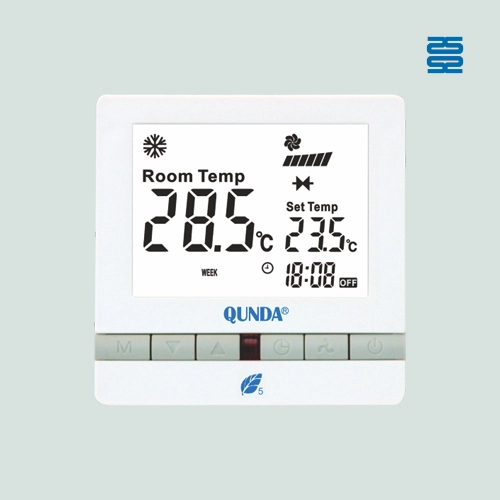
QD-HVAC05E Qunda Digital Thermostat for Central Air Conditioner

QD-HVAC03E Qunda Digital Thermostat for Central Air Conditioner
◼ Let’s Build Together
Get in Touch with SYSTO
If you have any comments or good suggestions, please leave us a message, later our professional staff will contact you as soon as possible.


Contact
Email us
Text or Call us
Address
Room 1606, No. 65, Zhongshan Seven Road, Liwan District, Guangzhou, Guangdong, China.

Facebook
Instagram
YouTube
Tik Tok
VK