






What features should buyers prioritize in AC smart thermostats?
Smart Thermostat for Air Conditioner: 6 Remote-Control Questions HVAC Buyers Need Answered
This article answers six specific, technically focused questions that installers, facility managers and informed homeowners ask when selecting AC smart thermostats and remote-control solutions. It emphasizes wiring, compressor protection, local vs cloud control, mini‑split compatibility, diagnostics, and verified energy-saving features.
1) How can I reliably add remote control to a ductless mini‑split or window AC without losing manufacturer features?
Many ductless mini‑splits and window units are controlled by proprietary IR or serial remotes and don't accept standard 24V thermostats. Using a generic smart thermostat for air conditioner (Wi‑Fi thermostat) directly will often fail. The reliable approaches are:
- Use a manufacturer gateway/cloud adapter when available (e.g., Mitsubishi Kumo Cloud, Fujitsu cloud modules). These preserve advanced features (vane position, quiet mode, multi‑zone coordination) because they talk the unit's native protocol.
- When no manufacturer gateway exists, choose a third‑party smart AC controller built for mini‑splits (Sensibo, Cielo, Ambi Climate, Tado). These use IR/serial bridging and provide mobile remote control, scheduling, and geofencing. They work well for typical comfort control but may not expose every proprietary function (advanced error codes, eco/auto vane sequencing) — always check the vendor's device compatibility list against your exact model.
- For window units with simple IR remotes, an IR bridge or smart remote can provide full remote control and automation. Confirm whether the device supports macros (e.g., setting mode + fan + swing) rather than only single‑button mapping.
Implementation tips:
- Test the bridge/controller on-site before removing the factory remote — verify power, all modes (cool/heat/dehumidify), and swing/louver functions.
- Expect up to 1–3 seconds latency via cloud bridges; local bridging options reduce latency but check that the controller supports LAN operation.
- If you need contractor-level fault codes or warranty‑safe control (e.g., to trigger defrost sequences correctly), plan to use the OEM gateway or work with the OEM‑certified interface.
2) What features must an AC smart thermostat include to prevent short‑cycling and protect the compressor?
Short‑cycling (too‑frequent on/off of the compressor) is the leading cause of premature compressor failure. When choosing AC smart thermostats and remote automation, prioritize:
- Anti‑short‑cycle delay: The thermostat or controller must enforce a minimum off time (commonly 3–5 minutes) before restarting the compressor. This must be configurable; look for explicit compressor protection settings in the UI and API.
- Minimum run time: Some systems benefit from a minimum run time to reach steady state and avoid nuisance starts; configurable in advanced settings.
- Staging and staging-aware control: For multi‑stage or variable‑speed equipment, prefer thermostats that understand stage control (e.g., 2‑stage heat/cool, VFD coordination) rather than simple on/off cycling.
- Runtime aggregation and alerts: The device should monitor cycles per hour and runtime and alarm when unusual patterns appear (e.g., >6 cycles/hour), so maintenance can prevent failure.
- Compressor lockout windows: Useful for demand‑response or grid signals; ensure lockout logic doesn't bypass anti‑short‑cycle protection.
Operational note: Many cloud‑only smart apps implement aggressive scheduling or rapid temperature adjustments for comfort which can unintentionally increase cycle counts. Prioritize devices that provide both an intuitive UI and an advanced HVAC protection panel for installers to lock down safe thresholds.
3) How can I implement secure remote control for my air conditioner that minimizes cloud exposure and supports local control?
Security and data sovereignty are increasingly important. Options (ranked by decreasing cloud dependency) are:
- Local‑first devices: These provide LAN APIs or fully local operation (no cloud required). Examples include some Zigbee/Z‑Wave thermostats connected via a local hub (Home Assistant, Hubitat). Local control reduces attack surface and avoids third‑party cloud outages.
- Vendor cloud with strong security: If using cloud services for remote access (common), ensure the vendor supports 2‑factor authentication (2FA), OAuth tokens (not basic passwords), and encrypted transport (TLS). Check their firmware update cadence and security disclosure policy.
- Hybrid approach: Use local control for active HVAC commands and cloud for telemetry/analytics. Some systems expose an MQTT or LAN API that apps can use locally while pushing anonymized metrics to the cloud.
- Network segmentation: Place the thermostat and bridge on a separate VLAN or guest Wi‑Fi. If remote technicians need access, provision VPN access to the VLAN instead of exposing device ports to the internet.
Installer checklist:
- Prefer devices with documented local APIs or integrations (Home Assistant, OpenHAB) if you need offline resiliency.
- Enforce strong passwords and 2FA on cloud accounts; request vendor SOC/ISO compliance where available for commercial deployments.
- Use firewalls to block unnecessary outbound ports and only allow the vendor's endpoints if cloud access is required.
4) Exactly how do I verify compatibility between a smart thermostat and my existing central AC or heat pump wiring?
Compatibility is a wiring and control‑logic problem. Follow these steps before purchase or installation:
- Document the current thermostat wiring: Photograph the control board and label each wire (R, C, W, Y, G, O/B, Aux/E, S1/S2, etc.).
- Identify system type: Single‑stage vs multi‑stage, heat pump vs conventional, presence of 24V control transformer, and whether there are accessories (humidifier, ventilator, economizer, zone dampers).
- Confirm C‑wire (Common) availability: Smart thermostats typically need a steady 24V supply. If no C wire exists, options are: install a C conductor from the air handler, use the thermostat vendor's power‑extender kit (Ecobee PEK is a common example), or select a thermostat that supports power stealing (less reliable on some systems).
- Check O/B for heat pumps and reversing valve logic: Heat pumps require correct O or B switching. Some thermostats let you set whether O energizes on cool or heat—set correctly to avoid reversed operation.
- Multi‑stage and accessory terminals: Verify the thermostat supports your number of stages (e.g., 2‑heat 2‑cool) and has terminals for humidifier/dehumidifier or fresh‑air controls if used.
- Use a multimeter to verify 24VAC and control continuity: Confirm R to C gives ~24VAC and that control outputs behave when toggled (only by trained technicians).
If uncertain, choose thermostats with installer diagnostics (wire detection, wiring diagrams in the app) or consult the HVAC control board documentation. Incorrect wiring can blow transformers or void warranties — when in doubt, use a qualified HVAC electrician.
5) Which remote diagnostics and maintenance alerts actually reduce expensive failures in AC systems?
Not all alerts are equally useful. Prioritize diagnostics that detect faults early and guide corrective action:
- Cycle anomaly detection: Alerts for unusual cycles per hour, high run lengths, or compressor lockouts. These often precede refrigerant leaks or failing contactors.
- Runtime and RTU staging reports: Aggregated runtime and stage usage reveal imbalanced systems, poor airflow, or dirty coils/filters.
- Filter and airflow reminders with runtime baselines: Timer‑only reminders are weak. Prefer systems that trigger a filter alert when run time or pressure differential patterns indicate reduced airflow.
- Heat pump fault codes and defrost alerts: When the smart controller integrates with the unit's control board (OEM gateway or compatible thermostat), it can surface diagnostic codes to technicians remotely.
- Energy and current anomaly detection: Smart relays/current sensors can show abnormal compressor start current, which predicts mechanical wear or refrigerant issues.
When selecting a smart thermostat for air conditioner systems, choose products that offer contractor or property‑manager dashboards with CSV exports, scheduled reports and API access. These tools let you pair alerts with service workflows and reduce emergency callouts.
6) What features in AC smart thermostats deliver measurable cooling cost savings in the field (not just marketing)?
To get verified savings, look beyond buzzwords. Features that produce repeatable, verifiable energy reduction include:
- Adaptive scheduling and setback with occupancy sensing: Combining schedules with motion or door sensors avoids unnecessary conditioned space while still delivering comfort when occupied.
- Precision control and correct deadband: Thermostats with accurate temperature sensors (±0.5°C / ±1°F) and configurable deadband reduce short cycles and energy waste. Avoid aggressive setpoint hysteresis that causes frequent cycling.
- Humidity‑aware control: In humid climates, integrating humidistat control (or systems that coordinate dehumidification mode) prevents HVAC from running excessively to chase humidity rather than temperature.
- Demand‑response and peak shaving features: For commercial or grid‑interactive buildings, support for standardized signals (Open ADR, utility API) can monetize curtailments and reduce peak charges.
- Analytics and verified reporting: Look for systems that provide before/after baselines, degree‑day normalization, and run‑time corrected energy estimates. The U.S. DOE and independent studies commonly cite typical savings of about 10–15% when a smart thermostat is implemented correctly with occupant behavior and system tuning; real results depend on building envelope, control strategy, and maintenance.
Operational guidance: Pair the smart thermostat with proper airflow management (clean filters, correct charge, fan curves). Software alone can’t fix poor equipment health — combine controls with routine maintenance to realize the marketed savings.
Conclusion: Advantages of selecting the right smart thermostat and remote control for your AC
Choosing the correct smart thermostat for air conditioner systems—and the right remote control architecture—delivers several measurable advantages: better occupant comfort through adaptive control, reduced energy consumption when analytics and occupancy sensing are used, longer equipment life by enforcing compressor protection and cycle limits, fewer emergency service calls via early‑warning diagnostics, and improved operational control through local APIs or secure cloud integrations. For ductless mini‑splits and non‑standard units, prefer OEM gateways or tested third‑party bridges to preserve manufacturer functionality.
If you want an exact compatibility check, wiring assessment, or a contractor dashboard set‑up, contact us for a quote at www.systoremote.com or email [email protected].
About Company
What markets do you serve?
Products are exported to over 100 countries worldwide.
CRC014V LITE
What’s the MOQ for customized models?
The MOQ depends on customization requirements such as logo, packaging, or function.
About Customized Service
Can I customize the functions or protocols of the remote?
Yes, we support IR, RF, Bluetooth, Wi-Fi, 2.4GHz, 433MHz, and voice control solutions. Our engineers can develop and adjust protocols to ensure full compatibility.
What kinds of customization do you offer?
We provide a full range of customization options to meet different market and brand needs:
▪ Appearance customization: housing shape, size, color, material
▪ Button customization: quantity, layout, fonts, and symbols
▪ Logo customization: silk printing, laser engraving, mold logo, or label
▪ Function customization: IR, RF, Bluetooth, and voice control protocol
▪ Packaging customization: gift box, color box, manuals, stickers, barcodes
▪ Hardware & software customization: chipset solution, code development, compatibility tuning
We offer flexible combinations to help you build a competitive product line.
KS-DK02V
Does it include batteries?
No, please use two AAA batteries.
Recommended For You
The CRC2621V AI Universal Air Conditioner Remote is designed for the Southeast Asian market. With an AI search function and compatibility with 99% of air conditioner brands, it provides faster setup and a better user experience.
Infrared LED light remote for Panasonic Japan market. No setup required. Supports dimming, color adjustment, timer, and 3-channel switching.
Do solar remote controls still use lithium batteries? Learn how modern solar-powered remotes now adopt supercapacitors with USB Type-C fast charging for improved safety, durability, and long lifespan.
Learn how to check whether a garage door remote control bought online is compatible with your opener. Frequency, learning type, and easy tips explained.
Having trouble setting up a universal remote even though your TV brand is listed in the manual? Learn the real reason, common mistakes, and how to improve success by using precise TV codes.
You May Also Like

QD-HVAC23 Qunda Touch-Screen Thermostat for Air Conditioner

QD-HVAC06E Qunda Digital Thermostat for Central Air Conditioner
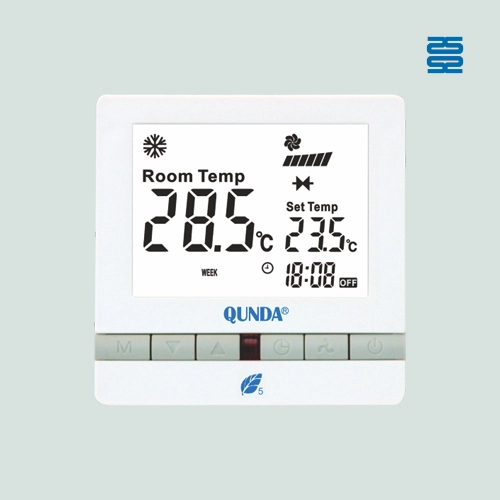
QD-HVAC05E Qunda Digital Thermostat for Central Air Conditioner

QD-HVAC03E Qunda Digital Thermostat for Central Air Conditioner
◼ Let’s Build Together
Get in Touch with SYSTO
If you have any comments or good suggestions, please leave us a message, later our professional staff will contact you as soon as possible.


Contact
Email us
Text or Call us
Address
Room 1606, No. 65, Zhongshan Seven Road, Liwan District, Guangzhou, Guangdong, China.

Facebook
Instagram
YouTube
Tik Tok
VK