






What features to look for in a Panasonic TV replacement remote?
1. How can I confirm whether my Panasonic TV requires an IR-only remote or a Bluetooth/RF paired remote before buying a replacement?
Difference matters: IR (infrared) remotes are line-of-sight, use IR codes, and are the most common. Bluetooth or RF remotes do not require direct line-of-sight and must be paired with the TV. Buying the wrong type is the leading cause of failed replacements.
Practical checks:
- Check the TV model label (usually on the back or inside the stand). Note the model number and region code — Panasonic often ships different remote hardware by region.
- Open the TV settings: navigate to Settings > Sound & Accessories or Settings > Remote Control & Accessories. If you see a pairing or Bluetooth sub-menu, your remote is likely Bluetooth/RF.
- Visual test of the original remote: point the original remote at a smartphone camera (front or back camera) and press a button. An IR remote’s LED will flash and you will see a purple/white blink on the camera. No flash suggests RF/Bluetooth or a dead IR LED.
- Review the owner manual or support page for your model on Panasonic’s official support site. Manuals list remote types and pairing instructions.
If you confirm IR-only, an OEM or IR-capable universal remote will work. If your TV uses Bluetooth/RF, you must purchase an OEM remote or a third-party remote explicitly listing compatibility with your Panasonic model and Bluetooth pairing capability — many low-cost universal remotes only emit IR and won’t pair.
2. Can a universal learning remote fully replicate my Panasonic Viera’s smart app buttons (Netflix, Prime) and voice search, and how do I program them if not?
Short answer: often yes for basic app-launch buttons and IR commands, but replicating built-in voice functionality and some branded quick-launch keys can be partial or require workarounds.
What to expect and how to program:
- Dedicated app keys: Many universal remotes include generic soft keys for common apps or let you program macros to open the TV’s app menu and navigate to a service. However, branded single-press keys (the TV’s dedicated Netflix button) may be proprietary or require specific Panasonic IR codes. Check the universal remote’s code database for your exact Panasonic model.
- Voice search: Panasonic voice features often rely on remotes with a microphone and Bluetooth pairing or on an integrated TV mic. A standard IR-only universal remote cannot reproduce on-remote microphones or wake-word capture. To retain voice control, buy an OEM Bluetooth/Voice remote or use external voice interfaces (Google Assistant/Alexa) if the TV supports them.
- Programming steps for learning remotes: place the universal remote into learning mode per its manual; align the donor remote (Panasonic) and the learning remote IR windows; press and transfer each function (power, volume, app key). Test macros and adjust delays for app navigation. Save profiles and label them with the Panasonic model for future deployments.
- When macros are unreliable (apps change), consider programming the universal remote to send the TV’s input/CEC commands to launch a streaming device (Roku/Fire Stick) instead — often more stable for frequent app updates.
3. What exact steps should I follow to pair a third-party Bluetooth/RF replacement remote to my Panasonic TV when the remote keeps failing to connect?
Pairing can fail due to mis-sequenced procedures, old batteries, TV firmware, or region-locked remotes. Follow this methodical procedure:
- Verify compatibility: ensure the third‑party remote specifically supports your Panasonic model series (check the manufacturer’s compatibility list and the remote’s regional firmware).
- Power cycle devices: remove batteries from the remote for 30 seconds, power‑cycle the TV (unplug for 30 seconds), then power the TV back on.
- Use fresh batteries and keep the remote close to the TV (within 1–2 meters) during pairing.
- Put the TV into pairing mode: navigate to Settings > Remotes & Accessories > Add Device (or similar). If the TV does not show an add device option, consult the manual because older Panasonic software can only pair OEM remotes.
- Place the replacement remote into pairing mode per its manual (common sequences: hold two buttons together for 5–10 seconds). LED indicators should blink to show pairing state.
- If the TV finds the remote but fails to complete pairing, remove any previously paired devices in the TV menu (clear Bluetooth cache). Try pairing again immediately after clearing the list.
- If pairing still fails: check for TV firmware updates (Settings > System > Software Update). Some Panasonic models have pairing bugs fixed in updates.
- Last resorts: attempt pairing in service or factory menus only with professional support. If the remote uses proprietary RF frequencies or encrypted pairing (common in some regional OEM remotes), a third‑party remote may be incompatible. In that case procure an official Panasonic replacement or an authorized aftermarket remote with matching FCC/CE certification.
4. How do I find and verify the correct Panasonic remote control code set (IR hex codes) for my specific model without relying on outdated online lists?
Finding accurate IR codes is essential when ordering universal or replacement remotes at scale. Outdated tables are common. Use these verification steps:
- Primary source: Panasonic service documentation and the official support page for your TV model. Service or repair manuals (sometimes labeled “service manual” or “technical manual”) include IR hex codes or remote command lists for that chassis.
- Cross‑check the remote model printed on the original remote (if available) and look up the remote’s part number on Panasonic’s parts catalog or on authorized parts reseller sites — part numbers map to code sets.
- If you have a working original remote, use an IR sniffer or an off‑the‑shelf IR receiver (USB IR dongle with decoding software) to capture button codes and export them as hex sequences. This produces definitive IR data you can load into learning or programmable remotes.
- For fleet purchases, ask the supplier for a sample IR dump or a proof-of-compatibility test: they should demonstrate power, volume, input, app and menu navigation functions on your model before completing bulk orders.
- Verify region differences: Panasonic often varies code sets between regions (EU/US/JP). Ensure the service manual and code set match your TV’s region label.
- If manufacturer documentation is unavailable, consult authorized Panasonic service centers — they can confirm exact code sets or provide OEM part numbers.
5. Are aftermarket replacement remotes safe for firmware/DRM features (DRM-protected apps, HDCP passthrough, 4K/HDR) on Panasonic 4K TVs, and what should procurement managers check?
Important clarification: DRM, HDCP, and HD/HDR processing are handled within the TV hardware and firmware — they are not directly affected by the remote control. A remote cannot alter DRM or HDCP protocols. However, a replacement remote can affect the ability to access and configure these features:
- If the replacement remote lacks buttons or sequences to access advanced menus (picture mode, HDMI deep color, 4K/60p toggles, HDR tone mapping, or service menus), technicians may be unable to enable or tune HDCP/HDR settings easily. Confirm that the remote supports menu navigation, advanced picture presets, and input selection.
- Procurement checks: verify that the replacement remote provides input cycling, CEC control toggles (HDMI‑CEC or 'Viera Link'), picture-mode keys, and programmable macro support so installers can change multiple settings in one action.
- Security: for Bluetooth or RF remotes, verify regulatory and safety certifications (FCC ID, CE) and ensure the remote’s firmware uses secure pairing. Avoid unknown no‑brand RF remotes with unclear source — they may cause interference or fail in multi-TV environments.
- Compatibility with streaming apps: ensure the remote can launch and control built-in streaming apps if you rely on the native app ecosystem for DRM-protected content. For mission‑critical installs, prefer OEM or well-documented aftermarket remotes that support these controls.
6. What hardware and build features should I prioritize (battery type, RF frequency, learning capability, backlight) when buying replacement remote controls for bulk purchases in commercial installations?
For commercial or fleet deployments you need reliability, consistency, and ease of maintenance. Prioritize these attributes:
- Power and battery type: choose remotes that use standard, easily replaceable batteries (AA/AAA) rather than proprietary packs. Consider models with low-power Bluetooth LE to prolong battery life. For hospitality deployments, rechargeable battery options with docking chargers reduce waste.
- Connectivity: for rooms with obstructed sightlines (AV cabinets), choose RF/Bluetooth remotes or RF-to-IR extenders. Confirm RF frequency and that devices comply with local radio regulations (e.g., 2.4 GHz BLE vs. sub‑GHz proprietary bands).
- Learning and macro capability: remotes with learning modes and macro sequences reduce support calls by automating setup sequences (power on > set input > launch app). Ensure the supplier provides provisioning tools for mass programming.
- Ergonomics and durability: silicone keypad mapping, spill-resistant housings, and backlit keys for low-light environments. Industrial logotypes and engraved labels resist wear better than printed legend keys.
- Backlight and accessibility: backlight is essential for guest rooms and control rooms. Large, tactile buttons for menu, volume, and input are preferable for less‑trained users.
- Provisioning and fleet management: ensure the vendor can pre-program remotes with your configuration (custom macros, locked down keys) and provide spare parts under warranty. Ask for sample units for a field trial before full roll-out.
- Regulatory and quality: request certificates (FCC/CE/UKCA) and an RMA policy. For large purchases, get serial-keyed firmware images or region-specific firmware to avoid code mismatches.
Final procurement checklist (quick): verify TV model & region, confirm IR vs Bluetooth/RF, obtain IR codes or sample captures, test a sample remote for app/voice/HDMI‑CEC functions, confirm certifications and warranty, and request pre-programming for fleet deployments.
Conclusion — advantages of choosing the right replacement remote:
Selecting the correct replacement remote (OEM, high-quality universal, or an RF/Bluetooth aftermarket unit) reduces downtime, preserves access to smart-app and voice features, and simplifies installation and maintenance in both consumer and commercial environments. OEM or certified universal remotes minimize pairing issues and warranty risk; learning remotes and programmable RF units improve user experience where line-of-sight is impractical. Prioritizing verified IR code compatibility, regulatory certification, battery logistics, and macro/learning capability leads to lower support costs and higher end-user satisfaction.
Contact us for a quote. Website: www.systoremote.com · Email: [email protected]
G10S
How do I use the voice control function?
Hold the microphone button while speaking into the built-in MIC.
QD-U03C+
Is OEM customization available?
Yes, we support OEM/ODM customization for different control logic, panel design, and packaging.
What type of air conditioners can the QD-U03C+ control?
It is designed for wall-mounted split A/C units. We also have other control system supporting multiple system types. Pls contact us for more details.
PU01
Is this pump suitable for both Split wall-mounted and Cabinet floor-standing air conditioners?
Yes, PU01E fits split units under 3HP or cabinet units under 2HP; PU01F fits split units under 5HP or cabinet units under 2–3HP.
CRC86E
What if the learning process fails?
Ensure both remotes have fresh batteries, IR emitters are aligned 2-5 cm apart, and repeat the process. The remote exits learning mode automatically after 15 seconds of inactivity.
Recommended For You
The CRC2621V AI Universal Air Conditioner Remote is designed for the Southeast Asian market. With an AI search function and compatibility with 99% of air conditioner brands, it provides faster setup and a better user experience.
Infrared LED light remote for Panasonic Japan market. No setup required. Supports dimming, color adjustment, timer, and 3-channel switching.
Do solar remote controls still use lithium batteries? Learn how modern solar-powered remotes now adopt supercapacitors with USB Type-C fast charging for improved safety, durability, and long lifespan.
Learn how to check whether a garage door remote control bought online is compatible with your opener. Frequency, learning type, and easy tips explained.
Having trouble setting up a universal remote even though your TV brand is listed in the manual? Learn the real reason, common mistakes, and how to improve success by using precise TV codes.
You May Also Like
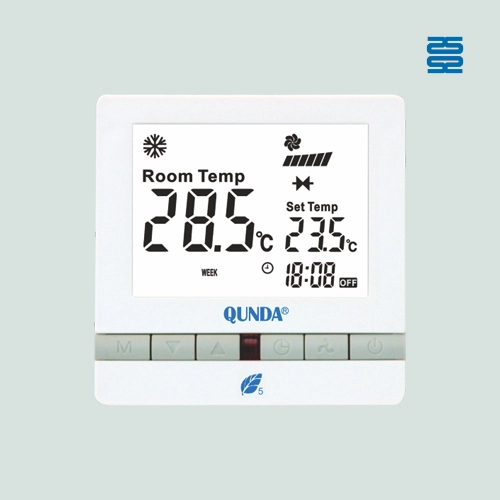
QD-HVAC05E Qunda Digital Thermostat for Central Air Conditioner

QD-HVAC03E Qunda Digital Thermostat for Central Air Conditioner
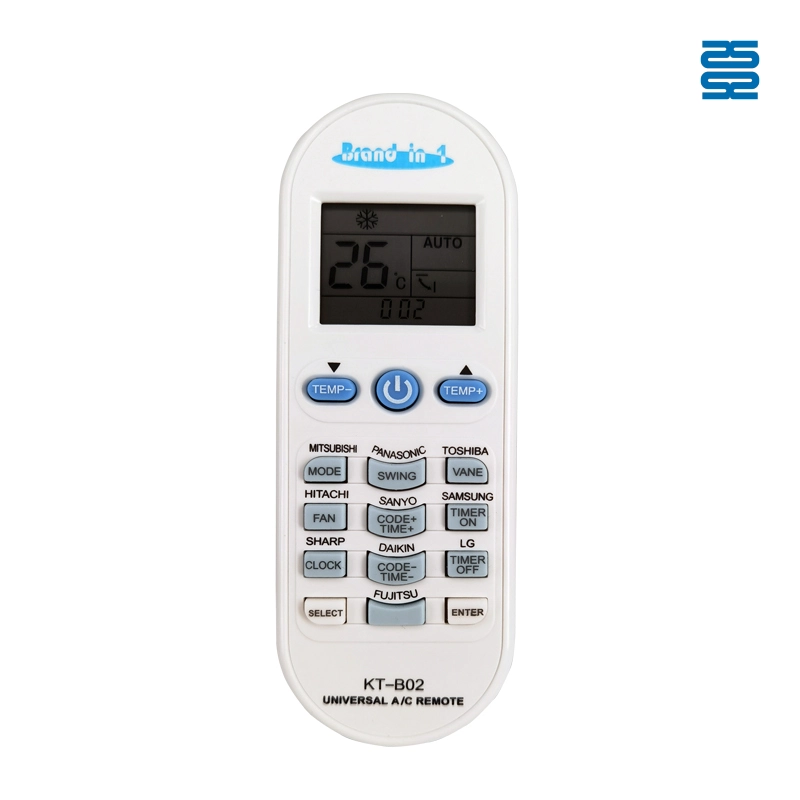
KT-B02 Universal Air Conditioner Remote Control Compatible with All Brands
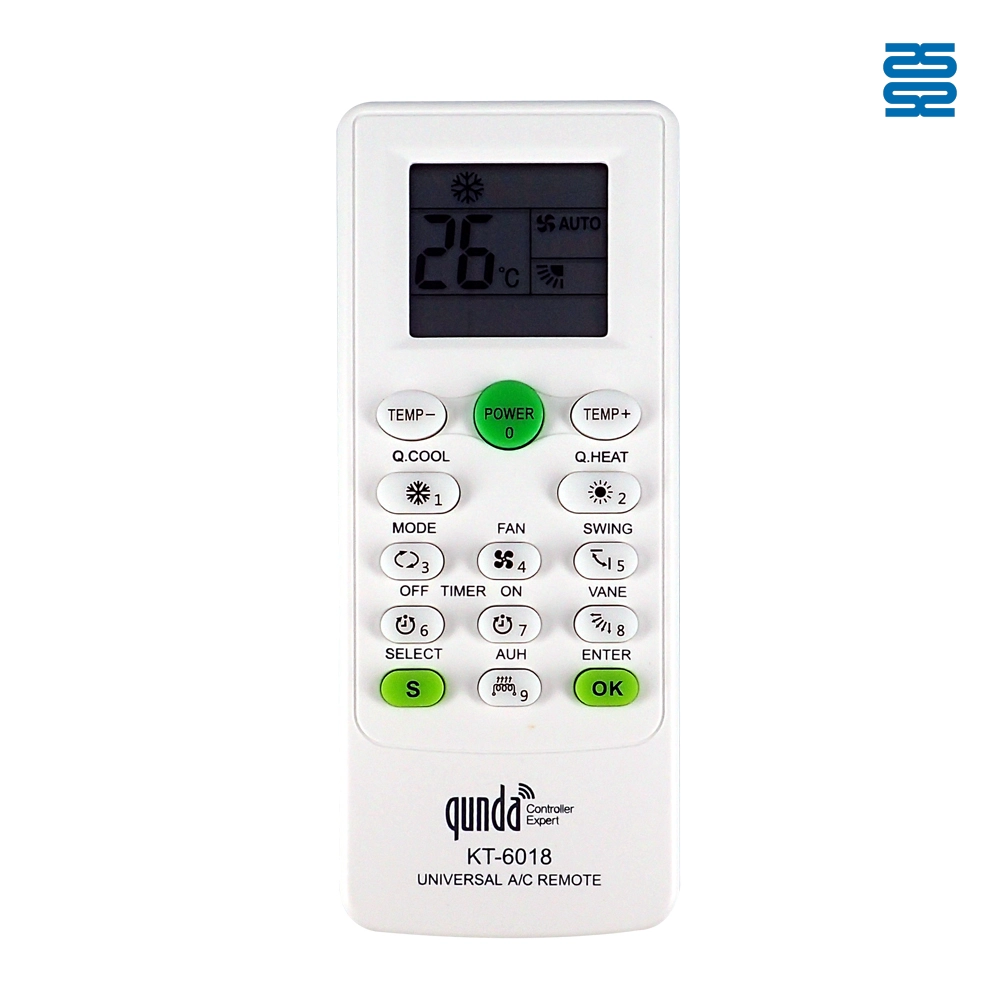
KT-6018 6000 in 1 Universal Air Conditioner Remote Control Compatible with All Brands
◼ Let’s Build Together
Get in Touch with SYSTO
If you have any comments or good suggestions, please leave us a message, later our professional staff will contact you as soon as possible.


Contact
Email us
Text or Call us
Address
Room 1606, No. 65, Zhongshan Seven Road, Liwan District, Guangzhou, Guangdong, China.

Facebook
Instagram
YouTube
Tik Tok
VK