






What warranty should buyers expect for a lighting remote control?
Choosing the right lighting remote control requires more than vendor specs. Below are six specific, beginner pain-point questions — each answered with the technical checks, test steps, and procurement clauses you should use when comparing wireless dimmer remote, RF remote, or Zigbee lighting solutions.
1. How can I verify a lighting remote control will be compatible with my LED driver/dimmer (PWM vs triac/0–10V/DALI) before purchase?
Why this matters: Mismatched control signal types are the top cause of flicker, limited dimming range, or driver failure after installation. “Works with LEDs” is too vague; you need precise signal compatibility.
What to check:
- Driver control interface: Confirm the LED driver supports the control protocol you plan to use — PWM (frequency range), leading-edge (triac), trailing-edge, 0–10V analog, DALI, or DMX. Check the driver datasheet for accepted input types and PWM frequency range (typical ranges: 200Hz–2kHz for many LED drivers).
- Remote output type: Verify whether the lighting remote control sends RF commands to a receiver that outputs PWM, 0–10V, DALI, or Triac dimming. Many wireless dimmer remote units pair with a receiver module that performs the driver interface conversion — ensure the receiver’s output matches your driver.
- PWM specifics: If using PWM dimming, confirm the remote/receiver supports the PWM frequency and resolution (e.g., 8-bit vs 12-bit) required for smooth dimming and to avoid audible noise. For high-CRI LED fixtures, higher PWM frequency (>1kHz) reduces visible flicker.
- Leading/trailing-edge: For incandescent/halogen retrofit or certain LED drivers, you may need a trailing-edge (electronic low-voltage) compatible remote/receiver; triac-based dimming will not work with many electronic LED drivers unless specifically supported.
- Multi-channel RGB(W)/CCT: For color fixtures, confirm the remote supports independent channel control, correct channel mapping, and enough current capacity in the receiver per channel.
How to validate before purchase:
- Request a compatibility list and the receiver’s schematic or technical manual from the vendor (insist on model-specific docs).
- Ask for a sample or loaner unit to run an onsite test with your exact driver and fixture at nominal load.
- Specify an acceptance test in the PO: define success criteria (no flicker, full dim range 0.5%–100% or as required, no audible noise, stable over temperature range).
2. What real-world wireless range and interference should I expect from Bluetooth mesh vs 433MHz RF lighting remote control in commercial buildings?
Why this matters: Range and interference impact reliability for multi-zone control in offices, warehouses, and retail spaces. Generic “up to X meters” specs are usually line-of-sight; indoor performance varies greatly.
Typical real-world expectations:
- 433/868/915 MHz RF remote: Better penetration through walls and longer line-of-sight range (often tens to 200+ meters LOS). Indoors expect ~20–80m depending on walls, metal, and noise. Many simple RF remotes use ASK/FSK with limited security and may be susceptible to interference from industrial equipment.
- 2.4 GHz options (Bluetooth mesh, Zigbee, Wi‑Fi): Shorter single-hop range indoors (typically 10–40m) but mesh networking extends coverage by relaying through nodes. Bluetooth mesh and Zigbee are preferred for dense deployments because nodes extend network reach and resilience.
- Wi‑Fi remotes: Range depends on the site Wi‑Fi; congestion and AP placement are factors. Latency is higher and network management is more complex.
Procurement and testing tips:
- Request RSSI or link-budget figures from the vendor and ask how the remote/receiver mitigates interference (frequency hopping, ACK/retry, retransmit limits).
- For commercial installations, specify mesh-capable Zigbee or Bluetooth mesh if you need scalable multi-zone control and predictable indoor coverage.
- Ask for site RF survey or run a pilot: measure packet loss, latency, and RSSI in representative areas (corridors, plant rooms, behind shelves). Define acceptable thresholds in the contract (e.g., <1% packet loss, <200ms control latency).
- Consider options with external antenna connectors or higher-gain antennas for long-range needs, and avoid consumer-grade RF in noisy industrial environments.
3. How do I assess battery life and replaceability for a wall-mounted lighting remote control used in multi-shift commercial environments?
Why this matters: Unexpected battery failures cause downtime and service calls. Many pros need predictable maintenance intervals and easy battery replacement in the field.
What affects battery life:
- Battery chemistry & capacity: Coin cells (e.g., CR2032), AA/AAA alkalis, and built-in Li-ion have very different lifetimes and replacement procedures.
- Transmit power and duty cycle: Frequent transmissions (polling, status reports) drain batteries faster. High TX power for long-range RF also consumes more energy.
- Features: Backlights, OLED displays, and high polling or keep-alive rates increase consumption.
- Environment: Low temperatures reduce effective battery capacity.
Practical checks and procurement language:
- Ask the vendor for measured battery life under your expected daily usage (e.g., 200 button presses/day, weekly scene activations). Request activity profiles and power budgets (mAh consumption per action and per day).
- Insist on removable batteries for commercial sites where rapid field replacement is required. If using rechargeable Li-ion, require a simple replacement module and clear safety instructions.
- Require a minimum demonstrated battery life (for example, >12 months under specified use) in the warranty/acceptance test.
- Specify that the remote must support low-battery reporting to the management console or indicator LEDs to trigger scheduled maintenance before failure.
4. What IP rating and enclosure materials should I require for lighting remote controls used outdoors, in kitchens, or in wet industrial areas?
Why this matters: Environmental ingress and UV exposure cause early failures if the enclosure is underspecified. “Weatherproof” marketing claims are often ambiguous.
Guidelines by environment:
- Indoor dry locations (offices, retail): IP20 is commonly sufficient.
- Splash-prone areas (kitchens, bathrooms): Specify at least IP44 (splash resistant) or IP54 for dust plus splash protection.
- Outdoor exposed use or wash-down areas: Require IP65 (dust-tight and water jets) or higher. For temporary submersion, use IP67 or IP68 as specified.
- Materials: UV-stable polycarbonate (PC) or ABS with UV inhibitors for outdoor housings; silicone or EPDM gaskets for button sealing; stainless steel or PVD-coated hardware where corrosion is a concern.
Procurement items to include:
- Ask for IP test certificates and the specific test reports (e.g., IEC 60529 test results) rather than a single compliance statement.
- Request material datasheets showing UV, salt-spray, and flame-retardancy ratings (UL94) if required in the spec.
- Include acceptance criteria: visual inspection after 72-hour salt spray, ingress tests, and functional test in environmental chamber if the budget allows.
5. What security and encryption standards should buyers require for smart lighting remotes to prevent unauthorized control?
Why this matters: Poorly secured lighting remotes can allow attackers to switch off emergency lighting, change access-control cues, or cause nuisance outages.
Recommended security requirements:
- Protocol-level encryption: For Zigbee and Thread, require AES-128 encryption and secure key exchange. For Bluetooth LE, insist on LE Secure Connections (Elliptic Curve) with secure pairing (out-of-band or passkey) where possible.
- Mutual authentication and unique device keys: Avoid shared global keys. Each remote and receiver pair should use unique keys provisioned during manufacturing or commissioning.
- Rolling codes and replay protection for legacy RF (433/868 MHz) solutions: If you use RF remotes with simple modulation, require rolling-code schemes or secure hopping to mitigate replay attacks.
- Firmware security: Support secure-boot and signed OTA firmware updates to prevent unauthorized firmware flashing.
- Management: Provide logging of pairing events and remote commands (or integrate into your building management system) so you can audit access.
Procurement clauses to include:
- Mandate compliance with recognized security profiles for the chosen protocol (for example, Zigbee 3.0 security, Bluetooth SIG profiles).
- Ask for a security whitepaper, vulnerability disclosure policy, and recent third-party penetration test results.
- Require the vendor to provide documented procedures for secure commissioning and decommissioning (key revocation, factory reset, secure erase).
6. What warranty should buyers expect for a lighting remote control and what terms should be negotiated?
Why this matters: Warranty coverage differs widely. A short warranty or unclear RMA process creates maintenance costs and operational risk.
Industry norms and recommended baseline:
- Standard consumer-level remotes: 1 year limited warranty is common.
- Commercial-grade remotes and combined remote+receiver kits: 2 years is a reasonable minimum; many reputable manufacturers offer 2–3 years.
- Industrial/mission-critical controllers: 3–5 years or longer with option for on-site support and spares agreements.
What the warranty should explicitly cover:
- Manufacturing defects and component failures under normal use (excluding batteries, accidental damage, or abuse) with clearly defined failure criteria.
- Firmware defects that cause device malfunction: require vendor to provide firmware fixes and OTA patches for a minimum guaranteed period (e.g., 24 months after ship date), with signed firmware images.
- Advance replacement (cross-ship) options for commercial installations to reduce downtime; specify RMA turnaround times (for example, next-business-day cross-ship or 5-business-day repair turnaround).
- Spare-part availability: guarantee spare parts for a defined period (e.g., 5–7 years) or offer a migration plan when products are EOL.
Negotiation checklist and contract language suggestions:
- Specify a minimum warranty duration in the contract (e.g., “Vendor warrants product to be free from defects for 24 months from acceptance”).
- Include service-level objectives (SLOs) for RMAs: acknowledgement within 24 hours, root-cause analysis deliverable for repeat failures, and advance replacement if >N failures per quarter.
- Define coverage boundaries: explicitly exclude consumables (batteries), abuse, lightning, and improper installation. Require the vendor to supply diagnostic support and firmware updates without additional charge during the warranty period.
- Ask for proof of compliance with regional regulatory marks (CE, FCC/IC, RCM, UKCA) — lack of certification can void warranty in certain jurisdictions and create liability issues.
Practical example: For an office rollout of 200 smart lighting remote controls plus receivers, a good procurement package would request 24–36 months warranty, advance replacement for up to 5% of units per year, signed firmware updates for at least 24 months, and explicit on-site replacement SLA if replacements are not feasible by courier.
Summary — advantages of choosing professional lighting remote control solutions from SystoRemote
Choosing professionally specified lighting remote control systems (wireless dimmer remote, Bluetooth mesh or Zigbee lighting networks, and rugged RF remotes) reduces commissioning risk, ensures LED driver compatibility, delivers predictable battery and environmental lifecycles, and secures installations against unauthorized control. By requiring measurable site tests, proper IP ratings, signed firmware updates, AES-based encryption, and a clear warranty with RMA SLAs (we recommend a minimum 24-month commercial warranty with firmware support), buyers minimize downtime and lifecycle costs.
For a customized quote, pilot units, or compatibility testing with your LED drivers and control network, contact us at www.systoremote.com or email [email protected].
CRC1130V
What’s the MOQ for customized models?
The MOQ depends on customization requirements such as logo, packaging, or function.
AKB75095308
Is this remote compatible with all LG TVs?
This model is specifically designed to replace AKB75095308 and works with corresponding LG TVs Model. For other LG models, please contact us for compatible options.
BN59-01432A
Are batteries required?
No extra batteries are needed — it comes with a built-in rechargeable battery.
FAN-2989W
What’s the control distance?
Up to 8 meters in an open area without obstruction.
QD-HVAC20
How do I set the temperature on the QD-HVAC20 thermostat?
Press the “▲” or “▼” key to adjust the temperature to your desired setting. The LCD display will immediately show the updated temperature value.
Recommended For You
Do solar remote controls still use lithium batteries? Learn how modern solar-powered remotes now adopt supercapacitors with USB Type-C fast charging for improved safety, durability, and long lifespan.
Learn how to check whether a garage door remote control bought online is compatible with your opener. Frequency, learning type, and easy tips explained.
Having trouble setting up a universal remote even though your TV brand is listed in the manual? Learn the real reason, common mistakes, and how to improve success by using precise TV codes.
Learn how to set up and program the CRC1130V universal remote control for your TV. This step-by-step guide covers direct brand buttons, code input, and auto search methods for quick and easy pairing.
You May Also Like
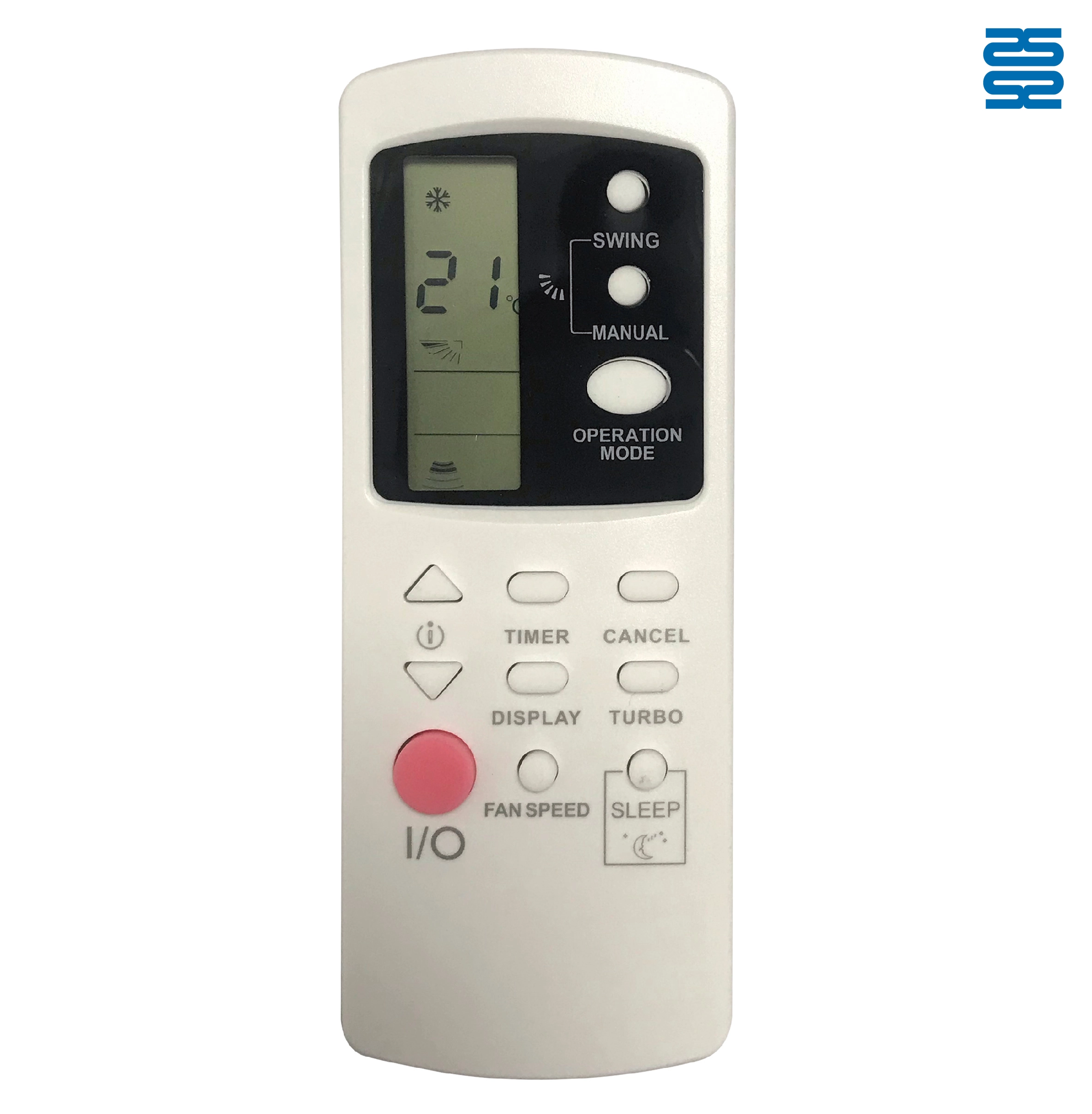
AFR31 Fujitsu Air Conditioner Remote Control Replacement

AFR29 Fujitsu Air Conditioner Remote Control Replacement

AFR30 Fujitsu Air Conditioner Remote Control Replacement

AFR39 Samsung Air Conditioner Remote Control Replacement
◼ Let’s Build Together
Get in Touch with SYSTO
If you have any comments or good suggestions, please leave us a message, later our professional staff will contact you as soon as possible.


Contact
Email us
Text or Call us
Address
Room 1606, No. 65, Zhongshan Seven Road, Liwan District, Guangzhou, Guangdong, China.

Facebook
Instagram
YouTube
Tik Tok
VK