






Which Lighting Remote Control Works Best with LED Fixtures?
Which Lighting Remote Control Works Best with LED Fixtures? 6 In-Depth Questions & Answers
As lighting specifiers, facility managers and installers increasingly replace legacy bulbs with LED fixtures, the choice of a lighting remote control and wireless interface is critical. Below are six specific, pain-point-focused questions beginners often search for but rarely find fully answered. Each answer covers practical compatibility checks, required wiring or gateways, and recommended device types—helping you buy the correct wireless lighting remote control for LED fixtures.
1. Which lighting remote control works best with LED fixtures that use constant-current drivers and 0-10V dimming?
Problem: You have LED fixtures with constant-current drivers that accept a 0-10V control input. Many sellers advertise “universal” remotes, but not all provide a proper 0-10V output or an approved 0-10V bridge.
Answer: For LED drivers with a 0-10V input you must use a remote control system that provides a true analog 0-10V control output (sink or source as required by the driver) or a certified digital-to-analog gateway that converts the remote’s wireless protocol to 0-10V. Key checks before purchase:
- Confirm whether the driver expects 0-10V sourcing (sends current) or sinking (accepts current). Many LED drivers accept a current sink; the remote/bridge must match.
- Do not use a PWM-only wireless dimmer directly on a 0-10V input—PWM at the fixture controller input can produce unstable dimming or trigger driver protection. Use a proper 0-10V interface.
- If you want wireless control, choose a Zigbee, Z-Wave or Bluetooth Mesh remote paired with a certified 0-10V gateway or driver module (look for interoperability documentation from both the gateway and the fixture manufacturer).
- For commercial retrofits, prefer DALI-2 or 0-10V certified bridges since they preserve commissioning and centralized control capabilities.
Example purchase path: LED fixture (constant current, 0-10V input) → select a wireless remote (e.g., Zigbee or BLE mesh) → pair with a Zigbee/BLE-to-0-10V gateway that explicitly lists the driver/fixture model or meets manufacturer interoperability notes.
2. How do I prevent LED flicker when using an RF lighting remote control that uses PWM dimming?
Problem: After installing a wireless RF remote and dimmer module, LEDs flicker at low levels or even at mid-range—visually distracting or failing certification requirements.
Answer: Flicker stems from three main causes: low PWM frequency, driver incompatibility with the dimming method, and poor signal translation from the remote to the driver. To mitigate flicker:
- Choose a dimming interface that matches the driver’s expected dimming type. If the driver expects analog (0-10V), don’t drive it with a mains-trailing-edge or low-frequency PWM signal.
- For PWM-based control, ensure the PWM frequency is sufficiently high—many professional installations use PWM frequencies in the kHz range (commonly 2–20 kHz) to move modulation above perceptual sensitivity and reduce audible interference. Check the LED driver datasheet for recommended PWM frequency range.
- Prefer LED drivers with built-in flicker mitigation or those compliant with recognized flicker standards. For sensitive installations (broadcast, galleries), specify drivers and controls that test below accepted modulation depths per IEEE-1789 guidance.
- Use high-quality RF remotes/receivers with stable power conversion and clean PWM outputs; cheap receivers can introduce jitter that manifests as flicker.
In short: match dimming methods, use high PWM frequencies when PWM is required, or use analog/DALI control to avoid PWM-related flicker entirely.
3. Can a Zigbee or Bluetooth Mesh lighting remote control line-voltage LED fixtures directly without a hub?
Problem: You want a simple wireless remote for hardwired line-voltage LED fixtures but don’t want to install an entire hub or gateway component.
Answer: It depends on the fixture and the protocol:
- Bluetooth Mesh: Many modern LED drivers and smart modules embed Bluetooth Mesh radios. If your line-voltage fixture contains an integrated BLE Mesh node, a BLE remote can communicate directly without a separate gateway. Bluetooth Mesh is designed for device-to-device control and can operate without cloud or hub when both devices support the same mesh profile.
- Zigbee: Most Zigbee networks require a coordinator (hub) to manage the network and route messages. Some fixtures contain an embedded Zigbee node, but you still typically need a Zigbee coordinator device to commission and manage the network unless the remote itself acts as a certified Zigbee coordinator (rare for consumer remotes).
- Proprietary RF remotes (sub-GHz or 2.4GHz): Some line-voltage receiver modules pair directly with RF remotes without a hub; these are often used in retrofit modules that replace wall switches or mount near drivers. Ensure the receiver is rated for line voltage and the RF band complies with local regulations (e.g., 433/868/915 MHz regional differences).
Practical guidance: inspect the fixture’s datasheet for embedded radio support. If no radio is embedded, plan for a receiver module or hub/bridge. For minimal infrastructure, use BLE Mesh-certified fixtures or select a remote+receiver pair designed for direct operation at line voltage with the necessary safety approvals.
4. How can I match a remote control’s dimming curve to preserve LED color temperature (tunable white) and CRI across the dimming range?
Problem: Dimming your tunable-white LED fixtures changes color temperature or makes whites look poor at low levels; CRI drops visibly when using a generic remote.
Answer: Maintaining color fidelity while dimming requires a combination of fixture capability and remote/control intelligence:
- Use drivers and fixtures that support controlled tunable-white modes (e.g., separate channels for warm and cool LEDs) and standardized digital control protocols such as DALI-2 DT8 for color/tunable white. DT8 provides defined color control semantics that preserve correlated color temperature (CCT) across dimming operations.
- Choose remotes or lighting controllers that implement dim-to-warm curves only if your fixture is designed for dim-to-warm behavior. For fixtures with separate warm/cool channels, choose a controller that applies proper gamma correction and channel balancing to preserve CRI across levels.
- Look for devices that support color calibration profiles (LUTs). Professional controllers and many smart lighting ecosystems (CE-compliant) let you upload or select fixture-specific profiles to maintain color rendering and CCT when dimming.
- Test at commissioning: measure output with a spectrometer or colorimeter across the dimming range to ensure CRI and CCT remain within spec. This is standard in architectural lighting projects where color fidelity matters.
Bottom line: The remote must not only send dimming commands but also be part of an ecosystem that understands the fixture’s multi-channel outputs and can apply appropriate correction algorithms—look to DALI-2 DT8 or equivalent certified solutions for professional results.
5. For commercial LED retrofit projects, which remote control protocol gives the best range and wall penetration: sub-GHz RF, Zigbee, Bluetooth Mesh, or Wi‑Fi?
Problem: Large buildings with concrete walls and multiple floors need dependable remote range. You want the protocol that reduces repeaters/gateways while keeping control reliable.
Answer: There is no single “best” protocol—each has tradeoffs. Consider these practical points:
- Sub-GHz RF (e.g., 433 MHz, 868/915 MHz): Better wall penetration and longer single-hop range than 2.4 GHz radios. For simple point-to-point control and minimal infrastructure, sub-GHz RF remote+receiver pairs are excellent for retrofits. Regulatory frequency availability varies by region—confirm local allowances.
- Zigbee and Bluetooth Mesh (2.4 GHz): Both rely on mesh networking. While 2.4 GHz has shorter per-hop range and less penetration than sub-GHz, the mesh architecture enables multi-hop routing—so you can cover large buildings by deploying enough powered nodes (drivers, in-line modules, or repeaters). Mesh provides redundancy and centralized control but requires node planning and possible coordination with IT for radios.
- Wi‑Fi: Good for integrating with existing IT networks and for high-bandwidth features (firmware updates, streaming diagnostics). Wi‑Fi coverage is usually already present in buildings, but Wi‑Fi devices consume more power and can be less deterministic for low-latency control unless you segment traffic or use enterprise QoS.
Recommendation: For retrofit projects prioritizing raw penetration and minimal gateways, sub-GHz RF remote/receiver pairs are a pragmatic choice. For scalable, integrated smart buildings where centralized management, scenes and telemetry matter, choose Zigbee or Bluetooth Mesh with proper node planning. Wi‑Fi is best when you need direct cloud or enterprise integration and existing reliable Wi‑Fi coverage.
6. How do I verify compatibility between a third-party lighting remote control and DALI-2 dimmable LED fixtures before purchase?
Problem: You need to ensure a third-party remote will function correctly with DALI-2 fixtures (on/off, dimming, tunable white modes) without returning hardware after failed commissioning.
Answer: DALI-2 (managed by the DiiA / DALI Alliance) standardizes device types and control commands. To ensure compatibility:
- Check DALI device type requirements: DALI-2 defines device types (DT6 for single-channel dimming, DT8 for color control/tunable white). Confirm your fixture’s DALI-2 device type and ensure the remote or DALI gateway explicitly supports that device type.
- Look for DALI-2 certification: certified products have passed the DALI-2 test suite for the supported device types—use the DiiA product database as a cross-reference (manufacturer listings indicate certified interoperability).
- Confirm addressing and group/control model: DALI networks use addressing and scene storage/recall. Verify that the remote/gateway supports the same addressing model (broadcast, group, short addresses) and can program scenes or import/export settings if needed.
- Request manufacturer interoperability notes or an application note showing the specific fixture and remote/gateway pairing. If possible, arrange a commissioning trial on-site or ask for a pre-configured demo unit from the vendor.
- For complex installations, insist on a functional spec: ask the vendor to document expected behaviors (startup levels, fade times, scene recall) and include these in procurement acceptance tests.
In short: verify DALI-2 certification, match device types (DT6/DT8), confirm addressing/scene features, and validate via a demo or documented interoperability statement.
Concluding summary — advantages of choosing the right lighting remote control for LED fixtures
Selecting the correct lighting remote control and control protocol for LED fixtures reduces installation rework, eliminates flicker, preserves color fidelity and CRI, enables scalable range across retrofits or new builds, and ensures long-term interoperability with building management. Matching driver dimming inputs (0-10V, DALI-2, PWM, DMX) to the remote/bridge, choosing the appropriate radio (sub-GHz for penetration, mesh for scalability), and insisting on standards certification (DALI-2, Zigbee/Bluetooth Mesh certified products) are the most effective steps to protect ROI and occupant satisfaction.
For a tailored recommendation and a quote for compatible lighting remote control systems and gateways for your LED fixtures, contact us at [email protected] or visit www.systoremote.com. We can provide interoperability checklists, recommended part numbers and on-site commissioning support.
CRC2201V
Are batteries included?
No, the remote requires 2 × AAA batteries (not included).
About Contact
What if I have after-sales issues?
Contact our support team—we’ll provide technical help.
How can I contact your sales team?
Use the inquiry form or email us at [[email protected]].
QD-U08PGC+
Is the transformer included?
Yes, an updated quick-plug transformer is enclosed for easy setup.
FAN-2989W
Can this replace my original KDK or Panasonic fan remote?
Yes, if your fan uses infrared control (please check before purchase).
Recommended For You
Infrared LED light remote for Panasonic Japan market. No setup required. Supports dimming, color adjustment, timer, and 3-channel switching.
Do solar remote controls still use lithium batteries? Learn how modern solar-powered remotes now adopt supercapacitors with USB Type-C fast charging for improved safety, durability, and long lifespan.
Learn how to check whether a garage door remote control bought online is compatible with your opener. Frequency, learning type, and easy tips explained.
Having trouble setting up a universal remote even though your TV brand is listed in the manual? Learn the real reason, common mistakes, and how to improve success by using precise TV codes.
Learn how to set up and program the CRC1130V universal remote control for your TV. This step-by-step guide covers direct brand buttons, code input, and auto search methods for quick and easy pairing.
You May Also Like
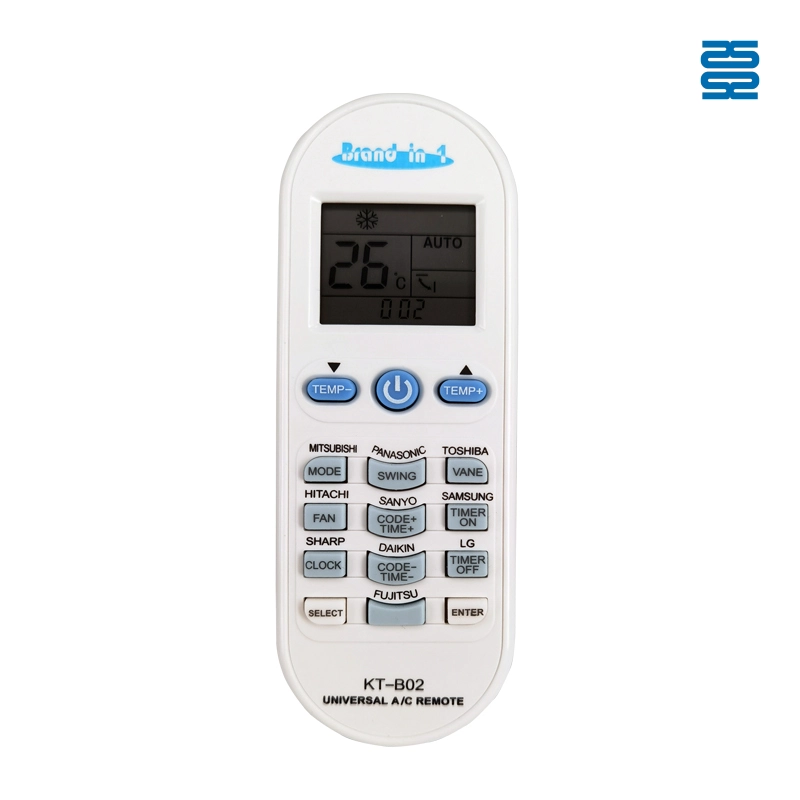
KT-B02 Universal Air Conditioner Remote Control Compatible with All Brands
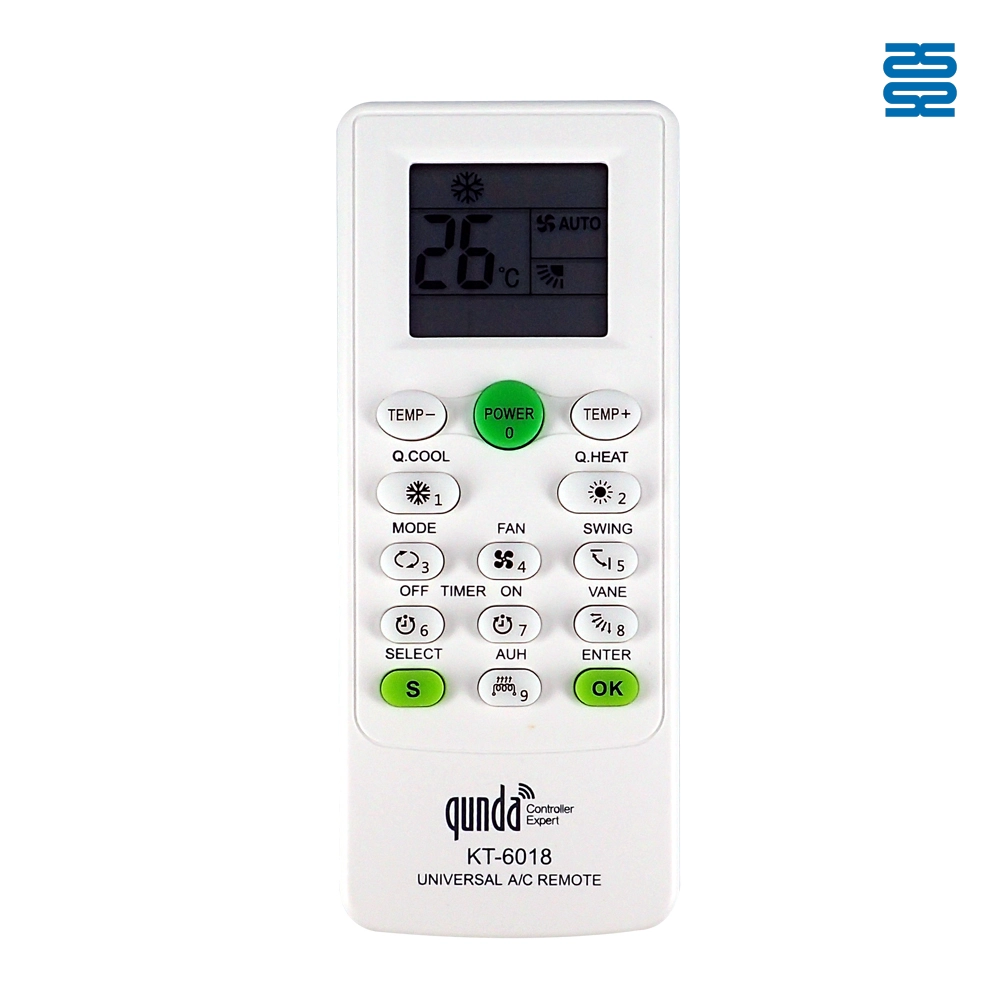
KT-6018 6000 in 1 Universal Air Conditioner Remote Control Compatible with All Brands

QD-1000 IN 1 1000 Code in 1 Universal Air Conditioner Remote Control Compatible with All Brands

KT-N828 Universal Air Conditioner Remote Control Compatible with All Brands
◼ Let’s Build Together
Get in Touch with SYSTO
If you have any comments or good suggestions, please leave us a message, later our professional staff will contact you as soon as possible.


Contact
Email us
Text or Call us
Address
Room 1606, No. 65, Zhongshan Seven Road, Liwan District, Guangzhou, Guangdong, China.

Facebook
Instagram
YouTube
Tik Tok
VK