






Beyond the Click: The Future of Lighting Remote Control and Smart Home Integration
This article explores the transformative shift in lighting control, moving from traditional handheld remotes to AI-driven, voice-activated smart home ecosystems. It covers the technical differences between IR, RF, and mesh protocols, the impact of the new 'Matter' standard, and future trends in biophilic design.
Lighting control is undergoing a radical transformation, evolving from simple on/off switches to sophisticated, intelligent ecosystems that enhance our daily lives. As we move beyond the click, the convergence of wireless technology, artificial intelligence, and human-centric design is reshaping how we interact with our environments.
Key Takeaways: The Evolution of Light Control
- Shift to Invisible Control: Lighting control is transitioning from physical handheld remotes to automated, voice-activated, and sensor-driven systems.
- Protocol Importance: Understanding the difference between IR, RF, and Mesh protocols (Zigbee/Thread) is crucial for system reliability.
- Standardization: Future-proofing your home requires considering Matter protocol compatible lighting for seamless cross-device compatibility.
- Holistic Efficiency: Energy efficiency now relies on intelligent scheduling and presence detection rather than just LED bulb upgrades.
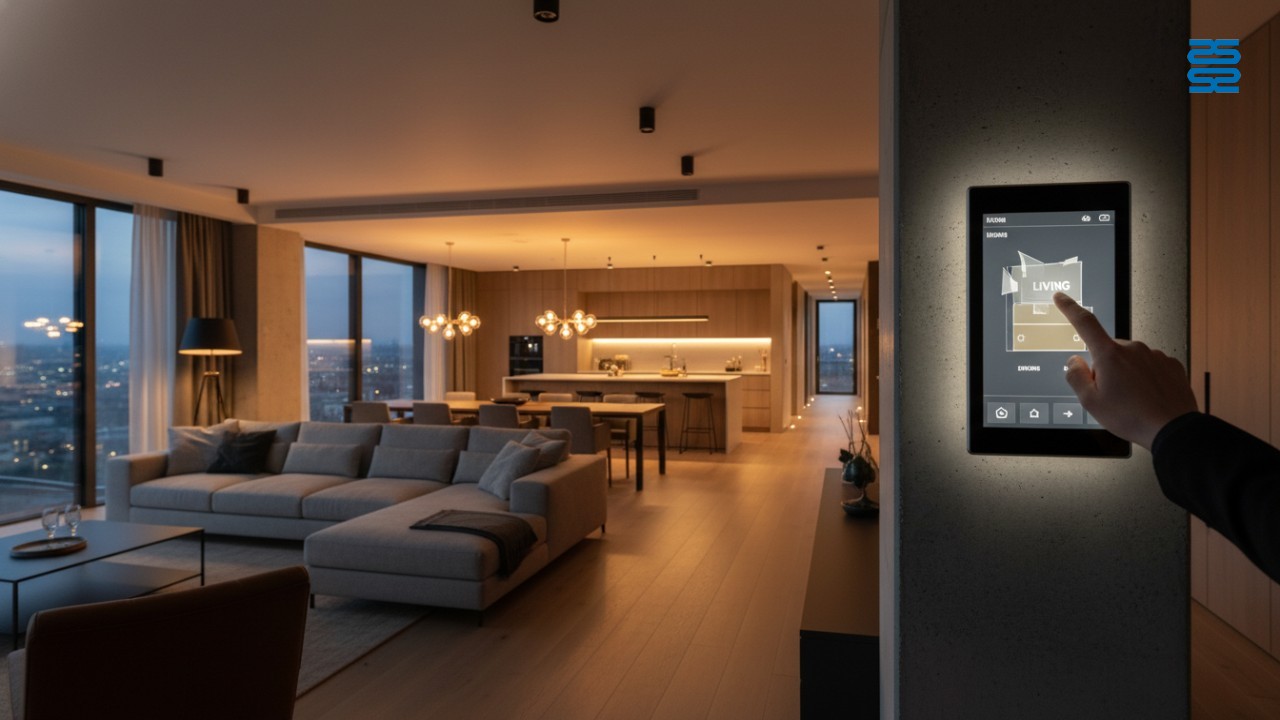
What is Modern Lighting Remote Control?
Home automation lighting control refers to the intelligent management of illumination systems through wireless interfaces, evolving from simple Infrared (IR) transmitters to complex networked ecosystems managed by AI and smartphone applications. It encompasses a spectrum of technologies designed to adjust brightness, color temperature, and scheduling without physical contact with a wall switch.
Modern lighting systems prioritize low-latency connectivity and integration with broader smart home hubs over singular, dedicated handheld devices. While the traditional remote offered a binary choice—light or dark—modern systems offer a gradient of possibilities. They allow users to sculpt their environment, changing the mood of a room instantly or automating security lighting to mimic presence when homeowners are away.
The core of this modernization lies in the shift from "direct control" to "delegated control." Instead of manually dimming a light, you set a scene or a rule, and the system handles the execution. This shift is powered by advanced chipsets and software that can process commands from multiple sources—be it a voice assistant, a motion sensor, or a daylight harvesting algorithm.
From Infrared to Infinity: Understanding Control Technologies
RF vs IR remote control represents the fundamental divide between legacy line-of-sight technology and modern barrier-penetrating wireless communication. IR (Infrared) is the legacy standard requiring a direct line of sight between the transmitter and receiver, making it affordable but limited in range and flexibility.
While IR technology, like that found in standard TV remotes, dominated the market for decades, it is increasingly being phased out for lighting applications due to its inability to transmit through walls or furniture. This limitation led to the rise of RF (Radio Frequency) technology, which serves as the backbone for many dedicated handheld remotes and smart switches today.
- IR (Infrared): Best for single-room usage where the user is stationary. It is low-cost and battery-efficient but fails if someone walks in front of the sensor.
- RF (Radio Frequency): Allows control through walls and longer distances (typically 50-100 feet). This is the standard for reliable, non-networked remote systems.
- Wi-Fi & Bluetooth: These technologies bridge the gap to smartphone control, offering app-based customization. However, relying solely on Wi-Fi can crowd network bandwidth, leading to latency.
- Zigbee, Z-Wave, & Thread: These are low-power mesh networks that increase reliability as you add more devices. They are crucial for whole-home setups where a signal needs to "hop" from bulb to bulb to reach the farthest room.
At Guangzhou SYSTO International Trading Limited, we have witnessed this evolution firsthand. Founded in 1998, our R&D teams have transitioned from designing simple IR blasters to complex RF and Bluetooth control boards that power today's smart HVAC and lighting systems. Our experience across 30+ global markets confirms that while IR remains useful for budget-friendly, standalone devices, the market is aggressively pivoting toward RF and mesh-based solutions that support the connected home.
Smart Home Integration: The Death of the Physical Remote?
Voice activated lighting systems utilize natural language processing through platforms like Amazon Alexa, Google Assistant, and Siri to replace physical interaction with verbal commands. This technology integrates lighting into the broader "Internet of Things" (IoT), allowing for hands-free operation and complex automation routines.
The physical remote is not dying; it is evolving. In a fully integrated smart home, the "remote" becomes ubiquitous—it is your voice, your phone, your smartwatch, and even the sensors on your wall. However, the complexity of connecting devices from different brands has historically been a major hurdle. This is where the Matter protocol changes the game.
- Voice Assistants: Leveraging AI to interpret commands like "Movie Time" to dim lights and lower blinds simultaneously.
- Geofencing: Automating lighting based on your GPS location, ensuring you never walk into a dark house.
- Scene Setting: Grouping multiple fixtures to activate simultaneously via a single digital trigger, reducing the need for banks of dimmer switches on the wall.
- The 'Matter' Standard: According to the Connectivity Standards Alliance, Matter is an industry-unifying standard that allows smart devices from different manufacturers to work seamlessly together. This eliminates the "walled garden" problem where an Apple HomeKit bulb wouldn't talk to a Google Home switch.
By adopting Matter protocol compatible lighting, homeowners ensure their investment is future-proof. It allows a homeowner to buy a light bulb from Brand A, a switch from Brand B, and a hub from Brand C, with the confidence that they will communicate locally and securely without relying entirely on the cloud.
Future Trends 2026+: Adaptive and Biophilic Control
Biophilic lighting control involves systems that automatically adjust color temperature and intensity to mimic natural sunlight patterns, thereby supporting the human circadian rhythm. This trend moves beyond convenience, positioning lighting as a health and wellness tool.
The future of lighting control is autonomous. We are moving toward systems that do not require active user input. Instead, AI-Driven Prediction will learn your habits over time—noticing you wake up at 7:00 AM on weekdays and 9:00 AM on weekends—and adjust the lighting fade-in capability accordingly.
- Circadian Rhythm Synchronization: Controllers shift lighting from cool blue (morning) to warm amber (evening). Research from the National Institutes of Health indicates that light exposure significantly influences circadian rhythms, affecting sleep patterns and hormone release.
- Presence Sensing 2.0: Moving beyond basic motion sensors (PIR) to mmWave radar technology. This detects static human presence (like reading a book) so lights don't turn off if you stop moving.
- Energy Grid Integration: Smart controllers that dim lights during peak energy pricing hours to reduce utility bills automatically.
- AI-Driven Prediction: Systems that analyze historical usage data to preemptively adjust lighting, creating a truly "invisible" interface.
This shift towards biophilic design is not just a luxury; it is becoming a standard in high-end residential and commercial developments. The ability of a control system to replicate the sun's arc indoors has profound implications for productivity in home offices and relaxation in living spaces.
Expert Tips: Common Mistakes in Lighting Automation
Smart lighting protocols often fail due to improper network planning and hardware incompatibility rather than device failure. A successful installation requires careful consideration of the electrical infrastructure and the wireless environment.
Many homeowners rush into automation by purchasing random smart bulbs, only to find they don't function when the physical wall switch is flipped off. This is the most common pitfall: cutting power to the smart radio. To avoid this, one must use compatible smart switches or "scene controllers" that send wireless signals rather than cutting the electrical circuit.
- Ignoring Switch Compatibility: Installing smart bulbs on standard dimmer switches often leads to flickering, buzzing, and reduced lifespan due to voltage irregularities.
- Overloading the Wi-Fi Network: Relying solely on Wi-Fi for 50+ bulbs can cripple a home router. Using a dedicated hub (Zigbee/Thread) offloads this traffic.
- Neglecting Physical Fallbacks: Failing to install a physical smart switch leaves guests (or family members without the app) unable to control lights if the internet goes down.
- Mismatched Protocols: Buying devices that don't speak the same language (e.g., trying to pair a Z-Wave bulb directly with a Wi-Fi router) results in a fragmented system.
Industry Leading Solutions: Integrated Lighting Architectures
Integrated lighting architectures describe professional-grade systems that bridge the gap between easy-to-use handheld remotes and complex backend automation. These solutions offer the reliability of hardwired systems with the flexibility of wireless control.
At SYSTO, we understand that reliability is paramount. Since our inception, we have built a comprehensive supply chain and strict quality control standards that ensure our control boards and remotes perform flawlessly in over 30 countries. Whether it is an OEM solution for a major HVAC brand or a custom RF lighting controller for a hotel chain, the hardware must be robust enough to handle years of daily use.
- Hybrid Control Systems: Implementing systems that offer tactile physical switches alongside advanced app-based scheduling satisfies both tech-savvy users and traditionalists.
- Robust Hardware: Ensuring 99.9% uptime and security in wireless lighting environments through high-quality internal components and rigorous testing.
- Energy Savings: The U.S. Department of Energy reports that LED technology combined with smart controls can reduce lighting energy use by up to 75%, making the ROI on these systems substantial.
Conclusion & Call to Action
The future of lighting remote control is not just about turning lights on and off; it is about creating an ecosystem that enhances comfort, security, and health. By moving beyond simple IR clickers to integrated smart networks and voice activated lighting systems, homeowners can unlock the true potential of their living spaces. As technology advances towards Matter and AI-driven prediction, the definition of a "remote control" will continue to expand, eventually becoming the environment itself.
Contact SYSTO today to discuss your specific OEM or ODM needs and let our 20+ years of experience help you build the next generation of control solutions.
About Products
What battery type do your remotes use?
Most models use standard AAA or AA batteries, as specified in the product manual.
FAN-2989W
How do I set up the remote for my fan?
You can use Auto Search or Manual Setup following the included user manual.
What batteries does it use?
Two AAA batteries (not included).
Does FAN-2989W support all fan types?
It supports most infrared-type ceiling, wall, and table fans. It does not support RF (radio frequency) remotes.
What is the lead time for delivery?
Stock items ship immediately after payment; out-of-stock units need 15–25 working days.
Recommended For You
Learn how to set up and program the CRC1130V universal remote control for your TV. This step-by-step guide covers direct brand buttons, code input, and auto search methods for quick and easy pairing.
You May Also Like

P020745 ChiQ Smart TV Voice Remote Control Replacement

C3250 JVC Smart TV Voice Remote Control Replacement

P023040 JVC Smart TV Voice Remote Control Replacement

C3287 JVC Smart TV Voice Remote Control Replacement
◼ Let’s Build Together
Get in Touch with SYSTO
If you have any comments or good suggestions, please leave us a message, later our professional staff will contact you as soon as possible.


Contact
Email us
Text or Call us
Address
Room 1606, No. 65, Zhongshan Seven Road, Liwan District, Guangzhou, Guangdong, China.

Facebook
Instagram
YouTube
Tik Tok
VK