






How can AC control systems reduce energy costs for facilities?
1. How can a BACnet-enabled air conditioner control system integrate with an existing BMS without causing downtime or voiding equipment warranties?
Integration pain points are common: incompatible protocols, address conflicts, downtime during switchovers, and vendor warranty concerns. The clean approach is phased integration and controller interoperability planning.
Action steps:
- Inventory: document all rooftop units (RTUs), packaged systems, chillers, AHUs, thermostats, and the BMS communication layer (BACnet/IP, BACnet MS/TP, Modbus, LonWorks). Confirm firmware versions and supported objects (BACnet objects and menus).
- Choose bridging hardware or middleware only if needed: a BACnet gateway that supports object mapping and device aliasing preserves original OEM controllers and avoids firmware changes that could affect warranties.
- Phased commissioning: first set up parallel monitoring (read-only) so the new air conditioner control system can observe without taking control. Validate points, units, and alarms for 1–2 weeks before switching to control mode.
- Fail-safe and local autonomy: configure each RTU controller to maintain safe local operation if the BMS or network drops—local PID loops and setpoint protection should always be active.
- Test procedures: run factory acceptance tests (FAT) and site acceptance tests (SAT) with OEM reps present to ensure warranty language is honored. Document all changes and retain original controller settings.
Why this works: using standard BACnet/IP and MS/TP object mapping with gateways or native BACnet controllers reduces custom programming and eliminates risky in-field firmware upgrades. Minimal downtime is achieved by read-only commissioning followed by scheduled control cutover during low-occupancy hours.
2. What remote control architecture (edge vs cloud) cuts energy costs most reliably for multi-zone commercial facilities with variable occupancy?
Decision drivers: latency tolerance, network reliability, data privacy, need for advanced analytics, and energy optimization goals (peak shaving vs continuous savings). Both edge and cloud have roles; hybrid architectures are usually best for facilities.
Recommended hybrid architecture:
- Edge layer: local controllers (edge controllers/programmable thermostats) run critical PID loops, zone-level scheduling, setback logic, and safety interlocks. This ensures HVAC keeps operating if cloud connectivity is lost and prevents occupant discomfort or equipment trips.
- Cloud layer: handles long-term analytics, machine learning-based predictive control, whole-site optimization, benchmarking, demand-response orchestration, and centralized fault analytics. Cloud systems aggregate telemetry to recommend setpoint optimization and sequence changes.
- Adaptive control: use occupancy sensors, CO2/IAQ sensors, and real-time schedules to dynamically adjust zoning and VAV damper positions. This reduces runtime and refrigeration load during low occupancy.
Energy benefits: edge control preserves immediate control quality and reduces waste from network outages. Cloud analytics identify larger optimization opportunities—sequence errors, persistent offsets, and setpoint drift—and can increase savings by enabling night setback, dynamic limits, and demand-response strategies. Case studies across industry indicate combined approaches commonly achieve deeper savings than cloud-only or legacy controls alone.
3. How should I size and configure VFDs and setpoint schedules in an air conditioner control system to reduce peak demand charges?
Peak demand charges are driven by instantaneous load; reducing simultaneous motor start-ups and modulating fan/compressor speeds with VFDs can lower these peaks.
Practical steps:
- Load profiling: collect 1-minute to 15-minute interval power data for 2–4 weeks to identify true peak windows and diversity. Many EMS or submeters can provide this telemetry.
- VFD sizing: select VFDs sized to motor nameplate amps plus 10–20% margin for inrush and harmonics. Match VFD control modes to motor type (open-loop V/Hz for constant torque, vector control for variable torque compressors if required).
- Soft-start and sequenced ramping: stagger start times for major loads (chillers, large AHUs) and use soft-start or VFD ramp profiles to avoid coincident inrush peaks.
- Peak-shaving strategies: implement demand-limiting setpoints—temporarily raise cooling setpoints (e.g., +1–2°C) during utility peak periods, pre-cool during off-peak, and leverage thermal storage if available.
- Control logic: integrate VFD setpoint changes with building schedules and occupancy signals. Use current monitoring on feeders to trigger automated throttling when approaching demand triggers.
Example calculation method: measure baseline peak kW and utility demand charge ($/kW). If VFD sequencing and setpoint management reduce peak by 10 kW and demand charge is $15/kW-month, annual savings = 10 kW * $15 * 12 = $1,800. Add ongoing energy kWh reductions to total ROI.
4. Which cybersecurity measures must be in place before enabling remote access for contractors to an air conditioner control system?
Remote access is essential but introduces real risk. Follow layered security aligned with industry best practices (NIST, vendor security guidelines) when deploying IoT remote monitoring and control.
Must-have controls:
- Network segmentation: place HVAC controllers behind a dedicated VLAN separated from corporate IT and guest networks. Use firewalls to restrict inbound/outbound traffic.
- Encrypted communications: require TLS 1.2+ for cloud connections and secure protocols (BACnet/SC is preferred over plain BACnet; use VPN for remote access if BACnet/SC is not available).
- Strong authentication: use multi-factor authentication (MFA), role-based access control (RBAC), and certificate-based device authentication for contractors. Avoid shared passwords and default accounts.
- Least privilege and audit logs: give contractors only the permissions they need (read-only vs control) and collect detailed audit logs of who changed setpoints or schedules. Retain logs per policy for forensic needs.
- Secure update processes: enable signed firmware updates and use secure boot where available. Maintain a patching schedule for controllers and gateways.
- Vendor security validation: request security architecture and penetration test summaries from vendors and ensure SLAs include incident response and rollback procedures.
Operational rule: when contractors need temporary elevated access, provision time-limited credentials or jump-host access with monitored sessions rather than handing over permanent privileged credentials.
5. How do fault detection and diagnostics (FDD) features in modern air conditioner control systems lead to measurable energy and maintenance savings?
FDD automates detection of operational faults—stuck dampers, sensor drift, short-cycling compressors, dirty coils—so fixes can be prioritized and applied before they cause major energy waste or equipment failure.
How to translate FDD to $$$:
- Define baseline: use a 3–12 month baseline to benchmark normal energy use and failure rates.
- Rule-based and model-based FDD: rule-based checks detect specific conditions (e.g., discharge air temp 5°C above setpoint while compressor running). Model-based analytics compare predicted vs actual energy or temperature response and flag deviations.
- Prioritization: assign economic impact scores to faults (estimated kWh impact and maintenance urgency). High-impact faults (chiller inefficiency, compressor short-cycling) get immediate dispatch.
- Quantify savings: track corrected faults against baseline energy use. In practice, case studies show early detection often recovers 5–15% of HVAC energy consumption for facilities with chronic maintenance backlogs. Combine that with lower emergency repair costs and extended asset life.
- Measurement & verification (M&V): implement IPMVP-aligned M&V or whole-building energy trending to validate savings after FDD-driven repairs.
Result: faster response, targeted maintenance, fewer catastrophic failures, and improved seasonal tuning that together improve energy efficiency and reduce unscheduled downtime.
6. What is a step-by-step ROI calculation for upgrading to a smart air conditioner control system (including incentives and payback) for a 50k–100k ft² facility?
Facilities need a tangible number. Use metered baseline, conservative savings assumptions, and include rebates to produce realistic payback.
Step-by-step model (example template):
- Collect baseline data: metered HVAC kW and kWh for 12 months and demand charge profile. If not available, estimate HVAC as 30–50% of building energy use depending on climate and facility type.
- Estimate upgrade cost: include controllers, gateways, sensors, VFDs, installation, commissioning, and BACnet integration. For a 50k–100k ft² building, typical turnkey control upgrades can vary widely—common ranges are $25k–$150k depending on scope (sensors, cloud services, chiller controls). Get detailed quotes.
- Conservative savings assumption: use 10–20% HVAC energy reduction for control upgrades with good commissioning; add demand charge reductions separately (example 5–15% of demand). Use the lower end for conservative ROI models.
- Apply utility rates: multiply saved kWh by cost/kWh and reduced demand kW by $/kW-month. Add maintenance and equipment life extension benefits as dollar savings (estimated yearly).
- Incentives and rebates: check local utility rebate programs and state/federal efficiency incentives; these can reduce upfront cost by 10–40%. Always request pre-approval from the utility before purchasing equipment when rebates require it.
- Compute simple payback: (Upfront cost - rebates) / annual net savings = years to payback. For many well-executed control upgrades in commercial buildings, payback often falls in the 2–6 year range depending on utility rates and incentives.
Example numeric illustration (conservative): baseline HVAC energy 400,000 kWh/year, energy cost $0.12/kWh = $48,000/year. Assume control upgrade yields 15% energy reduction = 60,000 kWh saved = $7,200/yr. Assume demand-management saves $2,000/yr. Total annual savings $9,200. If installed cost after rebates is $50,000, payback = 50,000 / 9,200 ≈ 5.4 years. These numbers are illustrative; always use measured baseline data for your site.
Concluding summary: A modern air conditioner control system that combines edge controllers for local PID stability, BACnet-compatible BMS integration, cloud analytics for setpoint optimization and demand response, VFD-based peak management, and robust FDD will reduce energy consumption, minimize peak demand charges, decrease unplanned maintenance, and improve occupant comfort. Key advantages are rapid fault detection, measurable energy savings (commonly 10–30% on HVAC-related loads under typical conditions), improved asset life, and predictable ROI when paired with utility incentives and proper commissioning.
For a custom evaluation, measured baseline, and a no-obligation quote, contact us at www.systoremote.com or email [email protected].
CRC2304V
Is it compatible with LG TVs?
Yes, it can operate LG TVs as an additional compatibility feature.
CRC2503V
Can I use this remote for DAIKIN or LG air conditioners?
Yes, both DAIKIN and LG are among the 27 supported brands.
QD-U03C+
What is the function of the “Sleep” key?
It gradually adjusts the temperature for comfortable sleeping and shuts off after 5 hours.
CRC014V LITE
How long is the production time?
Standard models:
In stock: Ships immediately after receiving payment.
Out of stock: 15–25 working days.
Custom models: Depends on project complexity.
About Contact
How soon will I get a reply?
Usually within 24 hours on working days.
Recommended For You
Infrared LED light remote for Panasonic Japan market. No setup required. Supports dimming, color adjustment, timer, and 3-channel switching.
Do solar remote controls still use lithium batteries? Learn how modern solar-powered remotes now adopt supercapacitors with USB Type-C fast charging for improved safety, durability, and long lifespan.
Learn how to check whether a garage door remote control bought online is compatible with your opener. Frequency, learning type, and easy tips explained.
Having trouble setting up a universal remote even though your TV brand is listed in the manual? Learn the real reason, common mistakes, and how to improve success by using precise TV codes.
Learn how to set up and program the CRC1130V universal remote control for your TV. This step-by-step guide covers direct brand buttons, code input, and auto search methods for quick and easy pairing.
You May Also Like
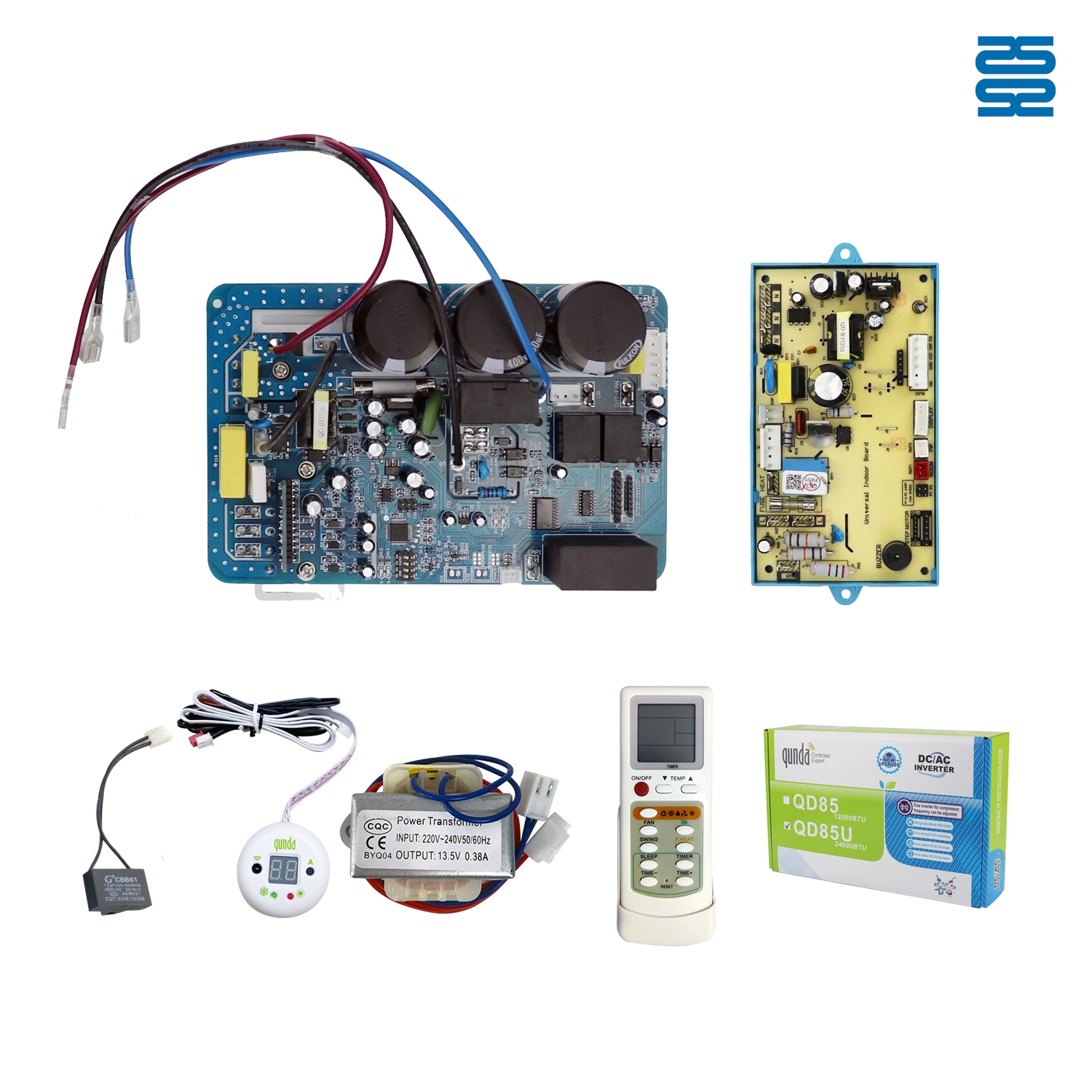
Universal Inverter Air Conditioner Control System QD85U
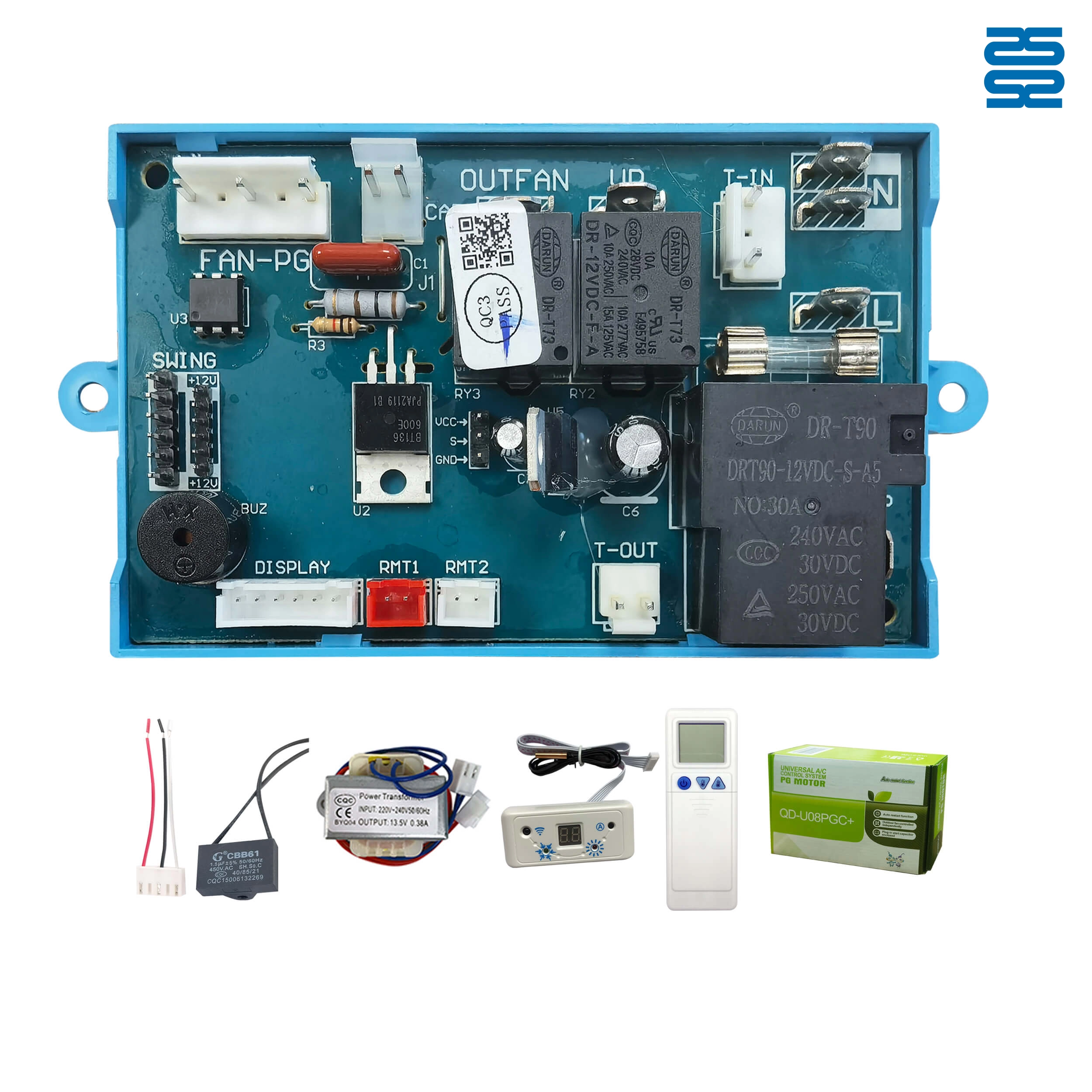
Qunda Universal Air Conditioner Control Board QD-U08PGC+
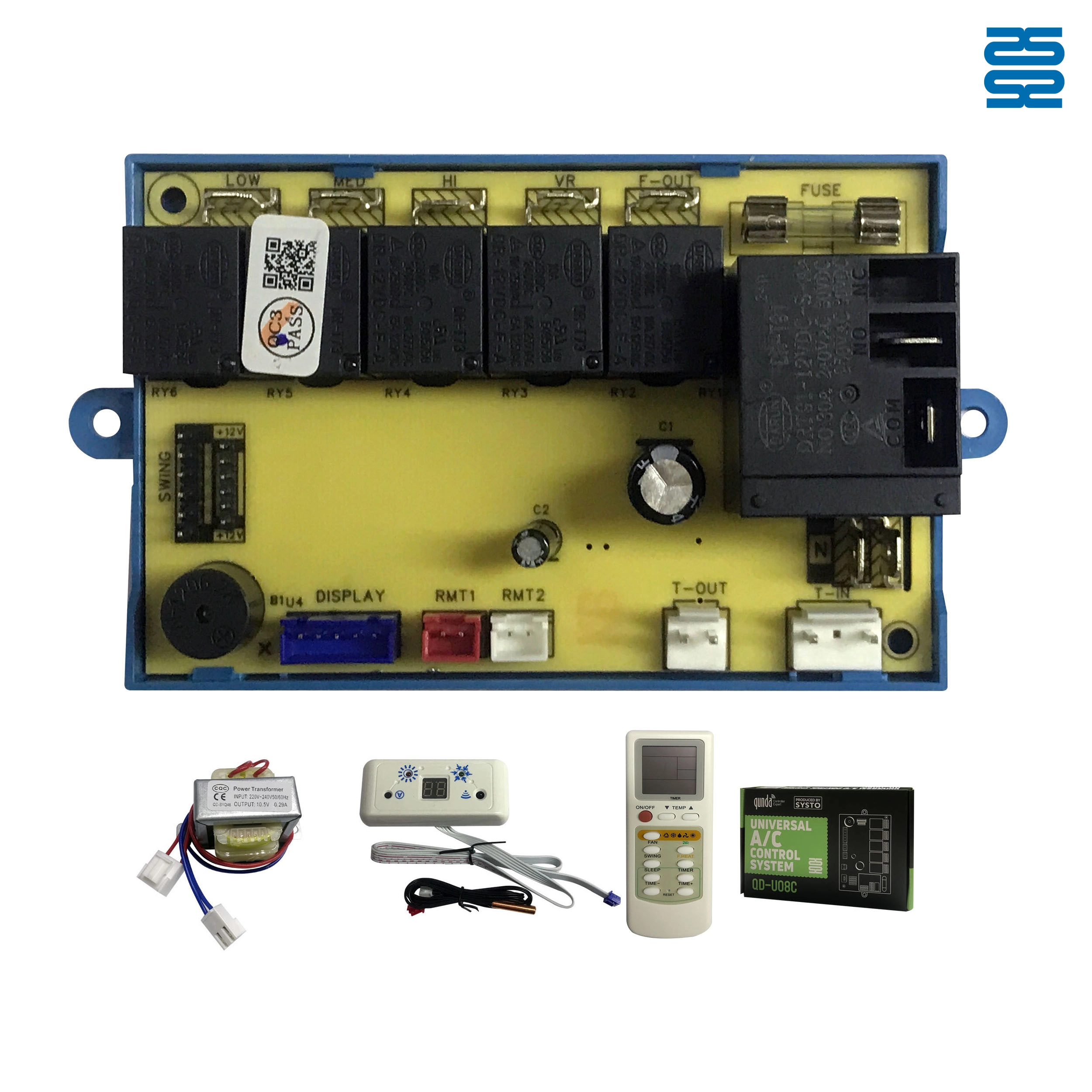
Universal Air Conditioner Control System Board QD-U08C+B for Wall-Mounted Split Units

AN-MR22GA NPDL AKB76039902 LG Magic TV Remote with Voice
◼ Let’s Build Together
Get in Touch with SYSTO
If you have any comments or good suggestions, please leave us a message, later our professional staff will contact you as soon as possible.


Contact
Email us
Text or Call us
Address
Room 1606, No. 65, Zhongshan Seven Road, Liwan District, Guangzhou, Guangdong, China.

Facebook
Instagram
YouTube
Tik Tok
VK