






What features matter in a commercial air conditioner control system?
A practical buyer’s guide answering six advanced, long-tail questions about commercial air conditioner control systems: remote supervisory architecture, cybersecurity requirements, legacy protocol integration (BACnet/Modbus), realistic energy savings and ROI, sensor & zoning best practices, and secure OTA update procedures.
1) How can I verify a commercial air conditioner control system truly supports remote supervisory control without risking local loop stability?
Answer:Many vendors conflate “remote access” with “cloud control.” For commercial HVAC you must separate fast control loops (local, millisecond–second response) from supervisory and analytics layers (minutes–hours). Ask vendors for the following proof points:
- Architecture diagram showing local controllers (PLCs or edge controllers) that run PID loops and VFD staging on-premises, with the cloud used only for supervisory setpoint scheduling, trending, analytics and alarms. Critical loops must not rely on round-trip cloud latency.
- Local fallback behavior spec: the controller should retain configured schedules, occupancy logic and safety interlocks if cloud connection is lost for X days (specify minimum 7 days for commercial use).
- Measurable latency and jitter: request benchmarked values for local loop execution (sub-second cycle for temperature control) and for supervisory changes via cloud (typical 1–5 seconds for local LAN, up to 10–30 seconds for WAN depending on architecture). If a vendor expects <1 second control via cloud for critical loops, that’s a red flag.
- Edge compute capability: verify the edge controller CPU, memory and local DB capacity and confirm it supports local analytics and rule-processing. Ask for details (e.g., ARM Cortex-A class MCU, NVRAM, local data retention days).
- Failover testing evidence: documented factory or site test reports showing behavior during simulated WAN outage.
Procurement checklist (must-have):
- Clear statement: All control loops critical to equipment safety and stability execute locally.
- Local schedule retention >=7 days.
- Documented latency measurements and failover test reports.
Why it matters: preserving deterministic local control avoids compressor short-cycling, unstable VFD ramps and occupant discomfort while letting cloud analytics optimize setpoints and schedules.
2) What exact cybersecurity measures should I require in the RFP for a cloud-connected air conditioner control system?
Answer:Cybersecurity for HVAC is no longer optional. Specify measurable, auditable controls rather than vague promises. Minimum technical requirements you should put in the RFP:
- Network & transport security: support for TLS 1.2/1.3 with mutual authentication for cloud connections. No unencrypted Modbus RTU/TCP across untrusted networks.
- Identity & access management: RBAC (role-based access control) with audit logging and support for SSO via SAML or OAuth2; MFA required for administrative remote access.
- Device identity and attestation: unique device certificates (X.509) per controller, secure boot, and signed firmware images. Ask vendor to provide certificate issuance/rotation process.
- OTA security: firmware signed with vendor’s private key; device verifies signature before install; rollback capability if update corrupts.
- Network segmentation support: controllers support VLAN tagging and static firewall policies; recommend isolating BMS/IoT networks from corporate networks via ACLs and VLANs.
- Encryption at rest for sensitive data and strong key management. Data residency requirements for your jurisdiction (GDPR, CCPA) should be honored.
- Incident response and disclosure: published SLA for security incidents and vulnerability disclosure program.
- Penetration testing & third-party audits: require SOC 2 or equivalent, and recent pen test reports for cloud backend and device firmware (within last 12 months).
Include these contractual clauses:
- Right to audit / receive pen test summary.
- Mandatory security patches timeline (e.g., critical patches within 30 days).
Why it matters: HVAC controllers have historically been entry points for broader network attacks. Requiring these specifics aligns with NIST and industry best practices and reduces operational and regulatory risk.
3) How do I ensure compatibility between a new control system and my legacy BACnet, Modbus rooftop units and variable-frequency drives (VFDs)?
Answer:Interoperability is often the biggest procurement headache. Do not accept ‘‘supports BACnet’’ as sufficient. Request vendor to validate against your actual devices and provide an integration plan:
- Inventory & mapping: provide the vendor a complete equipment list with model numbers for rooftop units (RTUs), VFDs, chilled-water pumps and existing controllers. Require a point-to-point mapping (I/O and object IDs) as part of the proposal.
- Protocol variants and speeds: confirm support for BACnet/IP and BACnet MS/TP master/slave token passing at the baud rates in your field (e.g., 9600/38400). For Modbus, specify RTU vs TCP and register ranges.
- Object/point translation: obtain a sample BACnet object and Modbus register map for one RTU and one VFD to verify correct scaling, units, and writable setpoints. Watch for common mismatches: temperature scaling (C vs F), signed vs unsigned integers, and different zero offsets.
- VFD integration specifics: confirm support for VFD start/stop, frequency (Hz) setpoint, ramp rates, fault monitoring (fault codes), and PID cascade control if required. Also check whether the controller can perform speed referencing or uses VFD internal PID.
- Testing & commissioning plan: require factory or site commissioning that includes a BACnet/Modbus interoperability test sheet, objective acceptance tests (OAT) and a site acceptance test (SAT) with signed trace logs.
- Gateway or protocol translation: if vendor proposes a gateway, require that it preserves device-level alarms and object semantics (not just polled values). Avoid black-box cloud-only gateways that only export aggregated metrics.
Red flags: vendors that cannot provide a sample point map or insist that you must replace legacy devices to use their solution.
4) What realistic energy-savings and ROI metrics can I expect from intelligent controls and demand-response features, and how should I measure them?
Answer:Energy savings vary by baseline building performance, HVAC type and deployment quality, but industry guidance gives realistic ranges and measurement practices:
- Typical savings ranges: expect 10–30% HVAC energy reduction from proper sequence optimization, schedule and setback, VFD staging, and occupancy-based control. Studies and DOE guidance often report ~10–20% for retrofits and higher where controls are outdated.
- Demand-response and peak shaving: commercial facilities that participate in DR programs can reduce peak demand by 10–40% during curtailment events via pre-cooling and strategic setbacks.
- ROI expectations: simple paybacks commonly range 1–4 years for intelligent control retrofits that include commissioning; more conservative budgets should assume 3–5 years for lower-intensity buildings.
- Measurement & verification (M&V): use ASHRAE-approved M&V approaches (IPMVP) — typically Option B (retrofit isolation) or Option C (whole-building) depending on scope. Key metrics: kWh reduction, kW peak reduction, runtime and compressor starts reduction, and occupant comfort complaints.
- Baseline and normalization: obtain at least 12 months historical energy data (metered) and normalize for HDD/CDD (heating and cooling degree days), occupancy and process changes. Trend pre/post-commissioning and report percent savings with confidence intervals.
- Avoid over-claiming: vendors should provide case studies with verified M&V or reference customers in similar climate and building types.
Procurement tip: include M&V deliverables and savings guarantees (or shared-savings model) in the contract to align incentives and make ROI measurable.
5) Which sensors and zoning strategies must be included to avoid overcooling in mixed-occupancy commercial spaces?
Answer:Overcooling is often caused by poor sensor placement, single-point control for large zones, or ignoring internal loads and solar gain. Remedies are technical and practical:
- Use multi-point sensing for large zones: instead of a single thermostat, deploy 2–4 temperature sensors per large open-plan zone and compute an averaged or weighted setpoint; use ceiling/return-air sensors for faster response to internal loads.
- Occupancy-based control: integrate PIR/motion sensors and badge/space-scheduling data to apply setback or conditioning only to occupied areas. For mixed-use floors, consider hybrid zoning with sub-zone controllers.
- CO2 and air-quality sensors: in conference rooms and dense areas, CO2 sensors can drive ventilation modulation (demand-controlled ventilation), avoiding unnecessary cooling from overventilation.
- Sunload & external sensors: add irradiance or façade-mounted sensors for perimeter zones to modulate cooling when solar gain is high.
- VAV and zone dampers: use VAV box control with pressure-independent valves and zone dampers to match airflow to load. Ensure the BMS supports reheat avoidance algorithms and optimal dew point control to prevent simultaneous heating/cooling.
- Control strategies: implement setback/occupancy setbacks, schedule-based preconditioning, and temperature deadbands (e.g., 1–2°C) to reduce short-cycling.
Commissioning & tuning: after installation, perform zone tuning for airflow, PI/PID loop tuning and occupant feedback rounds within the first 30–90 days to remove overcooling edge cases.
6) How should I evaluate remote firmware updates, OTA reliability and rollback procedures for commercial HVAC controllers?
Answer:Remote updates are necessary for security and feature improvements, but they introduce risk if not properly managed. Require these capabilities before procurement:
- Signed firmware and secure delivery: firmware must be digitally signed and delivered over secure channels (TLS). Devices must verify signatures and certificates before installation.
- Staged rollouts and canary updates: vendor should support phased deployment (canary group) and monitoring to detect regressions before full fleet rollout.
- Atomic update and rollback: updates should be atomic (either fully applied or not) and support automatic rollback to the last-known-good firmware if watchdog or health checks fail within a specified window (e.g., 10 minutes).
- Health checks and watchdogs: devices must run post-update health checks (sensor sanity checks, control loop stability tests) and revert if values are out-of-range.
- Bandwidth and scheduling: allow admins to schedule updates during low-impact windows and throttle update bandwidth to avoid saturating site WAN links.
- Update logging & audit trail: maintain update history with timestamps, version, checksum and operator ID. Include rollback events. These logs are important for troubleshooting and compliance.
- Testing & staging environment: vendor should provide a staging environment and test harness so facility teams can test firmware on non-production devices before wide deployment.
Contractual requirements: include an SLA that defines maximum time to patch critical vulnerabilities (e.g., 30 days) and define penalties or remediation if a faulty update causes downtime.
Why this matters: the last thing you want is a firmware bug that causes widespread HVAC failures during a heat wave. Proper OTA practices reduce that risk.
Conclusion:Modern commercial air conditioner control systems deliver significant operational, comfort and energy benefits only when their architecture, cybersecurity, interoperability, sensor strategy, and update practices are specified and validated. Require documented local control behavior, detailed cybersecurity controls (TLS, RBAC, signed firmware), verified BACnet/Modbus point mapping, M&V-based energy savings guarantees, multi-point sensing and occupancy-aware zoning, plus secure, staged OTA processes with rollback. These measures protect equipment life, occupant comfort and provide measurable ROI.
For a tailored specification, test plan and quote for your site, contact SystoRemote. Visit www.systoremote.com or email [email protected] to get a quote and on-site consultation.
CRC2304V
Does this remote need any setup or pairing?
No need. Simply insert two AAA batteries to start using.
QD-U03C+
Can I adjust fan speed and temperature manually?
Yes. Fan speed (3 levels) and temperature (16°C–30°C) can be adjusted.
PU01
What voltage does the pump support?
It operates stably under 110–220V global voltage standards.
CRC86E
What if the learning process fails?
Ensure both remotes have fresh batteries, IR emitters are aligned 2-5 cm apart, and repeat the process. The remote exits learning mode automatically after 15 seconds of inactivity.
About Company
Can I visit your company or factory?
Yes, we welcome global partners to visit. Please make an appointment in advance.
Recommended For You
Infrared LED light remote for Panasonic Japan market. No setup required. Supports dimming, color adjustment, timer, and 3-channel switching.
Do solar remote controls still use lithium batteries? Learn how modern solar-powered remotes now adopt supercapacitors with USB Type-C fast charging for improved safety, durability, and long lifespan.
Learn how to check whether a garage door remote control bought online is compatible with your opener. Frequency, learning type, and easy tips explained.
Having trouble setting up a universal remote even though your TV brand is listed in the manual? Learn the real reason, common mistakes, and how to improve success by using precise TV codes.
Learn how to set up and program the CRC1130V universal remote control for your TV. This step-by-step guide covers direct brand buttons, code input, and auto search methods for quick and easy pairing.
You May Also Like
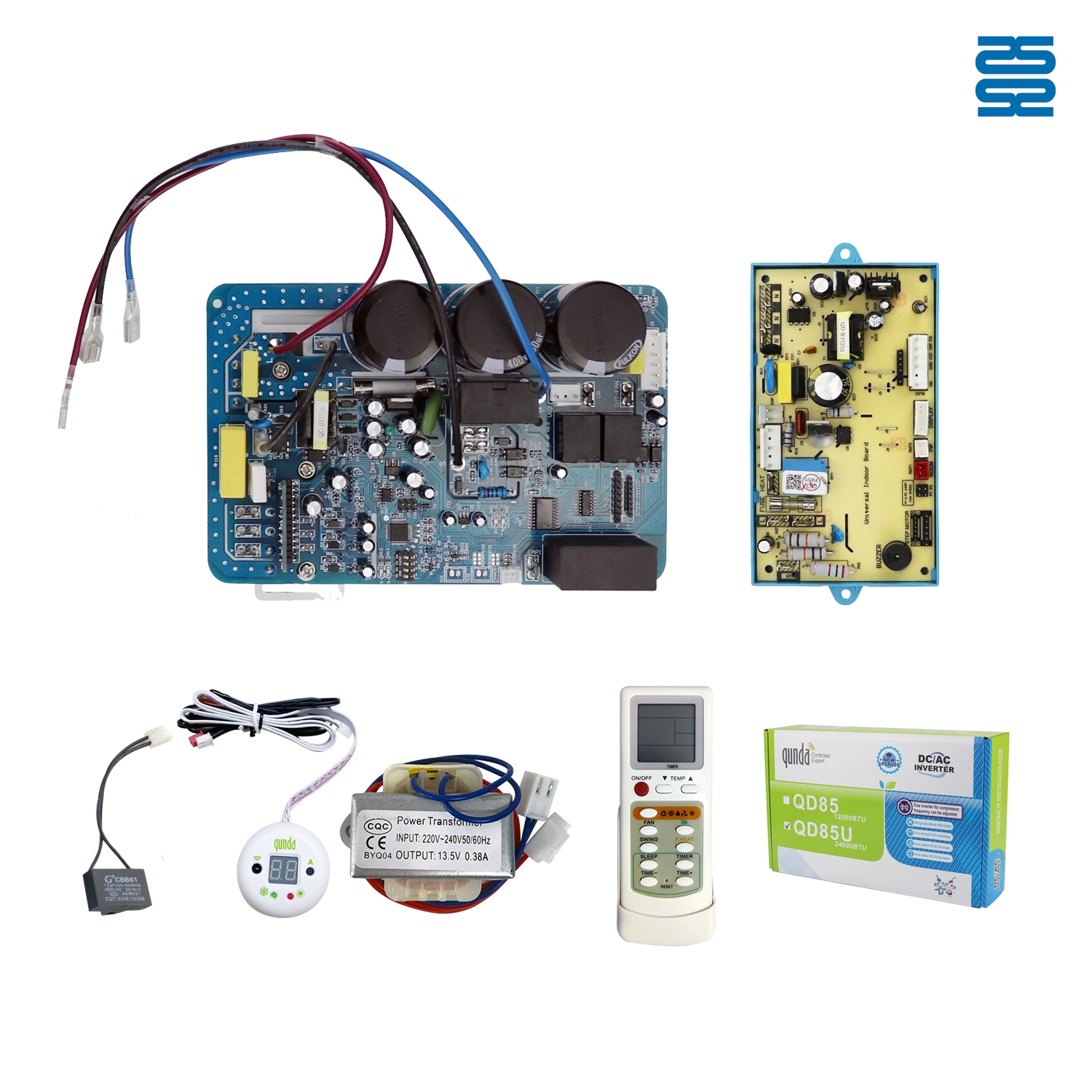
Universal Inverter Air Conditioner Control System QD85U
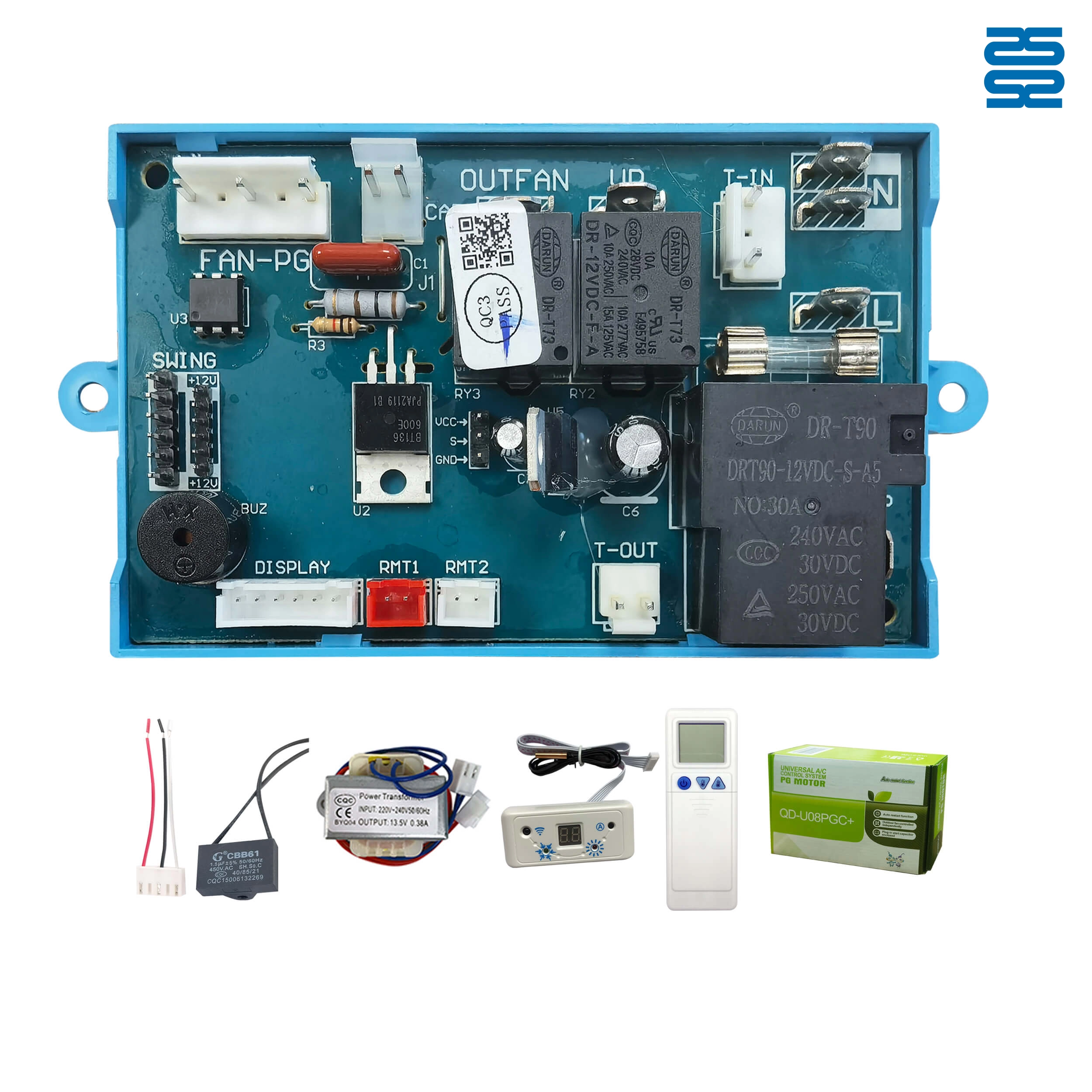
Qunda Universal Air Conditioner Control Board QD-U08PGC+
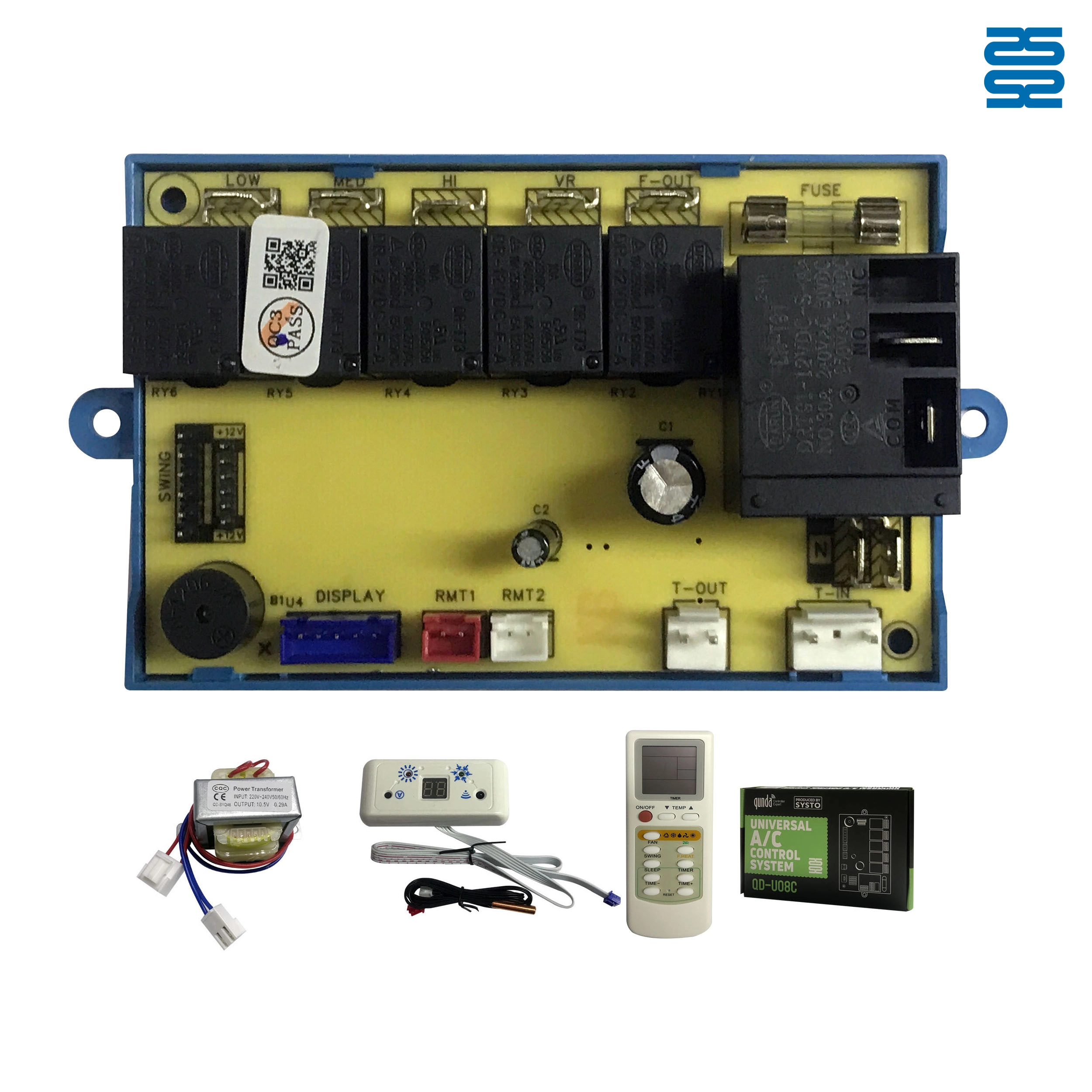
Universal Air Conditioner Control System Board QD-U08C+B for Wall-Mounted Split Units

AN-MR22GA NPDL AKB76039902 LG Magic TV Remote with Voice
◼ Let’s Build Together
Get in Touch with SYSTO
If you have any comments or good suggestions, please leave us a message, later our professional staff will contact you as soon as possible.


Contact
Email us
Text or Call us
Address
Room 1606, No. 65, Zhongshan Seven Road, Liwan District, Guangzhou, Guangdong, China.

Facebook
Instagram
YouTube
Tik Tok
VK