






The Guide to Wireless Remote Control Technology: 2026 Future Trends and Beyond
In the rapidly expanding ecosystem of the Internet of Things (IoT), the humble remote control has evolved from a simple channel-changer into a sophisticated command center. As we move through 2026, the boundaries between physical clicks and digital commands are blurring, driven by the Smart Home Protocol Matter and advanced Wireless control system integration.
What is a Wireless Remote Control?

A wireless remote control is an input device that transmits encoded commands to a receiver using invisible electromagnetic waves, enabling the operation of machinery or consumer electronics without physical tethers. These devices utilize specific communication protocols to ensure signals are decoded accurately by the target equipment.
The Core Mechanisms of Control
While the concept is simple—push a button, trigger an action—the underlying technology is complex. The remote acts as a transmitter, sending a packet of data via the Infrared (IR) spectrum or Radio Frequency (RF) signaling. The receiver, embedded in the TV, air conditioner, or industrial machine, demodulates this signal and executes the command.
Modern remotes have transcended simple one-way communication. Today, they are often transceivers, capable of sending commands and receiving status updates (like battery levels or error codes) from the host device. This bidirectional capability is essential for modern smart home dashboards and industrial safety systems.
Core Functions of Modern Remotes:
- Command Encoding: converting a button press into a binary string.
- Carrier Modulation: embedding the binary data onto a carrier wave (e.g., 38kHz for IR).
- Signal Transmission: sending the wave via LED or antenna.
- Error Correction: ensuring the signal isn't corrupted by interference.
Key Takeaways: Quick Summary of Wireless Tech
Wireless remote technology acts as the bridge between human intent and machine action, relying on three primary pillars: line-of-sight Infrared, barrier-penetrating Radio Frequency, and interconnected Bluetooth.
Critical Insights for 2026
Understanding the distinct strengths of each protocol is vital for selecting the right control system, whether for a living room or a factory floor.
- Range vs. Reliability: RF offers superior range (up to 100m) compared to IR, but IR remains the most cost-effective solution for single-room usage.
- Interoperability: The rise of the Smart Home Protocol Matter in 2026 is finally solving the "walled garden" problem, allowing remotes to control devices across different brands (Apple, Google, Amazon).
- Power Management: New energy-harvesting technologies are enabling "zero-power" remotes that recharge via ambient radio waves or kinetic button presses.
- Latency: Industrial systems prioritize sub-millisecond response times, whereas consumer TV remotes tolerate slightly higher latency.
The Evolution of Signals: From Tesla to 2026 AI Overviews
Remote control technology traces its origins back to 1898, but the most significant leaps have occurred in the last 30 years, transforming from mechanical pulses to encrypted, mesh-networked digital packets.
A Legacy of Innovation
The journey began with Nikola Tesla's "teleautomaton" boat, controlled by radio waves. However, the mass adoption of remote technology didn't explode until the mid-20th century.
Guangzhou SYSTO International Trading Limited, founded in 1998, sits right at the heart of this modern evolution. Entering the market just as digital electronics began to dominate, SYSTO witnessed and drove the shift from bulky, analog transmitters to the sleek, multi-protocol devices we see today. With over two decades of experience, companies like SYSTO have refined the manufacturing precision required to produce millions of reliable units for global markets.
Timeline of Innovation:
- 1950s: The "Lazy Bone" (wired) and "Flashmatic" (light-based).
- 1980s: Standardization of Infrared (IR) protocols.
- 1998: SYSTO is established, scaling production for global OEM/ODM demands.
- 2010s: Introduction of Bluetooth and Voice Control.
- 2026: AI-integrated remotes utilizing Matter and Thread protocols.
Technical Comparison: IR vs. RF vs. Bluetooth vs. Wi-Fi
Selecting the correct protocol depends entirely on the use case; Infrared is king of cost, Radio Frequency rules range, and Bluetooth dominates the smart home user experience.
Deep Dive into Protocols
To make an informed decision, one must compare the physical properties of the signals.
1. Infrared (IR) Spectrum IR uses light pulses invisible to the human eye. It is secure because light cannot pass through walls, preventing neighbors from controlling your TV. However, this is also its limitation; you must point the remote directly at the receiver.
2. Radio Frequency (RF) Signaling RF uses radio waves (commonly 433MHz or 2.4GHz) that penetrate solid objects. This is the standard for garage door openers and industrial cranes. It does not require line-of-sight.
3. Low-latency Bluetooth LE (BLE) Bluetooth Low Energy (BLE) has revolutionized remotes by offering low power consumption and two-way communication. It enables features like "Find My Remote" and voice search.
Comparison Matrix:
- Line-of-Sight:
- IR: Required (Strict).
- RF: Not Required.
- Bluetooth: Not Required.
- Operational Range:
- RF: High (up to 100m+).
- Bluetooth: Medium (10-30m).
- IR: Low (5-10m).
- Battery Life:
- IR: Excellent (Years).
- Bluetooth: Moderate (Months to a Year).
- Wi-Fi: Poor (Weeks, usually rechargeable).
Industry-Leading Solutions: Case Study on Integrated Wireless Systems
High-performance wireless systems require robust engineering to prevent signal interference, leveraging frequency hopping and advanced shielding to ensure 99.99% reliability in noisy environments.
The SYSTO Advantage
In the realm of Wireless control system integration, generic off-the-shelf components often fail in high-density environments. This is where OEM/ODM specialists make a difference. For instance, Guangzhou SYSTO International Trading Limited employs strict quality control standards developed over 25 years to mitigate these issues.
Consider an industrial client facing signal jamming in a factory full of heavy machinery. By switching to a custom RF solution with frequency-hopping spread spectrum (FHSS) technology—similar to what SYSTO engineers for specialized applications—latency can be reduced by up to 40%, and signal reliability is maintained even when heavy motors generate electromagnetic noise.
Benefits of Professional Integration:
- Custom PCB Design: Minimizing form factor while maximizing antenna gain.
- Protocol Optimization: Stripping unnecessary data packets to speed up response time.
- Durability: Manufacturing housing that withstands drops and environmental stress.
Expert Tips: Maximizing Range and Performance
Signal range is rarely limited by the power of the remote alone; it is often dictated by environmental factors, antenna orientation, and spectrum congestion.
Optimization Strategies
Even the most advanced Radio Frequency (RF) signaling device can fail if installed incorrectly. Use these best practices to ensure optimal performance.
- Antenna Orientation: For RF systems, ensure the receiver antenna is vertically polarized and positioned away from metal enclosures, which act as Faraday cages.
- Channel Selection: If using 2.4GHz RF, analyze the Wi-Fi environment. Channels 1, 6, and 11 are non-overlapping; set your control system to operate in the "quietest" available frequency slot.
- Repeater Deployment: In large homes or warehouses, use mesh nodes (Thread or Zigbee) to hop the signal from the remote to the hub, extending effective range indefinitely.
Common Mistakes to Avoid When Selecting a Control System
The most frequent error buyers make is prioritizing aesthetics over protocol compatibility, leading to frustrating latency issues and lack of interoperability.
Pitfalls in Procurement
According to recent market analysis, interoperability issues remain a top consumer complaint. Ignoring the Smart Home Protocol Matter in 2026 is a critical strategic error.
Avoid These Errors:
- Ignoring EMI: Failing to account for Electromagnetic Interference from nearby routers or microwaves can render an RF remote useless.
- Vendor Lock-In: Purchasing proprietary systems that cannot communicate with other smart devices limits future expansion. Always look for open standards.
- Underestimating Haptics: Touchscreens look modern but often fail in "eyes-free" operation. Physical tactile feedback is superior for volume and channel control.
The Future of Remote Technology: 2027 and Beyond
The future of remote control lies in predictive intelligence and energy autonomy, moving away from button presses toward intent recognition and battery-free operation.
Emerging Trends
By 2027, the concept of a "dead battery" may become obsolete. Companies are heavily investing in energy harvesting.
- Kinetic & RF Harvesting: New tech allows remotes to power themselves using the kinetic energy of a button press or by harvesting stray radio waves from the Wi-Fi router (e.g., WePower technologies).
- AI Intent Recognition: Remotes will utilize onboard AI to predict user intent, automatically highlighting the most likely buttons or commands based on time of day and usage patterns.
- Matter 2.0: Future iterations of the Matter protocol will support even more device types, further cementing the role of the universal remote in the unified smart home.
Frequently Asked Questions (FAQ)
What is the difference between IR and RF wireless remote controls?
IR (Infrared) technology uses light beams to send signals, requiring a direct line-of-sight to the device. RF (Radio Frequency) uses radio waves that can pass through walls and furniture, allowing for control from different rooms or hidden cabinets.
How do I pair a wireless remote to a new device?
To pair a remote, typically place the device in "Discovery Mode" by holding a specific button combination (often indicated in the manual). Then, navigate to the host device's settings (e.g., TV or Smart Hub) and select the remote's ID from the Bluetooth or RF accessory list.
Why is my wireless remote control not working despite new batteries?
This issue is often caused by signal interference or a de-sync. Other 2.4GHz devices (routers, microwaves) can crowd the frequency. Try re-pairing the remote or performing a hard reset to clear the connection cache.
What is the maximum range of a standard RF remote control?
Consumer-grade RF remotes generally operate effectively within 30 to 100 feet (10-30 meters). However, specialized industrial RF systems equipped with high-gain antennas can transmit signals up to 1,000 feet or more.
Are Bluetooth remotes superior to Infrared (IR) remotes?
It depends on the application. Low-latency Bluetooth LE remotes are superior for smart TVs as they support voice control and don't need line-of-sight. However, IR remotes are superior for battery life, simplicity, and instant "wake-up" response for basic functions.
Can I use my smartphone as a universal wireless remote control?
Yes. Many legacy smartphones have built-in IR blasters. For modern phones, apps utilizing Wi-Fi or Bluetooth can control smart devices. The Smart Home Protocol Matter further enhances this by allowing a single app to control devices from multiple brands.
What is the Matter protocol in modern 2026 remotes?
Matter is an industry-unifying standard that allows smart devices (lights, locks, TVs) to communicate securely and locally, without relying on the cloud. It ensures that a remote from Brand A can control a device from Brand B seamlessly.
How long do batteries last in high-performance wireless remotes?
Traditional IR remotes can last 12-24 months on a set of batteries. Bluetooth remotes, due to constant signal polling, typically last 3-6 months, though 2026 advancements in BLE energy efficiency are extending this lifespan significantly.
References
QD-U08PGC+
Does QD-U08PGC+ work with all wall-mounted air conditioners?
It supports most split-type wall-mounted units using PG motors. Please verify motor type before installation.
BN59-01432A
Can I order small quantities?
Yes, we support low MOQ for standard order.
CRC2304V
Which original SAMSUNG models can it replace?
Compatible with numerous Samsung remotes including AA59-00316B BN59-00457A BN59-00705A AA59-00325 BN59-00464 BN59-00706A AA59-00326 BN59-00477A BN59-00752A and more.
About Company
When was your company established?
Founded in 1998, we have over 27 years of manufacturing experience.
FAN-2989W
What batteries does it use?
Two AAA batteries (not included).
Recommended For You
Infrared LED light remote for Panasonic Japan market. No setup required. Supports dimming, color adjustment, timer, and 3-channel switching.
Do solar remote controls still use lithium batteries? Learn how modern solar-powered remotes now adopt supercapacitors with USB Type-C fast charging for improved safety, durability, and long lifespan.
Learn how to check whether a garage door remote control bought online is compatible with your opener. Frequency, learning type, and easy tips explained.
Having trouble setting up a universal remote even though your TV brand is listed in the manual? Learn the real reason, common mistakes, and how to improve success by using precise TV codes.
Learn how to set up and program the CRC1130V universal remote control for your TV. This step-by-step guide covers direct brand buttons, code input, and auto search methods for quick and easy pairing.
You May Also Like
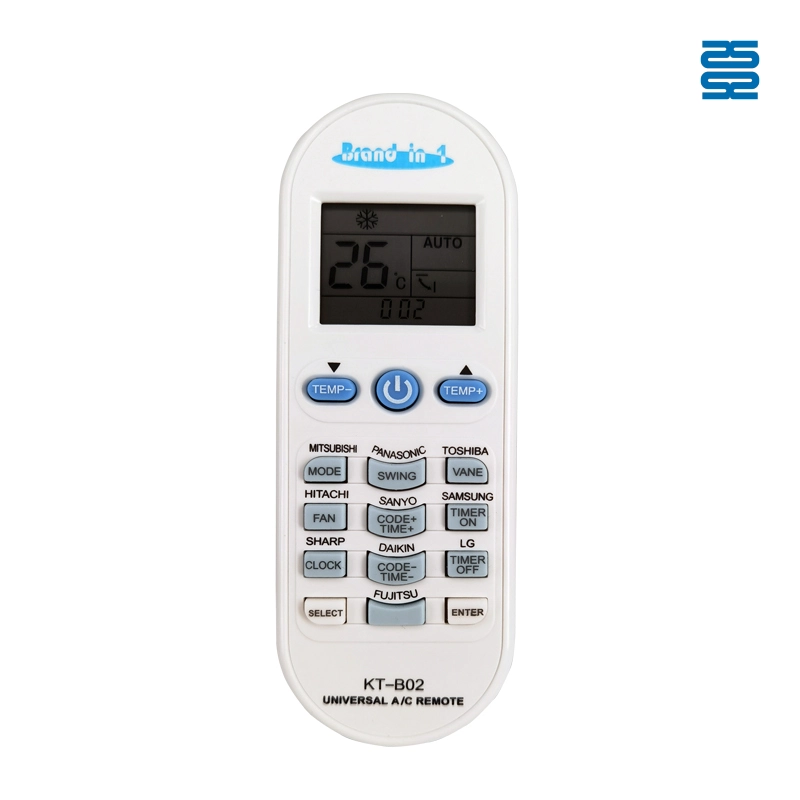
KT-B02 Universal Air Conditioner Remote Control Compatible with All Brands
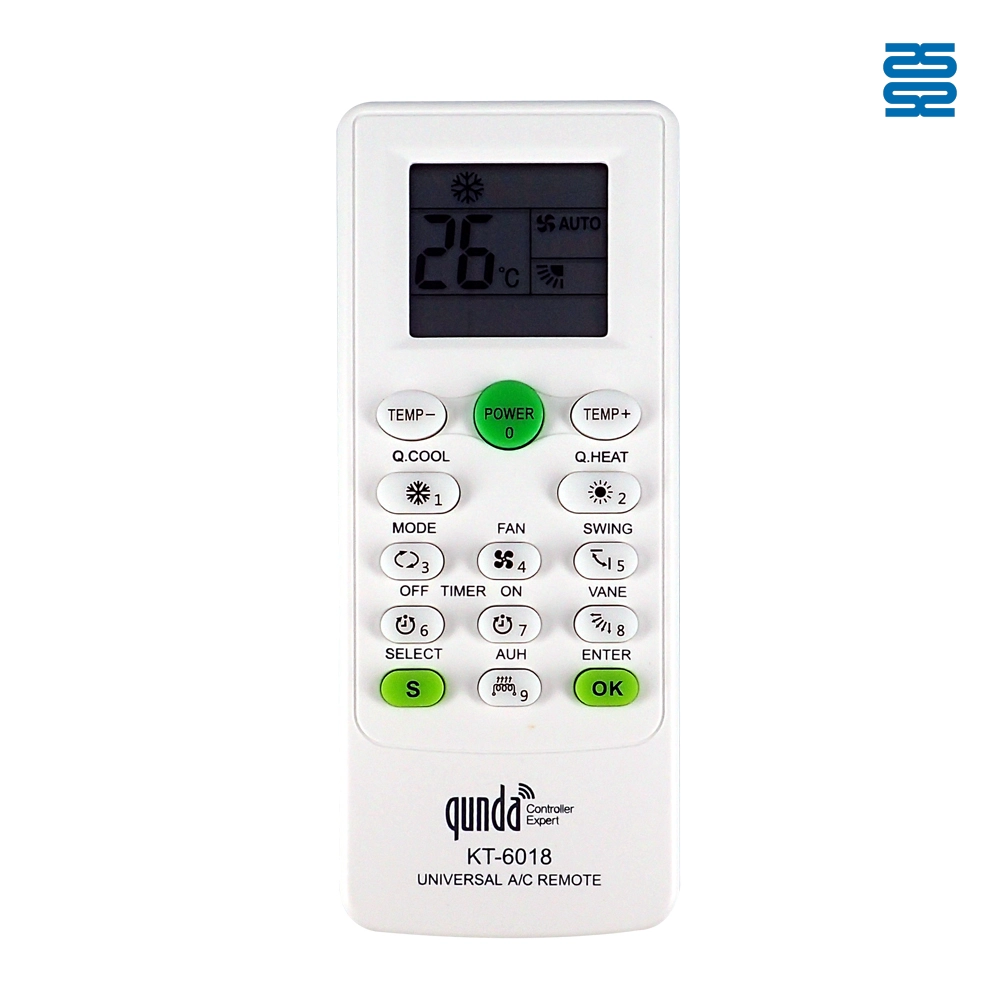
KT-6018 6000 in 1 Universal Air Conditioner Remote Control Compatible with All Brands

QD-1000 IN 1 1000 Code in 1 Universal Air Conditioner Remote Control Compatible with All Brands

KT-N828 Universal Air Conditioner Remote Control Compatible with All Brands
◼ Let’s Build Together
Get in Touch with SYSTO
If you have any comments or good suggestions, please leave us a message, later our professional staff will contact you as soon as possible.


Contact
Email us
Text or Call us
Address
Room 1606, No. 65, Zhongshan Seven Road, Liwan District, Guangzhou, Guangdong, China.

Facebook
Instagram
YouTube
Tik Tok
VK