






Navigating the Future of Remote Control Manufacturing: A 2026 & Beyond Guide to Choosing Your Partner
A comprehensive guide to the remote control manufacturing industry for 2026. Covers OEM/ODM solutions, manufacturing processes, IoT trends, and expert tips for selecting the right B2B partner, featuring insights on SYSTO's global capabilities.
What is a Remote Control Manufacturer and What Services Do They Offer?
A remote control manufacturer is a specialized entity that researches, designs, produces, and distributes wireless control devices for consumer, industrial, and smart home applications. These companies bridge the gap between user intent and device action, translating physical button presses or voice commands into digital signals. Beyond simple assembly, leading manufacturers provide end-to-end OEM remote control solutions, handling everything from the initial circuit board design to the final ergonomic casing.
Modern manufacturers act as strategic partners rather than just factories. They offer a suite of services designed to bring a product from concept to market reality:
· Original Equipment Manufacturing (OEM): Producing remotes based on exact client specifications and branding.
· Original Design Manufacturing (ODM): Creating unique designs and technologies that clients can rebrand and sell.
· Prototyping & R&D: Developing functional prototypes to test ergonomics, signal range, and battery life before mass production.
· Quality Assurance: Implementing rigorous testing for signal stability, drop resistance, and environmental durability.
Key Takeaways: Understanding the Remote Control Manufacturing Industry
The remote control industry is rapidly evolving from simple infrared devices to complex, AI-driven IoT hubs that orchestrate entire smart ecosystems. Understanding this shift is critical for businesses seeking a manufacturing partner who can deliver future-proof products. The market is moving toward high-connectivity solutions, requiring manufacturers to possess deep expertise in wireless protocols and software integration.
· Market Growth: The global remote control systems market is projected to reach approximately $4.62 billion by 2033, driven by smart home adoption (Source: Market Growth Reports).
· Technological Shift: There is a decisive move from unidirectional IR (Infrared) to bidirectional RF (Radio Frequency), Bluetooth, and Wi-Fi technologies.
· Strategic Partnerships: Success relies on selecting a manufacturer with a robust supply chain and global reach, such as SYSTO, which exports to over 30 countries, including Japan and North America.
· Sustainability: New regulations are pushing manufacturers toward eco-friendly materials and energy-harvesting technologies.
The Evolution of Remote Control Technology: From Tesla to Smart Homes
Remote control technology has evolved from Nikola Tesla’s 1898 "teleautomaton" boat to today's voice-activated, cloud-connected smart interfaces. This journey reflects a constant pursuit of convenience and range. Early mechanical remotes of the 1950s gave way to the ultrasonic "Space Command," which was eventually superseded by the Infrared (IR) standard in the 1980s that still dominates basic electronics today.
However, the modern era demands non-line-of-sight control. The integration of IoT remote control innovation has transformed the humble clicker into a command center.
· 1898: Nikola Tesla demonstrates the first wireless radio control.
· 1950s: Wired and ultrasonic remotes (Zenith Flashmatic) appear for televisions.
· 1980s: Infrared (IR) becomes the industry standard for low-cost, reliable control.
· 2000s: RF (Radio Frequency) gains popularity for garage doors and car key fobs.
· 2020s: Bluetooth Low Energy (BLE) and Wi-Fi enable voice search, motion control, and smart home integration.
Deconstructing the Remote: Core Components and How They Work
A remote control consists of a microcontroller (the brain), a transmitter (IR LED or RF antenna), and an input interface (keypad or voice mic) housed within a protective shell. When a user interacts with the device, the microcontroller scans the input, encodes a specific command sequence (like volume up), and sends it via the transmitter to the receiving device's decoder.
Understanding these components helps in specifying requirements for custom remote control development:
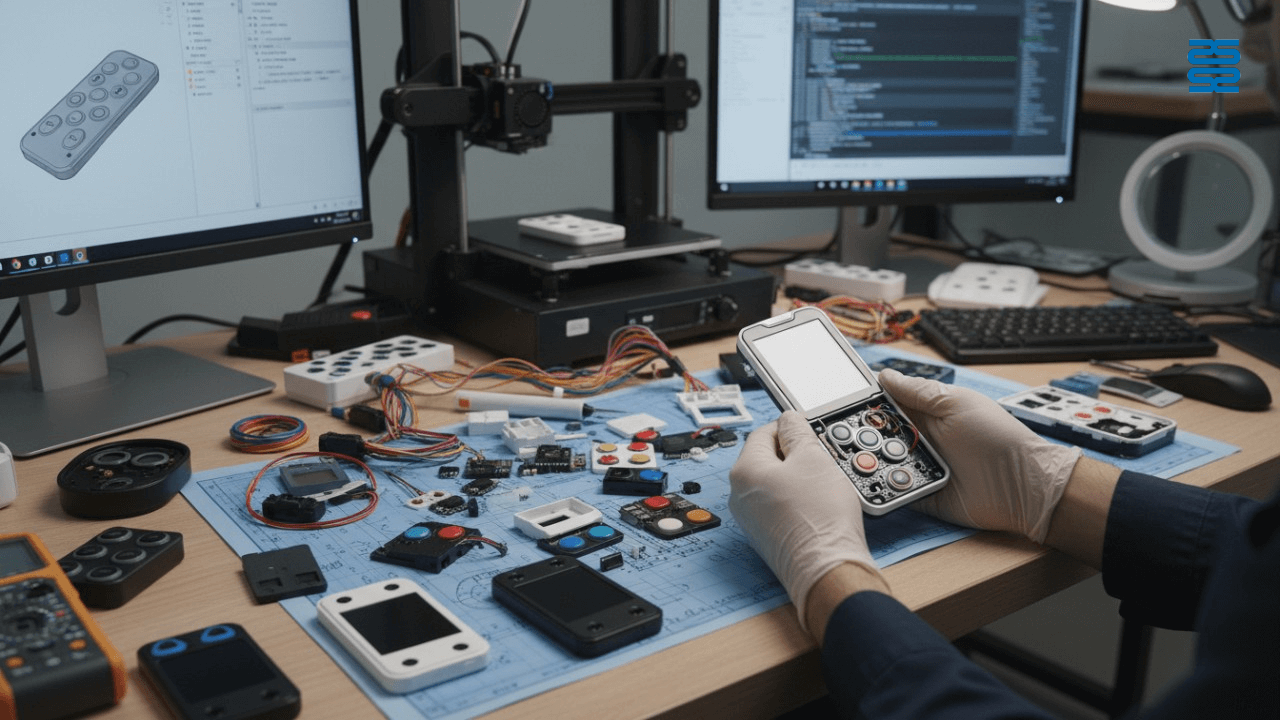
· Printed Circuit Board (PCB): The foundation holding all electronic components.
· Microcontroller (MCU): Processes inputs and generates the correct binary code protocols.
· Transmitter: IR LEDs emit invisible light pulses; RF modules broadcast radio waves for longer range.
· Conductive Rubber Keypad: Completes the circuit when pressed, triggering the signal.
· Crystal Oscillator: Maintains the precise timing frequency required for signal stability.
The Remote Control Manufacturing Process: A Step-by-Step Guide
The remote control manufacturing process is a multi-stage workflow involving PCB fabrication, surface mount assembly (SMT), plastic injection molding, and rigorous quality testing. Precision is paramount; a minor defect in the PCB etching or a misalignment in the IR LED can render the device useless. Leading manufacturers utilize automated SMT lines to ensure component placement accuracy.
Companies like SYSTO, with over two decades of experience, have refined this process to ensure stability and reliability:
1. Design & Engineering: Creating the schematic diagram, PCB layout, and 3D casing model.
2. PCB Fabrication: Etching copper pathways onto the raw circuit board material.
3. SMT Assembly: Automated machines place resistors, capacitors, and ICs onto the PCB.
4. Plastic Molding: Injection molding creates the top and bottom housing and battery cover.
5. Programming: Flashing the microcontroller with the specific firmware codes for the target devices.
6. Assembly: Combining the PCB, rubber keypad, battery springs, and casing.
7. Quality Control (QC): Testing signal strength, button response, and drop durability. SYSTO implements strict quality standards here to ensure exceptional reliability.
8. Packaging: Final boxing and preparation for global export.
Types of Remote Controls and Their Applications
Remote controls are categorized by their transmission technology (IR vs. RF) and their intended application, ranging from consumer electronics to heavy industrial machinery. While consumer remotes focus on ergonomics and aesthetics, industrial remote control suppliers prioritize durability, range, and fail-safe security protocols.
· Consumer Electronics: TV, Air Conditioner (AC), and Soundbar remotes. SYSTO specializes in these, offering dedicated AC control boards and thermostats alongside the remotes.
· Universal Learning Remotes: Devices capable of "learning" codes from existing remotes to consolidate control.
· Smart Home/Voice Remotes: Bluetooth-enabled remotes with microphones for voice assistants (Google Assistant/Alexa).
· Industrial Remotes: Ruggedized RF transmitters for cranes, mining equipment, and concrete pumps.
· Specialized Components: Beyond handhelds, manufacturers like SYSTO produce related components like condensate pumps and control boards.
Expert Tips for Choosing the Right Remote Control Manufacturer (B2B Focus)
Selecting a manufacturing partner requires evaluating their R&D capabilities, supply chain resilience, and ability to deliver flexible OEM/ODM customization. A low-cost provider may save money upfront but cost significantly more in long-term failure rates and supply delays. You need a partner who understands the intricacies of custom remote control development and international compliance.
· Verify R&D Experience: Look for established history. SYSTO, founded in 1998, brings over 25 years of R&D and design expertise.
· Assess Supply Chain Stability: Ensure the manufacturer has a comprehensive supply chain system to mitigate global component shortages.
· Check Customization Limits: Can they modify the mould? Can they rewrite firmware for unique codes? SYSTO supports customers in building their own brands through deep customization.
· Global Compliance: Ensure products meet FCC, CE, and RoHS standards for your target markets (e.g., Europe, North America).
· After-Sales Support: Choose a partner committed to long-term value and trusted partnerships, offering reliable troubleshooting and warranty support.
Challenges and Innovations in Modern Remote Control Production
Manufacturers today face the dual challenge of miniaturizing components while integrating power-hungry features like voice control and backlit keys. Balancing battery life with advanced functionality is a primary engineering hurdle. Furthermore, the push for sustainability is forcing the industry to rethink material choices and production waste.
To address this, IoT remote control innovation is driving several key changes:
· Energy Efficiency: New low-power Bluetooth protocols extend battery life significantly.
· Sustainable Materials: Shift toward recycled ABS plastics and biodegradable packaging.
· Supply Chain Resilience: Diversifying component sourcing to avoid bottlenecks seen in recent years.
· Security: Implementing encryption in RF signals to prevent hijacking, especially in industrial applications.
The Future of Remote Control Manufacturing: Trends and Opportunities (2026 and Beyond)
The future of remote control manufacturing lies in the convergence of AI, haptic feedback, and energy harvesting, creating devices that are self-powered and intuitively predictive. By 2026, we expect to see "intent-based" interfaces where the remote anticipates user needs based on viewing habits and time of day.
· Self-Charging Remotes: Integration of photovoltaic (solar) cells and RF energy harvesting to eliminate disposable batteries.
· AI & Contextual Awareness: Remotes that adapt their button layout (via touchscreens) or suggest actions based on user behavior patterns.
· Universal IoT Hubs: The remote becomes the central controller for the entire smart home, communicating via Matter and Zigbee protocols.
· Voice-First Interfaces: Enhanced natural language processing allows for complex, conversational commands rather than rigid keywords.
· Industrial Automation: Growth in the industrial wireless remote controller market is projected to reach over $1 billion by 2032 (Source: Intel Market Research), driven by Industry 4.0 and automation safety needs.
References
· Industrial Wireless Remote Controller Market Outlook 2025-2032
· Remote Control Systems & Kits Market Size & Growth
BN59-01432A
Can I order small quantities?
Yes, we support low MOQ for standard order.
CRC2605V
Are batteries included?
No, batteries are not included. Please use 2×AAA batteries.
What’s the MOQ for bulk purchase?
Regular stock supports small quantities. Custom orders depend on requirements.
AKB75095308
Can I customize this remote with my own brand logo?
Yes, we provide OEM/ODM customization for brand owners and distributors.
CRC2201V
What is the lead time for delivery?
Stock items ship immediately after payment; out-of-stock units need 15–25 working days.
Recommended For You
Infrared LED light remote for Panasonic Japan market. No setup required. Supports dimming, color adjustment, timer, and 3-channel switching.
Do solar remote controls still use lithium batteries? Learn how modern solar-powered remotes now adopt supercapacitors with USB Type-C fast charging for improved safety, durability, and long lifespan.
Learn how to check whether a garage door remote control bought online is compatible with your opener. Frequency, learning type, and easy tips explained.
Having trouble setting up a universal remote even though your TV brand is listed in the manual? Learn the real reason, common mistakes, and how to improve success by using precise TV codes.
Learn how to set up and program the CRC1130V universal remote control for your TV. This step-by-step guide covers direct brand buttons, code input, and auto search methods for quick and easy pairing.
You May Also Like
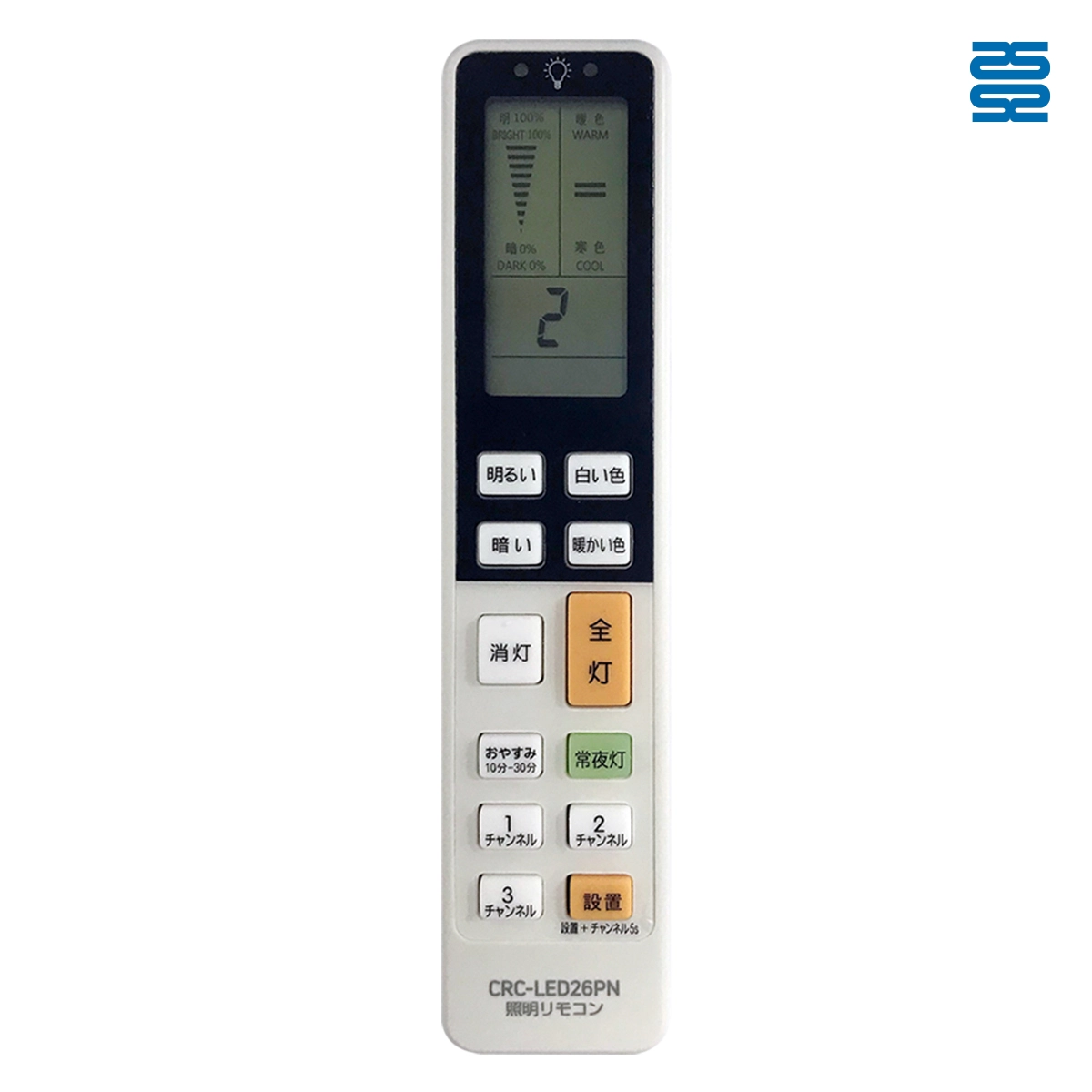
CRC-LED26PN Universal Panasonic Lighting IR Remote Control
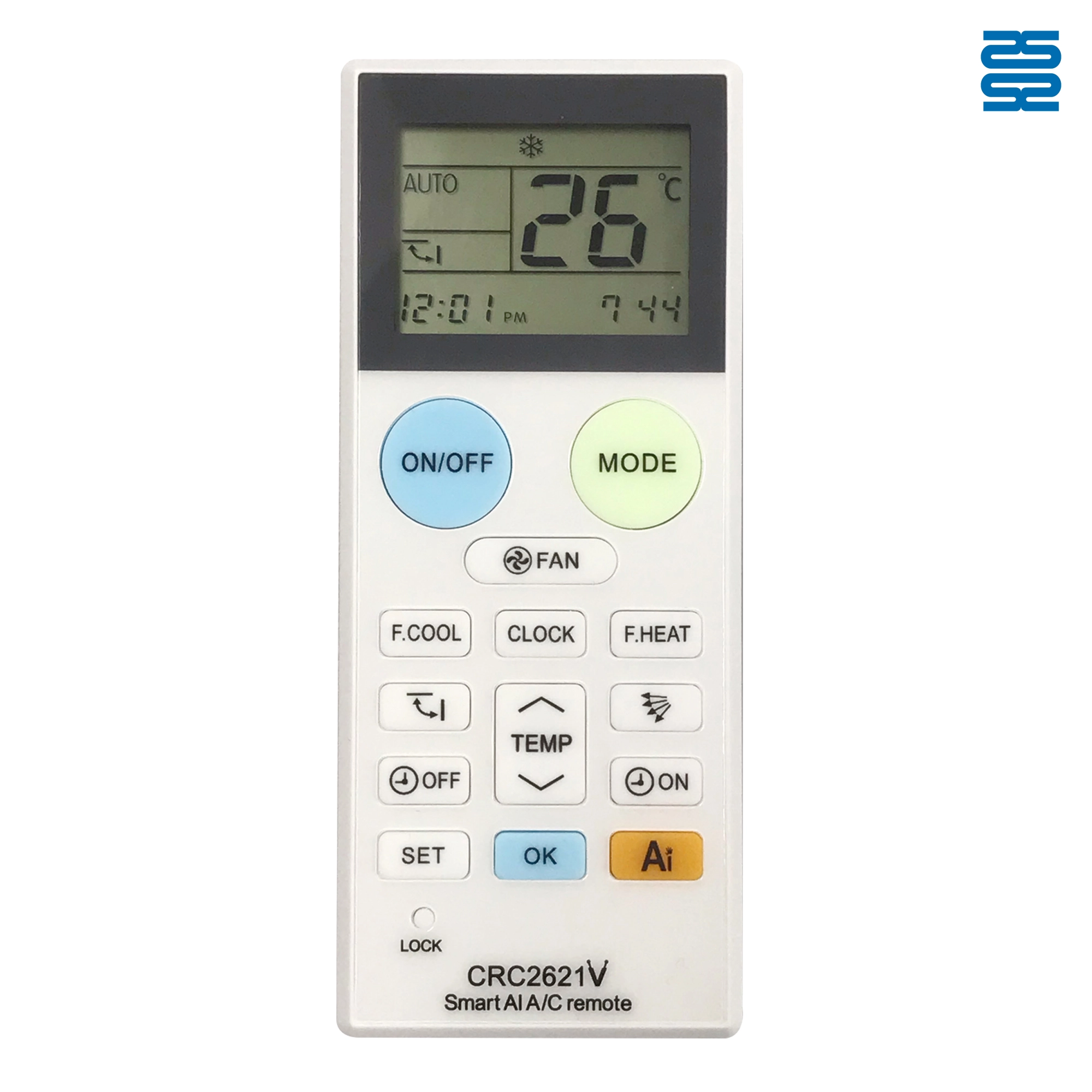
CRC2621V Universal Air Conditioner Remote Control Compatible with Local and Non-Brand
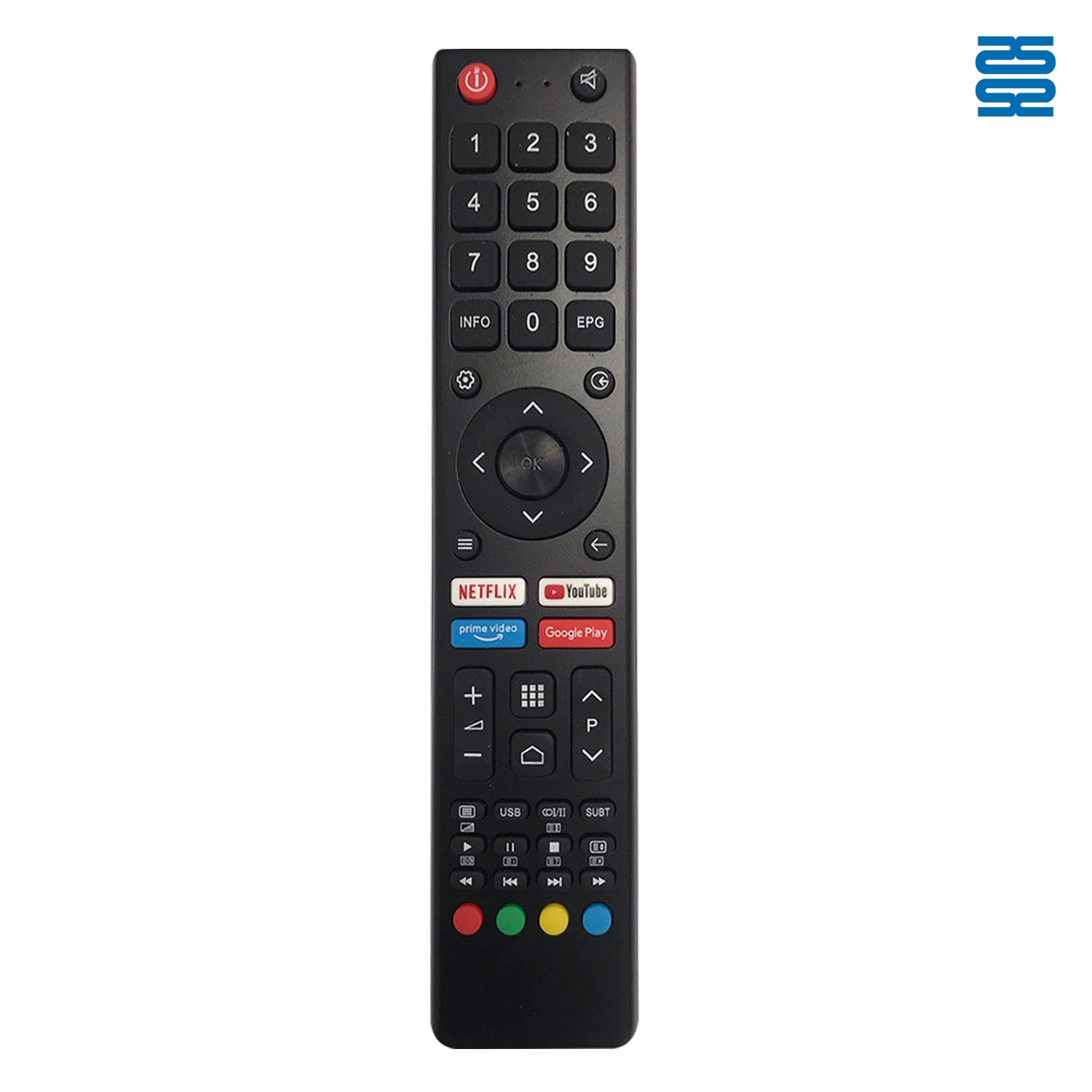
CRC2618V Changhong Universal TV Infrared Remote Control
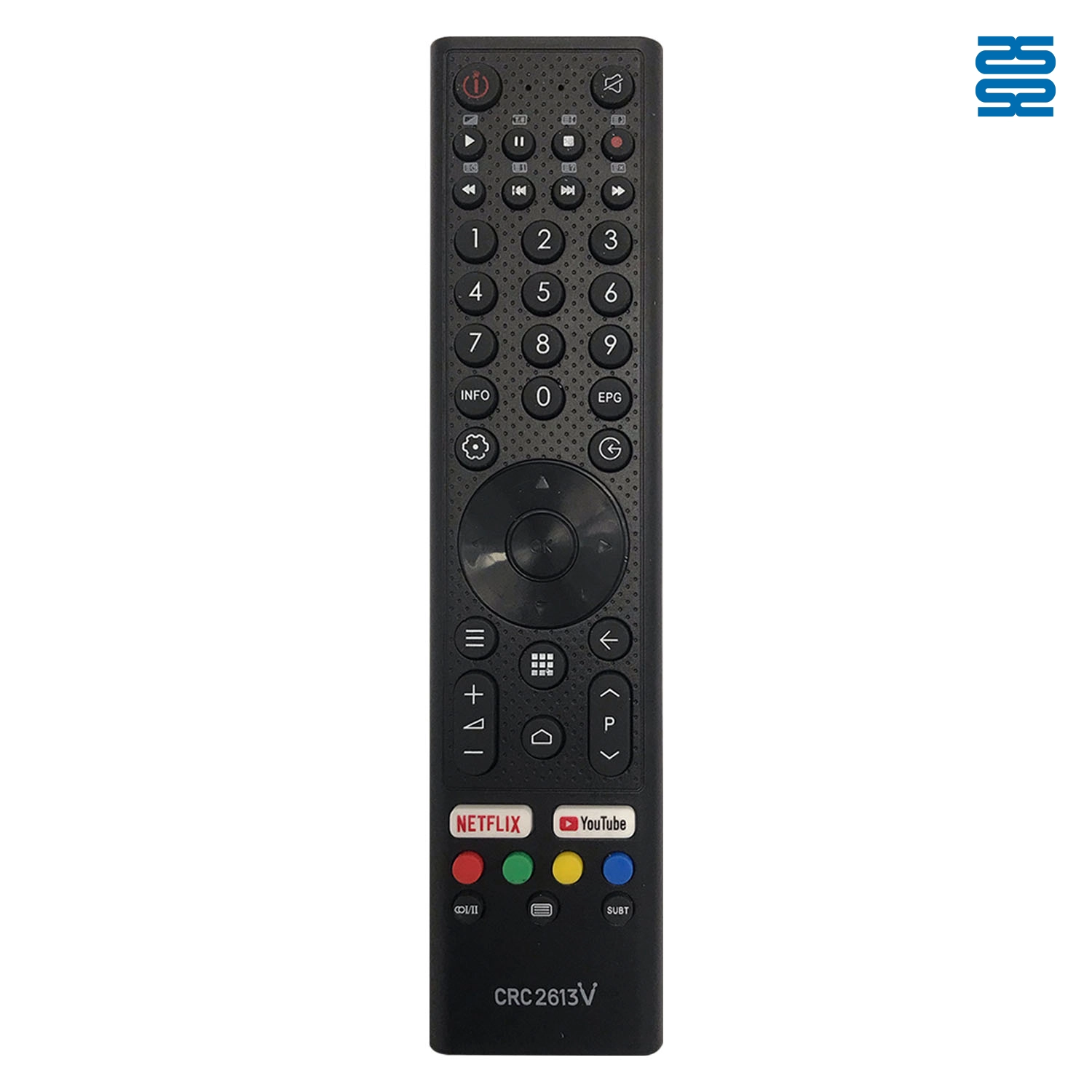
CRC2613V Changhong Universal TV Infrared Remote Control
◼ Let’s Build Together
Get in Touch with SYSTO
If you have any comments or good suggestions, please leave us a message, later our professional staff will contact you as soon as possible.


Contact
Email us
Text or Call us
Address
Room 1606, No. 65, Zhongshan Seven Road, Liwan District, Guangzhou, Guangdong, China.

Facebook
Instagram
YouTube
Tik Tok
VK