






Smart vs. Wi-Fi vs. Programmable: Choosing the Best Thermostat for Your HVAC System
Key Takeaways: Quick Guide to Thermostat Selection
- Programmable: Best for predictable schedules (e.g., 9-5 jobs). No remote access.
- Wi-Fi Enabled: Remote control via app, but requires manual adjustments.
- Smart (AI): Learns habits, uses geofencing, and optimizes automatically.
- Installation: C-wire installation requirements are critical for most smart units.
- ROI: Smart systems can reduce heating and cooling costs by roughly 8-12% annually.
What Is the Role of a Thermostat in an HVAC System?
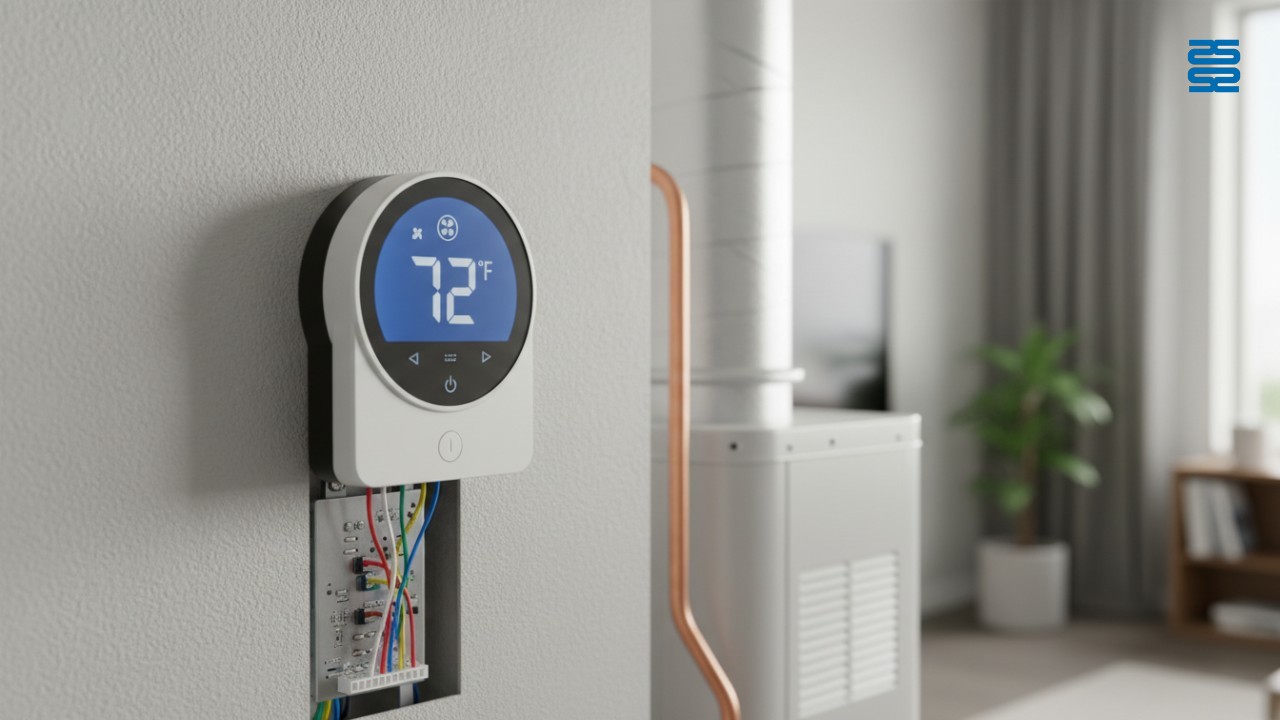
A thermostat acts as the command center of your HVAC infrastructure, functioning through a closed feedback loop that constantly monitors ambient air temperature against a set point. It signals the control board to activate the furnace, air conditioner, or heat pump when deviations occur.
While older units relied on mechanical bimetallic strips and mercury switches, modern digital thermostats utilize precision thermistors. These resistance-based sensors provide accurate readings down to a fraction of a degree. As a global leader in remote control solutions and A/C control boards, Guangzhou SYSTO International Trading Limited understands that the thermostat is no longer just a switch—it is a sophisticated computer. High-end models now manage humidity, ventilation, and multi-stage heating control, ensuring that two-stage furnaces and variable-speed fans operate at peak efficiency rather than simply blasting at 100% capacity.
Comparing the Contenders: Manual vs. Programmable vs. Wi-Fi vs. Smart
Selecting the right thermostat requires balancing your budget with your desire for automation and data. The market is divided into four distinct tiers, each offering a different level of control over your indoor climate.
- Manual (Non-Programmable): The traditional standard found in older homes. It operates on simple "set it and hold it" logic. While reliable, it leaves significant room for human error and energy waste if you forget to adjust it before leaving.
- Programmable (5-1-1 or 7-Day): These units allow you to preset schedules for weekdays and weekends. They are excellent for reducing waste during work hours but lack the flexibility to adapt if your plans change unexpectedly.
- Wi-Fi Enabled: Often confused with "smart" thermostats, these connect to the internet for remote access via a smartphone app. They are ideal for vacation homes, allowing you to adjust the temperature before you arrive, but they generally act as remote controls without intelligence.
- Smart (Learning/AI): The 2026 standard for efficiency. These devices utilize energy-saving learning algorithms to automatically generate schedules based on your actual behavior. They employ geofencing (using your phone's location) to detect when the house is empty and adjust accordingly.
According to the Department of Energy, homeowners can save as much as 10% a year on heating and cooling by simply turning their thermostat back 7°–10°F for 8 hours a day. Smart thermostats automate this process, ensuring you never miss a savings opportunity due to forgetfulness.
Technical Gap Analysis: Compatibility and The C-Wire
The most common hurdle homeowners face when upgrading to a smart system is the "C-Wire," or Common Wire. This wire provides a continuous 24V power path from the HVAC equipment to the thermostat.
- The Power Requirement: Unlike battery-operated manual units, smart thermostats require constant power to run their Wi-Fi radios and color touchscreens. Without a C-wire, the unit may try to "power steal" from the heating wire, causing the furnace to rapid-cycle or the thermostat to disconnect.
- Line Voltage vs. Low Voltage: It is critical to verify your system's voltage. Most residential central air systems are low voltage (24V). However, electric baseboard heaters often run on line voltage (120V or 240V). Installing a standard smart thermostat on a high-voltage system is a fire hazard and will destroy the unit immediately.
- Heat Pump Wiring: If you have a heat pump, the thermostat must control the reversing valve (O/B wire) and auxiliary heat strips. Incorrect wiring here can cause your expensive electric backup heat to run during mild weather, skyrocketing your electric bill.
Understanding C-wire installation requirements is vital. If your home lacks this wire, you may need a Power Extender Kit (PEK) or a professional rewire to safely install modern controls.
Expert Tips: 5 Common Thermostat Mistakes to Avoid
Even the most advanced thermostat cannot compensate for poor installation or placement. To ensure your system runs efficiently, avoid these common errors:
- The "Ghost" Readings: Placing a thermostat near a kitchen, in direct sunlight, or near a drafty window causes false temperature readings. This forces the HVAC system to overwork, cooling a room that is already cool or heating a room that is artificially warm.
- Ignoring HVAC Zoning: In multi-story homes, a single thermostat often leads to hot upper floors and freezing basements. HVAC zoning systems utilize dampers in the ductwork and independent thermostats to control different areas separately, improving comfort and efficiency.
- Tight Deadbands: Setting the heating and cooling setpoints too close together (e.g., Heat to 70°F, Cool to 68°F) can cause the system to "fight" itself, switching rapidly between heating and cooling modes.
- Blocking Airflow: Never place tall furniture or curtains in front of the thermostat or the return air vents in the same room. This disrupts the pressure balance and the device's ability to sense the ambient air correctly.
- Neglecting Updates: Smart thermostats are Internet of Things (IoT) devices. Regular firmware updates are necessary to patch security vulnerabilities and improve the AI algorithms that manage your energy usage.
Data from Energy Star suggests that properly used smart thermostats can save approximately 8% on heating and cooling bills annually, but only if installed in a location that represents the home's true temperature.
Future-Proofing Your Home with Professional Integration
As homes become more connected, the thermostat is evolving into a hub for the entire smart home. Smart home ecosystem integration allows your HVAC system to communicate with smart blinds (to block sun), ceiling fans (to circulate air), and even smoke detectors (to shut off fans during a fire).
While DIY installation is popular, professional integration ensures that your thermostat is calibrated to the specific airflow dynamics of your home. At Guangzhou SYSTO International Trading Limited, we have over two decades of experience in designing and manufacturing high-reliability control systems. Whether it is a universal learning remote or a complex A/C control board, our products are built to meet rigorous global standards.
We specialize in OEM and ODM solutions, helping partners develop customized controls that integrate seamlessly with modern Variable Refrigerant Flow (VRF) and communicating HVAC systems. By choosing professional-grade components, you ensure stable performance and long-term reliability.
Conclusion & Call to Action
Choosing between smart, Wi-Fi, and programmable thermostats depends on your lifestyle, budget, and existing wiring infrastructure. While programmable models offer basic savings for predictable schedules, smart thermostats deliver the highest ROI through AI-driven automation and remote accessibility. Ensuring your system meets voltage and C-wire requirements is the first step toward a successful upgrade.
Contact Guangzhou SYSTO International Trading Limited today to discuss our wholesale thermostat solutions or OEM/ODM services for your specific brand requirements.
BN59-01432A
Are batteries required?
No extra batteries are needed — it comes with a built-in rechargeable battery.
CRC2201V
Can I buy in small quantities?
Yes. We support small MOQ for regular models; OEM MOQ depends on customization needs.
QD-U03C+
What is the function of the “Sleep” key?
It gradually adjusts the temperature for comfortable sleeping and shuts off after 5 hours.
QD85U
What is the “Anti-Cold Wind” feature?
It delays fan operation in heating mode to ensure warm air delivery.
About Products
What battery type do your remotes use?
Most models use standard AAA or AA batteries, as specified in the product manual.
Recommended For You
Learn how to set up and program the CRC1130V universal remote control for your TV. This step-by-step guide covers direct brand buttons, code input, and auto search methods for quick and easy pairing.
This article explores the transformative shift in lighting control, moving from traditional handheld remotes to AI-driven, voice-activated smart home ecosystems. It covers the technical differences between IR, RF, and mesh protocols, the impact of the new 'Matter' standard, and future trends in biophilic design.
You May Also Like

P020745 ChiQ Smart TV Voice Remote Control Replacement

C3250 JVC Smart TV Voice Remote Control Replacement

P023040 JVC Smart TV Voice Remote Control Replacement

C3287 JVC Smart TV Voice Remote Control Replacement
◼ Let’s Build Together
Get in Touch with SYSTO
If you have any comments or good suggestions, please leave us a message, later our professional staff will contact you as soon as possible.


Contact
Email us
Text or Call us
Address
Room 1606, No. 65, Zhongshan Seven Road, Liwan District, Guangzhou, Guangdong, China.

Facebook
Instagram
YouTube
Tik Tok
VK