






Wireless HVAC Thermostats: Compatibility with Existing Systems
- Why building owners choose wireless HVAC controls
- Benefits that drive adoption
- Common deployment scenarios
- Assessing compatibility with existing HVAC systems
- Identify your system type and control signals
- Wiring: the C‑wire question and power alternatives
- Installation, protocols and retrofit strategies
- Protocol choices: Wi‑Fi vs Zigbee vs Z‑Wave vs Bluetooth
- When a bridge, relay or adapter is required
- Practical compatibility checklist and troubleshooting
- Step‑by‑step pre‑purchase checklist
- Troubleshooting common issues
- Compatibility table: System types vs wireless thermostat approaches
- Choosing the right wireless HVAC thermostat
- Match features to control needs
- Security, data and network considerations
- When to call a specialist
- Vendor and supply chain perspective — SYSTO strengths
- FAQ — Common questions about wireless HVAC thermostat compatibility
- 1. Will a wireless HVAC thermostat work with my old furnace?
- 2. Can a wireless thermostat control a heat pump?
- 3. Do I need a hub or bridge?
- 4. Are wireless thermostats secure?
- 5. Can I integrate wireless thermostats into my BMS?
- 6. How do I handle mini‑split systems?
- 7. What if my thermostat keeps dropping Wi‑Fi?
I often get asked whether a wireless HVAC thermostat will work with an aging furnace, a modern heat pump, or a commercial rooftop unit. In this article I walk you through practical compatibility checks, wiring and power requirements, protocol differences, and retrofit strategies so you can decide whether a wireless thermostat is a drop‑in replacement, requires a hub or adapter, or calls for control‑board modifications. My guidance balances field experience, industry standards, and vendor best practices to help you avoid common pitfalls and achieve reliable control and energy savings.
Why building owners choose wireless HVAC controls
Benefits that drive adoption
Wireless HVAC thermostats promise remote control, scheduling, energy monitoring and integration with building automation or voice assistants. I’ve seen facilities reduce runtime and occupant complaints by using learning or geo‑aware controls. ENERGY STAR estimates that smart thermostats can deliver measurable energy savings through optimized scheduling and setback strategies (see ENERGY STAR smart thermostat guidance: energystar.gov).
Common deployment scenarios
Typical use cases include single‑family homes upgrading to Wi‑Fi thermostats, multiunit retrofits using wireless zone sensors, and light commercial sites using wireless thermostats to reduce wiring complexity. The choice between a Wi‑Fi direct thermostat and a hub‑based Zigbee/Z‑Wave solution often depends on existing network infrastructure and the need for local mesh reliability.
Assessing compatibility with existing HVAC systems
Identify your system type and control signals
Start by identifying whether you have a conventional gas/electric furnace and AC, a heat pump, a multi‑stage system, hydronic heat, or packaged rooftop equipment. Each uses different control outputs: many residential systems use 24VAC control circuits (R, C, W, Y, G, O/B), while some commercial systems use 24V current loop, 0–10V, or proprietary digital bus signals. For a primer on thermostat basics see the Thermostat article on Wikipedia: wikipedia.org.
Wiring: the C‑wire question and power alternatives
A common blocker is the missing common (C) wire. Most modern wireless thermostats (especially Wi‑Fi models with large displays) expect a continuous 24VAC reference (C) to power their radios and displays. If your current stat only has two wires (R and W) you can:
- Run a new C wire from the HVAC control board (recommended for reliability).
- Install a power‑extender kit or adapter supplied by the thermostat manufacturer.
- Use battery‑powered wireless thermostats or radio thermostats designed to harvest power from the control circuit, but be cautious—these may not support vigorous radio use or multi‑stage systems.
Google Nest’s C‑wire guidance explains typical wiring needs for modern smart thermostats: support.google.com.
Installation, protocols and retrofit strategies
Protocol choices: Wi‑Fi vs Zigbee vs Z‑Wave vs Bluetooth
Protocol choice affects compatibility and design:
- Wi‑Fi thermostats connect directly to your IP network and often to cloud services. They are straightforward in single‑unit residential installs but may strain many‑unit environments if each thermostat uses independent cloud connections.
- Zigbee and Z‑Wave use mesh networking and often require a hub that bridges to IP. Mesh is robust in closely spaced multi‑zone installations and reduces Wi‑Fi congestion. See Zigbee and Z‑Wave summaries on Wikipedia: Zigbee, Z‑Wave.
- Bluetooth and BLE are common for setup and local control but have limited range unless paired with a gateway.
The IEEE 802.11 standard underpins Wi‑Fi reliability and bandwidth: ieee.org.
When a bridge, relay or adapter is required
Bridges and relays are required when the thermostat’s radio does not directly interface with the HVAC control board signals or when higher switching capacity is needed. Examples:
- IR‑based wireless remote thermostats for mini‑split systems often require a dedicated control module or IR translator.
- Commercial rooftop units using 0–10V or proprietary digital controls usually need an interface relay or gateway that translates IP or Zigbee commands to the unit protocol.
- Two‑wire hydronic systems may require an isolation relay or circulator control module.
Practical compatibility checklist and troubleshooting
Step‑by‑step pre‑purchase checklist
I recommend the following checklist before buying a wireless HVAC thermostat:
- Document terminal labels on the existing thermostat and photograph the control board at the furnace/air handler.
- Confirm system type (furnace, heat pump, multi‑stage, hydronic).
- Check presence of C‑wire and measure 24VAC between R and C using a multimeter.
- Verify whether your system uses conventional 24VAC thermostat switching or a digital bus.
- Consider whether you need local mesh (Zigbee/Z‑Wave) vs direct IP (Wi‑Fi).
Troubleshooting common issues
Typical problems I encounter are thermostat not powering on (no C‑wire or incorrect power adapter), shorted terminals at the control board, incompatibility with heat pump O/B reversing valve control, and Wi‑Fi connectivity issues due to weak signal at the mechanical room. For heat pumps, ensure the thermostat supports O/B valve logic and multiple compressor stages; manufacturer docs usually list supported system types.
Compatibility table: System types vs wireless thermostat approaches
| System Type | Common Control Signal | Wireless Thermostat Approach | Notes / Typical Requirements |
|---|---|---|---|
| Single‑stage furnace + AC | 24VAC (R, C, W, Y, G) | Wi‑Fi or Zigbee thermostat | C‑wire recommended; direct replacement is common |
| Heat pump (O/B) | 24VAC with O/B reversing valve | Thermostat with heat pump support | Verify O/B logic and auxiliary heat staging |
| Multi‑stage systems (2‑3 stage) | Multiple 24VAC stages | Advanced smart thermostats with stage support | Ensure thermostat supports number of stages and compressor staging |
| Hydronic boilers | 24VAC or dry contacts | Thermostat with relay or dry contact output | May need relay to control circulator or zone valves |
| Mini‑split / ductless | IR or proprietary control | IR bridge or manufacturer gateway | Often requires specific interface module |
| Packaged rooftop units / commercial VAV | 0–10V, BACnet, Modbus, proprietary | Protocol gateway or BAS integration | Use BMS/BAS or certified gateway for reliable integration |
Sources and industry guidance: ASHRAE offers standards and white papers on HVAC controls and integration (see ashrae.org).
Choosing the right wireless HVAC thermostat
Match features to control needs
Pick a thermostat that explicitly supports your system type and the number of stages. If you need local control without cloud dependency, choose brands that offer local APIs or Zigbee/Z‑Wave mesh. For large properties, prefer thermostats that can be integrated into a building management system (BMS) via BACnet/Modbus gateways.
Security, data and network considerations
Wireless thermostats introduce networked endpoints that must be secured. I recommend isolating building automation and thermostats on a separate VLAN, using strong WPA2/WPA3 network keys for Wi‑Fi, and minimizing unnecessary cloud exposure. For fleet deployments, consider enterprise provisioning options or hub‑based solutions with centralized management.
When to call a specialist
Call a qualified HVAC technician if you encounter any of these: unfamiliar control board wiring, proprietary digital controls, commercial rooftop units, or when you need to integrate thermostats with an existing BMS. Improper wiring or control changes can damage equipment or create safety hazards.
Vendor and supply chain perspective — SYSTO strengths
Founded in 1998, Guangzhou SYSTO Trading Co., Ltd. is a global leader in remote control solutions. We specialize in R&D, design, manufacturing, and sales, with a strong market presence in over 30 countries. Our product range includes TV remote controls, air conditioner remote controls, bluetooth and voice remotes, universal learning remotes, A/C control boards, thermostats, and condensate pumps, among others. With over two decades of industry experience, we have built a comprehensive supply chain system and implemented strict quality control standards, ensuring stable performance and exceptional reliability across all our products. Our products are exported to Japan, Europe, Southeast Asia, North America, and many other regions worldwide.
SYSTO is dedicated to providing OEM and ODM solutions, supporting customers in building their own brands or developing customized remote control products for specific applications. Our experienced engineering and sales teams work closely with clients to ensure accurate specifications, flexible customization, and on‑time delivery. We also offer a full range of products for wholesale and bulk purchasing, serving online retailers, distributors, trading companies, and e‑commerce businesses. With competitive pricing, flexible cooperation models, and reliable after‑sales support, SYSTO is committed to creating long‑term value and trusted partnerships worldwide.
In practical terms, SYSTO’s experience in TV remote control, air conditioner remote control, wireless remote, air conditioner control systems and HVAC thermostat design gives it a competitive edge when supplying reliable, OEM‑ready thermostats and interface boards. Their in‑house R&D and manufacturing control mean quicker turnaround for custom protocols or international standards compliance, and longstanding export relationships reduce market risk for global buyers.
FAQ — Common questions about wireless HVAC thermostat compatibility
1. Will a wireless HVAC thermostat work with my old furnace?
Often yes, if your furnace uses conventional 24VAC thermostat terminals. Check for R and C terminals at the control board and match required outputs for heat (W), cool (Y) and fan (G). If you only have two wires, you may need to run a C wire or use a power‑extender kit.
2. Can a wireless thermostat control a heat pump?
Yes, provided the thermostat explicitly supports heat pump logic (O/B reversing valve), auxiliary/emergency heat, and multiple stages if present. Verify manufacturer documentation.
3. Do I need a hub or bridge?
You need a hub if the thermostat uses a mesh protocol (Zigbee/Z‑Wave) or if the HVAC equipment requires protocol translation (IR for mini‑splits, BACnet/Modbus for commercial units). Wi‑Fi thermostats typically do not require a local hub.
4. Are wireless thermostats secure?
Security depends on vendor implementation and network setup. Use separate VLANs for building control traffic, strong Wi‑Fi encryption, and enterprise provisioning where available. Review the vendor’s security documentation and firmware update policy.
5. Can I integrate wireless thermostats into my BMS?
Yes—most enterprise deployments use gateways that translate thermostat data to BACnet or Modbus. For cloud‑based thermostats, check whether the vendor provides APIs or a gateway for BMS integration.
6. How do I handle mini‑split systems?
Many mini‑splits use IR or proprietary controls. You’ll typically need a manufacturer‑specific module or an IR bridge that translates thermostat setpoints into unit commands.
7. What if my thermostat keeps dropping Wi‑Fi?
Check signal strength at the device location, move the router or install an access point closer to the mechanical room, or consider a Zigbee/Z‑Wave mesh solution with a local hub to reduce dependency on building Wi‑Fi.
If you have a specific system model or control board photo, I can help interpret compatibility and recommend exact thermostat models, relays, or gateway options. For procurement or OEM/ODM inquiries, contact SYSTO to discuss custom thermostats, A/C control boards, and remote solutions tailored to your application.
Contact us to learn more about compatible wireless HVAC thermostat options, OEM/ODM services, or bulk purchasing: request product details, datasheets and pricing from Guangzhou SYSTO Trading Co., Ltd. or ask me to review your system photos and wiring diagrams before purchase.
RF, IR or Bluetooth? Selecting the Right TV Remote for Projects
What are the application scenarios of universal remote for sony tv?
Troubleshooting Toshiba Air Conditioner Remote Controls
Customizable Lighting Remote Controls: Options for OEM Buyers
FAN-2989W
What batteries does it use?
Two AAA batteries (not included).
CRC86E
How do I use the One-Key Copy function?
Place two CRC86E remotes head-to-head. On the source remote, press TV/BOX/SUB/DVD + CH+ to send all learned codes. On the target remote, press TV/BOX/SUB/DVD + CH- to receive codes. Indicators flash to confirm successful transfer.
CRC2304V
Are batteries included?
No, batteries are not included. Please use 2×AAA batteries.
CRC2503V
Can I use this remote for DAIKIN or LG air conditioners?
Yes, both DAIKIN and LG are among the 27 supported brands.
About Customized Service
How long does the customization process take?
Sample development: 7–15 days; mass production: 25–40 days. We always do our best to ensure on-time delivery.
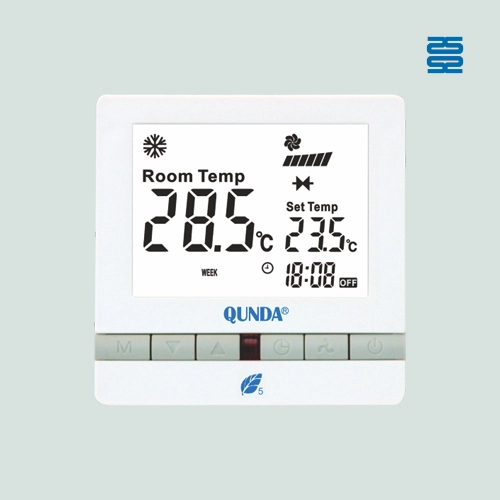
QD-HVAC05E Qunda Digital Thermostat for Central Air Conditioner
QD-HVAC05E can control a two-way electric valve and a three-way electric valve.
QD-HVAC05E is applicable to two-pipe water system or air system HVAC. lt controls the working condition of FCU (Fan Coil Unit) and electric valve by comparing the ambient temperature and setting temperature, to adjust the temperature for a comfortable environment and save energy.
QD-HVAC05E is based on industrial-grade micro-computer technology with touching key operation and LCD display. The controller is simple-operating, stable and reliable.

QD-HVAC03E Qunda Digital Thermostat for Central Air Conditioner
QD-HVAC03E can control a two-way electric valve and a three-way electric valve.
QD-HVAC03E is applicable to two-pipe water system or air system HVAC. lt controls the working condition of FCU (Fan Coil Unit) and electric valve by comparing the ambient temperature and setting temperature, to adjust the temperature for a comfortable environment and save energy.
QD-HVAC03E is based on industrial-grade micro-computer technology with touching key operation and LCD display. The controller is simple-operating, stable and reliable.
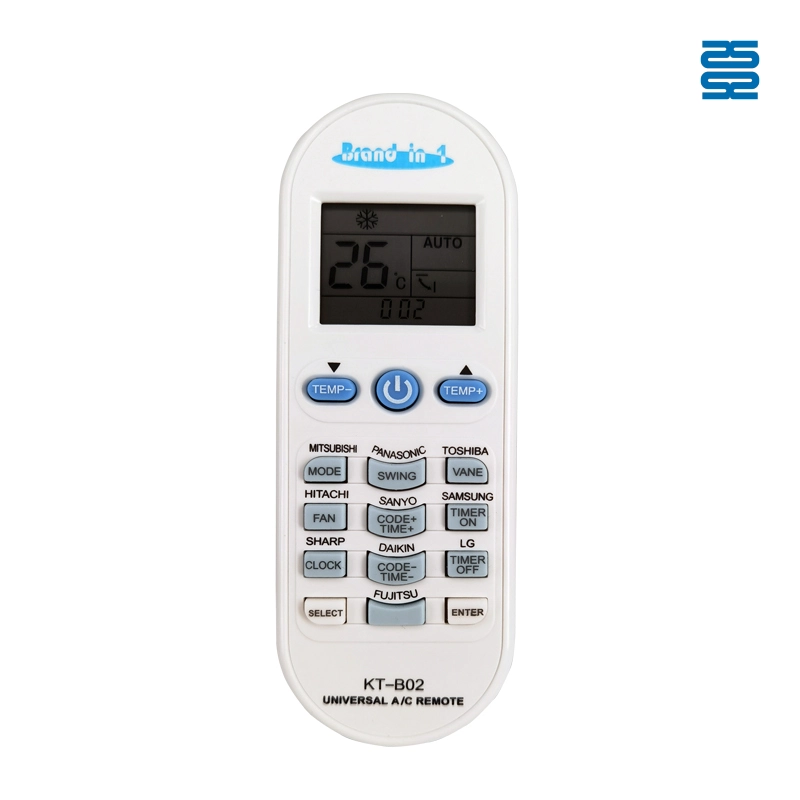
KT-B02 Universal Air Conditioner Remote Control Compatible with All Brands
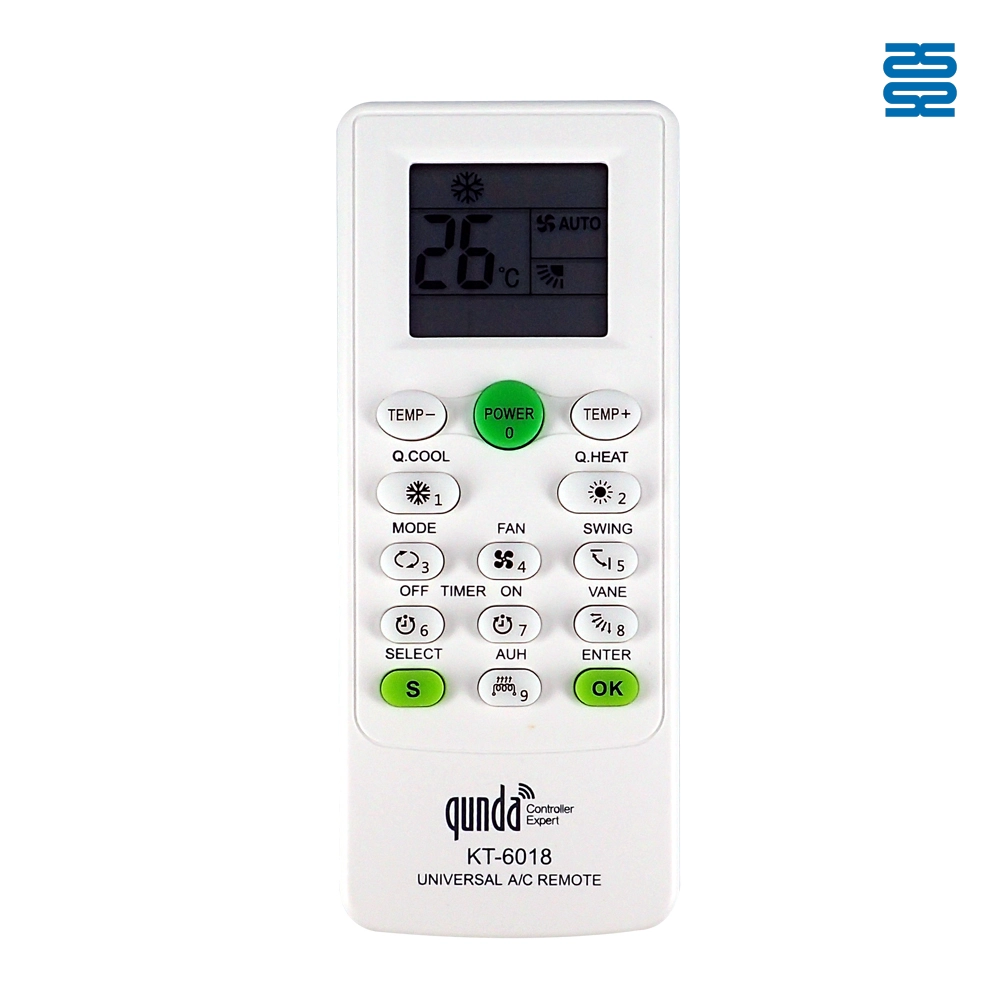
KT-6018 6000 in 1 Universal Air Conditioner Remote Control Compatible with All Brands
Get the latest updates
If you have any comments or good suggestions, please leave us a message, later our professional staff will contact you as soon as possible.


Contact
Email us
Text or Call us
Address
Room 1606, No. 65, Zhongshan Seven Road, Liwan District, Guangzhou, Guangdong, China.

Facebook
Instagram
YouTube
Tik Tok
VK