






What are the application scenarios of wireless hvac thermostat?
- Why wireless HVAC thermostats are taking off
- Market and user drivers
- How wireless meets modern expectations
- Application scenarios of wireless HVAC thermostat
- Residential single-family homes and apartments
- Commercial buildings and multi-zone systems
- Temporary sites, modular buildings and greenfield projects
- Key technologies and system integration
- Radio stacks and protocols
- Interfacing with building systems
- Deployment best practices, ROI and FAQs
- Installation and commissioning tips
- ROI, energy savings and lifecycle costs
- Frequently asked questions (FAQ)
- Q: Are wireless thermostats as reliable as wired ones?
- Q: Can wireless thermostats be used in large commercial buildings?
- Q: How secure are wireless HVAC thermostats?
- Q: What sensors and features should I prioritize?
- Conclusion: Where wireless makes the most sense
Wireless HVAC thermostats enable flexible, scalable temperature control across homes, multi-zone commercial spaces, temporary or retrofit installations, and IoT-enabled smart buildings. By removing wiring constraints and leveraging Wi‑Fi, Zigbee, Z‑Wave or proprietary RF, wireless thermostats reduce installation time, support zoning strategies, and integrate with building management systems to improve comfort and energy efficiency while simplifying maintenance and OEM customization.
Why wireless HVAC thermostats are taking off
Market and user drivers
Two decades into the smart-device era, the demand for wireless HVAC thermostats continues to grow. Homeowners want remote control and energy savings; facility managers want flexible zoning, easier maintenance and data for performance analytics. According to the U.S. Environmental Protection Agency's ENERGY STAR, programmable and smart thermostats can deliver measurable energy savings when used correctly. Wireless solutions remove wiring barriers in older buildings, lower installation labor, and accelerate deployment where wire runs are costly.
How wireless meets modern expectations
Consumers expect voice, app control, scheduling, geofencing and integration with smart assistants. Wireless HVAC thermostats (Wi‑Fi thermostats, Zigbee/Z‑Wave devices, and proprietary RF products) provide these features without invasive rewiring. For OEMs and suppliers like SYSTO, wireless designs allow flexible productization, faster time-to-market, and OEM/ODM customization to meet specific brand and market requirements.
Application scenarios of wireless HVAC thermostat
Residential single-family homes and apartments
In residential settings, wireless HVAC thermostats are popular in both new and existing homes. Typical scenarios include:
- Retrofits where thermostat wires are missing or routing new cables is disruptive.
- Smart home ecosystems requiring Wi‑Fi or Zigbee integration with voice assistants and lighting systems.
- Rental apartments and multi-family units where building owners want remote monitoring and simple tenant setup.
Wireless thermostats allow landlords and tenants to control temperature remotely, implement schedules, and reduce energy use with setback strategies. ENERGY STAR notes that proper scheduling and control strategies can reduce energy consumption for heating and cooling.
Commercial buildings and multi-zone systems
Small-to-medium commercial spaces—offices, retail stores, classrooms—benefit from wireless thermostats for zoning and centralized management without rewiring entire floors. Wireless sensors and thermostats can be grouped to create virtual zones, enabling:
- Per-room occupancy-based control for higher comfort and lower operating costs.
- Phased upgrades: add wireless thermostats to priority areas first, then scale.
- Integration with building automation systems (BAS) using open protocols or gateways.
For larger or critical systems, wireless devices can act as edge nodes feeding data to BACnet or Modbus gateways, so facility managers retain centralized oversight while enjoying flexible local control.
Temporary sites, modular buildings and greenfield projects
Construction site offices, pop-up retail, temporary healthcare facilities and modular buildings often require fast, non-permanent HVAC control. Wireless HVAC thermostats eliminate the need for structured wiring, allow quick commissioning, and can be reclaimed when a site closes or is reconfigured. This scenario also benefits disaster recovery and emergency response where speed matters.
Key technologies and system integration
Radio stacks and protocols
Wireless HVAC thermostats use a range of wireless technologies. The main options are:
| Protocol | Strengths | Typical uses |
|---|---|---|
| Wi‑Fi (802.11) | High bandwidth, direct cloud connectivity, ubiquitous home networks | Smart home thermostats, remote app control, OTA updates |
| Zigbee / Z‑Wave | Low power, mesh networking for improved range and reliability | Multi-sensor networks, low-power battery thermostats, integrated smart home ecosystems |
| Proprietary RF (433/868/915 MHz) | Simple pairing, long-range in some bands, cost-effective | Commercial retrofit devices, access-controlled systems |
| Thread / Matter (IP-based) | Interoperability focus, secure and future-ready | Next-gen smart home deployments |
Standards bodies and alliances like the Connectivity Standards Alliance (formerly Zigbee Alliance) and IEEE define interoperability and wireless performance expectations for IoT devices.
Interfacing with building systems
Integrators must decide whether a wireless thermostat will be standalone, cloud-managed, or connected to a BAS. Common approaches include:
- Direct Wi‑Fi cloud integration for consumer-focused remote control and analytics.
- Local mesh networks (Zigbee/Z‑Wave/Thread) with a gateway translating to BACnet/IP or Modbus for central building management.
- Hybrid setups where local control is prioritized and cloud services provide non-critical analytics or firmware updates.
For projects that require adherence to industry guidelines, consult organizations like ASHRAE for ventilation, control and commissioning best practices.
Deployment best practices, ROI and FAQs
Installation and commissioning tips
To maximize reliability and user satisfaction when deploying wireless HVAC thermostats:
- Survey RF environment first: identify Wi‑Fi dead zones and potential interference sources.
- Choose the right power mode: battery-backed battery-operated thermostats reduce wiring needs but require maintenance planning; line-powered devices simplify long-term reliability.
- Implement secure pairing and device management policies. Use strong WPA2/WPA3 Wi‑Fi and secure over-the-air update mechanisms.
ROI, energy savings and lifecycle costs
Energy savings depend on behavior, system efficiency and control strategy. ENERGY STAR and industry analyses often cite up to 10% savings on heating and cooling bills from effective setback and control strategies enabled by programmable or smart thermostats. Savings can be higher where zoning, occupancy sensing and data-driven HVAC optimization are applied in commercial settings.
Costs to consider:
- Hardware and gateway expenses (if required).
- Installation labor — generally lower for wireless retrofits.
- Maintenance — battery replacement for wireless battery models vs. negligible for wired thermostats.
- Cloud service or software licensing for advanced analytics.
Frequently asked questions (FAQ)
Q: Are wireless thermostats as reliable as wired ones?
A: Yes, when designed and installed correctly. Modern wireless protocols (Zigbee mesh, Thread, and robust Wi‑Fi implementations) deliver reliability comparable to wired systems. However, wireless devices should include fallback control logic so a thermostat can continue basic local control if the network or cloud is unavailable.
Q: Can wireless thermostats be used in large commercial buildings?
A: Absolutely. For large buildings, wireless thermostats typically integrate with gateways that translate device data and commands to BACnet or Modbus, preserving BAS workflows. Proper RF planning, redundancy and segmentation are important in large deployments.
Q: How secure are wireless HVAC thermostats?
A: Security depends on implementation. Use products that support secure boot, encrypted communications (TLS for cloud, WPA2/WPA3 for Wi‑Fi), firmware signing and role-based device management. Follow vendor recommendations and network segmentation to limit exposure.
Q: What sensors and features should I prioritize?
A: Prioritize occupancy sensing, temperature accuracy (±0.5°C or better for comfort-critical sites), humidity sensing (for mold control), and support for scheduling/geo-fencing if energy savings matter. For commercial applications, ensure support for remote diagnostics and OTA updates for lifecycle management.
Conclusion: Where wireless makes the most sense
Wireless HVAC thermostats excel where wiring is impractical, when phased upgrades are desirable, and when integration with smart ecosystems or cloud analytics adds value. From single-family retrofits to multi-zone commercial deployments and temporary facilities, wireless solutions reduce installation cost, speed rollout, and enable advanced control strategies that drive comfort and energy savings. Manufacturers and OEM partners—like Guangzhou SYSTO Trading Co., Ltd., with over two decades of remote control and thermostat expertise—can help tailor wireless HVAC thermostat solutions to specific markets and integration requirements.
References: foundational context on thermostats is available from Wikipedia, energy-saving guidance from ENERGY STAR, interoperability guidance via the Connectivity Standards Alliance, and HVAC engineering guidance from ASHRAE.
For OEM/ODM wireless HVAC thermostat solutions or wholesale procurement, contact SYSTO to discuss customization and bulk supply.
Top Features Buyers Want in Universal Air Conditioner Remotes
Smart Thermostat Integration with Air Conditioner Systems
What are the application scenarios of universal tv remote for hitachi?
Best wireless hvac thermostat manufacturers and supplier brands
G10S
What does it mean when the red light flashes slowly?
It indicates low battery (below 2V); please replace the AAA batteries.
BN59-01432A
Can I order small quantities?
Yes, we support low MOQ for standard order.
CRC2304V
Is it compatible with LG TVs?
Yes, it can operate LG TVs as an additional compatibility feature.
AN-MR25GA
How do I pair it with my TV?
Turn on your TV, insert the batteries, and press the “OK” button — pairing will occur automatically.
About Company
What are your main product categories?
TV remotes, air conditioner remotes, universal remotes, thermostats, control boards, condensate pumps, and more.
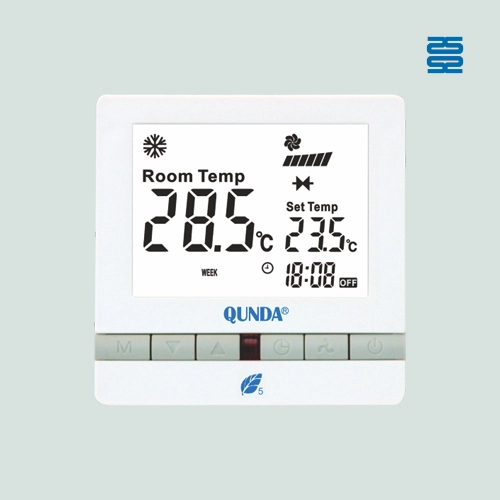
QD-HVAC05E Qunda Digital Thermostat for Central Air Conditioner
QD-HVAC05E can control a two-way electric valve and a three-way electric valve.
QD-HVAC05E is applicable to two-pipe water system or air system HVAC. lt controls the working condition of FCU (Fan Coil Unit) and electric valve by comparing the ambient temperature and setting temperature, to adjust the temperature for a comfortable environment and save energy.
QD-HVAC05E is based on industrial-grade micro-computer technology with touching key operation and LCD display. The controller is simple-operating, stable and reliable.

QD-HVAC03E Qunda Digital Thermostat for Central Air Conditioner
QD-HVAC03E can control a two-way electric valve and a three-way electric valve.
QD-HVAC03E is applicable to two-pipe water system or air system HVAC. lt controls the working condition of FCU (Fan Coil Unit) and electric valve by comparing the ambient temperature and setting temperature, to adjust the temperature for a comfortable environment and save energy.
QD-HVAC03E is based on industrial-grade micro-computer technology with touching key operation and LCD display. The controller is simple-operating, stable and reliable.
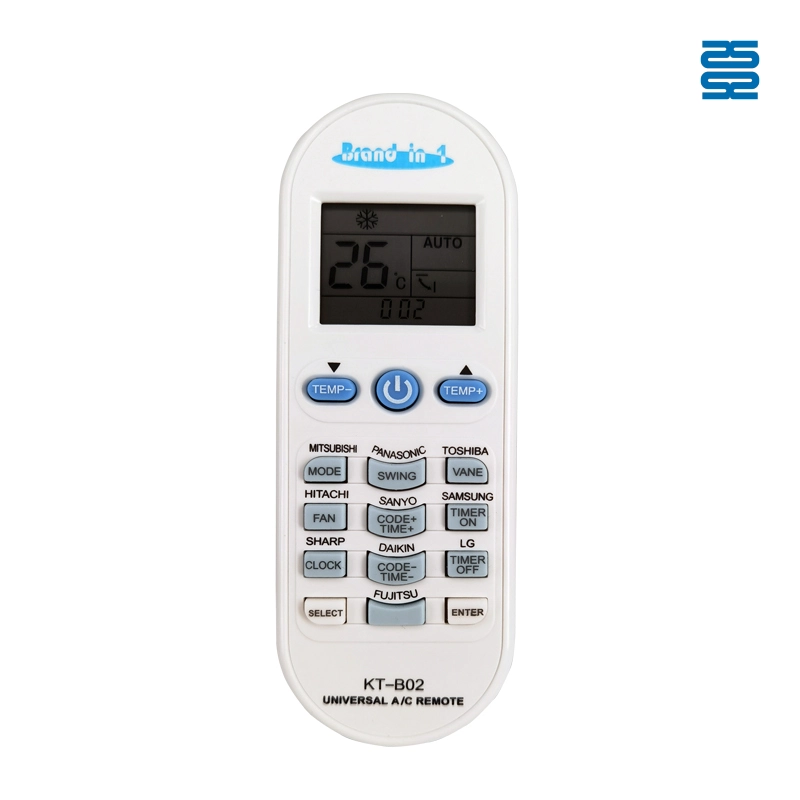
KT-B02 Universal Air Conditioner Remote Control Compatible with All Brands
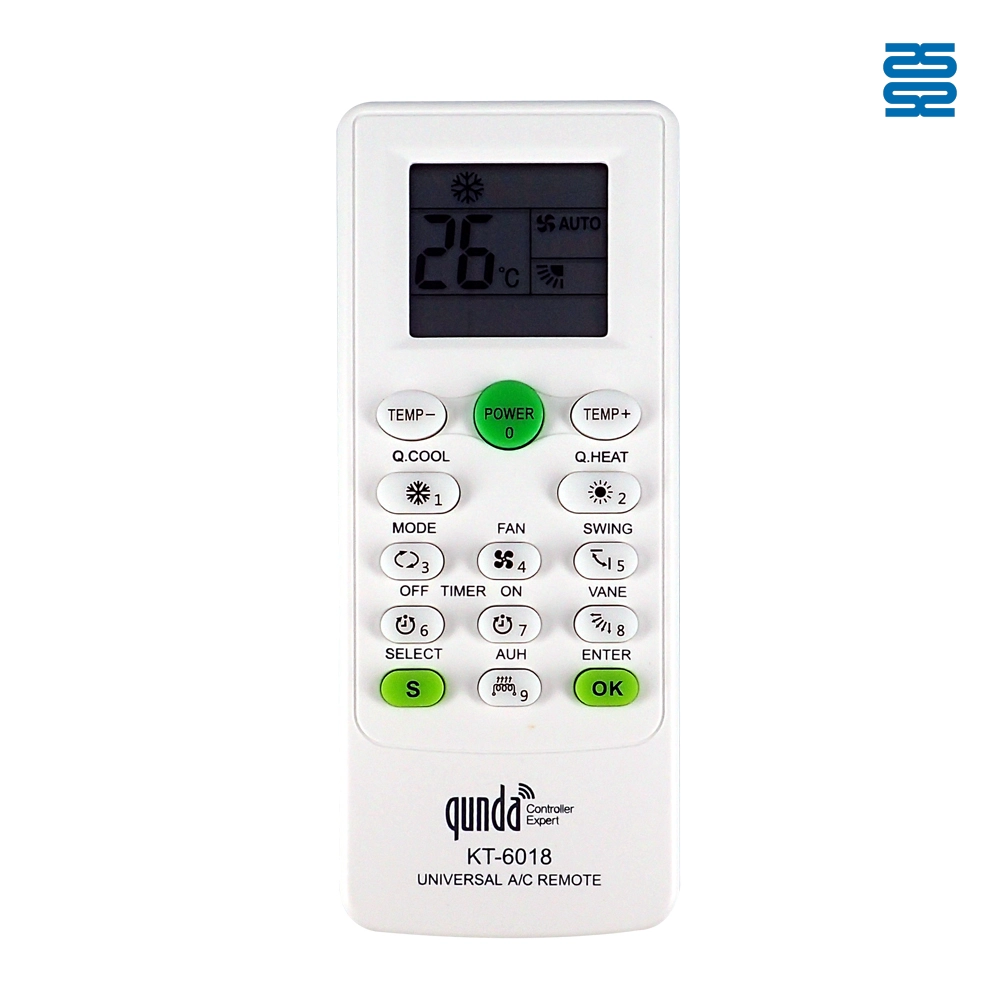
KT-6018 6000 in 1 Universal Air Conditioner Remote Control Compatible with All Brands
Get the latest updates
If you have any comments or good suggestions, please leave us a message, later our professional staff will contact you as soon as possible.


Contact
Email us
Text or Call us
Address
Room 1606, No. 65, Zhongshan Seven Road, Liwan District, Guangzhou, Guangdong, China.

Facebook
Instagram
YouTube
Tik Tok
VK