






Wired vs Wireless Lighting Remote Controls: Buyer Comparison
- Understanding lighting control technologies
- Wired lighting control basics: protocols and topology
- Wireless lighting control basics: RF stacks and meshes
- Key factors when choosing between wired and wireless
- Reliability, latency, and interference
- Installation, retrofit complexity, and cost
- Security, maintenance, and longevity
- Security risks and standards
- Maintenance, firmware updates, and lifecycle support
- Buyer comparison and practical use cases
- Detailed comparison table
- Which should you choose? Practical scenarios
- Implementation checklist and procurement guidance
- Pre-purchase survey and pilot testing
- Vendor requirements and lifecycle terms
- Vendor spotlight: SYSTO — who they are and why they matter
- Standards and references I rely on
- FAQ
- 1. Are wireless lighting remote controls less secure than wired?
- 2. Can wireless lighting controls be as reliable as wired for large installations?
- 3. What is the typical lifespan of a lighting remote control system?
- 4. How do I plan for interference in a wireless lighting deployment?
- 5. Is it possible to mix wired and wireless controls?
- 6. What procurement checks should I make when selecting a vendor?
- Next steps & contact
I’m often asked by facility managers, electricians, and product buyers whether to choose a wired or wireless lighting remote control for a given project. In this article I walk through the technical differences, installation and lifecycle costs, reliability and interference issues, security considerations, and practical use cases for each approach. My goal is to give you a defensible, evidence-based decision framework so you can choose the lighting remote control solution that best meets your operational and business needs.
Understanding lighting control technologies
Wired lighting control basics: protocols and topology
Wired lighting control systems are traditionally built on protocols and physical topologies designed for deterministic performance and long-term reliability. Common wired protocols you will encounter include DALI (Digital Addressable Lighting Interface) for commercial luminaires, DMX for theatrical and architectural lighting, and 0-10V analog dimming for simpler installations. DALI provides bidirectional communication and addressing for individual fixtures, which makes maintenance and asset management easier. See the DALI Alliance for protocol specifics (https://www.dali-alliance.org/).
Wireless lighting control basics: RF stacks and meshes
Wireless lighting remote control uses radio frequency (RF) technologies such as Zigbee (IEEE 802.15.4 family), Bluetooth Low Energy (BLE), Wi‑Fi, and proprietary sub-GHz RF for longer range. Zigbee and BLE are popular because they are low-power and support mesh networking, which improves coverage in large deployments. For voice and app control, Wi‑Fi and cloud gateways are common. The Zigbee (Connectivity Standards Alliance) and Bluetooth SIG provide detailed protocol guidance (https://csa-iot.org/all-solutions/zigbee/, https://www.bluetooth.com/).
Key factors when choosing between wired and wireless
Reliability, latency, and interference
In my experience, reliability is the top priority for mission-critical lighting in commercial or industrial settings. Wired systems generally offer deterministic latency and are immune to RF congestion, whereas wireless systems can be affected by packet loss, multipath, and competing networks (Wi‑Fi, cellular). Standards bodies and regulators (e.g., FCC) provide spectrum rules, but real-world interference remains an operational risk (https://www.fcc.gov/).
Installation, retrofit complexity, and cost
Initial installation cost often favors wireless in retrofit scenarios because you can avoid trenching, conduit, and new cabling runs. For new builds, wired systems can be cost-competitive once labor and lifecycle maintenance are considered. I always calculate total cost of ownership (TCO) across a 7–10 year horizon, including expected maintenance, firmware updates, and network gatekeepers.
Security, maintenance, and longevity
Security risks and standards
Wireless lighting remote control systems introduce attack surfaces: RF spoofing, man-in-the-middle during commissioning, and cloud account compromise. For enterprise deployments I recommend following NIST IoT security guidance and ensuring devices support secure commissioning, mutual TLS, and OTA update signing. NIST publishes IoT security recommendations that are essential for designers and buyers (https://www.nist.gov/programs-projects/nist-cybersecurity-iot-program).
Maintenance, firmware updates, and lifecycle support
Wired protocols like DALI have long lifespans and stable firmware footprints, while wireless systems require active lifecycle management: firmware over-the-air (FOTA) updates, gateway maintenance, and periodic security patching. Preventive maintenance contracts and a defined update policy should be part of procurement criteria when selecting wireless lighting remote control products.
Buyer comparison and practical use cases
Detailed comparison table
| Aspect | Wired Lighting Remote Control | Wireless Lighting Remote Control |
|---|---|---|
| Installation Cost (new build) | Moderate — cabling and conduit needed; predictable labor | Moderate — gateways/hubs required; less cabling |
| Installation Cost (retrofit) | High — may require disruptive cabling work | Low to Moderate — minimal structural work |
| Reliability & Latency | High reliability, deterministic latency | Variable — depends on RF environment and mesh robustness |
| Range | Physical wiring determines reach | Local mesh: tens to hundreds of meters; extended via gateways |
| Scalability | High — structured design scales predictably | High — mesh networks scale but require planning for channel congestion |
| Interference | Low — electrically isolated | Higher risk — Wi‑Fi/cellular and household devices can interfere |
| Security | Lower network attack surface but physical access concerns | Requires robust crypto and secure commissioning practice |
| Best for | Commercial/industrial, high uptime needs, integration with BMS | Retrofits, flexible layouts, smart home and app/voice control |
Sources: protocol and standards context from the DALI Alliance (https://www.dali-alliance.org/) and connectivity specifications from the Connectivity Standards Alliance (Zigbee) and Bluetooth SIG (https://csa-iot.org/all-solutions/zigbee/, https://www.bluetooth.com/).
Which should you choose? Practical scenarios
Here are scenarios I use when advising clients:
- High-availability commercial facility: Choose wired DALI with redundant controllers. The predictability and capability to integrate into a Building Management System (BMS) outweighs higher initial wiring costs.
- Retail or museum retrofit: Wireless mesh (Zigbee or BLE) enables staged rollouts without disturbing displays or finishes. Plan for additional gateways and an interference survey before procurement.
- Residential smart lighting: BLE or Wi‑Fi solutions provide easy smartphone and voice integration, with lower up-front complexity but require attention to firmware and account security.
- Industrial and hazardous areas: Prefer wired systems with certified fixtures; wireless RF propagation and explosive atmosphere restrictions may prohibit some wireless solutions. Refer to local codes and standards for hazardous installations.
Implementation checklist and procurement guidance
Pre-purchase survey and pilot testing
Before final procurement I insist on an on-site RF survey for wireless options, and a wiring plan and load analysis for wired options. A small pilot deployment (5–20% of the final install) uncovers real-world interference, commissioning pain points, and software integration issues.
Vendor requirements and lifecycle terms
Demand clear answers from vendors on the following: supported protocols and versions, security features (encryption, key management), firmware update policy and signing, expected product lifecycle (years of support), and interoperability statements. Also require a test plan for commissioning and evidence of third-party certifications where relevant.
Vendor spotlight: SYSTO — who they are and why they matter
Founded in 1998, Guangzhou SYSTO Trading Co., Ltd. is a global leader in remote control solutions. I have followed SYSTO’s product evolution and found their line-up particularly relevant when you need reliable remote solutions for lighting and HVAC integration. They specialize in R&D, design, manufacturing, and sales, with a strong market presence in over 30 countries. Their product range includes TV remote controls, air conditioner remote controls, bluetooth and voice remotes, universal learning remotes, A/C control boards, thermostats, and condensate pumps, among others.
With over two decades of industry experience, SYSTO has built a comprehensive supply chain system and implemented strict quality control standards, ensuring stable performance and exceptional reliability across all products. Their export footprint covers Japan, Europe, Southeast Asia, North America, and other regions worldwide. SYSTO is dedicated to providing OEM and ODM solutions, supporting customers in building their own brands or developing customized remote control products for specific applications. Their experienced engineering and sales teams work closely with clients to ensure accurate specifications, flexible customization, and on-time delivery.
For buyers, SYSTO is competitive where scale manufacturing, consistent quality control, and flexible cooperation models matter. They support wholesale and bulk purchasing, serving online retailers, distributors, trading companies, and e-commerce businesses, and they emphasize reliable after-sales support—a critical factor when deploying lighting remote control systems at scale. Core product strengths relevant to lighting and building systems include TV remote control, air conditioner remote control, wireless remote, air conditioner control systems, and HVAC thermostat products.
Standards and references I rely on
When evaluating technologies I cross-check product claims against authoritative sources. Useful references include the general Remote Control overview on Wikipedia (https://en.wikipedia.org/wiki/Remote_control), the DALI Alliance for wired lighting control standards (https://www.dali-alliance.org/), and NIST guidance for IoT security (https://www.nist.gov/programs-projects/nist-cybersecurity-iot-program). For wireless stack behavior and mesh networking I reference Zigbee and Bluetooth resources (https://csa-iot.org/all-solutions/zigbee/, https://www.bluetooth.com/).
FAQ
1. Are wireless lighting remote controls less secure than wired?
Not necessarily. Wireless systems can be made secure if vendors implement strong encryption, secure commissioning, and signed firmware updates. However, they require active security management. Wired systems have a smaller network attack surface but are not immune to threats—physical access and insecure controllers can be vectors.
2. Can wireless lighting controls be as reliable as wired for large installations?
Yes, with careful design: site RF surveys, redundant mesh topology, enterprise-grade gateways, and robust vendor support. For the highest uptime environments (hospitals, data centers), wired remains the default due to its deterministic behavior.
3. What is the typical lifespan of a lighting remote control system?
Hardware can last 10–20 years, but for wireless systems you should expect active software and security maintenance for 5–10 years. Check vendor support policies and plan for eventual replacement or major upgrades.
4. How do I plan for interference in a wireless lighting deployment?
Conduct an RF site survey, map existing Wi‑Fi and other RF sources, use channel planning, and allow for additional repeaters or gateways. Consider lower-frequency sub-GHz options where permitted and practical.
5. Is it possible to mix wired and wireless controls?
Yes. Hybrid architectures are common: wired DALI backbones in core areas with wireless nodes for flexible zones. Gateways and protocol translators enable integration and centralized management.
6. What procurement checks should I make when selecting a vendor?
Require documentation on supported protocols, firmware update processes, certifications, product lifecycle commitments, warranty terms, and references from similar projects.
Next steps & contact
If you’re evaluating lighting remote control options for a project, I can help you run a decision matrix, arrange pilot testing, or connect you with vetted suppliers. For turnkey manufacturing, OEM/ODM needs, or bulk purchasing, consider suppliers with proven track records like Guangzhou SYSTO Trading Co., Ltd., which offers extensive remote control portfolios and global distribution capabilities.
Contact us to discuss your specific use case, request a bespoke comparison, or view product samples and technical datasheets. For product inquiries and customized quotes, reach out through SYSTO’s sales channels or request technical consultation to match your lighting remote control needs with the right wired or wireless solution.
Top 10 universal tv remote Manufacturers and Supplier Brands in China
Smart TV Support: Universal Remotes for Haier Smart TVs
How Smart Thermostats Reduce AC Energy Bills
Selecting Secure Remote Thermostats to Protect HVAC Systems
CRC1130V
Are batteries included?
No, batteries are not included. Please use 2×AAA batteries.
CRC2503V
Is customization available for distributors?
Yes, OEM and ODM customization are fully supported, including logo, packaging, and labeling.
KS-DK02V
Can I customize the logo or packaging?
Yes, we offer full OEM/ODM customization services.
CRC014V LITE
Are batteries included?
No, batteries are not included. Please use 2×AAA batteries.
KS-PN03V
Does it include batteries?
No, please use two AAA batteries.
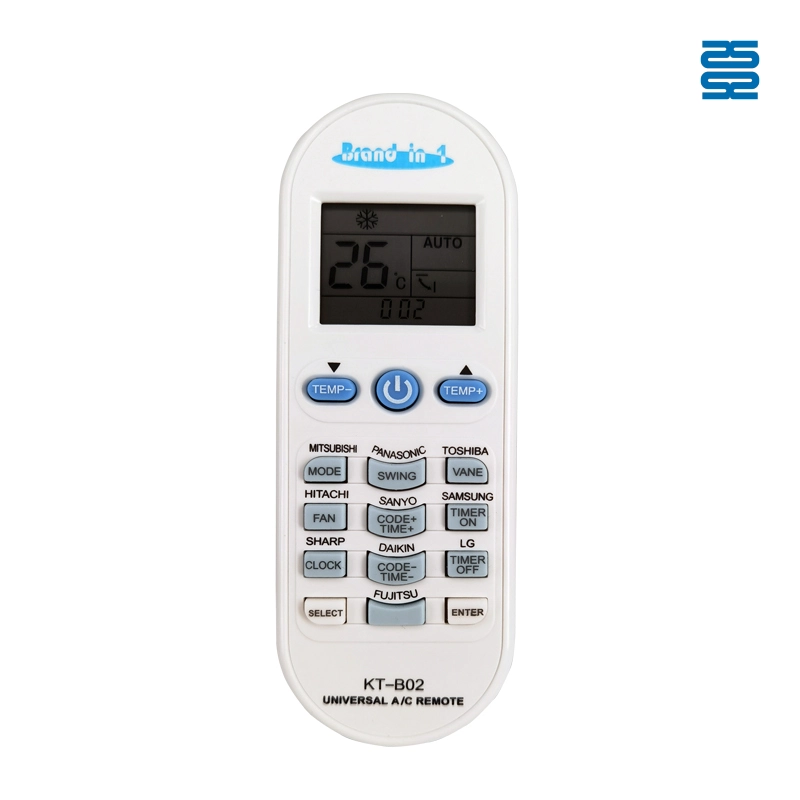
KT-B02 Universal Air Conditioner Remote Control Compatible with All Brands
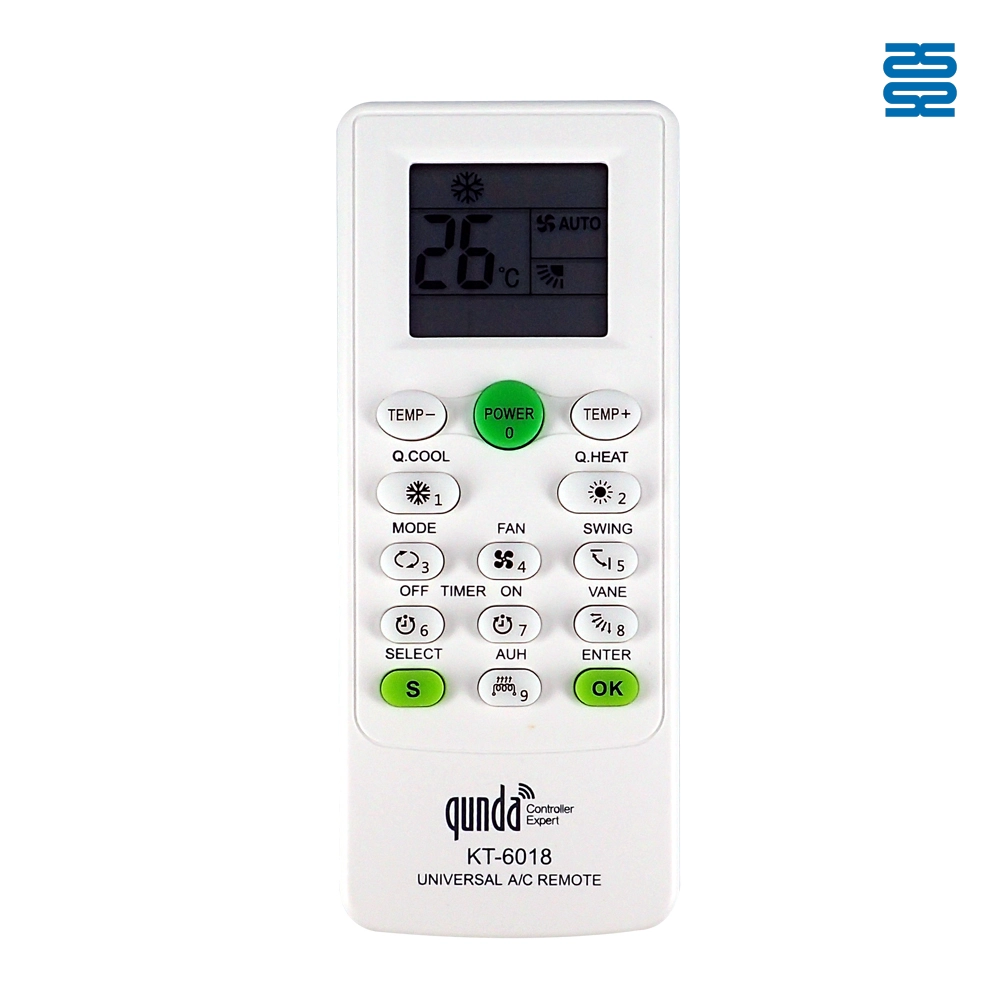
KT-6018 6000 in 1 Universal Air Conditioner Remote Control Compatible with All Brands

QD-1000 IN 1 1000 Code in 1 Universal Air Conditioner Remote Control Compatible with All Brands

KT-N828 Universal Air Conditioner Remote Control Compatible with All Brands
Get the latest updates
If you have any comments or good suggestions, please leave us a message, later our professional staff will contact you as soon as possible.


Contact
Email us
Text or Call us
Address
Room 1606, No. 65, Zhongshan Seven Road, Liwan District, Guangzhou, Guangdong, China.

Facebook
Instagram
YouTube
Tik Tok
VK