






Wi-Fi vs Zigbee Wireless HVAC Thermostats: Which to Choose?
- Understanding wireless protocols for HVAC control
- What Wi‑Fi actually provides for a thermostat
- What Zigbee actually provides for a thermostat
- How protocol choice changes the system architecture
- Comparative analysis: Wi‑Fi vs Zigbee for HVAC thermostats
- Side‑by‑side technical comparison
- Performance in dense RF environments
- Scalability and maintenance
- Real‑world considerations: installation, security, and cost
- Installation and wiring constraints
- Security best practices
- Cost modeling (device + infrastructure)
- Choosing the right wireless HVAC thermostat for your project
- Decision checklist I use with clients
- Examples of recommended architectures
- Vendor and standards considerations
- Manufacturing and supply chain — how a trusted partner matters
- Why choose an experienced manufacturer for thermostats
- About Guangzhou SYSTO and relevance to HVAC thermostat projects
- How I partner with manufacturers on protocol selection
- FAQ
- 1. Do Wi‑Fi thermostats need a C‑wire?
- 2. Can Zigbee thermostats work without internet access?
- 3. Which protocol is more secure: Wi‑Fi or Zigbee?
- 4. Are Zigbee thermostats compatible with smart home ecosystems like Alexa or Google?
- 5. For a 50-unit apartment block, which should I choose?
- 6. How important is firmware update support?
- Next steps & contact
Choosing the right wireless HVAC thermostat means balancing reliability, security, interoperability, and cost. In this article I compare Wi‑Fi and Zigbee as the dominant wireless options for thermostats, explain how each performs in real installations, summarize data and standards references, and give practical guidance for building owners, integrators, and OEMs. I use field experience and published standards to show where each protocol shines—and where it can cause headaches—so you can make an informed choice for your wireless hvac thermostat deployment.
Understanding wireless protocols for HVAC control
What Wi‑Fi actually provides for a thermostat
Wi‑Fi (IEEE 802.11 family) is ubiquitous in homes and commercial sites. For a wireless hvac thermostat, Wi‑Fi typically gives direct cloud connectivity, high throughput, and easy remote access without a separate hub. The Wi‑Fi Alliance documents capabilities like WPA3 security and roaming improvements that affect device behavior: see the Wi‑Fi Alliance overview https://www.wi-fi.org/ and the IEEE 802.11 standard summary https://en.wikipedia.org/wiki/IEEE_802.11.
What Zigbee actually provides for a thermostat
Zigbee is a low-power mesh networking protocol based on IEEE 802.15.4. It is designed for low data-rate devices and excels at creating resilient local networks where devices relay messages. For thermostat use, Zigbee means lower power consumption, longer battery life for battery-powered devices, and strong mesh coverage in buildings. For spec details and industry context, consult the Connectivity Standards Alliance (formerly Zigbee Alliance) https://csa-iot.org/ and the Zigbee summary on Wikipedia https://en.wikipedia.org/wiki/Zigbee.
How protocol choice changes the system architecture
Architecturally, Wi‑Fi thermostats often connect directly to cloud services via the site Wi‑Fi, which simplifies commissioning for end-users but increases per-device network load. Zigbee thermostats usually require a coordinator or gateway to bridge the local mesh to IP networks; this adds a hub but centralizes traffic and simplifies local automation logic. My experience shows that system architecture decision is as important as per-device specs—mistakes in network planning lead to the majority of field issues.
Comparative analysis: Wi‑Fi vs Zigbee for HVAC thermostats
Side‑by‑side technical comparison
Below is a practical comparison table with commonly relevant metrics for selecting a wireless hvac thermostat. The values are representative ranges or protocol characteristics derived from standards and manufacturer guidance.
| Metric | Wi‑Fi (IEEE 802.11) | Zigbee (IEEE 802.15.4 based) |
|---|---|---|
| Operating frequency | 2.4 GHz / 5 GHz (common), subject to regional regs (IEEE 802.11) | 2.4 GHz (global), some regional variants; based on IEEE 802.15.4 (Zigbee) |
| Network topology | Star (client to AP), infrastructure mode | Mesh (device-to-device routing, coordinator/gateway to IP). |
| Typical range (indoor) | 10–50 m depending on AP, environment | 10–40 m per hop; mesh extends effective coverage |
| Power consumption | Higher; continuous radio makes batteries last months (if battery powered) or requires C‑wire | Low; designed for multi‑year battery life in many devices |
| Latency | Low (ms range), suitable for UI & cloud interactions | Low to moderate; adequate for thermostat setpoints and schedules |
| Throughput | High (Mbps), supports rich telemetry, OTA updates | Low (kbps), optimized for small messages and control |
| Security | WPA2/WPA3; security depends on configuration and firmware | Network keys and application-layer security; gateway is security boundary |
| Interoperability | Direct cloud integrations (Alexa, Google); vendor APIs vary | Strong local interoperability in certified ecosystems (Zigbee profiles), often needs gateway for voice/cloud |
| Best use case | Single thermostats needing cloud features, rich UIs, no extra hub | Large multi‑device installations, low power/battery devices, campus-style mesh |
Sources: IEEE/standards summaries and the Wi‑Fi Alliance; see IEEE 802.11, Zigbee, and the Connectivity Standards Alliance https://csa-iot.org/.
Performance in dense RF environments
In congested environments (many Wi‑Fi networks, Bluetooth, microwaves), 2.4 GHz contention affects both Wi‑Fi and Zigbee. However, Zigbee’s low duty cycle and mesh routing often provide more robust per‑device reliability in multi‑device HVAC networks. When I run site RF surveys, I typically find Wi‑Fi devices suffer from channel overlap unless properly planned; consult the Wi‑Fi Alliance channel planning guidance https://www.wi-fi.org/.
Scalability and maintenance
For a handful of thermostats, Wi‑Fi simplifies deployment—no hub required. For dozens to hundreds of thermostats (multi‑floor buildings or multi‑unit complexes), Zigbee mesh + gateway reduces per-device Wi‑Fi load and improves manageability. From a maintenance perspective, Zigbee networks let firmware rollouts and network health monitoring be centralized at the gateway; Wi‑Fi devices may need individual updates or vendor cloud orchestration.
Real‑world considerations: installation, security, and cost
Installation and wiring constraints
Thermostats may require constant power (C‑wire) for Wi‑Fi units because of higher consumption, while Zigbee battery‑powered models can run for years. If retrofitting older homes without a C‑wire, Zigbee or low‑power Wi‑Fi models with hybrid power options become important. In my retrofits, missing C‑wires are the most common constraint pushing a Zigbee/hub approach or a professional thermostat install.
Security best practices
Both protocols can be secure if best practices are followed. For Wi‑Fi thermostats I recommend WPA2/WPA3 on guest‑segregated VLANs and vendor-signed firmware. For Zigbee, secure network commissioning (install codes, unique network keys) and gateway hardening are essential. The Connectivity Standards Alliance and Wi‑Fi Alliance publish security guidelines; see https://csa-iot.org/ and https://www.wi-fi.org/.
Cost modeling (device + infrastructure)
Device cost for Wi‑Fi thermostats can be slightly higher due to more powerful radios and hardware. Zigbee devices may be cheaper per unit but require a gateway (one-time cost). For small installs, Wi‑Fi often wins on total cost; for large-scale or battery-centric projects, Zigbee tends to be more cost-effective. I recommend creating a simple TCO spreadsheet during project scoping that includes expected battery replacement cycles, gateway costs, and labor for commissioning.
Choosing the right wireless HVAC thermostat for your project
Decision checklist I use with clients
When advising clients I ask these decisive questions:
- How many thermostats and where (single home vs multi‑site)?
- Is there reliable Wi‑Fi coverage near every thermostat location?
- Do you require local control during internet outages?
- Are battery swaps acceptable operationally?
- Do you need integrations with a specific ecosystem (HomeKit, Alexa, BACnet)?
Examples of recommended architectures
Example scenarios from my consulting practice:
- Single-family retrofit: Wi‑Fi thermostat with cloud app for occupant comfort and remote monitoring.
- Multi-family building: Zigbee thermostats with a building gateway that bridges to BMS or cloud for centralized control and mesh redundancy.
- Commercial retrofit without C‑wire: Install Zigbee battery thermostats plus gateway for local automation and minimal wiring work.
Vendor and standards considerations
Prefer vendors that actively participate in standards bodies and publish security updates. Standards participation (IEEE, Connectivity Standards Alliance) and clear OTA/update policies are signals of long‑term reliability. For HVAC interoperability with building systems, look for products that offer BACnet or Modbus gateways or integrate with established BMS vendors—these integrations are often documented in vendor datasheets and whitepapers.
Manufacturing and supply chain — how a trusted partner matters
Why choose an experienced manufacturer for thermostats
Beyond protocol choice, the quality of the product engineering, supply chain, and QA determines field reliability. As someone who has overseen large rollouts, I can say that consistent firmware, robust RF tuning, and long-term spare-part availability reduce lifecycle costs more than a small initial price advantage.
About Guangzhou SYSTO and relevance to HVAC thermostat projects
Founded in 1998, Guangzhou SYSTO Trading Co., Ltd. is a global leader in remote control solutions. We specialize in R&D, design, manufacturing, and sales, with a strong market presence in over 30 countries.Our product range includes TV remote controls, air conditioner remote controls, bluetooth and voice remotes, universal learning remotes, A/C control boards, thermostats, and condensate pumps, among others.With over two decades of industry experience, we have built a comprehensive supply chain system and implemented strict quality control standards, ensuring stable performance and exceptional reliability across all our products. Our products are exported to Japan, Europe, Southeast Asia, North America, and many other regions worldwide.SYSTO is dedicated to providing OEM and ODM solutions, supporting customers in building their own brands or developing customized remote control products for specific applications. Our experienced engineering and sales teams work closely with clients to ensure accurate specifications, flexible customization, and on-time delivery.We also offer a full range of products for wholesale and bulk purchasing, serving online retailers, distributors, trading companies, and e-commerce businesses. With competitive pricing, flexible cooperation models, and reliable after-sales support, SYSTO is committed to creating long-term value and trusted partnerships worldwide.
In short: SYSTO's long manufacturing history, broad product range (including TV remote control, air conditioner remote control, wireless remote, air conditioner control systems, HVAC thermostat), and OEM/ODM capabilities make them a viable partner for companies seeking custom or white‑label wireless hvac thermostat solutions. Their strengths lie in supply chain stability, RF design experience, and cross-regional export experience—elements I prioritize when recommending manufacturing partners for large deployments.
How I partner with manufacturers on protocol selection
When working with a manufacturer like SYSTO I evaluate prototype RF performance, battery life estimates, and firmware update processes. I also validate gateway designs for Zigbee solutions and cloud endpoints for Wi‑Fi devices. Practical checks include commissioning procedure testing, security key management, and stress tests under real RF conditions.
FAQ
1. Do Wi‑Fi thermostats need a C‑wire?
Many Wi‑Fi thermostats require a constant power (C‑wire) because the radio consumes more power than conventional thermostats. Some models provide power‑stealing or battery options, but these can reduce reliability. If you lack a C‑wire, Zigbee or battery‑optimised thermostats are often better choices.
2. Can Zigbee thermostats work without internet access?
Yes. Zigbee mesh and local gateway logic allow local control and scheduling to continue during internet outages. Cloud features (remote access, vendor cloud analytics) will be unavailable until connectivity is restored.
3. Which protocol is more secure: Wi‑Fi or Zigbee?
Both can be secure if implemented correctly. Wi‑Fi security depends on router settings (WPA2/WPA3) and device firmware; Zigbee security depends on secure commissioning and gateway hardening. Security failures are usually due to misconfiguration or delayed firmware updates rather than the protocol itself. See the Connectivity Standards Alliance https://csa-iot.org/ and Wi‑Fi Alliance https://www.wi-fi.org/ guidance for best practices.
4. Are Zigbee thermostats compatible with smart home ecosystems like Alexa or Google?
Yes, but often via a gateway that bridges Zigbee to IP/cloud where Alexa/Google integrations operate. Some manufacturers provide bridges or cloud services to expose Zigbee devices to popular voice assistants.
5. For a 50-unit apartment block, which should I choose?
For 50 units, I generally recommend Zigbee mesh with a robust gateway architecture to centralize updates and minimize Wi‑Fi congestion. This reduces per‑unit power needs and simplifies long‑term maintenance. However, site‑specific factors (existing Wi‑Fi strength, BMS integration requirements) might change the recommendation—conduct an RF/site survey first.
6. How important is firmware update support?
Critical. Firmware support ensures security patches, bug fixes, and feature improvements. Before procurement, require a firmware update policy, signed firmware images, and a tested OTA mechanism. This is a gating factor in my vendor selection process.
Next steps & contact
If you are evaluating wireless hvac thermostat options for a retrofit, commercial deployment, or an OEM project, I can help with protocol selection, RF/site surveys, vendor evaluation, and pilot deployments. For turnkey manufacturing or OEM/ODM partnerships, consider Guangzhou SYSTO as a manufacturing partner with proven remote control and thermostat experience.
Contact us to discuss project requirements, request a product catalog, or schedule a technical consultation. View product options and request quotes for wholesale or custom development.
Reach out to our team to evaluate your wireless HVAC strategy, request sample units, or get an OEM/ODM quote—let's design a reliable thermostat solution together.
References: IEEE/Wi‑Fi Alliance and Connectivity Standards Alliance resources cited above; general protocol summaries on Wikipedia: IEEE 802.11, Zigbee, and standards info at https://csa-iot.org/.
How to Find Compatible Replacement Remotes for Toshiba ACs
Top 10 hisense tv remote control Manufacturers and Supplier Brands in 2026
Battery Life and Durability of Replacement Remotes for Panasonic
Window AC Remote Controls: Smart Upgrades and Wi-Fi Options
PU01
What voltage does the pump support?
It operates stably under 110–220V global voltage standards.
Can I order with my own logo or packaging?
Yes, OEM & ODM customization is available, including logo printing and packaging design.
About Customized Service
Can you develop remotes compatible with specific brands or models?
Yes, we can develop IR codes for most global brands and devices.
AKB75095308
Is this remote compatible with all LG TVs?
This model is specifically designed to replace AKB75095308 and works with corresponding LG TVs Model. For other LG models, please contact us for compatible options.
FAN-2989W
What batteries does it use?
Two AAA batteries (not included).
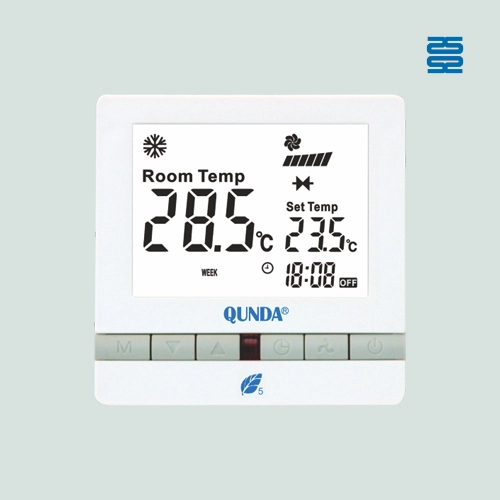
QD-HVAC05E Qunda Digital Thermostat for Central Air Conditioner
QD-HVAC05E can control a two-way electric valve and a three-way electric valve.
QD-HVAC05E is applicable to two-pipe water system or air system HVAC. lt controls the working condition of FCU (Fan Coil Unit) and electric valve by comparing the ambient temperature and setting temperature, to adjust the temperature for a comfortable environment and save energy.
QD-HVAC05E is based on industrial-grade micro-computer technology with touching key operation and LCD display. The controller is simple-operating, stable and reliable.

QD-HVAC03E Qunda Digital Thermostat for Central Air Conditioner
QD-HVAC03E can control a two-way electric valve and a three-way electric valve.
QD-HVAC03E is applicable to two-pipe water system or air system HVAC. lt controls the working condition of FCU (Fan Coil Unit) and electric valve by comparing the ambient temperature and setting temperature, to adjust the temperature for a comfortable environment and save energy.
QD-HVAC03E is based on industrial-grade micro-computer technology with touching key operation and LCD display. The controller is simple-operating, stable and reliable.
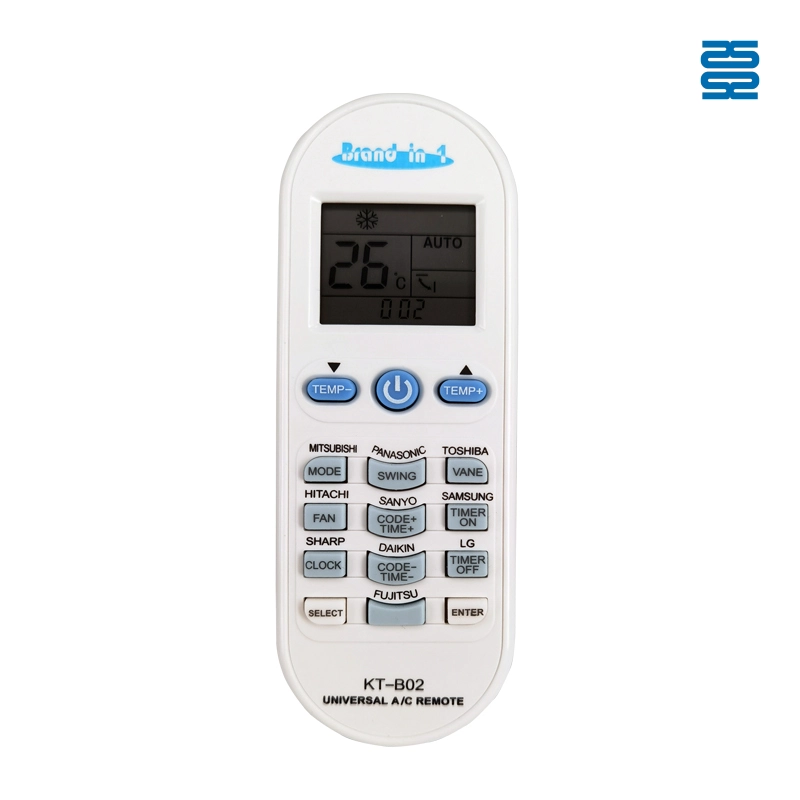
KT-B02 Universal Air Conditioner Remote Control Compatible with All Brands
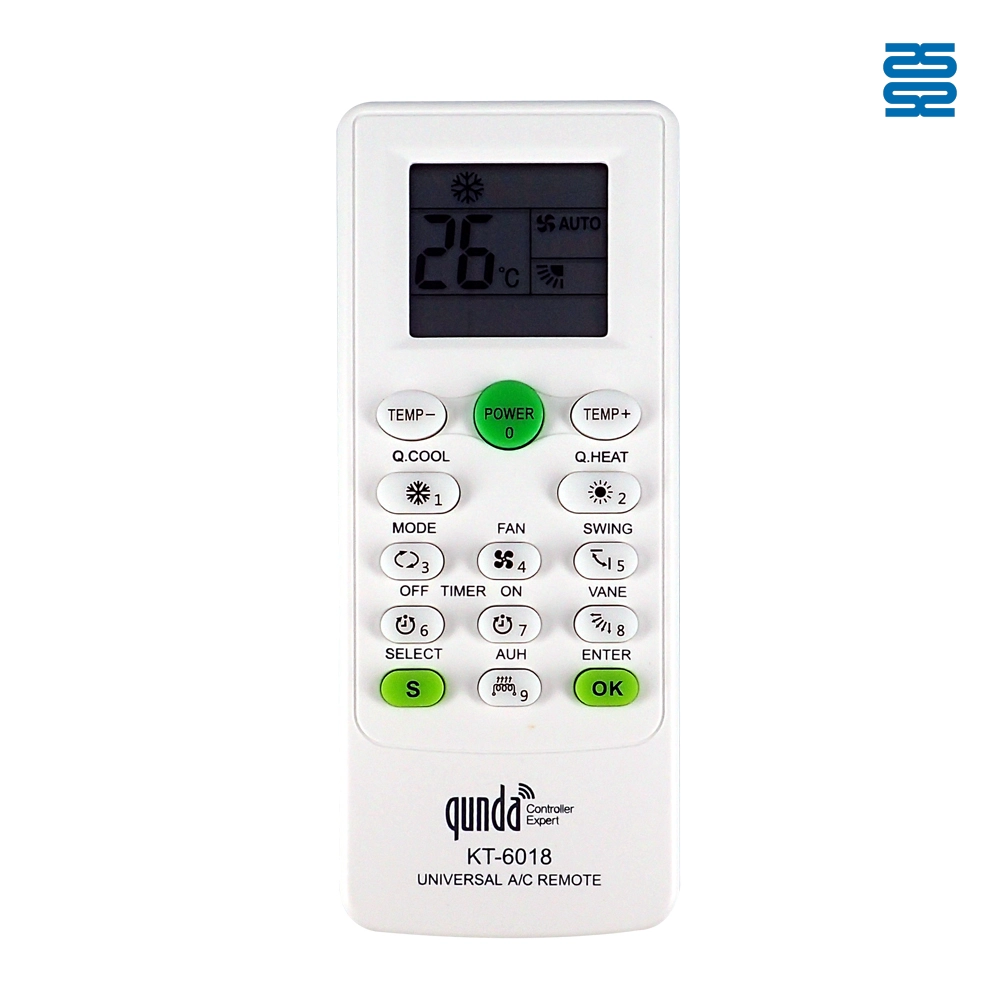
KT-6018 6000 in 1 Universal Air Conditioner Remote Control Compatible with All Brands
Get the latest updates
If you have any comments or good suggestions, please leave us a message, later our professional staff will contact you as soon as possible.


Contact
Email us
Text or Call us
Address
Room 1606, No. 65, Zhongshan Seven Road, Liwan District, Guangzhou, Guangdong, China.

Facebook
Instagram
YouTube
Tik Tok
VK