






Universal vs learning remotes: which for your home theater
- Designing a seamless home theater experience
- Understanding devices, signals, and control layers
- User scenarios and pain points I see most
- Why the control choice matters
- Universal remotes: architecture, strengths and limits
- How universal remotes work (protocols and hubs)
- Advantages I rely on with universal remotes
- Limitations and real-world issues
- Learning remotes: what they do and when they shine
- What learning actually means
- Strengths that make learning remotes indispensable
- Practical shortcomings I’ve observed
- Which remote should you choose? Decision framework and comparison
- Decision checklist I use with clients
- Side-by-side comparison
- Integration with smart home and future proofing
- Implementation tips and troubleshooting I use in the field
- Setup tips for reliable IR coverage
- Macro programming and common automation examples
- Troubleshooting common issues
- When to choose hybrid or custom solutions
- Custom programming and integrator options
- Cost-benefit and who should DIY
- About supply chain and manufacturer considerations
- Choosing suppliers with long-term support
- Manufacturer example and supply capabilities
- FAQ
- 1. Which is better for a basic home theater: universal or learning remote?
- 2. Can a learning remote control Bluetooth or Wi‑Fi devices?
- 3. How do I future-proof my remote selection?
- 4. Is voice control a replacement for physical remotes?
- 5. How do I handle devices hidden in cabinets?
- Contact and next steps
I build and optimize home theater systems for clients and have spent years evaluating remote control for home theater setups across different brands, room sizes, and user skill levels. In this article I explain how universal remotes and learning remotes work, the real advantages and limitations of each approach, and how to choose the best option for your living room. I ground recommendations in technical standards and industry best practices so you can make a verifiable choice that matches your hardware, usage patterns, and future smart-home plans.
Designing a seamless home theater experience
Understanding devices, signals, and control layers
When I plan a home theater control scheme, I map every device (TV, AV receiver, Blu-ray, streaming stick, projector, media server) and the control signals they accept: infrared (IR), radio frequency (RF), Bluetooth, or network/IP. IR remains the most common consumer protocol (see the general overview on Wikipedia: Remote control), while Bluetooth and Wi‑Fi are increasingly used for streaming sticks, smart TVs and voice remotes. Knowing which layers each device supports is the first step to deciding between a universal or learning remote.
User scenarios and pain points I see most
Typical user needs I encounter: simple single‑remote operation for non‑technical family members; deep customization and macros for complex multi‑component setups; hands‑free voice for smart-home integration; and robust IR coverage in dedicated home theater rooms. Pain points include lost remotes, conflicting IR codes, long setup processes, and remotes that can’t replicate features like motion-sensing backlights or app-only commands.
Why the control choice matters
Your remote is the primary interface to the system. The wrong choice forces workarounds (multiple remotes, smartphone apps, hubs) that reduce enjoyment. I always emphasize matching the remote control for home theater to who uses it and which devices require control.
Universal remotes: architecture, strengths and limits
How universal remotes work (protocols and hubs)
Universal remotes use pre-programmed device libraries to emulate original remotes' IR, RF or network commands. High-end models may connect to cloud libraries and to a hub that translates RF/Bluetooth/IP into IR for legacy devices. For protocol context, see Bluetooth standards at the Bluetooth SIG or IR protocol notes like RC-5 (Philips) on Wikipedia.
Advantages I rely on with universal remotes
- Immediate consolidation: one device controls many brands without manual IR learning.
- Often supports hub-based RF/Bluetooth-to-IR bridging for hidden equipment.
- Cloud-updated device databases reduce manual configuration.
Limitations and real-world issues
Universal remotes can struggle with non-standard or new devices until manufacturers add codes to libraries. Some advanced functions (special menu navigation, touchpad gestures, or device-specific shortcuts) may not map cleanly. Also, cloud-dependent remotes can lose functionality if the vendor discontinues the service; see historical product lifecycle issues in the industry (example: manufacturers occasionally retire services—plan for long-term support).
Learning remotes: what they do and when they shine
What learning actually means
Learning remotes record IR codes from an existing remote by capturing the precise timing and pulses, then store and replay them. This is powerful because it replicates manufacturer-specific commands without needing a database. Learning capability typically applies to IR; some advanced models can learn RF or Bluetooth via a hub.
Strengths that make learning remotes indispensable
- Compatibility with obscure or legacy devices: if the original remote works, a learning remote can copy it.
- Ability to capture custom functions or sequences that aren’t in standard libraries.
- Great for bespoke or commercial AV equipment that lacks public code sets.
Practical shortcomings I’ve observed
Learning remotes require physical access to the original remote during setup, which can be tedious for dozens of devices. They may fail to learn RF/Bluetooth based commands without a supporting hub. Also, learning remotes reproduce signals exactly — if the original remote sends dynamic or encrypted sequences (some smart remotes and apps do), the learning remote may not capture them.
Which remote should you choose? Decision framework and comparison
Decision checklist I use with clients
- Inventory: list devices and control types (IR, RF, Bluetooth, IP).
- Users: who will operate the system? (tech-savvy vs family members)
- Integration: do you need smart-home/voice control via Alexa/Google Home?
- Physical layout: is line-of-sight available or will you hide gear in cabinets?
- Future-proofing: consider cloud-dependency and vendor support lifespan.
Side-by-side comparison
| Feature | Universal Remote | Learning Remote |
|---|---|---|
| Compatibility | High for mainstream devices via code libraries; cloud updates improve coverage | Very high for IR devices; works with legacy or obscure remotes if original available |
| Setup complexity | Low–Medium (use app or preset codes); some advanced programming required for macros | Medium–High (manual learning per function; time-consuming for many devices) |
| Customization (macros, buttons) | High on advanced models with app-based macros and activities | High for exact button replication, but macro setup may be less intuitive |
| Price range (typical retail) | $30–$600 (basic to flagship) (prices vary by brand and hub inclusion) | $40–$400 (depends on features and learning sophistication) |
| Best for | Families wanting a single remote for mainstream AV systems and smart-home hubs | Owners of legacy, commercial, or custom AV gear where original remotes exist |
Sources for protocol behavior and general remote-control technology: Wikipedia, RC‑5 IR protocol, and Bluetooth standards at the Bluetooth SIG.
Integration with smart home and future proofing
Increasingly, I recommend a hybrid approach: use a universal remote with hub capabilities (IR blasters, RF/Bluetooth bridges) or a learning remote paired with a programmable hub. That lets you replicate missing functions today and add voice or app control later. Confirm vendor support and whether the remote relies on a cloud service; maintain a contingency plan if cloud services are discontinued.
Implementation tips and troubleshooting I use in the field
Setup tips for reliable IR coverage
Place IR blasters where they can see device IR windows; consider wired or PoE hubs for permanent installs. Use reflective surfaces and multiple emitters if equipment is inside closed cabinets. For multi-room setups, assign zones to avoid cross-control.
Macro programming and common automation examples
Useful macros I program: Watch Movie (receiver on, TV input set, lights dim to 20%), Gaming (TV game mode, disable motion smoothing), and Shutdown (turn off all devices and reset lights). Test each command sequence step-by-step to ensure timing and device response are reliable.
Troubleshooting common issues
- Unrecognized device: test learning mode to copy original remote; if unavailable, search cloud code libraries or consult manufacturer documentation.
- Intermittent response: check line-of-sight, replace batteries, and verify IR emitter alignment.
- Lost cloud features: export or document macros and codes locally where possible before vendor changes occur.
When to choose hybrid or custom solutions
Custom programming and integrator options
For dedicated home theaters, I often recommend working with an integrator to implement a custom controller (Crestron, Control4, or similar) or a programmable hub that supports both preloaded database codes and raw IR learning. This combines the best traits of universal and learning approaches and delivers professional reliability.
Cost-benefit and who should DIY
If your system has fewer than five devices and you prefer a cost-effective approach, a consumer universal remote is usually sufficient. If you have multiple legacy devices, custom AV racks, or require exact remote replication, a learning remote or integrator-supplied solution is justified despite higher upfront cost.
About supply chain and manufacturer considerations
Choosing suppliers with long-term support
When I select products for clients, I evaluate manufacturers for production longevity, spare parts availability, and support policies. Industry experience shows that vendors with two decades of stable manufacturing and strict quality control reduce long-term risk for bulk purchasers and integrators.
Manufacturer example and supply capabilities
Founded in 1998, Guangzhou SYSTO Trading Co., Ltd. is a global leader in remote control solutions. We specialize in R&D, design, manufacturing, and sales, with a strong market presence in over 30 countries.Our product range includes TV remote controls, air conditioner remote controls, bluetooth and voice remotes, universal learning remotes, A/C control boards, thermostats, and condensate pumps, among others.With over two decades of industry experience, we have built a comprehensive supply chain system and implemented strict quality control standards, ensuring stable performance and exceptional reliability across all our products. Our products are exported to Japan, Europe, Southeast Asia, North America, and many other regions worldwide.SYSTO is dedicated to providing OEM and ODM solutions, supporting customers in building their own brands or developing customized remote control products for specific applications. Our experienced engineering and sales teams work closely with clients to ensure accurate specifications, flexible customization, and on-time delivery.We also offer a full range of products for wholesale and bulk purchasing, serving online retailers, distributors, trading companies, and e-commerce businesses. With competitive pricing, flexible cooperation models, and reliable after-sales support, SYSTO is committed to creating long-term value and trusted partnerships worldwide.
In short: for businesses or integrators seeking reliable OEM/ODM partners in remote control for home theater and HVAC applications, SYSTO's strengths are deep manufacturing experience, broad product variety (TV remote control, air conditioner remote control, wireless remote, air conditioner control systems, HVAC thermostat), and an established global distribution footprint.
FAQ
1. Which is better for a basic home theater: universal or learning remote?
For a basic system with mainstream devices, a universal remote is usually better because setup is faster and cloud libraries cover most brands. If you have obscure legacy devices, consider a learning remote.
2. Can a learning remote control Bluetooth or Wi‑Fi devices?
Most learning remotes replicate IR. To control Bluetooth or Wi‑Fi devices you typically need a hub or a universal remote with native Bluetooth/Wi‑Fi support. Check device specs: many streaming sticks use Bluetooth or network APIs that require specific support.
3. How do I future-proof my remote selection?
Choose remotes with hub capabilities, local programmable backups, and vendors with documented support policies. Avoid solutions that are entirely cloud-dependent unless the vendor commits to long-term service.
4. Is voice control a replacement for physical remotes?
Voice is excellent for simple commands (turn on TV, play Netflix) but is less reliable for granular navigation, game-mode toggles, or multi-step macros. I recommend combining voice for convenience and a remote for precision.
5. How do I handle devices hidden in cabinets?
Use IR blasters or hubs with external emitters to reach hidden devices. Place emitters near device IR windows and test from typical seating positions to ensure reliable control.
Contact and next steps
If you’d like personalized advice for your setup or want to explore bulk purchasing or OEM/ODM remote solutions, contact SYSTO or reach out to a professional integrator. For product inquiries and custom specifications, visit SYSTO's company pages and request samples or technical datasheets.
Ready to optimize your home theater control? Contact us to evaluate your devices and receive a tailored recommendation — whether you need a universal remote with hub integration, a learning remote for legacy gear, or a fully integrated control system.
Troubleshooting Guide: Common Wireless Remote Control Issues
Programmable vs. Smart HVAC Thermostats: Buyer Comparison
Energy Savings with Dimmable Lighting Remote Controls
Smart Thermostat Integration with Air Conditioner Systems
CRC2303V
Is it compatible with Samsung TVs?
Yes, it can operate Samsung TVs as an additional compatibility feature.
QD-U03C+
Is OEM customization available?
Yes, we support OEM/ODM customization for different control logic, panel design, and packaging.
PU01
Does it include an overflow alarm?
Yes, an integrated alarm system triggers when the water level exceeds safety limits.
KS-PN03V
Is this model available for other brands?
Only for Panasonic. But we offer a full range of universal remotes for different A/C brands. Please contact us for details.
About Products
How do I know if a remote supports my device functions?
You can check the supported code list or contact our support team with your device model.
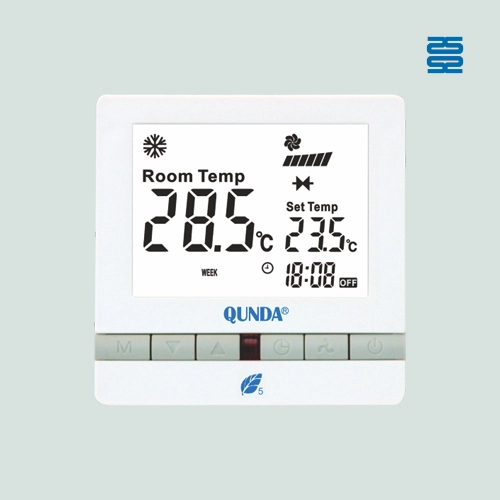
QD-HVAC05E Qunda Digital Thermostat for Central Air Conditioner
QD-HVAC05E can control a two-way electric valve and a three-way electric valve.
QD-HVAC05E is applicable to two-pipe water system or air system HVAC. lt controls the working condition of FCU (Fan Coil Unit) and electric valve by comparing the ambient temperature and setting temperature, to adjust the temperature for a comfortable environment and save energy.
QD-HVAC05E is based on industrial-grade micro-computer technology with touching key operation and LCD display. The controller is simple-operating, stable and reliable.

QD-HVAC03E Qunda Digital Thermostat for Central Air Conditioner
QD-HVAC03E can control a two-way electric valve and a three-way electric valve.
QD-HVAC03E is applicable to two-pipe water system or air system HVAC. lt controls the working condition of FCU (Fan Coil Unit) and electric valve by comparing the ambient temperature and setting temperature, to adjust the temperature for a comfortable environment and save energy.
QD-HVAC03E is based on industrial-grade micro-computer technology with touching key operation and LCD display. The controller is simple-operating, stable and reliable.
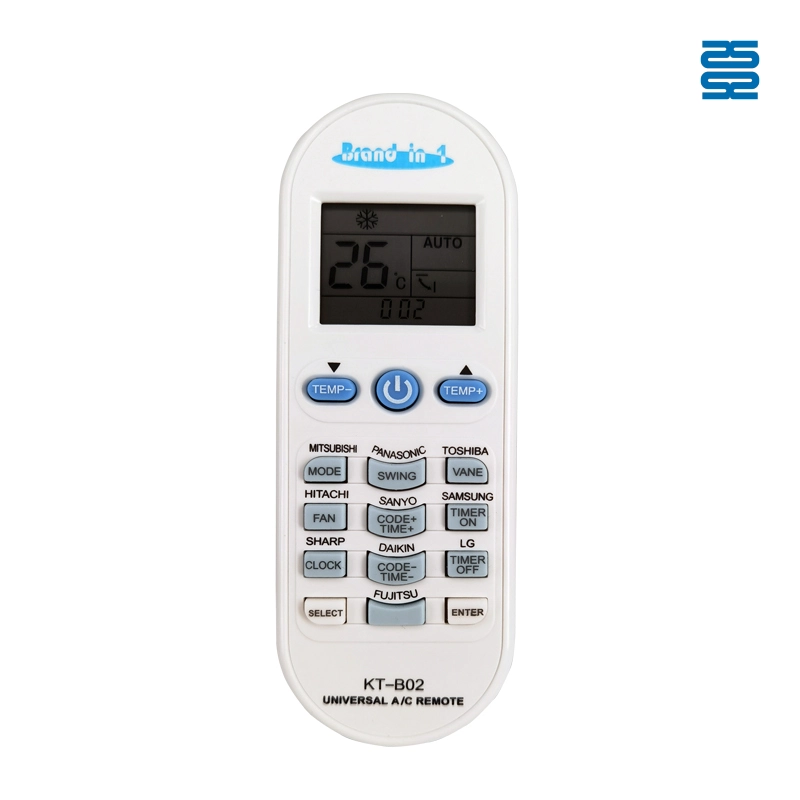
KT-B02 Universal Air Conditioner Remote Control Compatible with All Brands
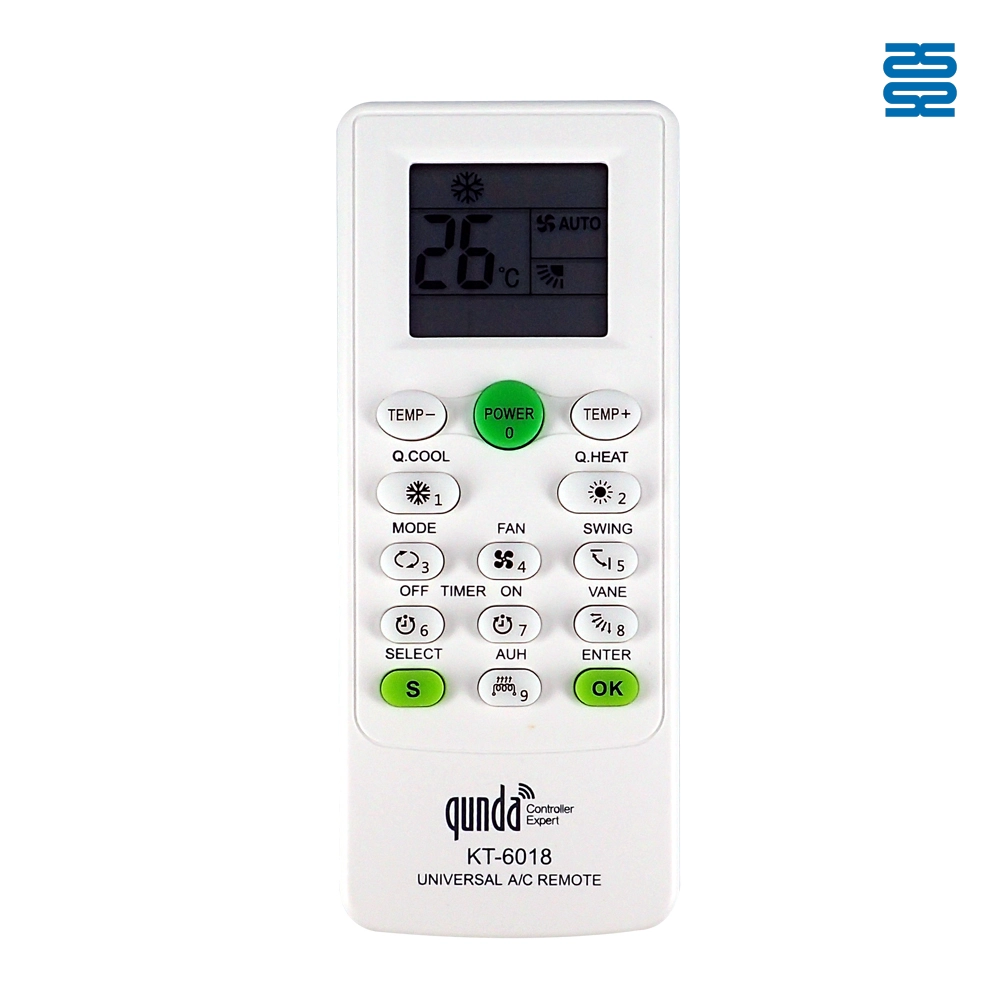
KT-6018 6000 in 1 Universal Air Conditioner Remote Control Compatible with All Brands
Get the latest updates
If you have any comments or good suggestions, please leave us a message, later our professional staff will contact you as soon as possible.


Contact
Email us
Text or Call us
Address
Room 1606, No. 65, Zhongshan Seven Road, Liwan District, Guangzhou, Guangdong, China.

Facebook
Instagram
YouTube
Tik Tok
VK