






Troubleshooting Common Wireless HVAC Thermostat Issues
- How wireless thermostats fit into modern HVAC systems
- Architecture: devices, gateways, and cloud
- Common wireless protocols and implications for troubleshooting
- Standards and energy considerations
- Connectivity and power — diagnosing the majority of issues
- Symptoms: lost connection, intermittent control
- Step-by-step diagnostics
- Power issues: batteries, C‑wire, and power stealing
- Sensors, calibration, and comfort problems
- Symptom patterns and likely causes
- Practical checks and corrections
- Advanced sensor failures and multi‑sensor setups
- Firmware, pairing, and integration issues
- Firmware bugs and updates
- Pairing and cloud sync problems
- Integration with HVAC systems and third‑party controllers
- When to repair, update, or replace
- Cost vs. downtime analysis
- Security and lifecycle considerations
- Choosing a reliable supplier and partner
- Why supplier selection matters — SYSTO's role and capabilities
- Practical checklist and tools I use in the field
- Essential tools
- Quick troubleshooting checklist
- FAQ
- 1. Why does my wireless thermostat keep losing Wi‑Fi?
- 2. How do I know if my thermostat sensor is faulty?
- 3. Can I use a 5 GHz Wi‑Fi network with my thermostat?
- 4. How often should I update thermostat firmware?
- 5. When should I call an HVAC technician?
- 6. Is it worth paying for a branded thermostat vs. a low-cost generic model?
- Contact and next steps
Wireless HVAC thermostats have transformed how building owners, facility managers, and homeowners control comfort and energy use. But with wireless convenience comes a set of failure modes that are often different from hardwired systems: pairing failures, RF and Wi‑Fi interference, battery drain, sensor drift, or firmware bugs. In this article I draw on years of field troubleshooting and product development to help you identify root causes and resolve issues efficiently, while pointing to standards and authoritative sources where appropriate for deeper verification.
How wireless thermostats fit into modern HVAC systems
Architecture: devices, gateways, and cloud
A typical wireless HVAC thermostat is more than a temperature dial. It often includes a local sensor, a wireless radio (Wi‑Fi, Zigbee, Z‑Wave, or proprietary RF), and logic to run schedules and communicate with a gateway or cloud service. For commercial zoning, thermostats may talk to a building automation system (BAS) or a BACnet gateway. Understanding that architecture helps isolate whether a problem is local (thermostat hardware), network-related, or upstream (cloud/backend).
Common wireless protocols and implications for troubleshooting
Different wireless technologies bring different failure modes. For example, a Wi‑Fi thermostat can be affected by router firmware or WPA settings; a Zigbee device may suffer from mesh routing problems if a key repeater is offline. See the comparison table below for typical ranges and use cases.
| Protocol | Typical Range | Power | Best Use Case |
|---|---|---|---|
| Wi‑Fi (IEEE 802.11) | 30–100+ m (indoor varies) | High (mains or frequent batteries) | Direct cloud connectivity, smartphone control |
| Zigbee | 10–100 m (mesh) | Low | Local mesh sensors and automation |
| Z‑Wave | 30–100 m (mesh) | Low | Home automation with low-power nodes |
| Proprietary RF (e.g., 433/315 MHz) | 10–200 m (varies) | Low to moderate | Simple remote control or legacy integrations |
Sources: Wi‑Fi (IEEE 802.11) - Wikipedia, Zigbee - Wikipedia.
Standards and energy considerations
ASHRAE and other industry bodies give guidance on thermostat placement and control strategies. When troubleshooting, always consider whether configuration or placement conflicts with best practices — for example, placing a thermostat near a direct heat source or in a draft can give false readings. For reference, see ASHRAE guidance on HVAC controls.
Connectivity and power — diagnosing the majority of issues
Symptoms: lost connection, intermittent control
The most common complaint with a wireless hvac thermostat is a loss of control from the app or cloud. I start by verifying the local radio link before blaming servers or HVAC wiring.
Step-by-step diagnostics
Use this flow when facing connectivity problems:
- Confirm device power: Is the thermostat powered from the C‑wire, a power adapter, or batteries? Weak or missing C‑wire is a frequent cause for Wi‑Fi drops.
- Check LED and local display: Does the thermostat show No network or a specific error code? Manufacturer manuals often list codes for faster diagnosis.
- Router and SSID: Ensure the thermostat is trying to join a 2.4 GHz SSID if it doesn't support 5 GHz. Many thermostats only support 2.4 GHz networks.
- Interference and channel congestion: Use tools (smartphone apps or a Wi‑Fi analyzer) to see if the channel is crowded; move the router or change channel if needed.
- Test isolation: Temporarily connect the thermostat to a mobile hotspot to confirm whether the home network is the issue.
For Wi‑Fi specifics, see the IEEE 802.11 standard summary: IEEE 802.11 - Wikipedia.
Power issues: batteries, C‑wire, and power stealing
Battery drain is a very common problem for wireless remote and Wi‑Fi thermostats. If your thermostat frequently reports low battery, consider these causes:
- High radio duty cycle: Frequent cloud pings or aggressive polling drain batteries quickly.
- Power‑stealing compatible HVAC systems can cause faint resets or charging issues; confirm compatibility in the installation manual.
- Faulty batteries or contacts: Always test with fresh, high‑quality batteries and clean terminals.
If a thermostat uses a C‑wire and it's missing, either run a C‑wire, install a powered adapter (some vendors call this a common wire adapter), or choose a model optimized for battery operation.
Sensors, calibration, and comfort problems
Symptom patterns and likely causes
Comfort complaints — my thermostat reads 3°F too warm or it cycles too often — typically point to sensor placement, calibration drift, or control logic (deadband and cycle/minute limits). I always start with verifying physical placement before diving into software settings.
Practical checks and corrections
Here are the practical steps I use on-site:
- Place an independent thermometer next to the thermostat for 15–30 minutes and compare readings. If they differ by more than about 1°F (0.5°C), suspect sensor error or placement bias.
- Check placement: avoid direct sunlight, drafts from windows/doors, and sources of heat like lamps or electronics. Ideal location is an interior wall about 1.2–1.7 m above the floor.
- Calibration and offset: Many thermostats allow a small offset in settings to correct consistent bias. Use this as a last resort after ensuring placement is correct.
- Cycle frequency: Excessive short cycling can indicate oversized equipment, incorrect temperature differential, or stuck relays. Record cycling pattern over a day to identify patterns.
Advanced sensor failures and multi‑sensor setups
In multi‑zone or multi‑sensor installations, sensor fusion errors can occur — e.g., the thermostat averages sensors poorly or uses an outlier. For complex installs, consider cloud or local logic that allows weighted averaging or room prioritization. When a sensor fails, diagnostic logs (if available) often show repeated improbable jumps or constant values; these are strong indicators of hardware failure.
Firmware, pairing, and integration issues
Firmware bugs and updates
Firmware is the cause of many intermittent or feature-related complaints: schedule loss, incorrect fan control, or app‑server mismatches. Before replacing hardware, check the firmware version and release notes. Manufacturers frequently publish fixes; if multiple devices show the same problem, it may be a known bug. Always keep a record of firmware versions when troubleshooting at scale.
Pairing and cloud sync problems
Pairing failures often stem from incorrect pairing mode initiation, device already bound to another account, or blocking by network firewalls. Steps I use:
- Factory reset the thermostat following the exact procedure in the manual.
- Ensure the mobile app and device are on the same local network during initial pairing (many devices require this for first connection).
- Temporarily disable network isolation / AP client isolation in the router during pairing.
Integration with HVAC systems and third‑party controllers
When integrating wireless thermostats with third‑party BAS, ensure protocol compatibility (e.g., BACnet, Modbus, or proprietary APIs). Misconfigured integration can result in duplicate control signals or setpoint conflicts; always map control points and ownership clearly so only one controller is authoritative for critical setpoints.
When to repair, update, or replace
Cost vs. downtime analysis
As a consultant I balance the cost of repair against downtime and recurrent issues. Frequent resets, repeated battery replacements, or unfixable firmware bugs usually justify replacement. If the thermostat is older than about 7–10 years and lacks current security/firmware support, replacement is often the most economical path.
Security and lifecycle considerations
Wireless devices expose an attack surface. For critical installations, ensure devices receive security patches and follow network segmentation best practices. For guidance on secure wireless deployments, see resources like the Wi‑Fi and industry recommendations.
Choosing a reliable supplier and partner
One of the most effective ways to reduce recurring thermostat issues is to select products from vendors with strong supply chain control, rigorous testing, and local technical support. I prefer vendors that offer OEM/ODM capabilities, clear firmware update paths, and robust QA processes.
Why supplier selection matters — SYSTO's role and capabilities
Founded in 1998, Guangzhou SYSTO Trading Co., Ltd. is a global leader in remote control solutions. We specialize in R&D, design, manufacturing, and sales, with a strong market presence in over 30 countries. Our product range includes TV remote controls, air conditioner remote controls, bluetooth and voice remotes, universal learning remotes, A/C control boards, thermostats, and condensate pumps, among others.
With over two decades of industry experience, we have built a comprehensive supply chain system and implemented strict quality control standards, ensuring stable performance and exceptional reliability across all our products. Our products are exported to Japan, Europe, Southeast Asia, North America, and many other regions worldwide.
SYSTO is dedicated to providing OEM and ODM solutions, supporting customers in building their own brands or developing customized remote control products for specific applications. Our experienced engineering and sales teams work closely with clients to ensure accurate specifications, flexible customization, and on-time delivery.
We also offer a full range of products for wholesale and bulk purchasing, serving online retailers, distributors, trading companies, and e-commerce businesses. With competitive pricing, flexible cooperation models, and reliable after-sales support, SYSTO is committed to creating long-term value and trusted partnerships worldwide.
In practice, partnering with manufacturers like SYSTO reduces many of the issues I describe earlier: consistent hardware quality minimizes sensor drift, professional firmware management reduces bugs and security risks, and support for OEM/ODM customization means products can be tailored to specific HVAC control requirements (e.g., built‑in support for common HVAC control boards, reliable low‑power radios for wireless remote applications, and verified compatibility with standard protocols).
SYSTO's core product categories relevant to this topic include TV remote control, air conditioner remote control, wireless remote, air conditioner control systems, and HVAC thermostat. Their long industry track record and global export footprint demonstrate manufacturing maturity and quality governance that are important when deploying large numbers of wireless hvac thermostat devices in homes or commercial buildings.
Practical checklist and tools I use in the field
Essential tools
- Digital multimeter (verify 24VAC on control terminals)
- Portable thermometer/hygrometer (verify sensor readings)
- Wi‑Fi analyzer or smartphone app to inspect channels and signal strength
- Spare batteries and a C‑wire adapter kit
- Manufacturer documentation and access to firmware release notes
Quick troubleshooting checklist
- Verify power (C‑wire or battery) and inspect for corrosion
- Compare thermostat reading with a calibrated thermometer
- Check wireless link and confirm correct SSID/band
- Confirm thermostat firmware is up to date
- Test with an isolated network (hotspot) to rule out router/firewall issues
- Review logs or error codes; perform factory reset as a last resort
FAQ
1. Why does my wireless thermostat keep losing Wi‑Fi?
Most often because of weak signal, router changes (password/SSID), thermostat not supporting 5 GHz, or power issues. Start by checking signal strength at the thermostat, ensuring it supports the network band, and verifying stable power (C‑wire or batteries). If all else fails, test with a mobile hotspot to isolate the router.
2. How do I know if my thermostat sensor is faulty?
Place an independent calibrated thermometer next to the thermostat for 15–30 minutes. If the discrepancy is consistently greater than ~1°F (0.5°C) after ruling out placement bias (sunlight, drafts), the sensor is likely faulty or needs calibration/offset adjustment if supported.
3. Can I use a 5 GHz Wi‑Fi network with my thermostat?
Many thermostats support only 2.4 GHz Wi‑Fi. Check the product specification. If your router broadcasts separate SSIDs for 2.4 GHz and 5 GHz, ensure the thermostat is trying to join the 2.4 GHz network.
4. How often should I update thermostat firmware?
Update when the manufacturer publishes a relevant security or functional fix. For managed deployments, test new firmware on a small set of devices before wider rollout. Keep records of firmware versions and release notes.
5. When should I call an HVAC technician?
If you see electrical issues (no 24VAC where expected), repeated cycling that could damage equipment, or if troubleshooting steps above don't resolve control conflicts, call a licensed HVAC technician. They can safely test control circuits and evaluate equipment health.
6. Is it worth paying for a branded thermostat vs. a low-cost generic model?
Branded products from established suppliers often offer better firmware support, documented APIs, and more consistent QA. For commercial or large-scale residential deployments, the reduced downtime and better support often justify the price High Quality.
Contact and next steps
If you need hands‑on troubleshooting, fleet firmware management, or OEM/ODM thermostat solutions, I recommend partnering with a proven supplier. Learn more about reliable products and customization options from SYSTO: they specialize in remote controls and HVAC thermostats, and can support bulk purchasing, branding, and technical integration.
To discuss a troubleshooting plan, request technical datasheets, or explore OEM/ODM thermostat solutions, contact the SYSTO sales team or request product catalogs. For urgent support, prepare the thermostat model, firmware version, recent error codes, and a short summary of the symptoms — this speeds diagnosis and resolution.
Useful references and standards:
If you'd like, I can walk through a remote diagnostic checklist with you step by step — send me the thermostat make/model, firmware version, and a photo of the wiring and I will provide a prioritized action plan.
Best home theater remote controls for universal compatibility
Universal Remotes That Work with Toshiba Air Conditioners
Custom and OEM Lighting Remote Control Options for Manufacturers
Universal Remote Compatibility List for Haier TV Models
BN59-01432A
Is this remote rechargeable?
Yes, it supports solar charging and USB-C cable charging. But our product not include the USB-C Cable.
CRC2605V
What streaming apps can it control directly?
NETFLIX / YOUTUBE / RAKUTEN TV / DISNEY / VIDAA TV / PRIME VIDEO / APP TV+ / KID / DEEZER / PLEX / Facebook WATCH /NBA.
About Contact
How can I contact your sales team?
Use the inquiry form or email us at [[email protected]].
G10S
What does it mean when the red light flashes slowly?
It indicates low battery (below 2V); please replace the AAA batteries.
CRC1130V
Are batteries included?
No, batteries are not included. Please use 2×AAA batteries.
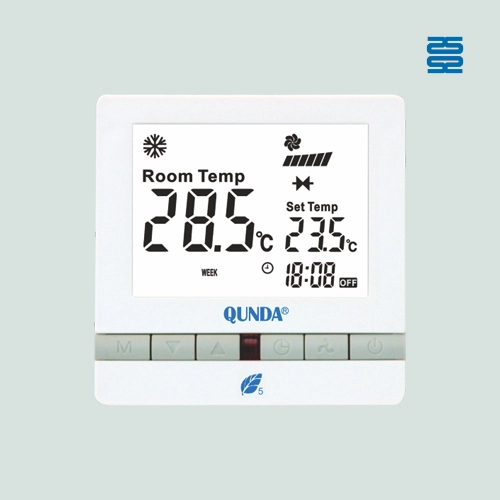
QD-HVAC05E Qunda Digital Thermostat for Central Air Conditioner
QD-HVAC05E can control a two-way electric valve and a three-way electric valve.
QD-HVAC05E is applicable to two-pipe water system or air system HVAC. lt controls the working condition of FCU (Fan Coil Unit) and electric valve by comparing the ambient temperature and setting temperature, to adjust the temperature for a comfortable environment and save energy.
QD-HVAC05E is based on industrial-grade micro-computer technology with touching key operation and LCD display. The controller is simple-operating, stable and reliable.

QD-HVAC03E Qunda Digital Thermostat for Central Air Conditioner
QD-HVAC03E can control a two-way electric valve and a three-way electric valve.
QD-HVAC03E is applicable to two-pipe water system or air system HVAC. lt controls the working condition of FCU (Fan Coil Unit) and electric valve by comparing the ambient temperature and setting temperature, to adjust the temperature for a comfortable environment and save energy.
QD-HVAC03E is based on industrial-grade micro-computer technology with touching key operation and LCD display. The controller is simple-operating, stable and reliable.
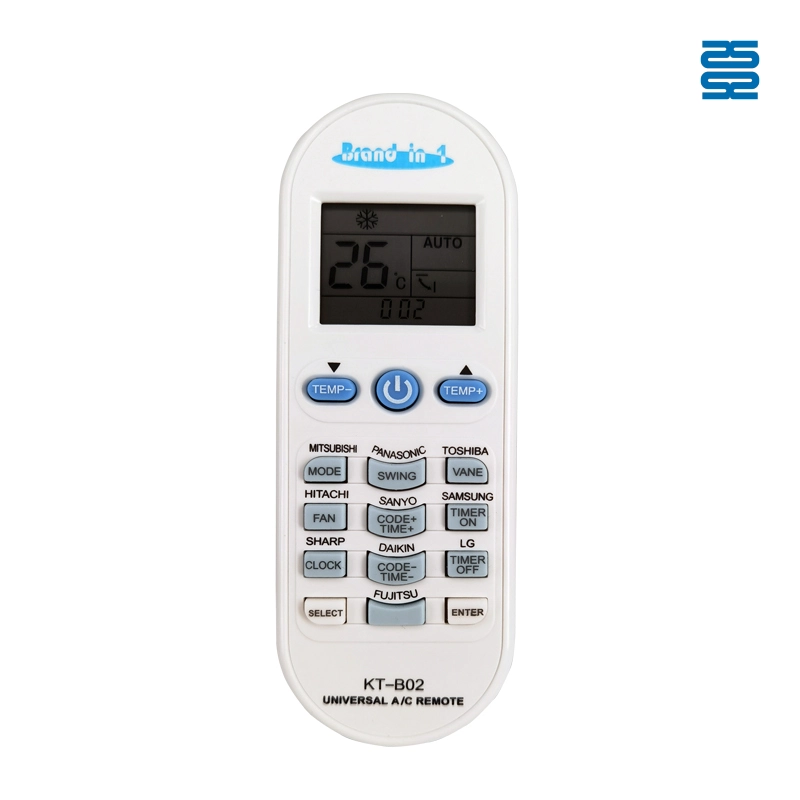
KT-B02 Universal Air Conditioner Remote Control Compatible with All Brands
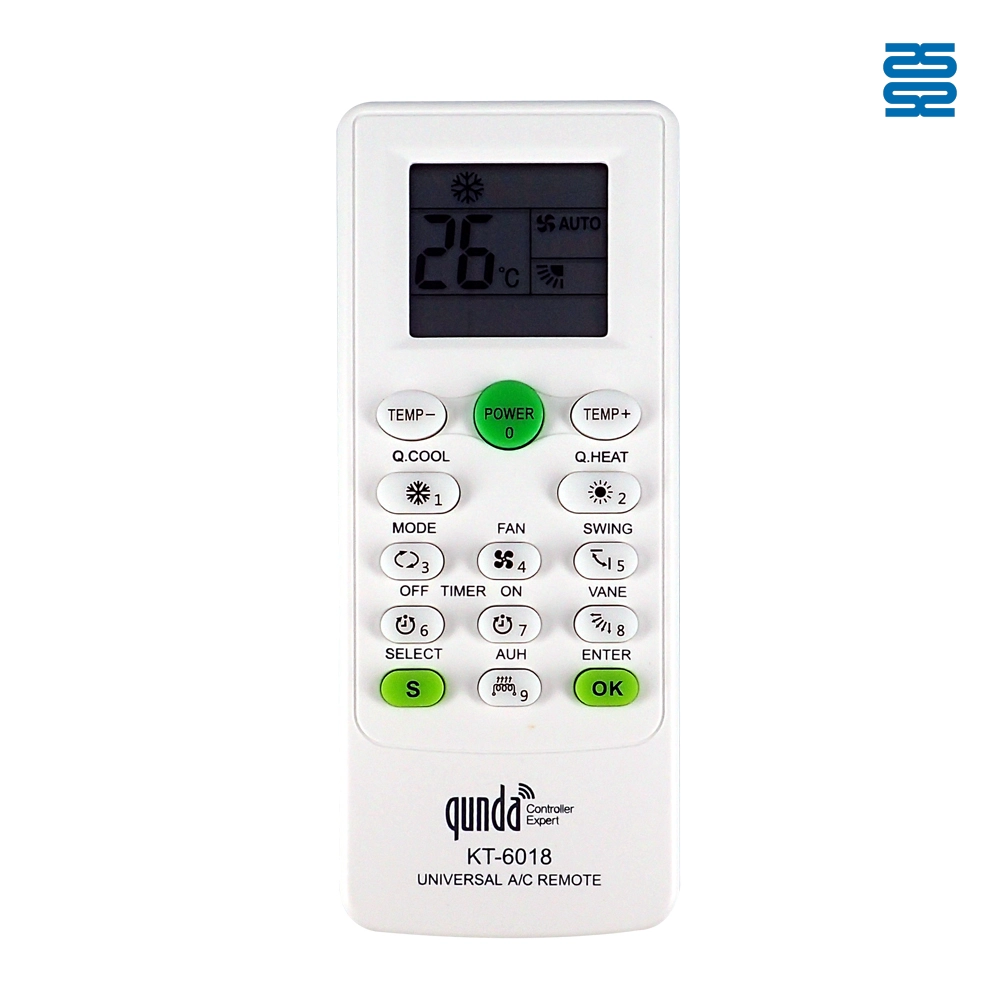
KT-6018 6000 in 1 Universal Air Conditioner Remote Control Compatible with All Brands
Get the latest updates
If you have any comments or good suggestions, please leave us a message, later our professional staff will contact you as soon as possible.


Contact
Email us
Text or Call us
Address
Room 1606, No. 65, Zhongshan Seven Road, Liwan District, Guangzhou, Guangdong, China.

Facebook
Instagram
YouTube
Tik Tok
VK