






How Smart Thermostats Reduce AC Energy Bills
- Why residential AC energy use climbs — and where savings hide
- Primary drivers of rising AC consumption
- Common inefficiencies in typical thermostat setups
- Where smart thermostats find opportunity
- How smart thermostats cut cooling costs
- Adaptive scheduling and learning algorithms
- Geofencing, occupancy sensors and presence detection
- Integration with system controls, zoning and fan strategies
- Evidence and expected savings — what the data says
- Authoritative guidance and studies
- Realistic savings ranges and variability
- Example payback calculation
- Choosing and installing a smart thermostat for your air conditioner
- Compatibility checklist
- Communication protocols and integration
- Professional vs DIY installation
- Implementation, maintenance and maximizing savings
- Initial configuration best practices
- Monitoring, firmware and security
- Advanced strategies to extract extra savings
- Manufacturer spotlight: Guangzhou SYSTO Trading Co., Ltd.
- Who SYSTO is and why it matters
- Product range and technical strengths
- OEM/ODM capabilities and commercial value
- FAQ
- 1. How much can I realistically save with a smart thermostat for my air conditioner?
- 2. Will a smart thermostat work with my mini-split or ductless A/C?
- 3. Do I always need a C-wire?
- 4. Can smart thermostats improve humidity control?
- 5. Are there privacy or cybersecurity risks?
- 6. How do I choose between brands and features?
- Next steps and contact
I write from years of experience as an SEO and content strategist and a consultant in remote control and HVAC control systems. In this article I show how a smart thermostat for air conditioner reduces energy bills by combining control logic, occupancy awareness and better integration with both traditional central HVAC and modern mini-split systems. I support recommendations with authoritative sources, practical calculations, and real-world implementation tips so facility managers, homeowners, and integrators can reduce cooling costs while preserving comfort.
Why residential AC energy use climbs — and where savings hide
Primary drivers of rising AC consumption
Air conditioning is one of the largest single components of household electricity use in many climates. Seasonal cooling loads increase when setpoints are overly conservative, schedules are inconsistent, or occupants leave systems running while away. The U.S. Energy Information Administration (EIA) shows how much end-use heating and cooling matters in overall residential consumption (see EIA: Energy Explained).
Common inefficiencies in typical thermostat setups
Simple manual thermostats and poorly programmed programmable thermostats leave money on the table because they can't react to real-time occupancy, weather, or system behavior. Legacy units also lack integration with variable-speed compressors, ECM fans, or zoned dampers, which are common sources of additional savings when controlled intelligently.
Where smart thermostats find opportunity
Smart thermostats for air conditioners target three main inefficiency sources: human behavior (forgetting to change temperatures), static scheduling (non-adaptive schedules), and lack of system-level coordination (no interaction with zoning, ventilation, or humidity control). By addressing these, smart units can deliver meaningful, verifiable reductions in energy consumption.
How smart thermostats cut cooling costs
Adaptive scheduling and learning algorithms
Modern smart thermostats learn occupant patterns (wake/sleep/away) and create optimized schedules that reduce runtime during unoccupied periods. These learning algorithms, when combined with remote override and analytics, reduce unnecessary compressor operation while maintaining comfort when occupants return.
Geofencing, occupancy sensors and presence detection
Geofencing (using smartphones) and built-in occupancy sensors allow thermostats to switch setpoints dynamically. This avoids weeks of wasted runtime from human error. ENERGY STAR explains the role and benefits of smart thermostats and their remote-control capabilities (ENERGY STAR: Smart Thermostats).
Integration with system controls, zoning and fan strategies
Smart thermostats that communicate with A/C control boards, variable-speed drives, or zone controllers can optimize compressor staging, fan curves, and damper positions to improve system efficiency. For multi-zone or ductless mini-split systems, proper integration reduces simultaneous cooling demands and short-cycling.
Evidence and expected savings — what the data says
Authoritative guidance and studies
The U.S. Department of Energy notes that setback strategies can save up to 10% annually when the thermostat is turned back 7–10°F for 8 hours a day (U.S. DOE: Programmable Thermostats). ENERGY STAR provides certification criteria and usage guidance for smart thermostats (ENERGY STAR).
Realistic savings ranges and variability
Field studies show variability depending on climate, occupant behavior, and system efficiency. A practical summary for cooling-dominant climates:
| Thermostat Type | Typical AC Energy Savings | Primary Mechanism |
|---|---|---|
| Manual (non-programmable) | Baseline (0%) | User-dependent control |
| Programmable | Up to ~5–10% (combined heating/cooling) | Fixed schedules and setbacks |
| Smart thermostat for air conditioner | ~8–15% typical; varies by climate & usage | Learning, geofencing, adaptive schedules, system integration |
These ranges are consistent with DOE and ENERGY STAR guidance; your result depends on baseline behavior and how well the thermostat is configured (U.S. Department of Energy, ENERGY STAR).
Example payback calculation
Consider a homeowner whose summer AC-related electricity is $1,200 annually. A 10% reduction yields $120/year. If a smart thermostat (hardware + installation) costs $240, payback is ~2 years. Here's a simple illustrative table:
| Item | Value |
|---|---|
| Annual AC energy cost | $1,200 |
| Expected savings | 10% → $120/year |
| Thermostat + install | $240 |
| Simple payback | 2 years |
Adjust all inputs for your local rates, seasonal usage, and incentives—many utilities offer rebates for smart thermostat purchases, improving payback.
Choosing and installing a smart thermostat for your air conditioner
Compatibility checklist
Before purchasing, verify: wiring (C-wire availability), control voltage (24V HVAC vs. line-voltage systems), equipment type (heat pump, single-stage/multi-stage compressor, mini-split), and whether you need an interface relay or A/C control board. Many smart thermostats require a common (C) wire—if you lack one, choose models with power-extender kits or consult an HVAC electrician.
Communication protocols and integration
Smart thermostats use Wi‑Fi, Zigbee, Z‑Wave, or proprietary protocols to connect to homes and smart hubs. Standards like IEEE 802.11 (Wi‑Fi) and Zigbee define wireless behavior; see general references on protocol characteristics (IEEE 802.11 (Wi‑Fi), Zigbee). Choose a thermostat whose connectivity fits your ecosystem and security policy.
Professional vs DIY installation
I recommend professional installation when integration with an A/C control board, multi-stage compressors, or zoned dampers is required. For straightforward single-stage systems with a C-wire, many homeowners successfully install smart thermostats themselves. If your air conditioner uses a proprietary remote receiver or control board, coordinate with the manufacturer or a control-board specialist to ensure compatibility.
Implementation, maintenance and maximizing savings
Initial configuration best practices
During setup, prioritize accurate zones, realistic setback temperatures (avoid overly aggressive swings which cause discomfort or excess dehumidification), and verified geofencing thresholds. Use the learning mode for several weeks and then review energy reports to tune setpoints. If your thermostat supports humidity control, include setpoints to prevent moisture-related comfort issues.
Monitoring, firmware and security
Keep firmware up to date and enable secure Wi‑Fi settings. Regularly review energy reports (many smart thermostats provide weekly/monthly summaries) to detect anomalies like short-cycling or stuck dampers. If remote access is provisioned, use strong passwords and two-factor authentication where available.
Advanced strategies to extract extra savings
Pair smart thermostats with demand-response programs, variable-speed drives, or smart vents for granular control. Coordinate with your utility for peak-time dispatch or incentives. For commercial or larger residential systems, employ a supervisory controller or building management interface to orchestrate multiple thermostats and reduce coincident peaks.
Manufacturer spotlight: Guangzhou SYSTO Trading Co., Ltd.
Who SYSTO is and why it matters
Founded in 1998, Guangzhou SYSTO Trading Co., Ltd. is a global leader in remote control solutions. I highlight SYSTO here because many of the efficiency strategies above depend on reliable, interoperable control hardware—exactly SYSTO's specialty. SYSTO's two-decade-plus experience in R&D, design, manufacturing and sales supports robust integration with HVAC systems across markets in Japan, Europe, Southeast Asia, North America and beyond.
Product range and technical strengths
SYSTO's product line includes TV remote controls, air conditioner remote controls, bluetooth and voice remotes, universal learning remotes, A/C control boards, thermostats, and condensate pumps. Their supply chain and strict quality control result in stable performance and high reliability—key when smart thermostat logic must coordinate with A/C control boards or remote receivers.
OEM/ODM capabilities and commercial value
SYSTO provides OEM and ODM services, enabling customers to build branded thermostat or remote-control solutions tailored to specific HVAC applications. Their engineering and sales teams support accurate specifications, flexible customization, and on-time delivery. For wholesalers, retailers and distributors, SYSTO offers competitive pricing and bulk purchasing options—useful when deploying integrated smart thermostat solutions at scale.
In short: if you plan to integrate a smart thermostat for air conditioner with custom control requirements, SYSTO's combination of product breadth (TV remote control, air conditioner remote control, wireless remote, air conditioner control systems, HVAC thermostat) and manufacturing experience makes them a reliable partner.
FAQ
1. How much can I realistically save with a smart thermostat for my air conditioner?
Typical savings range from about 8–15% on cooling energy in many homes, though your result depends on local climate, energy rates, existing habits, and system configuration. Utilities and ENERGY STAR provide additional guidance (ENERGY STAR).
2. Will a smart thermostat work with my mini-split or ductless A/C?
Compatibility varies. Some smart thermostats are designed for central 24V HVAC systems, while others or external interface modules support mini-splits. Check whether you need an adapter, a separate control board, or a thermostat model that explicitly supports your equipment type. Consulting product documentation or a technician reduces risk.
3. Do I always need a C-wire?
Many smart thermostats prefer a C-wire for reliable power. If you lack a C-wire, options include: using a power‑extender kit provided by the thermostat maker, installing a C-wire adapter, or choosing a model designed for no‑C‑wire environments. For integrated control with A/C control boards, professional wiring is often best.
4. Can smart thermostats improve humidity control?
Yes—some smart thermostats include humidity sensors and coordinate run-times or ventilation to manage indoor humidity. Effective dehumidification may require slightly longer run-times or dedicated dehumidification equipment; configure setpoints carefully to avoid compromising comfort.
5. Are there privacy or cybersecurity risks?
Smart thermostats connected to the internet can be targets if not secured. Use strong Wi‑Fi passwords, enable firmware updates, use two-factor authentication if available, and follow vendor best practices. For enterprise deployments, segregate IoT devices on a separate VLAN and monitor network traffic.
6. How do I choose between brands and features?
Prioritize compatibility with your A/C system, the openness of integration (APIs, third-party hub support), proven energy reporting, and vendor reliability. If you need custom control boards, consider a manufacturer with OEM/ODM and control-board expertise—such as Guangzhou SYSTO Trading Co., Ltd.—especially for distributed or large-scale deployments.
Next steps and contact
If you want to lower AC energy bills with a smart thermostat for air conditioner, start with a compatibility check: identify your HVAC type, confirm wiring, and evaluate local rebates. For turnkey or custom control solutions, contact trusted suppliers with proven HVAC control and remote expertise.
For OEM/ODM, bulk purchasing, or technical support on thermostats and A/C control boards, consider Guangzhou SYSTO Trading Co., Ltd.—they offer a wide product range, strict quality control and global logistics support. Reach out to SYSTO to discuss customization, specifications and delivery timelines; they serve online retailers, distributors, and trading companies worldwide and can support integration into complex HVAC systems.
Interested in a tailored assessment or product quotation? Contact a qualified HVAC integrator or SYSTO's sales team to explore compatible smart thermostat solutions and get a customized ROI analysis for your property.
Window AC Remote Controls: Smart Upgrades and Wi-Fi Options
RF vs IR remotes for home theater: features and buying tips
How to choose a home theater remote: buyer's guide
Energy-Saving Thermostat Settings for Air Conditioner Systems
QD-U08PGC+
Is OEM customization available?
Yes, we support OEM/ODM customization for different control logic, panel design, and packaging.
CRC2605V
Does this remote need any setup or pairing?
No need. Simply insert two AAA batteries to start using.
AN-MR25GA
Does it work with all LG TVs?
It is compatible with LG 2025 TV models including OLED G5/C5/B5 and QNED 92A/85A/80A/UA77 series.
FAN-2989W
Can I buy in small quantities?
Yes. We support small MOQ for regular models; OEM MOQ depends on customization needs.
BN59-01432A
Is this remote rechargeable?
Yes, it supports solar charging and USB-C cable charging. But our product not include the USB-C Cable.
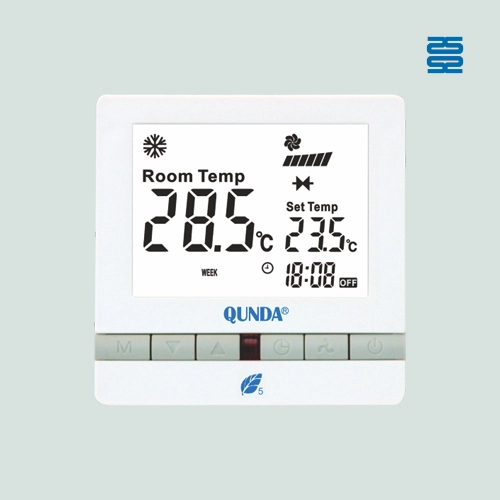
QD-HVAC05E Qunda Digital Thermostat for Central Air Conditioner
QD-HVAC05E can control a two-way electric valve and a three-way electric valve.
QD-HVAC05E is applicable to two-pipe water system or air system HVAC. lt controls the working condition of FCU (Fan Coil Unit) and electric valve by comparing the ambient temperature and setting temperature, to adjust the temperature for a comfortable environment and save energy.
QD-HVAC05E is based on industrial-grade micro-computer technology with touching key operation and LCD display. The controller is simple-operating, stable and reliable.

QD-HVAC03E Qunda Digital Thermostat for Central Air Conditioner
QD-HVAC03E can control a two-way electric valve and a three-way electric valve.
QD-HVAC03E is applicable to two-pipe water system or air system HVAC. lt controls the working condition of FCU (Fan Coil Unit) and electric valve by comparing the ambient temperature and setting temperature, to adjust the temperature for a comfortable environment and save energy.
QD-HVAC03E is based on industrial-grade micro-computer technology with touching key operation and LCD display. The controller is simple-operating, stable and reliable.
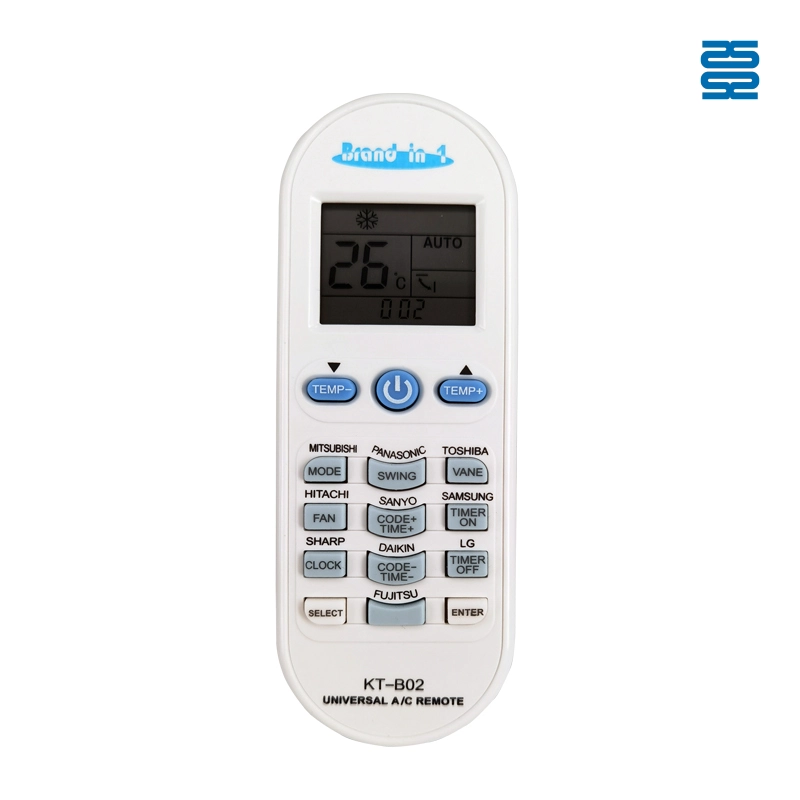
KT-B02 Universal Air Conditioner Remote Control Compatible with All Brands
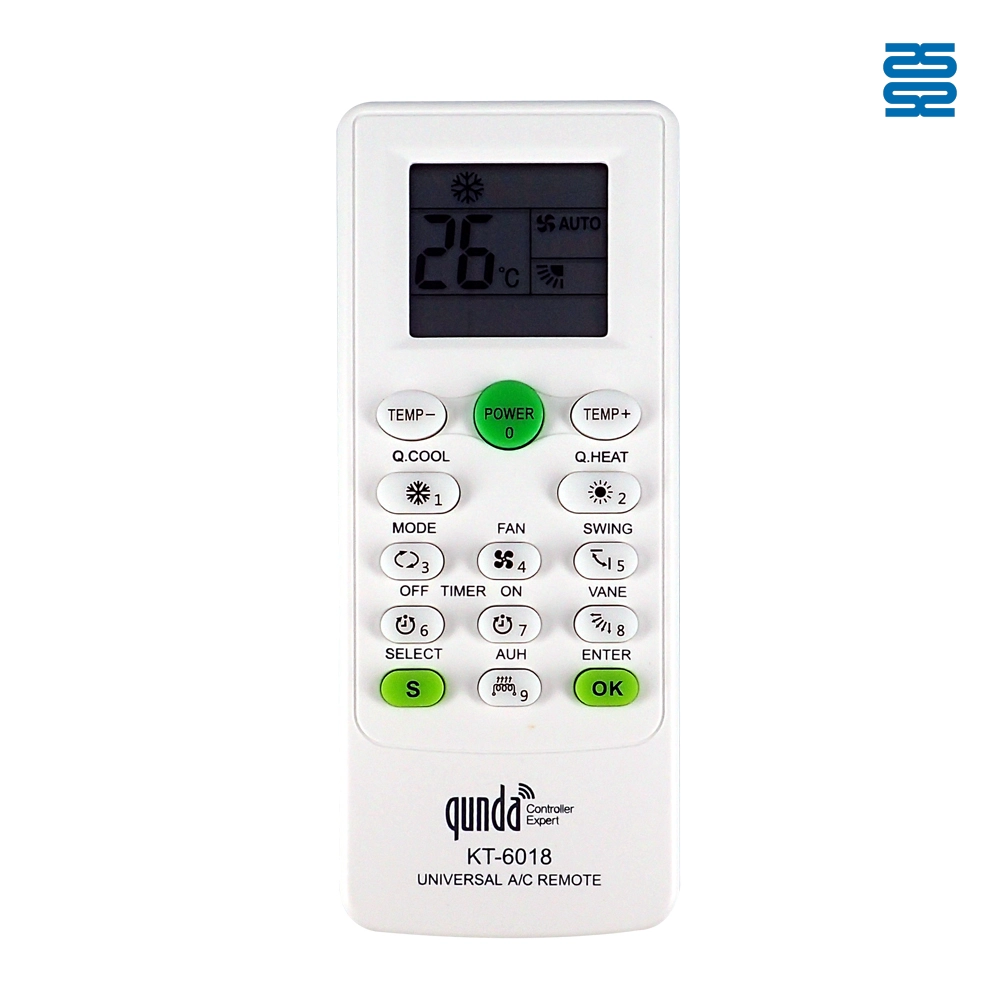
KT-6018 6000 in 1 Universal Air Conditioner Remote Control Compatible with All Brands
Get the latest updates
If you have any comments or good suggestions, please leave us a message, later our professional staff will contact you as soon as possible.


Contact
Email us
Text or Call us
Address
Room 1606, No. 65, Zhongshan Seven Road, Liwan District, Guangzhou, Guangdong, China.

Facebook
Instagram
YouTube
Tik Tok
VK