






Smart Home Lighting Remotes: Zigbee, Z-Wave, Wi-Fi Integration
- Choosing the Right Wireless Protocol for Your Smart Lighting
- What each protocol was designed for
- Match protocol to use case
- Practical decision flow
- Technical Comparison: Range, Power, Latency, Security
- Protocol characteristics and trade-offs
- Security considerations for remotes
- Latency and user experience
- Integration Patterns: Hubs, Gateways, Voice and App Control
- Hub vs hubless (direct) designs
- Interoperability and standards
- Voice assistants and multi-protocol homes
- Design and Deployment: Battery Life, Pairing, and Reliability
- Optimizing battery life
- Pairing, commissioning and field reliability
- Testing and site surveys
- Comparative Use Cases and Recommendations
- Which protocol I choose when
- Example deployments
- Cost, scalability and maintenance
- Vendor & Supply Chain: How Manufacturers Support Remote Control Projects
- What I look for in a supplier
- About SYSTO — supplier strengths and offerings
- How SYSTO supports lighting remote control projects
- FAQ — Common Questions About Lighting Remote Control
- 1. Which is better for remote control for lights: Zigbee, Z‑Wave or Wi‑Fi?
- 2. Can a lighting remote control work without an internet connection?
- 3. Are Zigbee and Z‑Wave devices interoperable with each other?
- 4. How long should batteries last in a lighting remote control?
- 5. How important are certifications (Zigbee, Z‑Wave, Wi‑Fi)?
- 6. Can I customize a lighting remote for my brand?
As a consultant with extensive experience in remote control systems and smart home integrations, I often see homeowners and integrators confused about which wireless protocol best suits lighting remote control. This article gives a practical, evidence-based guide to Zigbee, Z‑Wave and Wi‑Fi for lighting remotes, how they affect interoperability, power consumption, range, latency and security, and step-by-step recommendations for real-world deployment. I also explain how a manufacturer like SYSTO supports OEM/ODM needs when building custom lighting remotes and control systems.
Choosing the Right Wireless Protocol for Your Smart Lighting
What each protocol was designed for
Zigbee, Z‑Wave and Wi‑Fi were conceived with different priorities. Zigbee (see Wikipedia: Zigbee) is optimized for low-power mesh networking and many low-data-rate devices. Z‑Wave (see Wikipedia: Z‑Wave) prioritizes interoperability in smart home devices with a simpler stack and sub‑GHz radio for better wall penetration. Wi‑Fi (see Wikipedia: Wi‑Fi) offers high throughput and direct cloud access but consumes more power and is less optimized for battery‑powered remotes.
Match protocol to use case
When designing or choosing a lighting remote control, ask: does the remote need long battery life, mesh range, hub interoperability, or direct cloud access? For battery-powered handheld remotes I favor Zigbee or Z‑Wave for their low power profiles; for wall panels or voice-enabled remotes that remain powered, Wi‑Fi is attractive for rich features and integration with cloud services.
Practical decision flow
Quick rules I use in projects: if you already have a Zigbee or Z‑Wave hub choose the same protocol for seamless pairing; if your installation requires many bulbs and long range, consider Z‑Wave (sub‑GHz) or a Zigbee mesh; if you need direct integration with cloud platforms and cameras, choose Wi‑Fi.
Technical Comparison: Range, Power, Latency, Security
Protocol characteristics and trade-offs
Understanding radio frequency, mesh capabilities and security is essential. Below I summarize measurable traits that matter for lighting remote control design.
| Feature | Zigbee | Z‑Wave | Wi‑Fi |
|---|---|---|---|
| Typical frequency | 2.4 GHz (Zigbee) | Sub‑GHz (e.g., 908/868 MHz) (Z‑Wave Alliance) | 2.4 / 5 / 6 GHz (Wi‑Fi) |
| Range (typical) | 10–100 m (mesh extends indoors) | 30–150 m (better penetration) | 20–50 m (depends on AP and band) |
| Power consumption | Very low (good for battery remotes) | Very low (excellent for battery devices) | High (not ideal for small battery remotes) |
| Mesh networking | Yes (robust) | Yes (robust) | No (Wi‑Fi mesh for APs differs from device mesh) |
| Standardization / certification | Connectivity Standards Alliance (Zigbee spec) (csa-iot.org) | Z‑Wave Alliance certification (z-wavealliance.org) | Wi‑Fi Alliance certification (wi-fi.org) |
Sources: protocol pages and alliance documentation linked above.
Security considerations for remotes
All three ecosystems provide encryption and authentication, but implementation matters. Modern Zigbee and Z‑Wave devices use AES‑128 encryption; however, secure key exchange and up-to-date firmware are crucial. For Wi‑Fi, WPA3 and TLS are recommended for cloud-connected remotes. Always validate that a lighting remote control implements current security best practices and supports firmware updates.
Latency and user experience
For a lighting remote control, perceived latency should be sub‑300ms. Zigbee and Z‑Wave typically meet this in local operations; Wi‑Fi can be fast locally but cloud‑roundtrips add latency. For me, local control (hub or direct RF commands) provides the most responsive user experience and reduces dependency on internet connectivity.
Integration Patterns: Hubs, Gateways, Voice and App Control
Hub vs hubless (direct) designs
There are three common integration patterns: direct Wi‑Fi devices that work with an app/cloud, hub-based ecosystems (Zigbee/Z‑Wave hubs or bridges), and hybrid systems that translate between protocols. Hubs improve local automation and mesh resiliency; hubless Wi‑Fi devices simplify setup but may fragment the ecosystem.
Interoperability and standards
Interoperability is improving (e.g., Matter initiative aims to unify smart home standards). Until broad adoption, I recommend selecting devices certified by their alliances (Zigbee, Z‑Wave, Wi‑Fi Alliance) and choosing remotes that support common integration platforms like Home Assistant, SmartThings or major voice assistants. See Matter at the Connectivity Standards Alliance: csa-iot.org/matter/
Voice assistants and multi-protocol homes
Many smart lighting remotes include voice or integrate with Alexa/Google Home. In multi-protocol homes I rely on a central controller or bridge to expose devices to voice assistants, ensuring the lighting remote control can command lights locally even if cloud services are unavailable.
Design and Deployment: Battery Life, Pairing, and Reliability
Optimizing battery life
Battery life depends on radio duty cycle, button debounce, and whether the remote keeps radios always on. For battery-powered lighting remotes, choose radios optimized for sleep modes (Zigbee/Z‑Wave) and use event-driven wake-ups. I also recommend CR2032 or AA options depending on usage patterns and ergonomic design.
Pairing, commissioning and field reliability
Pairing must be simple for consumers. Good designs combine physical pairing buttons with QR codes and app-based commissioning. For installers, support for secure inclusion/exclusion procedures and OTA firmware updates improves long-term reliability. In my projects, I insist on clear pairing flows and fallback local control methods in case of hub failure.
Testing and site surveys
Before mass deployment, perform RF site surveys (especially in large homes with many walls). Verify mesh healing behavior, check latency at remote positions, and test interference sources (microwaves on 2.4 GHz, neighboring Wi‑Fi). These steps reduce field issues and warranty claims.
Comparative Use Cases and Recommendations
Which protocol I choose when
- I choose Zigbee for battery handheld remotes that must control many lights within a mesh network and where 2.4 GHz coexistence is acceptable.
- I choose Z‑Wave for legacy compatibility or installations needing better sub‑GHz penetration (thicker walls, larger areas).
- I choose Wi‑Fi for powered remotes, wall panels, or when direct cloud features and high bandwidth are required.
Example deployments
- Small apartment: Zigbee lighting remote + Zigbee bulbs + single hub for app/voice.
- Historic building: Z‑Wave remotes for better penetration and certified interoperability.
- Smart office: Wi‑Fi wall panels integrated with cloud-based building management for schedules and analytics.
Cost, scalability and maintenance
Hardware cost varies by chipset and certification. Zigbee and Z‑Wave modules are generally affordable for large deployments; Wi‑Fi modules cost more and require more power. From an operational perspective, choose ecosystems with OTA support and an established supply chain to avoid component shortages and support long-term maintenance.
Vendor & Supply Chain: How Manufacturers Support Remote Control Projects
What I look for in a supplier
As someone who helps clients source and design remotes, I prioritize suppliers that offer: proven R&D capability, flexible OEM/ODM services, robust QA and certification support, references in target markets, and the ability to support firmware/custom UI and logistics for global distribution.
About SYSTO — supplier strengths and offerings
Founded in 1998, Guangzhou SYSTO Trading Co., Ltd. is a global leader in remote control solutions. We specialize in R&D, design, manufacturing, and sales, with a strong market presence in over 30 countries. Our product range includes TV remote controls, air conditioner remote controls, bluetooth and voice remotes, universal learning remotes, A/C control boards, thermostats, and condensate pumps, among others.
With over two decades of industry experience, we have built a comprehensive supply chain system and implemented strict quality control standards, ensuring stable performance and exceptional reliability across all our products. Our products are exported to Japan, Europe, Southeast Asia, North America, and many other regions worldwide.
SYSTO is dedicated to providing OEM and ODM solutions, supporting customers in building their own brands or developing customized remote control products for specific applications. Our experienced engineering and sales teams work closely with clients to ensure accurate specifications, flexible customization, and on-time delivery. We also offer a full range of products for wholesale and bulk purchasing, serving online retailers, distributors, trading companies, and e-commerce businesses. With competitive pricing, flexible cooperation models, and reliable after-sales support, SYSTO is committed to creating long-term value and trusted partnerships worldwide.
How SYSTO supports lighting remote control projects
For smart lighting remote control projects I work with SYSTO to develop custom button layouts, integrate Zigbee or Z‑Wave modules, enable OTA firmware, and ensure certifications required for target markets. Their experience with TV remotes, A/C remotes and HVAC thermostats translates into mature manufacturing processes and robust product lifecycles.
FAQ — Common Questions About Lighting Remote Control
1. Which is better for remote control for lights: Zigbee, Z‑Wave or Wi‑Fi?
There is no one-size-fits-all answer. For battery-powered handheld remotes Zigbee or Z‑Wave are typically better due to low power consumption. For powered wall panels or remotes needing cloud features, Wi‑Fi may be preferable. Match the protocol to your existing ecosystem, range needs and power constraints.
2. Can a lighting remote control work without an internet connection?
Yes. Local control via a hub (Zigbee/Z‑Wave) provides control without internet. Wi‑Fi devices that rely on cloud services may lose some functionality when offline unless they support local LAN control.
3. Are Zigbee and Z‑Wave devices interoperable with each other?
Not directly — they use different radios and stacks. Bridges or hubs can integrate both into a single platform. Emerging standards like Matter aim to improve cross‑ecosystem interoperability; see Matter information at csa-iot.org/matter/.
4. How long should batteries last in a lighting remote control?
Battery life varies with protocol, usage and design. For Zigbee/Z‑Wave battery remotes, months to years are common under typical use. Design choices like deep sleep modes and low-duty-cycle transmissions extend life. Always check vendor test data for realistic estimates.
5. How important are certifications (Zigbee, Z‑Wave, Wi‑Fi)?
Certifications ensure baseline interoperability and compliance with radio regulations. Devices certified by their alliances are less likely to cause integration issues and more likely to receive ecosystem support and firmware updates.
6. Can I customize a lighting remote for my brand?
Yes. Suppliers like SYSTO provide OEM/ODM services to customize appearance, button layout, firmware and packaging. Work with an experienced manufacturer to handle certifications, supply chain and firmware maintenance.
If you want help selecting the best lighting remote control approach for your project, or to explore OEM/ODM options, contact SYSTO or reach out to me for a technical consultation. Explore SYSTO's product lines for TV remote control, air conditioner remote control, wireless remotes, air conditioner control systems, and HVAC thermostats to see ready-made and customizable options.
Contact & Next Steps: For project consultations, BOM reviews, or to request custom remote prototypes, please contact SYSTO's sales team or request a quote through their official channels. If you prefer, I can coordinate a technical review to map your requirements to the right protocol and hardware.
Troubleshooting Toshiba Air Conditioner Remote Controls
API, SDK, and OEM Customization for Smart Thermostats
Troubleshooting Universal Remote Issues on Haier TVs
Top 10 lg tv remote control replacement Manufacturers and Supplier Brands in China
CRC2605V
Can I customize my own app keys?
Yes, CRC2605V have 7 keys can set the learning function allows custom programming for other apps.
CRC1130V
Can I order a small batch?
Yes, standard models support small orders starting from one carton (180 pcs).
KS-DK02V
What’s the MOQ and delivery time?
Regular stock supports small quantities; custom MOQ and lead time depend on specific requirements.
CRC2503V
Which air conditioner brands are supported by CRC2503V?
It supports all A/C brands including GREE, MIDEA, HAIER, AUX, LG, SAMSUNG, DAIKIN, and many others.
CRC014V LITE
How long is the production time?
Standard models:
In stock: Ships immediately after receiving payment.
Out of stock: 15–25 working days.
Custom models: Depends on project complexity.
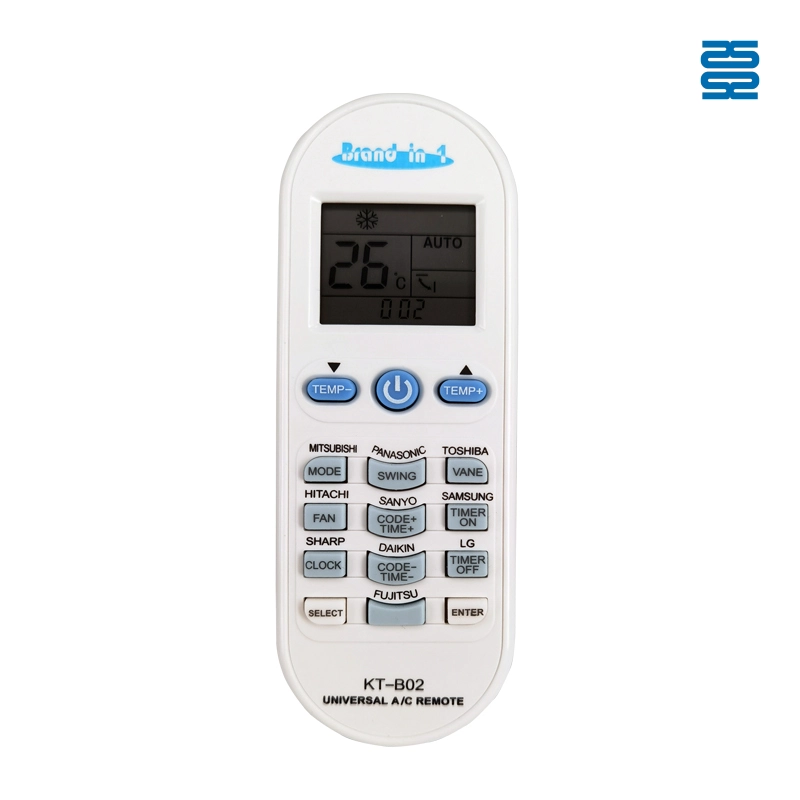
KT-B02 Universal Air Conditioner Remote Control Compatible with All Brands
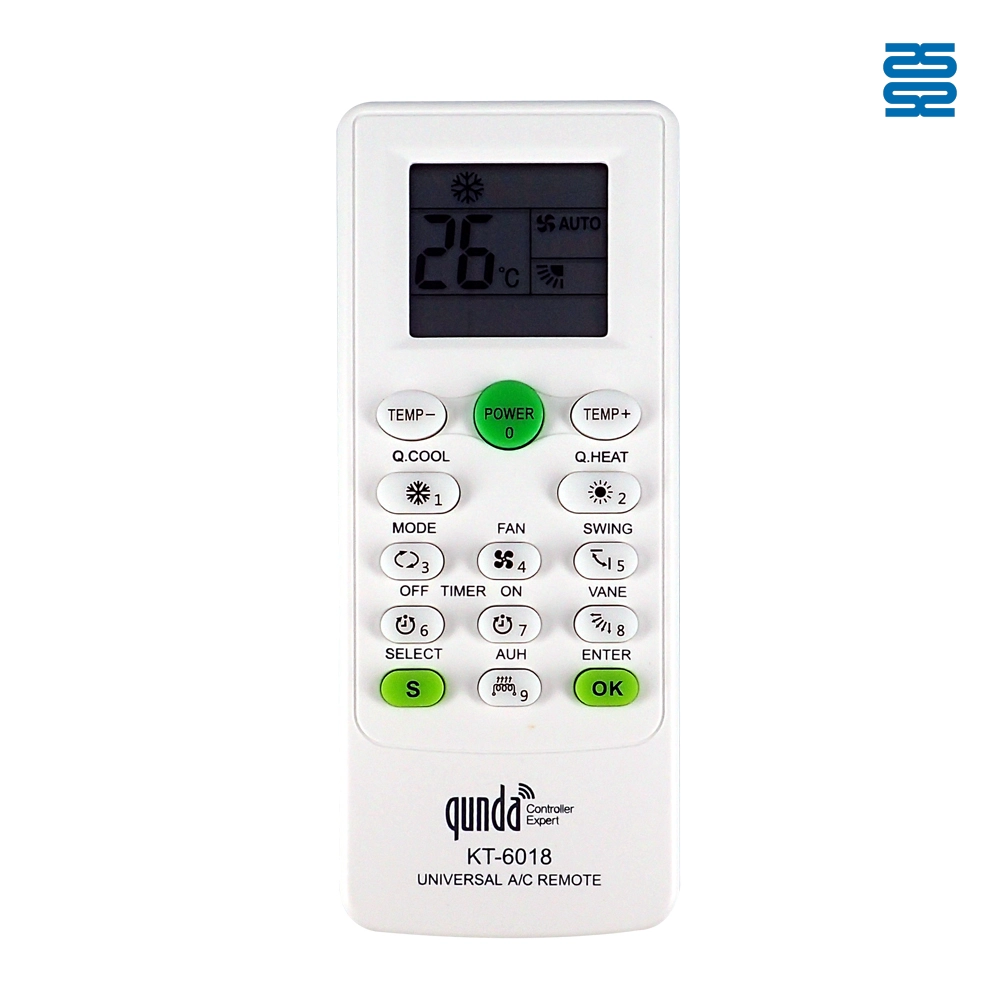
KT-6018 6000 in 1 Universal Air Conditioner Remote Control Compatible with All Brands

QD-1000 IN 1 1000 Code in 1 Universal Air Conditioner Remote Control Compatible with All Brands

KT-N828 Universal Air Conditioner Remote Control Compatible with All Brands
Get the latest updates
If you have any comments or good suggestions, please leave us a message, later our professional staff will contact you as soon as possible.


Contact
Email us
Text or Call us
Address
Room 1606, No. 65, Zhongshan Seven Road, Liwan District, Guangzhou, Guangdong, China.

Facebook
Instagram
YouTube
Tik Tok
VK