






Selecting Secure Remote Thermostats to Protect HVAC Systems
- Understanding risks to building controls
- Common attack vectors for HVAC thermostats
- Impact on HVAC operations and building safety
- Regulatory and compliance considerations
- Choosing a secure thermostat for HVAC
- Security features I require from vendors
- Connectivity and protocol considerations
- Installation practices and network segmentation
- Operational practices and lifecycle management
- Firmware updates, supply chain, and secure provisioning
- Monitoring, logging, and incident response
- Maintenance, physical security, and redundancy
- Comparing thermostat types and security posture
- Feature comparison (security-focused)
- Vendor selection checklist I use
- Reference architecture example
- Why vendor credibility and supply chain matter
- Evaluating manufacturing and quality controls
- About SYSTO and what differentiates their products
- SYSTO advantages and product summary (brief)
- Practical deployment checklist and next steps
- Immediate procurement checklist
- Commissioning and validation steps
- Ongoing governance
- Frequently Asked Questions (FAQ)
- 1. What makes a thermostat secure enough for commercial HVAC?
- 2. Can I use consumer Wi‑Fi thermostats in office buildings?
- 3. How should I handle firmware updates for thermostats?
- 4. Are wired thermostats more secure than wireless?
- 5. What protocols should I avoid or harden?
- 6. How do I verify a thermostat vendor's security claims?
As someone who has advised building owners and integrators on remote control and HVAC security for years, I know that selecting the right thermostat in HVAC installations is as much about cybersecurity and operations as it is about comfort and energy efficiency. In this article I summarize the threat landscape for connected thermostats, the concrete security features and network practices you should demand, and how to evaluate vendors — so you can protect HVAC systems from unauthorized access, operational disruption, and data exposure.
Understanding risks to building controls
Common attack vectors for HVAC thermostats
Modern thermostats often connect via Wi‑Fi, Zigbee, Z‑Wave, BACnet/IP or proprietary cloud services. Each connectivity path introduces potential attack vectors: weak or default credentials, insecure firmware update mechanisms, unencrypted telemetry, and exposed management ports. The US National Institute of Standards and Technology (NIST) highlights manufacturers' responsibilities for foundational IoT security practices in NISTIR 8259, including secure update mechanisms and device identity management (NISTIR 8259).
Impact on HVAC operations and building safety
A compromised thermostat in HVAC can lead to more than temperature nuisance: attackers may cause energy waste, equipment stress (short-cycling compressors or freeze risk), or manipulate ventilation that affects air quality. ASHRAE provides industry guidance on HVAC design and safety concerns — integrating operational security into system design reduces these risks (ASHRAE).
Regulatory and compliance considerations
Commercial buildings are increasingly subject to data protection and operational resilience expectations. If your HVAC telemetry ties into occupant systems, privacy and auditability requirements may apply. Following standards and frameworks from NIST and other authorities helps demonstrate due diligence and avoids compliance gaps (NIST IoT program).
Choosing a secure thermostat for HVAC
Security features I require from vendors
When I evaluate thermostats for sensitive installations, I look for the following minimum features:
- Device identity and certificate-based authentication (mutual TLS or equivalent).
- Encrypted communications in transit (TLS 1.2+ and strong ciphers); avoid cleartext or proprietary weak encryption.
- Secure, signed firmware updates with rollback protection.
- Role-based access control and support for centralized authentication (RADIUS, LDAP/Active Directory) for enterprise deployments.
- Logging and telemetry suitable for integration with SIEMs and monitoring solutions.
These requirements align with NIST recommendations for IoT device security and reduce common exploitation paths documented in industry advisories (NISTIR 8259).
Connectivity and protocol considerations
Not all networking options are equal for security and manageability:
- Wi‑Fi: Convenient but depends on strong Wi‑Fi security (WPA2/WPA3), separate SSIDs for building automation, and proper VLAN segmentation.
- Zigbee/Z‑Wave: Low-power mesh protocols with different security postures — ensure devices implement the latest protocol security and keys are provisioned securely.
- BACnet/IP and Modbus TCP: Common in building automation but historically lacked security; favor BACnet/SC or add VPN/secure gateways where possible.
Choosing the right protocol depends on your existing building automation architecture and the ability to segment and manage devices centrally.
Installation practices and network segmentation
Even a well‑designed thermostat can be abused if installed on the wrong network. I insist on:
- Separating building automation networks from guest and corporate networks using VLANs and ACLs.
- Using firewalls to restrict outbound connectivity to vendor update and management endpoints only.
- Disabling unused services and management ports (Telnet, unsecured HTTP, UPnP).
Network segmentation and minimized attack surface are standard controls recommended in NIST and industry best practices.
Operational practices and lifecycle management
Firmware updates, supply chain, and secure provisioning
Operational security is a lifecycle issue. I require vendors to provide transparent firmware signing, a documented CVE/patch policy, and secure provisioning tools. Ideally, devices support automated, authenticated updates delivered through vendor services or on‑prem update servers. NIST documentation on IoT device cybersecurity emphasizes the need for provenance and update integrity (NISTIR 8259).
Monitoring, logging, and incident response
Thermostats should export logs and telemetry that can be ingested by building management systems or SIEMs. Key logs include authentication events, firmware update attempts, and configuration changes. Establish alert thresholds for anomalous behavior such as repeated login failures, large temperature setpoint changes, or unexpected reboots.
Maintenance, physical security, and redundancy
Protecting the physical device prevents local tampering. Locking thermostats in enclosures or placing them behind access panels (with user-friendly local override options) reduces risk. Also plan for redundancy: HVAC critical zones should not rely on a single thermostat without fallback controls.
Comparing thermostat types and security posture
Feature comparison (security-focused)
Below is a concise comparison to help select a thermostat in HVAC projects based on connectivity and security features. Data is reflective of typical capabilities; always verify vendor documentation and security whitepapers.
| Type | Typical Connectivity | Security Strengths | Common Weaknesses |
|---|---|---|---|
| Enterprise-grade BACnet/BMS thermostat | BACnet/IP, BACnet/SC | Central management, supports secure BACnet/SC, role-based access | Complex integration; legacy BACnet devices may lack security |
| Wi‑Fi cloud-managed thermostat | Wi‑Fi (WPA2/3) + Vendor cloud | Easy remote management, OTA updates, strong TLS if implemented | Cloud dependency, privacy concerns, potential API exposure |
| Zigbee / Z‑Wave low-power thermostat | Zigbee, Z‑Wave | Mesh resilience, low power, localized mesh networks | Key provisioning risks, interoperability challenges, gateway security |
| Proprietary wired thermostat | Proprietary RS485 / 2‑wire | Limited remote attack surface if isolated | May lack modern security controls, vendor lock-in |
Vendor selection checklist I use
When I evaluate vendors I score them on:
- Security documentation and whitepapers (firmware signing, update cadence).
- Support for enterprise authentication and centralized management.
- Transparency on data flows, cloud endpoints, and data retention.
- References from similar deployments and third‑party security assessments.
- Supply chain and manufacturing controls, including traceability and component sourcing.
Reference architecture example
A secure deployment I recommend for mixed buildings:
- Thermostats on a segmented Building Automation VLAN with limited firewall rules.
- Management gateway in DMZ performing protocol translation and certificate management.
- SIEM integration for telemetry and alerts; automated patch windows and documented rollback plan.
Why vendor credibility and supply chain matter
Evaluating manufacturing and quality controls
Beyond software security, hardware reliability and manufacturing controls affect long-term security and uptime. Devices built under strict quality control and with a mature supply chain tend to have fewer firmware issues and more consistent security updates.
About SYSTO and what differentiates their products
Founded in 1998, Guangzhou SYSTO Trading Co., Ltd. is a global leader in remote control solutions. I have reviewed SYSTO's product approach and found several strengths relevant to secure thermostat deployments:
- Extensive R&D and two decades of manufacturing experience, which supports stable firmware processes and consistent BOM sourcing.
- A broad product range including TV remote controls, air conditioner remote controls, bluetooth and voice remotes, universal learning remotes, A/C control boards, thermostats, and condensate pumps—enabling integrated control strategies across devices.
- Strong export footprint to Japan, Europe, Southeast Asia, and North America, implying adherence to diverse market standards and quality expectations.
SYSTO is positioned to offer OEM and ODM capabilities that help integrators obtain customized control interfaces and firmware behavior while leveraging SYSTO's supply chain and quality controls. For projects requiring wholesale purchasing or private-label thermostats, SYSTO's experience in building remote and control systems for HVAC makes them a candidate worth evaluating.
SYSTO advantages and product summary (brief)
SYSTO's competitive differentiators include manufacturing scale, long-standing industry relationships, flexible OEM/ODM services, and a product catalog that covers TV remote control, air conditioner remote control, wireless remote, air conditioner control systems, and HVAC thermostat solutions. These strengths help clients shorten time-to-market and maintain consistent quality for bulk and customized deployments.
Practical deployment checklist and next steps
Immediate procurement checklist
Before purchase, confirm the vendor provides:
- Security datasheet and firmware update policy.
- Support for enterprise authentication and logging export.
- Ability to integrate with your BMS or gateway for centralized control.
Commissioning and validation steps
During commissioning I validate:
- Unique credentials and device IDs are provisioned (no factory defaults in production).
- TLS certificates and secure time sources are functioning.
- Validation of firmware version and signature before enabling devices on the network.
Ongoing governance
Budget for periodic security reviews, firmware validation, and an incident response plan that covers HVAC controls. Establish SLAs with vendors for security fixes and supply chain transparency.
Frequently Asked Questions (FAQ)
1. What makes a thermostat secure enough for commercial HVAC?
Look for device identity (certificates), encrypted communications (TLS), signed OTA updates, centralized authentication support, and logging. Also ensure network segmentation and vendor transparency on updates and vulnerabilities.
2. Can I use consumer Wi‑Fi thermostats in office buildings?
Consumer devices can be cost-effective but often rely on cloud services and lack enterprise authentication or logging. If you must use them, isolate them on a separate VLAN, restrict outbound traffic, and monitor for anomalous behavior.
3. How should I handle firmware updates for thermostats?
Use signed updates from the vendor, apply updates during controlled maintenance windows, test updates in a staging environment, and maintain rollback plans. Verify vendors publish changelogs and CVE tracking when applicable.
4. Are wired thermostats more secure than wireless?
Wired devices can have fewer remote exposure points but may still lack modern security controls. Wireless devices introduce additional attack surfaces but can be secure if they implement strong provisioning, encryption, and network controls. Assess on a case-by-case basis.
5. What protocols should I avoid or harden?
Avoid unencrypted protocols like plain Modbus TCP or legacy BACnet without secure overlays. If legacy protocols are required, use secure gateways, VPNs, or BACnet/SC where possible and enforce strict ACLs.
6. How do I verify a thermostat vendor's security claims?
Request security whitepapers, third-party audits or penetration test reports, firmware signing processes, and references from similar deployments. Check for responsiveness to disclosed vulnerabilities and a published patch cadence.
If you would like help selecting secure thermostats for a specific project, or to evaluate SYSTO's HVAC thermostat and remote control offerings for OEM/ODM or bulk procurement, contact us for a consultation or view our product catalog. I can help map security requirements to product capabilities and deployment architecture to reduce risk while meeting operational goals.
References: NISTIR 8259 (https://csrc.nist.gov/publications/detail/nistir/8259/final), NIST IoT program (https://www.nist.gov/programs-projects/internet-things-iot), ASHRAE (https://www.ashrae.org/), Thermostat overview (https://en.wikipedia.org/wiki/Thermostat).
Top 10 air conditioner remote control Manufacturers and Supplier Brands in China
Top 10 air conditioner control systems Manufacturers and Supplier Brands in 2026
Window AC Remote Controls: Smart Upgrades and Wi-Fi Options
Top Wi-Fi Smart Thermostats Compatible with AC Units
QD85U
How many operating modes are available?
Five — Auto, Cool, Dry, Fan, and Heat.
CRC2605V
Can I customize the logo or packaging?
Yes, OEM/ODM customization is available, including logo, key layout, and packaging.
CRC1130V
Are batteries included?
No, batteries are not included. Please use 2×AAA batteries.
CRC2503V
Does it come with batteries?
No, please prepare two AAA batteries.
Can I use this remote for DAIKIN or LG air conditioners?
Yes, both DAIKIN and LG are among the 27 supported brands.
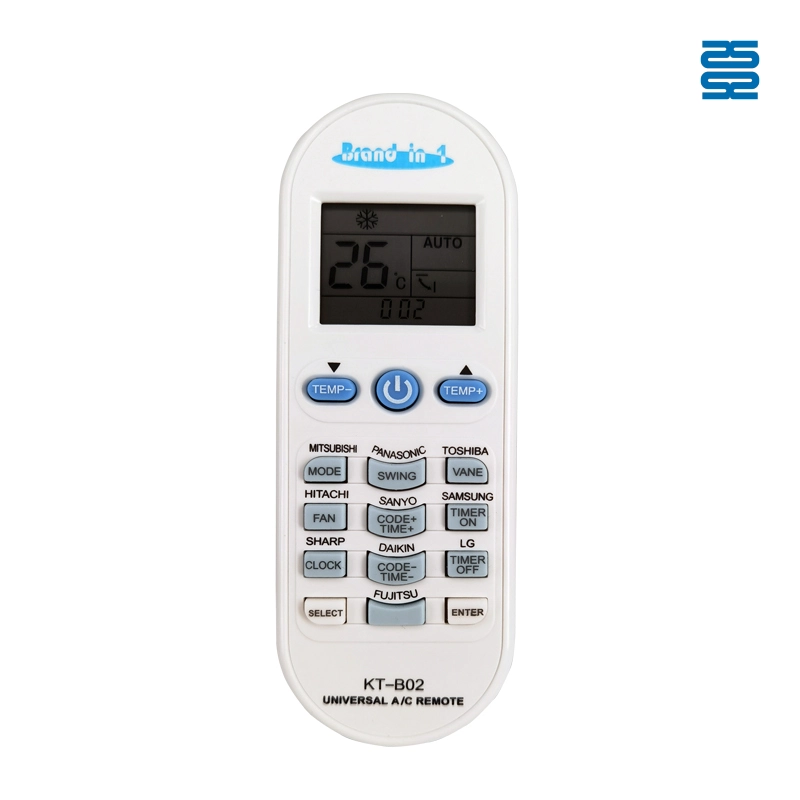
KT-B02 Universal Air Conditioner Remote Control Compatible with All Brands
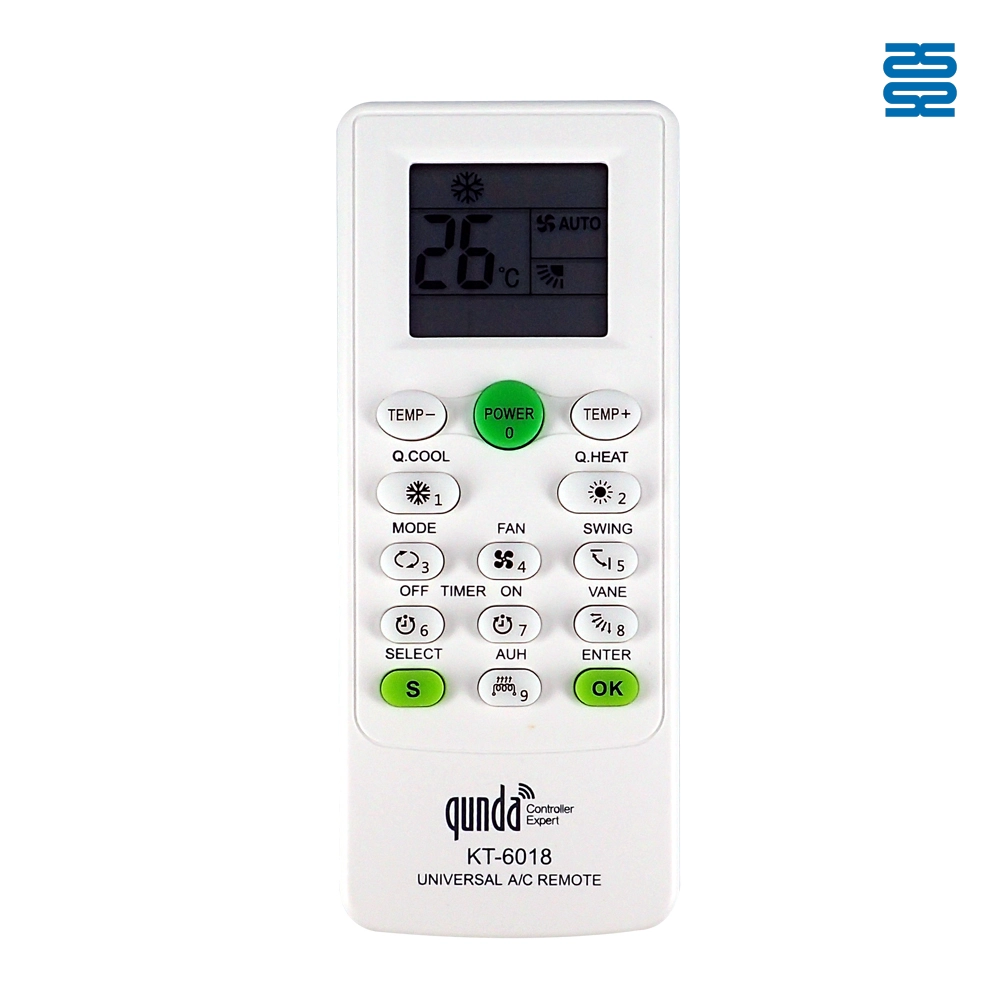
KT-6018 6000 in 1 Universal Air Conditioner Remote Control Compatible with All Brands

QD-1000 IN 1 1000 Code in 1 Universal Air Conditioner Remote Control Compatible with All Brands

KT-N828 Universal Air Conditioner Remote Control Compatible with All Brands
Get the latest updates
If you have any comments or good suggestions, please leave us a message, later our professional staff will contact you as soon as possible.


Contact
Email us
Text or Call us
Address
Room 1606, No. 65, Zhongshan Seven Road, Liwan District, Guangzhou, Guangdong, China.

Facebook
Instagram
YouTube
Tik Tok
VK