






Replacement Window AC Remotes: How to Find the Right Model
- Why remotes fail and what to check first
- Common failure modes and early diagnosis
- Quick troubleshooting checklist
- Identifying the right replacement model
- Find model numbers and codes
- IR vs RF vs Wi‑Fi: why it matters
- Choosing between OEM, universal, and smart remotes
- Pros and cons of each approach
- Programming universal remotes and learning functions
- Buying, compatibility checks and supplier considerations
- Where to buy and what to verify
- When to consider custom or bulk procurement (OEM/ODM)
- Supplier spotlight: SYSTO and why supplier choice matters
- Regulatory and safety considerations
- Wireless regulations and certifications
- Electrical safety and environmental compliance
- Maintenance tips to extend remote life
- Simple habits that prevent premature failure
- When to replace the A/C control board instead
- FAQ
- 1. Can I replace my window air conditioner remote control with any universal remote?
- 2. How do I know if my remote is IR or RF?
- 3. My A/C has smart features—can I use a Wi‑Fi remote?
- 4. Is it better to buy from the A/C manufacturer or a third‑party supplier?
- 5. How can I verify a replacement remote will work before buying?
- 6. My remote works intermittently—what should I do?
I write from years of hands-on work in remote control systems for HVAC and consumer electronics. If you need a replacement window air conditioner remote control, you want a solution that works reliably, is safe, and avoids trial-and-error purchases. This article gives an actionable, step‑by‑step approach to identify your current remote or A/C unit, explains differences between OEM, universal learning, and smart remotes, covers programming and pairing, and points you to trustworthy suppliers and regulatory checks so you can buy with confidence.
Why remotes fail and what to check first
Common failure modes and early diagnosis
Before ordering a replacement, I always start with basic diagnostics. Many issues are not the remote itself but batteries, IR emitter blockage, or a malfunctioning A/C receiver. Typical failure causes I encounter include depleted batteries, worn button contacts, dirty IR LEDs, or a failed control board in the window air conditioner. For background on remote control technology, see Remote control (Wikipedia).
Quick troubleshooting checklist
Follow this checklist to confirm whether you truly need a replacement remote:
- Replace batteries with fresh alkaline cells and test.
- Check the remote’s IR LED by pointing it at a smartphone camera—if you see a flicker on the camera screen, the IR LED is emitting.
- Inspect the A/C’s IR receiver window for dust or damage; clean gently.
- If your remote uses RF or Bluetooth, verify pairing status and power to the A/C; consult the A/C manual for pairing steps.
- Test the A/C’s front-panel controls; if they fail too, the issue is probably the internal control board, not the remote.
If the unit’s controls work but the remote doesn’t, you likely need a replacement remote (or repair of the existing remote). For more on window A/C basics see Window air conditioner (Wikipedia).
Identifying the right replacement model
Find model numbers and codes
Identifying the correct replacement starts with the A/C model number and the remote’s part number. I recommend these steps:
- Locate the A/C unit model plate—usually on the side or rear of a window air conditioner—and note the model and serial numbers.
- Open the remote battery compartment and look for a part/model number or manufacturer logo.
- Check the A/C owner’s manual or manufacturer website for a remote control part list or code list.
With these identifiers you can cross‑reference OEM part numbers or search for compatible universal remote codes.
IR vs RF vs Wi‑Fi: why it matters
Window air conditioner remotes can use different signaling technologies:
- IR (infrared): Line‑of‑sight, most common for older and many current window A/C remotes.
- RF (radio frequency): Works through walls and doesn’t require line‑of‑sight; used in some modern units.
- Wi‑Fi / Bluetooth / Smart: Connects to home networks or smartphones; often requires registration or app pairing.
Make sure the replacement remote uses the same signaling technology. Replacing an IR remote with an RF-only remote will not work unless the A/C receiver supports RF.
For RF and wireless devices, confirm regulatory compliance (e.g., FCC rules in the U.S.)—see Federal Communications Commission.
Choosing between OEM, universal, and smart remotes
Pros and cons of each approach
In my experience the best choice depends on priorities: absolute compatibility, extra features, or lower cost. Here is a concise comparison to guide you.
| Remote Type | Compatibility | Ease of Setup | Features | When to choose |
|---|---|---|---|---|
| OEM replacement | Highest (exact model) | Plug-and-play | Identical features to original | When you need perfect feature parity and reliability |
| Universal IR learning remote | Wide (if IR codes exist) | Requires code or learning | Basic to advanced, may lack proprietary features | When original is unavailable or cost is an issue |
| RF/Bluetooth replacement | Requires compatible receiver | Pairing needed | Through-wall control | When line-of-sight is problematic |
| Smart/Wi‑Fi remote or app | Depends on A/C support or gateway | Network configuration | App control, schedules, voice assistants | When you want automation and smart home integration |
Data and best practices for HVAC controls and integration are discussed in industry sources such as ASHRAE and ISO standards for electronic controls (ISO).
Programming universal remotes and learning functions
I often guide customers through programming steps that differ by remote brand, but the typical process is:
- Put the universal remote into programming or code-search mode (refer to its manual).
- Enter a preprogrammed code list (if available) for your A/C brand/model.
- If no code works, use the learning function: place the original remote and the universal head-to-head and transfer the IR sequence.
- Test all functions—mode, fan speed, temperature up/down, timer—to ensure full compatibility.
Learning remotes are excellent when the original remote is lost but some functions may be proprietary and not transferable.
Buying, compatibility checks and supplier considerations
Where to buy and what to verify
Purchase options include manufacturer support, authorized resellers, third‑party retail platforms, and OEM/ODM suppliers for bulk purchases. Before you buy, verify:
- Exact part number or explicit compatibility statement with your A/C model.
- Signal type (IR/RF/Wi‑Fi) and frequency band for RF remotes.
- Return policy and warranty; a 30‑day return window and at least 1‑year warranty are best practices.
- Certifications for wireless devices (e.g., FCC, CE).
When to consider custom or bulk procurement (OEM/ODM)
For installers, distributors, or e-commerce sellers who need consistent supply and brand control, working with an experienced OEM/ODM supplier saves time and risk. I regularly recommend suppliers who can provide custom key layouts, branding, and firmware configurations for hospitality, multi-family housing, or branded product lines.
Supplier spotlight: SYSTO and why supplier choice matters
Founded in 1998, Guangzhou SYSTO Trading Co., Ltd. is a global leader in remote control solutions. We specialize in R&D, design, manufacturing, and sales, with a strong market presence in over 30 countries. Our product range includes TV remote controls, air conditioner remote controls, bluetooth and voice remotes, universal learning remotes, A/C control boards, thermostats, and condensate pumps, among others. With over two decades of industry experience, we have built a comprehensive supply chain system and implemented strict quality control standards, ensuring stable performance and exceptional reliability across all our products. Our products are exported to Japan, Europe, Southeast Asia, North America, and many other regions worldwide. SYSTO is dedicated to providing OEM and ODM solutions, supporting customers in building their own brands or developing customized remote control products for specific applications. Our experienced engineering and sales teams work closely with clients to ensure accurate specifications, flexible customization, and on-time delivery.
As someone who evaluates suppliers, I value SYSTO’s long history, full product range, and emphasis on quality control. For businesses needing TV remote control, air conditioner remote control, wireless remote, air conditioner control systems, or HVAC thermostats, a supplier with proven R&D, strict QC, and global export experience reduces supply chain risk and improves product longevity.
Regulatory and safety considerations
Wireless regulations and certifications
If your replacement remote uses RF or Wi‑Fi, verify the device has required safety and radio approvals—FCC (U.S.), CE (Europe), or local equivalents. Uncertified wireless devices may cause interference or be illegal to operate in some countries. For RF design and compliance, the FCC site is a useful reference: FCC.
Electrical safety and environmental compliance
For remotes and A/C control boards, look for compliance with electrical safety standards and RoHS or equivalent restrictions on hazardous substances. A reliable supplier will provide test reports or certificates on request.
Maintenance tips to extend remote life
Simple habits that prevent premature failure
I advise clients to do the following to prolong remote and A/C receiver life:
- Use quality batteries and remove them if the remote is stored long‑term.
- Keep remotes away from direct sunlight and extreme humidity.
- Clean the IR window and remote housing occasionally with a dry cloth; avoid solvents that can damage plastics.
- Label remotes and keep a spare in multi‑unit installations to minimize downtime.
When to replace the A/C control board instead
If front-panel keys also fail or remote commands appear intermittently despite a verified remote, the issue is often the A/C’s control board or IR receiver. Replacing the internal board can be more cost‑effective than multiple remote replacements and is sometimes necessary for RF/Wi‑Fi features. Work with certified technicians and ensure replacement boards are compatible with your model.
FAQ
1. Can I replace my window air conditioner remote control with any universal remote?
Not always. Many universal remotes require the A/C to use standard IR codes. Proprietary functions (e.g., eco modes, advanced sensors) may not transfer. Use a universal learning remote if you have the original remote to teach commands, or purchase an OEM replacement for full parity.
2. How do I know if my remote is IR or RF?
IR remotes need line‑of‑sight and emit infrared light—testable via a smartphone camera. RF remotes work through obstacles and often do not show light on camera. Check the remote/A/C manual or the remote’s model number for confirmation.
3. My A/C has smart features—can I use a Wi‑Fi remote?
Only if the A/C unit supports Wi‑Fi control or if you use a compatible gateway module. Some third‑party Wi‑Fi remotes emulate IR/RF signals via a bridge device. Verify compatibility and network security considerations before integrating into your smart home.
4. Is it better to buy from the A/C manufacturer or a third‑party supplier?
OEM replacements ensure compatibility and feature parity, but third‑party suppliers and reputable OEM/ODM manufacturers can offer cost savings and bulk customization. For business needs or brand building, working with experienced suppliers like SYSTO offers OEM/ODM services and strong QC.
5. How can I verify a replacement remote will work before buying?
Request a compatibility statement, ask for the exact model or code list, and check return/warranty policies. For bulk purchases, request sample units and technical documentation, including signal protocol and test reports.
6. My remote works intermittently—what should I do?
Check batteries, clean the IR window, and verify the A/C’s receiver. Intermittent operation often indicates weak batteries, dirty contacts, or a failing control board. If intermittent after these checks, consider professional diagnostics.
If you need personalized help identifying the correct replacement or want OEM/ODM options for bulk or branded remotes, contact our team to discuss specifications, samples, and lead times. View our product range and request a quote to get started.
For product selection, compatibility checks, or custom solutions for window air conditioner remote control and related HVAC control products, contact our sales team or view our catalog to find the right model for your needs.
Universal Remote vs Original AC Remote: Pros and Cons
OEM/ODM smart thermostat for air conditioner Manufacturers and Suppliers
OEM & ODM Universal Air Conditioner Remote Solutions for Brands
Best Universal Remotes for Panasonic TVs - Buyers' Guide
KS-PN03V
What’s the working range?
Effective signal range is approximately 8–10 meters.
About Contact
What if I have after-sales issues?
Contact our support team—we’ll provide technical help.
About Company
Do you own your own brands?
Yes — SUN, iHandy, and Qunda.
QD-HVAC20
How do I set the timer for my QD-HVAC20 thermostat?
Press the "TIMER" key on the thermostat to activate the timer function. You can then set the desired on/off times using the up/down arrows.
KS-DK02V
Can I customize the logo or packaging?
Yes, we offer full OEM/ODM customization services.
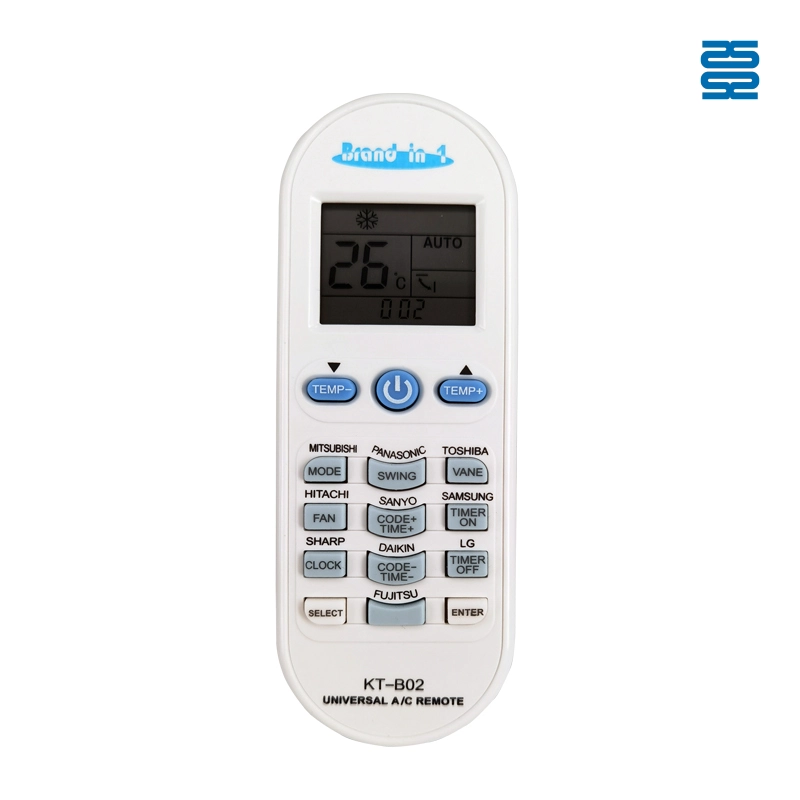
KT-B02 Universal Air Conditioner Remote Control Compatible with All Brands
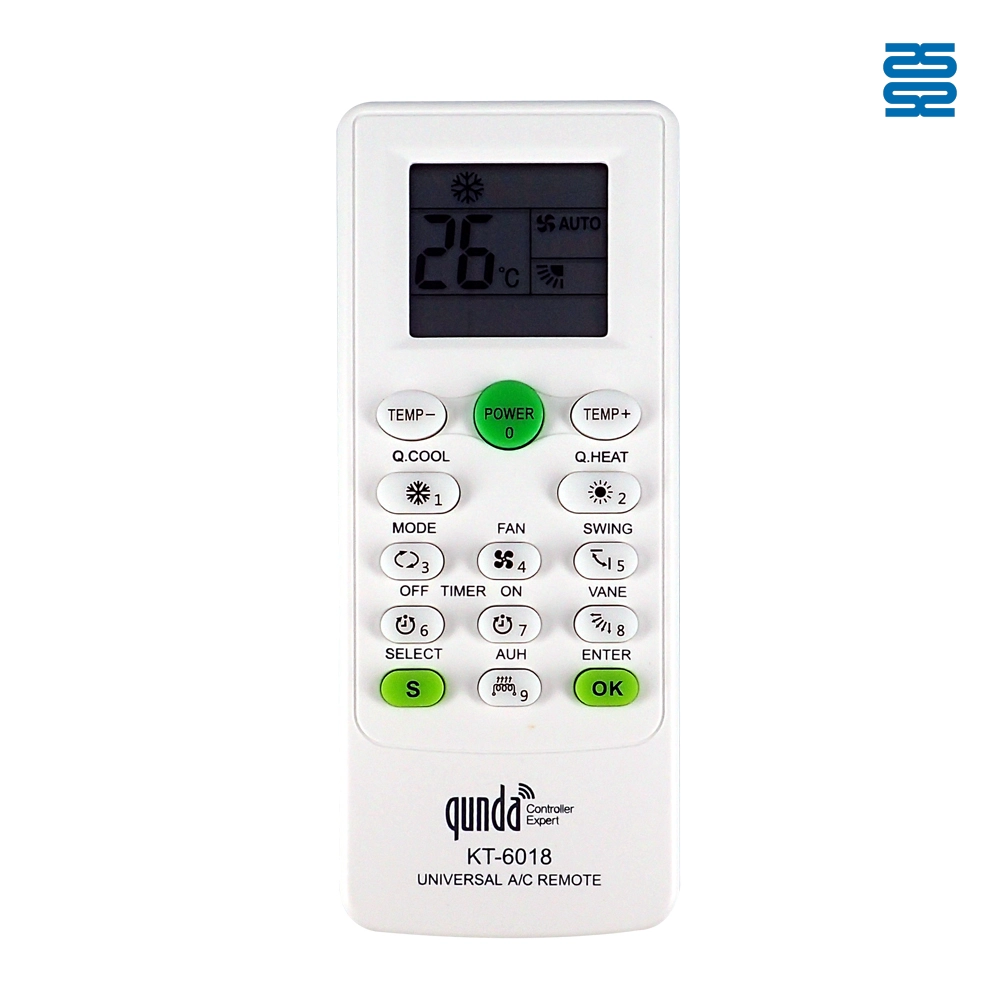
KT-6018 6000 in 1 Universal Air Conditioner Remote Control Compatible with All Brands

QD-1000 IN 1 1000 Code in 1 Universal Air Conditioner Remote Control Compatible with All Brands

KT-N828 Universal Air Conditioner Remote Control Compatible with All Brands
Get the latest updates
If you have any comments or good suggestions, please leave us a message, later our professional staff will contact you as soon as possible.


Contact
Email us
Text or Call us
Address
Room 1606, No. 65, Zhongshan Seven Road, Liwan District, Guangzhou, Guangdong, China.

Facebook
Instagram
YouTube
Tik Tok
VK