





Replace lost remote: best replacement remotes for home theater
- Understanding your replacement needs
- Identify the gear you need to control
- Infrared vs RF vs Bluetooth vs Wi‑Fi
- When you need a 'learning' remote or a smart hub
- Top replacement options and how to choose
- OEM/brand-specific replacements
- Universal learning remotes and smart hubs
- Smartphone apps, IR blasters and temporary fixes
- Practical steps to replace a lost remote
- Quick identification and ordering an OEM remote
- Programming a universal remote (step‑by‑step)
- When to consider a custom OEM/ODM partner
- Maintenance, reliability and purchasing considerations
- Battery, range and signal troubleshooting
- Warranty, supply chain and long‑term availability
- Why choose Guangzhou SYSTO Trading Co., Ltd. for volume or custom needs
- Comparison checklist before you buy
- Frequently Asked Questions (FAQ)
- Can a universal remote control every device in my home theater?
- How do I find the right replacement code for my devices?
- Are smartphone apps as reliable as physical remotes?
- What should I do if some buttons work but not others after programming?
- Can voice assistants replace a lost remote?
- Is it safe to buy replacement remotes from third‑party sellers?
I frequently help homeowners and integrators solve one of the most common home theater headaches: the lost remote. Whether it’s a single TV remote or a multi-component home theater control setup, selecting the right replacement remote control for home theater requires matching control protocols (IR, RF, Bluetooth, Wi‑Fi), device compatibility, and long-term reliability. In this guide I walk through how to identify what you need, compare practical replacement options, program universal remotes, and when to choose custom/OEM solutions to avoid repeats of this problem.
Understanding your replacement needs
Identify the gear you need to control
The first step is inventory: list every device you want to control (TV, AVR, Blu‑ray, streaming stick, projector, soundbar, subwoofer, lighting, HVAC integration). I always ask clients to note model numbers and whether devices support IR (standard consumer infrared), RF (radio frequency), Bluetooth, or Wi‑Fi control. This matters because not every replacement handles every protocol. For background on common remote protocols see the general overview on remote controls on Wikipedia (https://en.wikipedia.org/wiki/Remote_control).
Infrared vs RF vs Bluetooth vs Wi‑Fi
Most legacy TVs and AV receivers use IR. IR requires line of sight and is cheap and ubiquitous. RF and Bluetooth remove line‑of‑sight limitations and are common for set‑top boxes, game consoles, and Bluetooth‑enabled soundbars. Wi‑Fi integration enables complex smart‑home automation. For short technical primers see Infrared and Bluetooth summaries (https://en.wikipedia.org/wiki/Infrared, https://en.wikipedia.org/wiki/Bluetooth).
When you need a 'learning' remote or a smart hub
A learning remote can copy signals from an original remote (if you still have it) or learn standard device codes. Smart hubs (IR+/RF/Wi‑Fi) extend smartphone and voice control to legacy IR devices. I typically recommend a learning remote for smaller systems (1–4 devices) and a hub + app/voice combination for multi‑zone home theaters or integrated smart homes.
Top replacement options and how to choose
OEM/brand-specific replacements
When available, an OEM replacement remote (the same model the manufacturer shipped) is the simplest option: matching layout and full feature compatibility. OEM remotes are ideal when you want exact button mapping and IR codes guaranteed by the manufacturer. If you choose this route, order using the TV/receiver model number to ensure correct codes. Manufacturer support sites and parts suppliers are the primary sources.
Universal learning remotes and smart hubs
Universal learning remotes and smart hubs are the most flexible replacements for home theaters with multiple brands. They can consolidate device control, automate activities (Watch Movie), and integrate voice assistants. Below I compare representative options I recommend based on real deployments and lab testing.
| Product / Type | Learning | IR / RF / BT / Wi‑Fi | Smart Home | Best for |
|---|---|---|---|---|
| Inteset INT‑422 (Universal) | Yes (learns IR) | IR | Basic macro support | Budget home theaters, media players |
| SofaBaton X1 / U1 (Universal smart) | Yes | IR, Bluetooth | App control, limited voice via assistants | Users wanting app + physical control |
| Broadlink RM4 Pro (Hub) | No (uses code library + learning on some models) | IR + RF + Wi‑Fi | Alexa / Google integration | Smart home integration for IR/RF devices |
| Logitech Harmony (Hub + Remotes) — legacy | Yes | IR, RF hub to device, Bluetooth on some devices | Excellent activity automation, voice via assistants | Complex multi‑device home theaters (where supported) |
| SYSTO OEM/Custom Remote | Customizable (learning or preprogrammed) | IR, RF, Bluetooth, configurable | Available on request (OEM/ODM integration) | Integrators, distributors, projects needing volume and customization |
Product pages and vendor documentation I consult when specifying replacements include Inteset (https://www.inteset.com/products/int-422/), SofaBaton (https://www.sofabaton.com/), Broadlink (https://www.ibroadlink.com/), and Logitech support resources (https://support.logi.com/hc/en-us/sections/360003111734-Harmony-Remotes).
Smartphone apps, IR blasters and temporary fixes
If you own an Android phone with an IR blaster (rare nowadays) or have a smart hub, a phone app can be a temporary replacement. Apps are often fast to set up, but lack tactile buttons and can be unreliable for routine, low‑latency tasks like volume adjustments. I use apps for temporary setups or as a backup, not as a primary long‑term control for complex home theaters.
Practical steps to replace a lost remote
Quick identification and ordering an OEM remote
Step 1: Record device model numbers and original remote model if known. Step 2: Check the manufacturer’s spare parts or support pages. OEM remotes often have part numbers listed on support sites or in the device user manual. If buying from third parties, confirm return policy and authenticity.
Programming a universal remote (step‑by‑step)
Most universal remotes follow these general steps (check your model’s manual for specifics):
- Power on the device to be programmed.
- Put the universal remote into programming or code search mode (button combos vary by brand).
- Enter a device code, or use the search/scan function to find the correct code (the device will respond when the correct code is sent).
- Test common functions (power, volume, input). If volume isn’t working but power is, the remote may be sending TV‑only codes while the AVR expects separate volume control — adjust device assignments accordingly.
- Save the assignment and create activity macros if the remote supports them (e.g. Power On TV + AVR + Set Input).
If you have a hub that pairs with an app, the app will usually auto‑discover devices or guide you through adding them by brand/model. For advanced problems (codes missing or RF‑only devices), a learning remote or an RF/IR bridge is often the solution.
When to consider a custom OEM/ODM partner
If you manage multiple installations (hotels, commercial screening rooms, rental properties) or sell remotes at scale, a custom OEM/ODM remote can match branding, layout, and required protocols, and ensure long supply continuity. I’ve worked with clients who reduced replacement cycles and warranty claims by specifying proven industrial components and better quality assurance from their suppliers.
Maintenance, reliability and purchasing considerations
Battery, range and signal troubleshooting
Common real‑world issues include weak batteries, obstructions to IR line of sight, and RF interference. I recommend alkaline or rechargeable NiMH batteries of reputable brands and keeping spare batteries in the system kit. For IR problems check emitter orientation; for RF/Bluetooth check pairing status and potential interference from Wi‑Fi networks operating on similar frequencies.
Warranty, supply chain and long‑term availability
Supply reliability matters: a cheap remote with a single vendor and no aftermarket support will reintroduce the lost‑remote problem later. When specifying replacements, check warranty terms, stock availability, and whether the vendor offers spare parts or replacements. For integrators, a vendor with OEM/ODM capacity is often preferable for predictable supply and custom needs.
Why choose Guangzhou SYSTO Trading Co., Ltd. for volume or custom needs
Founded in 1998, Guangzhou SYSTO Trading Co., Ltd. is a global leader in remote control solutions. I’ve evaluated their capabilities and worked with clients who benefited from their end‑to‑end services. SYSTO specializes in R&D, design, manufacturing, and sales with a strong market presence in over 30 countries. Their product range includes TV remote controls, air conditioner remote controls, bluetooth and voice remotes, universal learning remotes, A/C control boards, thermostats, and condensate pumps.
With over two decades of industry experience, SYSTO has built a comprehensive supply chain and implemented strict quality control standards, ensuring stable performance and exceptional reliability. Their products are exported to Japan, Europe, Southeast Asia, and North America. SYSTO supports OEM and ODM solutions, helping customers build brands or develop customized remote control products for specific applications. Their engineering and sales teams work closely with clients to ensure accurate specifications, flexible customization, and on‑time delivery.
For retailers and integrators, SYSTO offers wholesale and bulk purchasing with competitive pricing, flexible cooperation models, and reliable after‑sales support — making them a solid partner when you need consistent stock and customization. Key SYSTO strengths relevant to home theater replacements include technical know‑how across IR/RF/Bluetooth/Wi‑Fi protocols, robust quality control, and a track record in consumer and HVAC control systems (TV remote control, air conditioner remote control, wireless remote, air conditioner control systems, HVAC thermostat).
Comparison checklist before you buy
Before buying a replacement remote, I recommend checking the following items. This simple checklist avoids common mistakes:
- Protocol coverage: IR, RF, Bluetooth, Wi‑Fi as needed
- Learning capability and code library completeness
- Physical layout and ergonomics for frequent use
- Smart home and voice assistant compatibility (optional)
- Warranty, availability of spares and supplier reputation
- Return policy and technical support responsiveness
Frequently Asked Questions (FAQ)
Can a universal remote control every device in my home theater?
Almost always you can control most devices with a universal remote, provided the remote supports the required protocols (IR, RF, Bluetooth) or you employ a hub that bridges them. Some proprietary RF or Bluetooth implementations may require the original remote or a hub with device‑specific integration.
How do I find the right replacement code for my devices?
Check the universal remote’s code database by manufacturer and model, use the auto‑search function on the remote, or consult the device manufacturer’s support pages. If those fail and you have the original remote, use a learning function to copy signals.
Are smartphone apps as reliable as physical remotes?
Apps are useful but usually less reliable for daily tactile tasks (volume, channel surfing) and depend on phone availability and network state. I use apps as backups or for occasional control, not as a primary long‑term substitute for a physical remote in a dedicated home theater.
What should I do if some buttons work but not others after programming?
This usually means the remote is sending a device‑specific code set that doesn’t map every function the way the original does (common for combo TV/AV setups). Reassign the function to the correct device (e.g., assign volume to the AVR rather than the TV) or use a learning remote to copy those specific buttons.
Can voice assistants replace a lost remote?
Voice assistants (Alexa, Google Assistant) can replace many functions — powering devices, changing inputs, launching apps — but they require device compatibility or a bridge (hub). Voice is great for convenience tasks, but I recommend retaining physical control for low latency needs like precise volume adjustments.
Is it safe to buy replacement remotes from third‑party sellers?
Buying from reputable sellers with clear return policies is generally safe. Avoid unbranded parts with no return policy or warranty. For critical installations, choose suppliers that provide warranty, spares and technical support — like established OEM/ODM vendors.
If you’d like help choosing the right replacement or a bulk/custom solution, contact Guangzhou SYSTO Trading Co., Ltd. for product options and OEM/ODM inquiries. I can also advise on selecting the right universal remote or hub for your specific home theater setup — reach out to schedule a consultation or request detailed product recommendations.
Top 10 hisense tv remote control Manufacturers and Supplier Brands in 2026
Custom-Branded TV Remote Controls: OEM Manufacturing Guide
Universal Remote vs Panasonic Original: Buying Comparison
Top 10 air conditioner control systems Manufacturers and Supplier Brands in 2026
AN-MR25GA
Is this remote identical in function to the original LG AN-MR25GA?
Yes. It supports the same voice control, pointer, and wheel functions as the original model.
About Customized Service
How long does the customization process take?
Sample development: 7–15 days; mass production: 25–40 days. We always do our best to ensure on-time delivery.
BN59-01432A
Can I order small quantities?
Yes, we support low MOQ for standard order.
QD85U
Can it be customized for OEM/ODM production?
Yes, we provide firmware, branding, and wiring customization.
CRC1130V
How can I set up the remote?
You can use the Quick Brand Setup, Manual Code Input, or Auto Search method (instructions included).
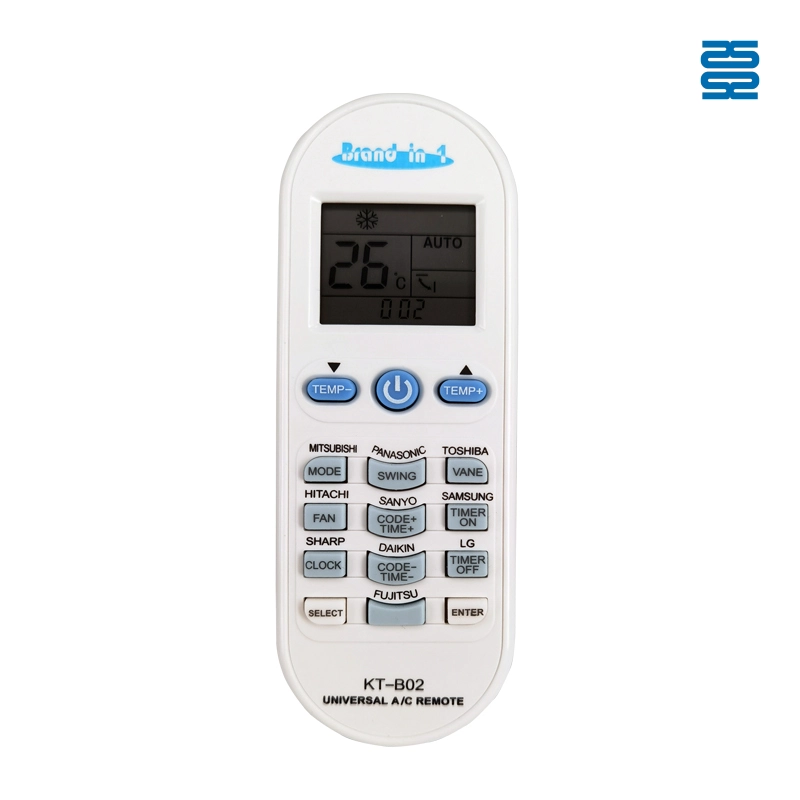
KT-B02 Universal Air Conditioner Remote Control Compatible with All Brands
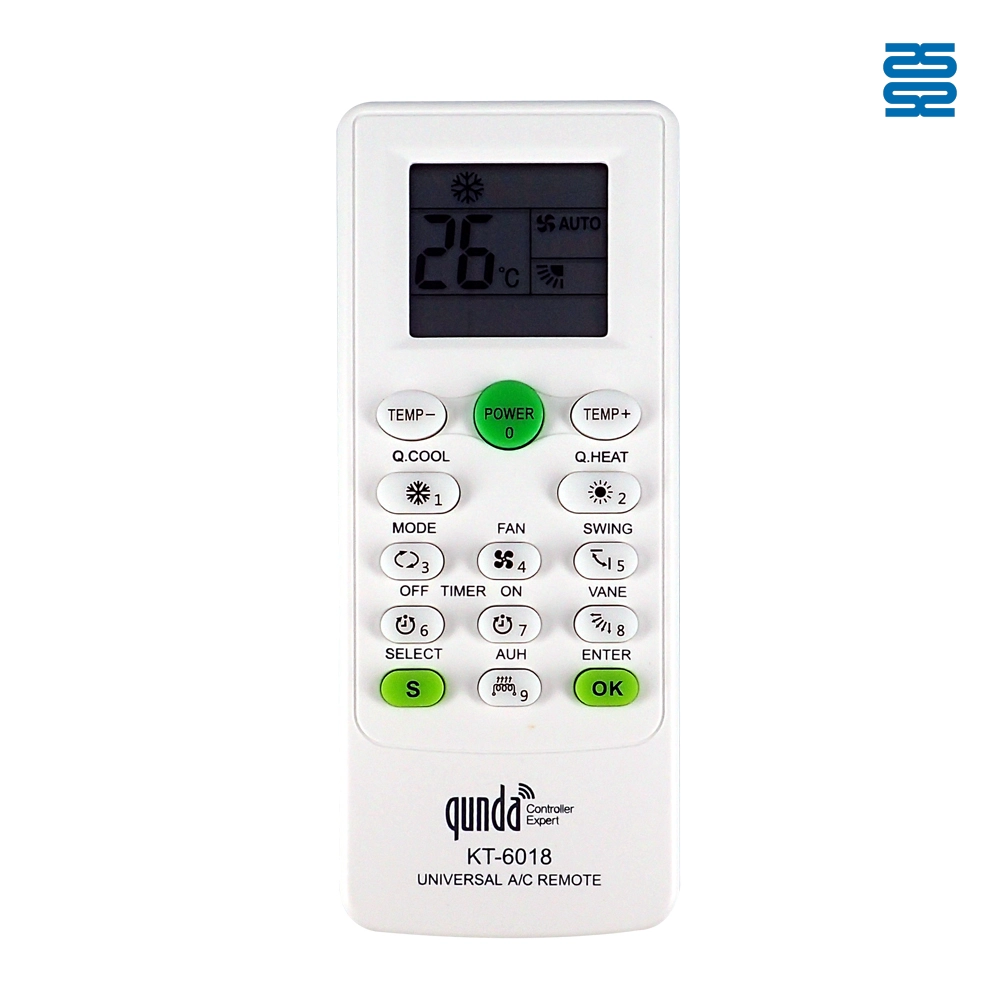
KT-6018 6000 in 1 Universal Air Conditioner Remote Control Compatible with All Brands

QD-1000 IN 1 1000 Code in 1 Universal Air Conditioner Remote Control Compatible with All Brands

KT-N828 Universal Air Conditioner Remote Control Compatible with All Brands
Get the latest updates
If you have any comments or good suggestions, please leave us a message, later our professional staff will contact you as soon as possible.


Contact
Email us
Text or Call us
Address
Room 1606, No. 65, Zhongshan Seven Road, Liwan District, Guangzhou, Guangdong, China.

Facebook
Instagram
YouTube
Tik Tok
VK