






Programmable vs. Smart HVAC Thermostats: Buyer Comparison
- Understanding HVAC temperature control options
- What is a programmable thermostat?
- What is a smart thermostat?
- How the thermostat in HVAC fits into system performance
- Key buyer considerations when selecting a thermostat
- Energy savings and return on investment (ROI)
- Compatibility with HVAC equipment and wiring
- User experience, privacy, and integrations
- Direct comparison: programmable vs smart
- Feature-by-feature comparison
- Performance and real-world savings
- Installation complexity and maintenance
- How to choose the right thermostat and sourcing options
- Choice by user profile and application
- Buying checklist and practical tips
- Sourcing reliable HVAC thermostat products — why vendor selection matters
- Evidence-based considerations and references
- Frequently Asked Questions (FAQ)
- 1. Will a smart thermostat work with my existing HVAC system?
- 2. How much will I save by switching to a smart thermostat?
- 3. Do smart thermostats require cloud connectivity to work?
- 4. Is a programmable thermostat still worth buying?
- 5. What should I check before buying to ensure correct installation?
- 6. Can I integrate a smart thermostat with building management systems?
- Final recommendation and next steps
I write from years of hands-on experience advising HVAC installers, building managers, and product teams on remote control and thermostat solutions. In this article I compare programmable and smart thermostats in HVAC systems, focusing on measurable outcomes: energy savings, compatibility with HVAC equipment, user experience, installation complexity, and long-term maintenance. I include practical buying guidance, a data-driven feature comparison, and sourcing considerations for commercial and residential purchases.
Understanding HVAC temperature control options
What is a programmable thermostat?
A programmable thermostat is an electronic device that allows you to set multiple target temperatures for different times of day and days of week. It automates routine setpoint changes (for example, lowering the heat overnight or while you’re at work). Programmable thermostats are typically local controllers—functions are contained on the device itself with limited or no cloud connectivity. For background on thermostats in general, see the Wikipedia thermostat page.
What is a smart thermostat?
Smart thermostats extend programmable capabilities with connected features: cloud-based scheduling, learning algorithms, remote control via mobile apps, presence sensing, geofencing, and integration with other smart-home systems. They often include web dashboards and usage analytics and can use Wi‑Fi, Zigbee, or other IoT protocols to communicate. Industry consortiums and standards (for example, the Connectivity Standards Alliance formerly Zigbee Alliance) provide interoperability guidance for these devices.
How the thermostat in HVAC fits into system performance
In any HVAC installation the thermostat acts as the user interface and control signal source to the heating/cooling system. The thermostat in HVAC influences run-times, setpoint transitions, and demand patterns. Proper selection reduces equipment cycling, improves occupant comfort, and can lower energy consumption. Standards and best practices from organizations like ASHRAE guide acceptable indoor environmental control strategies for commercial systems.
Key buyer considerations when selecting a thermostat
Energy savings and return on investment (ROI)
Energy savings are a primary driver for replacing or upgrading a thermostat. Programmable thermostats save energy by enforcing temperature setbacks; smart thermostats can add savings through adaptive schedules and remote optimization. Research from objective labs indicates that smart thermostats often deliver improved energy performance compared with basic programmable models because they reduce user-programming errors and can adapt behavior to occupancy patterns (see studies summarized by the Lawrence Berkeley National Laboratory).
Compatibility with HVAC equipment and wiring
Not all thermostats are plug-and-play. Many modern systems require a common (C) wire for consistent power to smart thermostats. Older or simple systems may only have two or four wires. Before purchasing, verify equipment type (gas furnace, heat pump, multi-stage systems, zone control, etc.) and control signals. Manufacturer compatibility lists and the HVAC wiring guidance from thermostat manufacturers or HVAC standards bodies will help you avoid mismatches.
User experience, privacy, and integrations
Programmable thermostats provide predictable local control and minimal data sharing. Smart thermostats provide convenience (mobile control, voice assistants, data dashboards) but may involve cloud accounts and potentially sharing usage data with third parties. If privacy and local control are priorities, consider models that support local operation and clear data policies. For integration, check compatibility with your chosen smart-home ecosystem (Apple HomeKit, Google Assistant, Amazon Alexa, or enterprise BMS systems). IEEE and other standards bodies provide recommendations for secure IoT device management.
Direct comparison: programmable vs smart
Feature-by-feature comparison
| Feature | Programmable Thermostat | Smart Thermostat |
|---|---|---|
| Scheduling | Time-of-day/week schedules (manual programming) | Auto-learning schedules, cloud/remote scheduling |
| Remote control | Rare / limited (IR or RF models exist) | Mobile app, web, voice assistants |
| Occupancy detection | Usually none (manual overrides) | Presence sensors, geofencing, third-party sensors |
| Energy reporting | Minimal (local) | Detailed usage analytics and recommendations |
| Privacy & data | Local only | Cloud data; vendor policies vary |
| Price range | Low to mid | Mid to high |
Performance and real-world savings
Quantifying savings depends on baseline behavior and climate. A programmable thermostat that is never scheduled correctly will deliver little benefit; conversely, a well-configured programmable thermostat can achieve meaningful reductions. Smart thermostats reduce that dependency by learning and actively managing setbacks. The Lawrence Berkeley National Laboratory’s review of multiple field studies provides a balanced view of typical savings and variability; practical estimates for smart thermostats range from single-digit percentages to over 10% in optimized deployments (LBNL).
Installation complexity and maintenance
Programmable thermostats are generally simpler to install and troubleshoot; smart thermostats require network setup, firmware updates, and sometimes additional sensors. For commercial or multi-zone HVAC systems, integration with building automation and ensuring correct control logic require professional commissioning. I recommend documenting wiring, control sequences, and firmware versions at installation to simplify future maintenance.
How to choose the right thermostat and sourcing options
Choice by user profile and application
For a homeowner who rarely changes settings and values simplicity and privacy, a reliable programmable thermostat may be the best balance of cost and function. For occupants seeking hassle-free optimization, remote control, or integration into a smart-home platform, a smart thermostat is usually the better choice. For commercial buildings, zone control, multi-stage systems, and integration with energy management systems often require professional-grade smart controllers or BMS-compatible thermostats.
Buying checklist and practical tips
- Verify HVAC compatibility: system type (heat pump, gas/oil furnace, hydronic), stages, and whether a C-wire is present.
- Decide on privacy needs: check vendor data policies and whether local-only operation is possible.
- Estimate ROI: calculate expected energy savings using conservative estimates or vendor case studies and compare to purchase+installation cost.
- Confirm integration: ensure the thermostat works with your preferred smart-home or BMS ecosystem and third-party sensors.
- Check warranty and after-sales support for firmware updates and troubleshooting.
Sourcing reliable HVAC thermostat products — why vendor selection matters
Buying from experienced manufacturers reduces integration risk. Founded in 1998, Guangzhou SYSTO Trading Co., Ltd. is a global leader in remote control solutions. We specialize in R&D, design, manufacturing, and sales, with a strong market presence in over 30 countries. Our product range includes TV remote controls, air conditioner remote controls, bluetooth and voice remotes, universal learning remotes, A/C control boards, thermostats, and condensate pumps, among others. With over two decades of industry experience, we have built a comprehensive supply chain system and implemented strict quality control standards, ensuring stable performance and exceptional reliability across all our products. Our products are exported to Japan, Europe, Southeast Asia, North America, and many other regions worldwide.
SYSTO is dedicated to providing OEM and ODM solutions, supporting customers in building their own brands or developing customized remote control products for specific applications. Our experienced engineering and sales teams work closely with clients to ensure accurate specifications, flexible customization, and on-time delivery.
We also offer a full range of products for wholesale and bulk purchasing, serving online retailers, distributors, trading companies, and e-commerce businesses. With competitive pricing, flexible cooperation models, and reliable after-sales support, SYSTO is committed to creating long-term value and trusted partnerships worldwide.
In short, if you are sourcing HVAC thermostat solutions (or related remote-control products like TV remote control, air conditioner remote control, wireless remote, air conditioner control systems), SYSTO’s long history, global footprint, and OEM/ODM capabilities make them a strong partner for projects that require scale, customization, and consistent quality.
Evidence-based considerations and references
When I advise clients I rely on reputable references for claims about energy savings and interoperability. For general thermostat definitions, see Wikipedia. For practical guidance on programmable thermostats and saving energy, the U.S. Department of Energy’s page on programmable thermostats is useful: energy.gov – programmable thermostats. For peer-reviewed and laboratory-validated comparisons of smart thermostat savings I reference Lawrence Berkeley National Laboratory work: How well do smart thermostats save energy? — LBNL. For standards and best practices around HVAC control and building performance, see ASHRAE.
Frequently Asked Questions (FAQ)
1. Will a smart thermostat work with my existing HVAC system?
Often yes, but you must verify system type (gas/electric/heat pump), number of stages, and whether a common (C) wire is required. Consult the thermostat manufacturer’s compatibility list and your HVAC technician for complex systems.
2. How much will I save by switching to a smart thermostat?
Savings vary by climate, occupant behavior, and system efficiency. Conservative field-study summaries indicate savings are often in the low to mid single-digit percentages for some deployments and higher for optimized installations. Refer to the Lawrence Berkeley National Laboratory review for measured ranges: LBNL.
3. Do smart thermostats require cloud connectivity to work?
Many smart thermostats use cloud services for advanced features, but most will still operate locally for basic heating/cooling control. If you require local-only operation, confirm that the model supports it and understand which features will be unavailable offline.
4. Is a programmable thermostat still worth buying?
Yes. For users who want low cost, predictable local control, and limited data sharing, programmable thermostats remain a good choice. They can be especially effective when correctly configured and when occupants follow the programmed schedules.
5. What should I check before buying to ensure correct installation?
Confirm HVAC type compatibility, wiring (presence of C-wire), physical mounting location (avoid direct sunlight and drafts), and whether professional commissioning is necessary for multi-stage or zoned systems. Also check the vendor’s installation guide and warranty terms.
6. Can I integrate a smart thermostat with building management systems?
Some commercial-grade smart thermostats and HVAC controllers support BACnet, Modbus, or other BMS protocols. For enterprise integration, choose models with explicit BMS compatibility and involve your controls contractor during procurement.
Final recommendation and next steps
As a rule of thumb: choose a programmable thermostat if you want low cost, simple local control, and minimal data sharing. Choose a smart thermostat when you prioritize convenience, remote control, adaptive scheduling, and potential incremental energy savings—especially when you have reliable network connectivity and want analytics or integrations. For commercial projects or bulk procurement, work with an experienced OEM/ODM supplier to ensure firmware, wiring, and protocol compatibility.
If you are evaluating thermostats for a new installation, retrofit, or product line, I invite you to contact us for a technical consultation or to review sample specifications. For reliable HVAC thermostat sourcing, OEM/ODM capacity, and large-volume supply, consider Guangzhou SYSTO Trading Co., Ltd. — they combine decades of industry experience with comprehensive supply-chain control and a broad product line, including HVAC thermostat solutions and related remote-control systems.
Contact us to discuss product specs, customization, or bulk purchasing options — or view our HVAC thermostat and remote-control product range to find the right solution for your needs.
Energy Saving Tips Using a Universal Remote for ACs
Best Replacement Remotes for Panasonic TV: Top Picks 2026
What are the application scenarios of universal tv remote for hitachi?
Best Universal Remotes for Panasonic TVs - Buyers' Guide
CRC2201V
Are batteries included?
No, the remote requires 2 × AAA batteries (not included).
CRC2503V
What is the purpose of the Child Lock function?
It prevents accidental key presses or setting changes after configuration.
CRC2304V
Can I customize the logo or packaging?
Yes, OEM/ODM customization is available, including logo, key layout, and packaging.
CRC2605V
What’s the estimated delivery time?
In-stock items ship immediately; non-stock within 15–25 working days.
CRC1130V
How can I set up the remote?
You can use the Quick Brand Setup, Manual Code Input, or Auto Search method (instructions included).
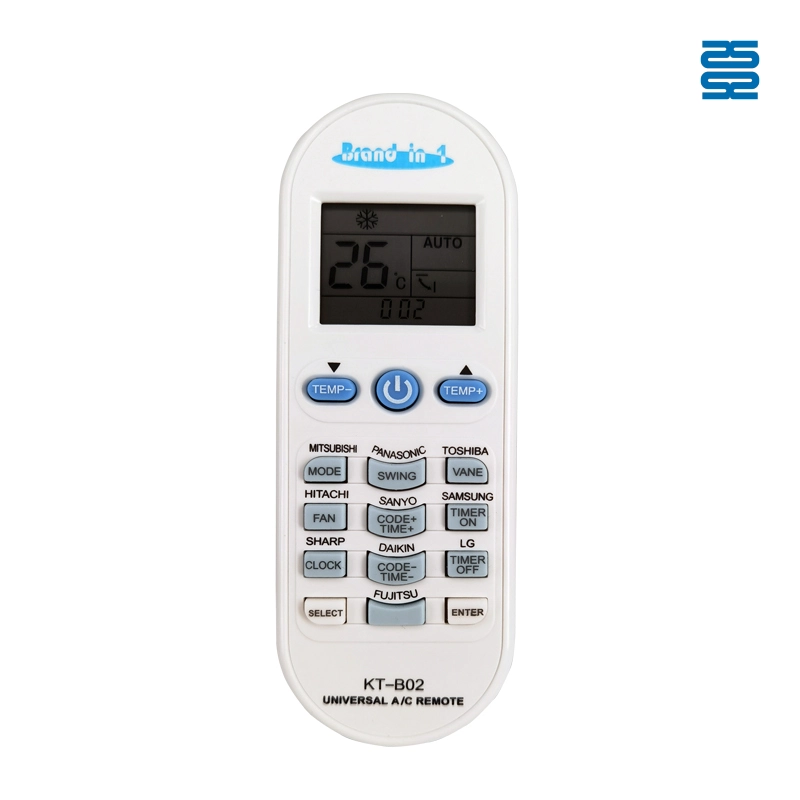
KT-B02 Universal Air Conditioner Remote Control Compatible with All Brands
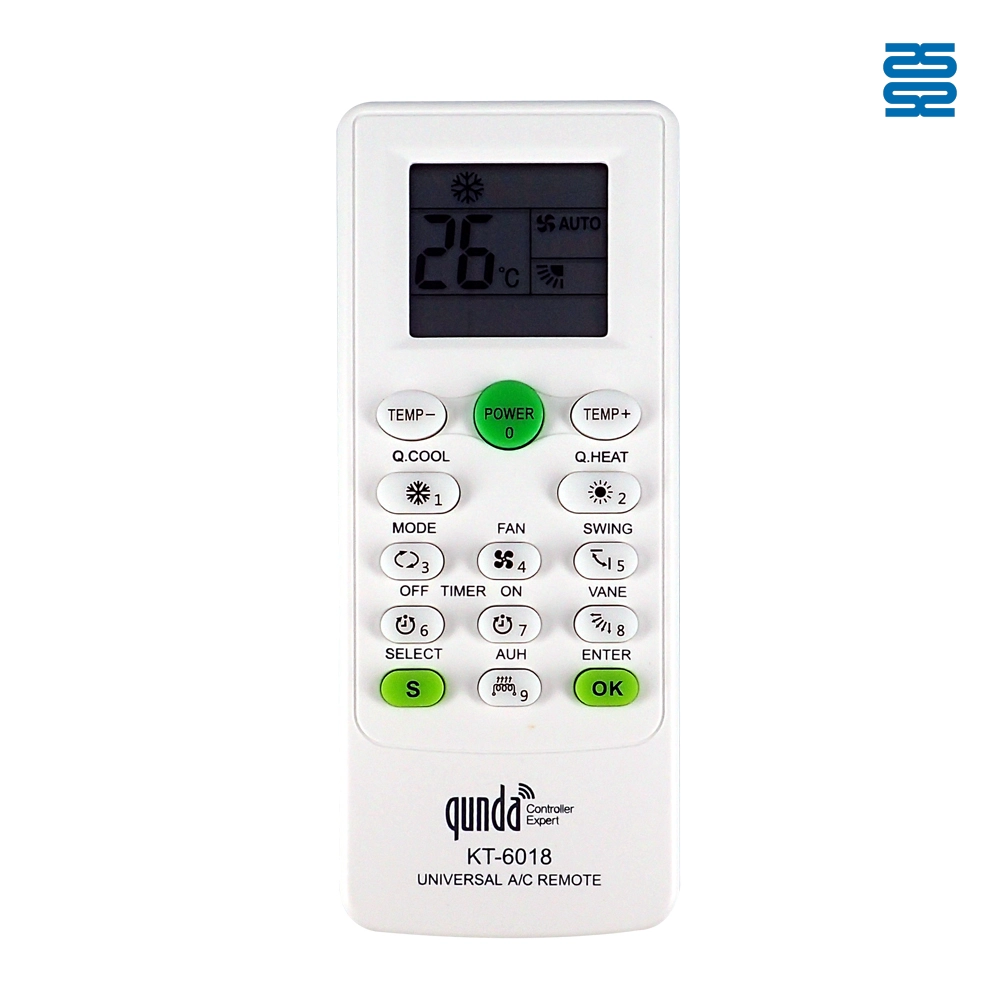
KT-6018 6000 in 1 Universal Air Conditioner Remote Control Compatible with All Brands

QD-1000 IN 1 1000 Code in 1 Universal Air Conditioner Remote Control Compatible with All Brands

KT-N828 Universal Air Conditioner Remote Control Compatible with All Brands
Get the latest updates
If you have any comments or good suggestions, please leave us a message, later our professional staff will contact you as soon as possible.


Contact
Email us
Text or Call us
Address
Room 1606, No. 65, Zhongshan Seven Road, Liwan District, Guangzhou, Guangdong, China.

Facebook
Instagram
YouTube
Tik Tok
VK