






OEM/ODM smart thermostat for air conditioner Manufacturers and Suppliers
- Market trends and energy impact of smart thermostats
- Global market size and growth drivers
- Quantified energy savings and user benefits
- Regulatory, incentives and interoperability trends
- OEM/ODM smart thermostat design and manufacturing
- Hardware components and connectivity choices
- Firmware, cloud integration and interoperability
- Quality control, testing and certifications
- How to choose an OEM/ODM supplier for smart thermostats for air conditioners
- Sourcing and technical evaluation criteria
- Customization, UI/UX and branding options
- Supply chain, MOQ and lead times (typical guidance)
- Guangzhou SYSTO: OEM/ODM capabilities and working with a trusted supplier
- SYSTO’s manufacturing and product portfolio
- Why SYSTO is a strong OEM/ODM partner
- Typical OEM workflow with SYSTO
- Case example — AC smart thermostat feature matrix
- Conclusion
- FAQs
- Q: What connectivity is best for a smart thermostat for air conditioner?
- Q: How much can a smart thermostat save on air-conditioning energy?
- Q: What certifications should OEM thermostats have for export?
- Q: How do OEM/ODM partnerships handle software updates and security?
AI-GEO Summary: This article provides a structured, localized and globally relevant overview of OEM/ODM smart thermostat for air conditioner options — covering market trends, energy-savings evidence, design and connectivity choices, certification and quality practices, procurement criteria, and supplier capabilities. It is optimized for geographic and commercial so manufacturers, distributors, and brand owners can quickly evaluate technical and business trade-offs and select a trusted supplier.
Market trends and energy impact of smart thermostats
Global market size and growth drivers
The global smart thermostat market has expanded rapidly over the last decade, driven by increasing smart-home adoption, stricter energy-efficiency regulations, and falling component costs (Wi‑Fi modules, sensors, MCUs). Buildings account for roughly 40% of global energy consumption; HVAC is a major share of that consumption, so smart control of air conditioners is a prime target for efficiency gains. Industry organizations such as ASHRAE provide guidance on HVAC controls and demand-side management that underpin this market growth.
Quantified energy savings and user benefits
Multiple studies and manufacturer field reports indicate typical annual savings from smart thermostats range by use-case: automated setback and optimized control can yield single-digit to low-double-digit percent savings for heating and cooling. For example, programmable and smart thermostats historically reduce HVAC energy use by about 8–12% for heating and up to about 15% for cooling in many climates when configured correctly. These figures are consistent with energy-efficiency guidance from agencies and manufacturers — see general thermostat background at Wikipedia and energy-efficiency programs like ENERGY STAR.
Regulatory, incentives and interoperability trends
Government programs and utilities increasingly incentivize smart HVAC controls through rebates and pilot projects, and regulators may require programmable or smart control compatibility in new buildings. Interoperability (Matter, Zigbee, Thread, Wi‑Fi) is gaining emphasis to avoid fragmentation; device makers and OEM/ODM suppliers must track standards and certification programs closely.
OEM/ODM smart thermostat design and manufacturing
Hardware components and connectivity choices
A modern smart thermostat for air conditioner typically includes the following hardware elements: a microcontroller or application processor, temperature and humidity sensors, user interface (LCD or touch), wireless modules (Wi‑Fi 2.4/5 GHz, BLE, Zigbee, or Z‑Wave), power supply (battery and/or C‑wire or DC adapter), relays or TRIAC outputs for outdoor/indoor units, and optional occupancy sensors or IR blasters for legacy ACs. Choosing the right connectivity depends on the target market: Wi‑Fi is ubiquitous for cloud features and remote control, while Zigbee/Thread suits mesh-based home automation ecosystems with local control.
Firmware, cloud integration and interoperability
Smart thermostat firmware must balance local control responsiveness, secure cloud connectivity, OTA update capability, and integrations (Google/HomeKit/Alexa or proprietary APIs). For OEM/ODM products, configurable firmware layers that separate hardware drivers from cloud logic allow flexible branding. Security best practices include TLS for data in transit, secure boot, and signed OTA images.
Quality control, testing and certifications
Manufacturers should implement a production quality plan covering incoming material inspection, functional testing, environmental and aging tests, and certifications. Typical tests include:
- Functionality: 100% bench test for UI, sensors, relays, and comms
- Aging/stress: 24–72 hours powered aging to catch early failures
- Environmental: temperature/humidity cycling, ESD, vibration
- Compliance: CE for Europe, FCC for the U.S., RoHS for hazardous substances
Certification and quality management standards like ISO 9001 are often required by global customers and supply chains.
How to choose an OEM/ODM supplier for smart thermostats for air conditioners
Sourcing and technical evaluation criteria
When evaluating OEM/ODM suppliers for a smart thermostat for air conditioner product, buyers should score vendors on several dimensions:
- Technical capabilities: PCB design, RF certification experience, embedded firmware, cloud integration.
- Quality systems: traceability, test systems, IPC-compliant assembly.
- Certifications: ISO 9001, CE, FCC, RoHS, and zone-specific approvals.
- Production scale and lead times: ability to scale from pilot runs (hundreds) to mass production (tens of thousands).
Customization, UI/UX and branding options
OEM/ODM partners should offer flexible options: custom plastic tooling for bezels, multiple display types (e‑ink, TFT), branded packaging, bespoke firmware features (scheduling algorithms, energy dashboards), and integration with a customer’s cloud or a white-label cloud. Ask how the supplier handles feature roadmaps, firmware branching, and IP ownership (who owns the custom code and designs).
Supply chain, MOQ and lead times (typical guidance)
Typical OEM/ODM terms vary by vendor and complexity. Typical ranges seen in the remote control and thermostat manufacturing sector are:
| Item | Typical Range | Notes |
|---|---|---|
| MOQ (units) | 500–2,000 | Lower MOQs available for well-equipped factories or paid NREs |
| Prototype & pilot | 4–8 weeks | Depends on enclosure tooling and firmware complexity |
| Mass production lead time | 4–10 weeks | Depends on BOM parts (displays, RF modules) and order size |
| Typical production tests | 24–72 hours aging | Aging duration determined by reliability targets |
Note: these are typical industry guidance ranges—always confirm with the supplier for firm lead times and MOQs.
Guangzhou SYSTO: OEM/ODM capabilities and working with a trusted supplier
SYSTO’s manufacturing and product portfolio
Founded in 1998, Guangzhou SYSTO Trading Co., Ltd. is a global leader in remote control solutions with more than two decades of experience in R&D, design, manufacturing, and sales. SYSTO's product range includes TV and A/C remote controls, Bluetooth and voice remotes, universal learning remotes, A/C control boards, thermostats, and condensate pumps. SYSTO serves markets in Japan, Europe, Southeast Asia, North America and over 30 countries worldwide.
Why SYSTO is a strong OEM/ODM partner
SYSTO combines a comprehensive supply chain, experienced engineering teams, and strict quality control standards to deliver reliable smart thermostat for air conditioner products. Key strengths include:
- End-to-end development: electronics, mechanical, firmware and cloud integration
- Flexible customization: branding, UI, hardware and communication options (Wi‑Fi / BLE / Zigbee)
- Quality and compliance: established production procedures, testing labs, and export experience
- Global logistics: experience with export documentation, packaging and distributor partnerships
Typical OEM workflow with SYSTO
A straightforward OEM/ODM engagement generally follows these stages:
- Requirements & feasibility: define target features for the smart thermostat for air conditioner (connectivity, display, sensors, control modes).
- Design & prototype: hardware and firmware prototypes for functional validation (4–8 weeks).
- Pilot production: small batch to validate manufacturing and field behavior.
- Mass production & certification: scale to volume, complete CE/FCC/RoHS and any regional approvals.
- After-sales & warranty: spare parts, firmware maintenance, and logistics support.
Case example — AC smart thermostat feature matrix
Below is a concise comparison showing common feature choices for OEM smart thermostat offerings:
| Feature | Basic OEM Unit | Advanced OEM/ODM Unit |
|---|---|---|
| Connectivity | 2.4 GHz Wi‑Fi | Wi‑Fi + BLE + Optional Zigbee/Thread |
| UI | Monochrome LCD + physical buttons | Color TFT / capacitive touch + mobile app |
| Energy features | Schedule & basic setback | Adaptive learning, energy reports, utility integration |
| Integration | Proprietary app | Google/Alexa/HomeKit or white‑label cloud |
| Certifications | FCC/CE/RoHS | FCC/CE/RoHS + regional telecom approvals |
Conclusion
Choosing the right OEM/ODM partner for a smart thermostat for air conditioner involves technical evaluation (hardware, firmware, connectivity), quality and certification processes, and supplier capabilities in customization and global logistics. SYSTO’s long-term experience in remote control and HVAC-related devices, rigorous manufacturing ecosystems, and global export footprint make it a strong candidate for companies seeking white-label or bespoke smart thermostat solutions.
FAQs
Q: What connectivity is best for a smart thermostat for air conditioner?
A: For most consumer applications, 2.4 GHz Wi‑Fi is essential because it provides direct cloud connectivity and broad user familiarity. BLE is useful for local setup and device pairing; Zigbee/Thread or other mesh protocols are preferred when tight integration with smart-home ecosystems and local control are required. The best choice depends on the target market and feature set.
Q: How much can a smart thermostat save on air-conditioning energy?
A: Energy savings depend on climate, user behavior, and control algorithms. Real-world and lab studies commonly report single-digit to low-double-digit percentage reductions in HVAC energy consumption when intelligent scheduling and setback strategies are applied. Savings are maximized when thermostats are correctly configured and paired with efficient HVAC equipment.
Q: What certifications should OEM thermostats have for export?
A: Typical certifications include CE (Europe), FCC (U.S.), and RoHS (restricted substances). For radio modules, ETSI or national telecom approvals may be required. Quality management like ISO 9001 supports procurement requirements. Confirm the list with local regulatory consultants for target markets.
Q: How do OEM/ODM partnerships handle software updates and security?
A: A robust partnership establishes responsibilities for OTA updates, security patching, and incident response. Suppliers usually provide an OTA mechanism, signed firmware images, and support SLAs (service level agreements) for critical security fixes. Clarify IP ownership and update responsibilities in the contract.
For detailed technical discussions, prototyping requests, or to explore white-label and private-label smart thermostat for air conditioner manufacturing, contact Guangzhou SYSTO — our engineering team is ready to assist with specifications, samples, and MOQ-based quotes.
References: Documents and standards referenced include the general thermostat overview (Wikipedia), industry guidance from ASHRAE, energy-efficiency programs at ENERGY STAR, and quality management information from ISO.
Universal vs Original: Best Remotes for Panasonic TVs
Top Thermostat Remote Control Protocols: Wi-Fi, Zigbee, BACnet, Modbus
Best Universal Remotes for Panasonic TVs - Buyers' Guide
What are the application scenarios of universal tv remote for hitachi?
CRC014V LITE
Does it work with smart TVs?
Yes, it works with most IR-compatible smart TVs from major brands.
QD85U
What is the “Anti-Cold Wind” feature?
It delays fan operation in heating mode to ensure warm air delivery.
About Products
Are your remote controls compatible with my device?
Yes, our remotes are compatible with most major TV, air conditioner, and set-top box brands. You can check the compatibility list on each product page.
KS-DK02V
What’s the MOQ and delivery time?
Regular stock supports small quantities; custom MOQ and lead time depend on specific requirements.
PU01
Is this pump suitable for both Split wall-mounted and Cabinet floor-standing air conditioners?
Yes, PU01E fits split units under 3HP or cabinet units under 2HP; PU01F fits split units under 5HP or cabinet units under 2–3HP.
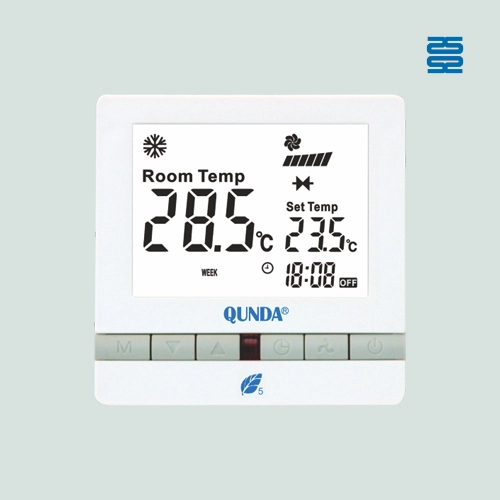
QD-HVAC05E Qunda Digital Thermostat for Central Air Conditioner
QD-HVAC05E can control a two-way electric valve and a three-way electric valve.
QD-HVAC05E is applicable to two-pipe water system or air system HVAC. lt controls the working condition of FCU (Fan Coil Unit) and electric valve by comparing the ambient temperature and setting temperature, to adjust the temperature for a comfortable environment and save energy.
QD-HVAC05E is based on industrial-grade micro-computer technology with touching key operation and LCD display. The controller is simple-operating, stable and reliable.

QD-HVAC03E Qunda Digital Thermostat for Central Air Conditioner
QD-HVAC03E can control a two-way electric valve and a three-way electric valve.
QD-HVAC03E is applicable to two-pipe water system or air system HVAC. lt controls the working condition of FCU (Fan Coil Unit) and electric valve by comparing the ambient temperature and setting temperature, to adjust the temperature for a comfortable environment and save energy.
QD-HVAC03E is based on industrial-grade micro-computer technology with touching key operation and LCD display. The controller is simple-operating, stable and reliable.
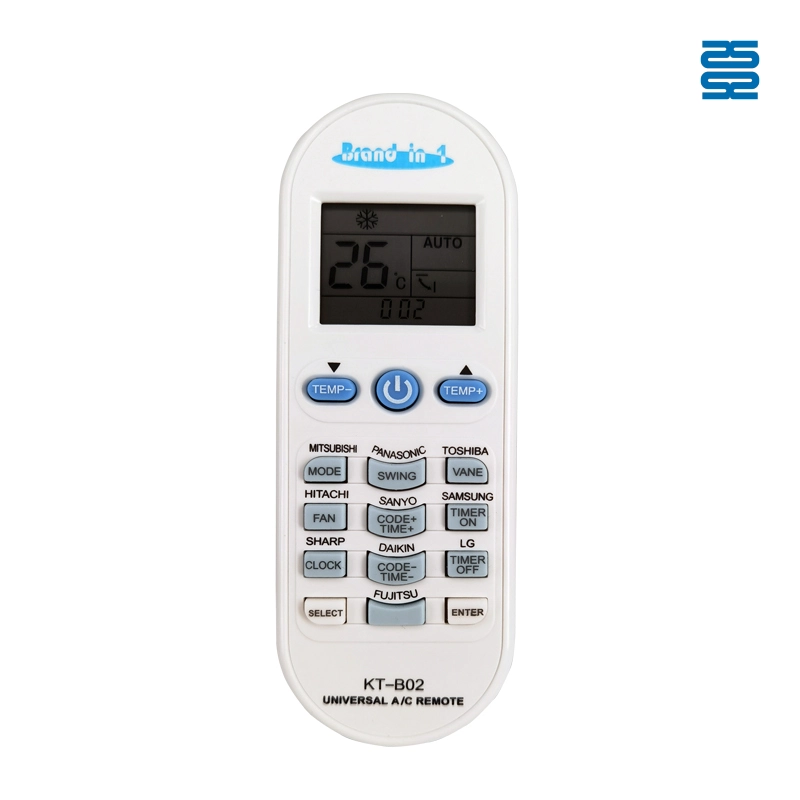
KT-B02 Universal Air Conditioner Remote Control Compatible with All Brands
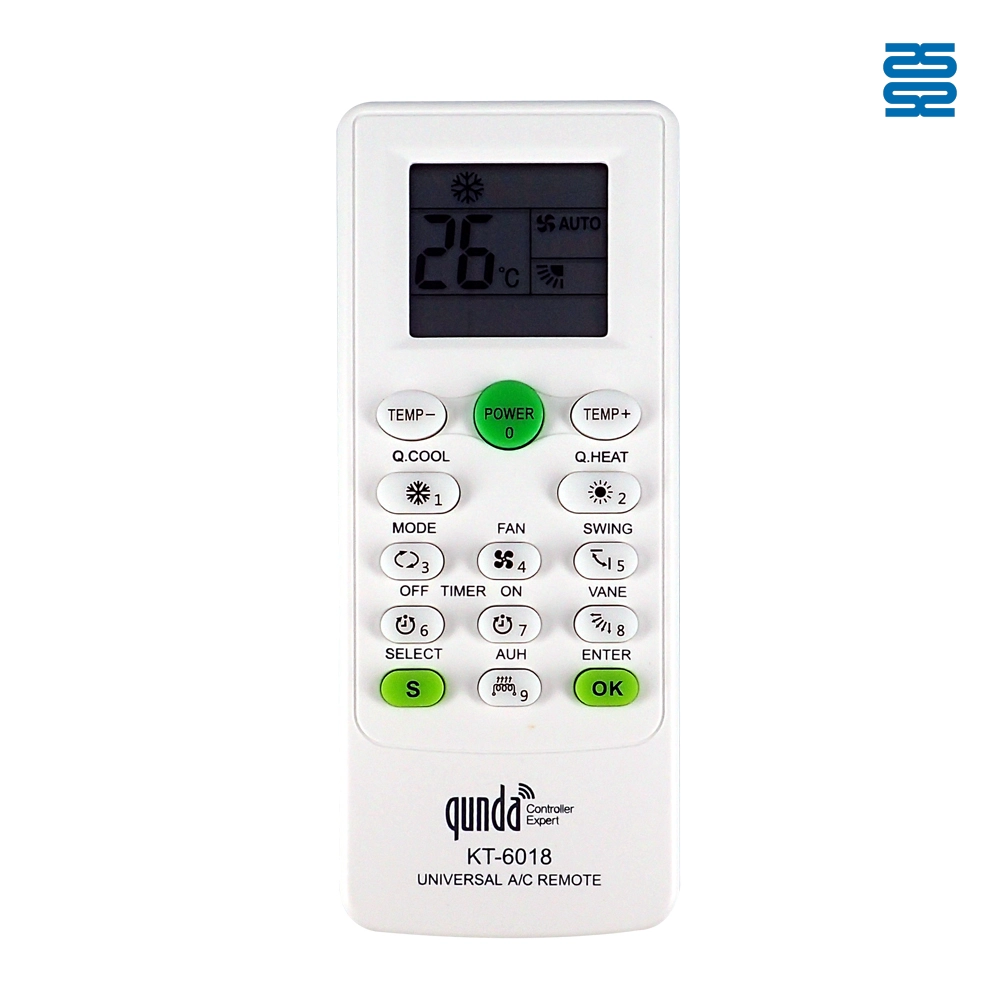
KT-6018 6000 in 1 Universal Air Conditioner Remote Control Compatible with All Brands
Get the latest updates
If you have any comments or good suggestions, please leave us a message, later our professional staff will contact you as soon as possible.


Contact
Email us
Text or Call us
Address
Room 1606, No. 65, Zhongshan Seven Road, Liwan District, Guangzhou, Guangdong, China.

Facebook
Instagram
YouTube
Tik Tok
VK