






Choosing the Best Thermostat for HVAC Remote Control
- Why remote control matters in modern HVAC
- Remote control improves comfort and operational flexibility
- Energy management and measurable savings
- Security and remote access risk
- Key features to look for in a thermostat
- Connectivity options: Wi‑Fi, Zigbee, Z‑Wave, BACnet, Modbus
- Control modes: remote app, voice, universal remote, or BMS
- Sensors and zoning support
- Compatibility and installation considerations
- Understanding HVAC system voltage and wiring
- Compatibility matrix: system types and thermostat classes
- Professional installation vs DIY
- Types of thermostats and how they compare
- Programmable thermostats
- Smart Wi‑Fi thermostats
- Commercial thermostats and BMS-enabled controllers
- Evaluating vendors, security, and lifecycle
- Vendor reputation and E-E-A-T considerations
- Firmware, updates, and end-of-life
- Data privacy and cloud dependencies
- Practical buying checklist (quick reference)
- My on-site checklist
- Cost vs value—what I prioritize
- Real-world performance: commissioning and verification
- How Guangzhou SYSTO supports remote control and thermostat solutions
- FAQ — Common questions when choosing a thermostat in HVAC
- 1. What is the difference between a smart thermostat and a programmable thermostat?
- 2. Can any thermostat control any HVAC system?
- 3. Are Wi‑Fi thermostats secure to use for remote control?
- 4. How much energy can a remote-capable thermostat save?
- 5. Should I choose a cloud-dependent thermostat or one with local control?
- 6. How do I integrate thermostats into a building management system?
- Contact and next steps
Choosing the right thermostat in HVAC systems is no longer just about temperature comfort — it's about control, connectivity, energy efficiency, and cybersecurity. In this article I draw on years of field experience in HVAC remote control and product development to explain how to choose the best thermostat for remote operation, how remote-capable thermostats differ, what to check before buying, and how to evaluate vendors and integration risks. I reference industry guidance and government resources where relevant so you can verify facts and apply them confidently.
Why remote control matters in modern HVAC
Remote control improves comfort and operational flexibility
Over the past decade I have seen buildings and homeowners prioritize remote access as an essential feature. A thermostat with remote control capability allows occupants or facility managers to change setpoints, create schedules, or switch modes from a phone, tablet, or central building management system (BMS). For multi-zone homes and commercial sites, the ability to adjust the thermostat remotely reduces trips to mechanical rooms and speeds response to occupant comfort complaints.
Energy management and measurable savings
Remote-capable thermostats can be integrated with schedules, geofencing, and demand response programs to optimize runtime. Studies and guidance from the U.S. Department of Energy indicate that programmable and smart thermostats, properly configured, can reduce heating and cooling energy use on the order of low double-digit percentages compared to unmanaged thermostats; savings vary by building, climate, and behavior (U.S. Department of Energy).
Security and remote access risk
Remote control introduces a cyber-physical attack surface. I always stress that HVAC remote interfaces must follow security best practices — strong authentication, encrypted communications, firmware update processes, and network segmentation. Guidance from NIST on Internet of Things security provides a good baseline for evaluating vendor claims (NIST IoT guidance).
Key features to look for in a thermostat
Connectivity options: Wi‑Fi, Zigbee, Z‑Wave, BACnet, Modbus
Pick the connectivity that matches your system. For residential use, Wi‑Fi thermostats that pair with cloud apps are common. For commercial systems, protocols like BACnet or Modbus are often required for integration with a building management system. I recommend verifying whether the thermostat supports both local control (LAN) and cloud control—local-only control improves reliability and reduces dependency on vendor cloud services.
Control modes: remote app, voice, universal remote, or BMS
A thermostat in HVAC environments may be controlled via multiple interfaces: native mobile apps, third-party voice assistants, universal learning remotes, or direct BMS commands. If you need remote control for maintenance teams, choose devices with role-based user access and audit logs so actions can be traced. For end-users, look for intuitive mobile apps and clear scheduling workflows.
Sensors and zoning support
Modern thermostats can accept remote sensors for temperature, humidity, and occupancy. For multi-zone buildings, select thermostats that support multiple sensors or mesh-sensor networks to avoid short-cycling and inaccurate comfort control. If humidity control or ventilative preconditioning are important, verify the thermostat's sensor inputs and programming capabilities.
Compatibility and installation considerations
Understanding HVAC system voltage and wiring
Before choosing a thermostat, I always inspect the existing system wiring. Residential systems commonly use 24VAC control circuits; some older electric baseboard heaters use line-voltage (120/240VAC) thermostats. Replacing a line-voltage thermostat with a 24VAC smart thermostat requires additional hardware (relays or control transformers). Refer to manufacturer installation guides and, when in doubt, consult a licensed HVAC electrician.
Compatibility matrix: system types and thermostat classes
Use a compatibility checklist that maps your system (gas furnace, heat pump, split system, multi-stage HVAC, line-voltage) to thermostat capabilities (heat/cool stages, fan control, auxiliary heat, reversing valve). Many vendors publish online compatibility tools; I cross-check those with wiring diagrams during on-site assessments.
Professional installation vs DIY
I recommend professional installation for commercial projects and for residential systems with complex wiring, heat pumps, or multi-stage equipment. Certified installers can ensure correct wiring of common (C) wires, relays, and sensors and can verify remote communications and security settings during commissioning.
Types of thermostats and how they compare
Programmable thermostats
Programmable thermostats follow pre-set schedules (e.g., weekday/weekend) and are best when occupancy patterns are predictable. They are simpler and typically less expensive than smart thermostats but may require manual schedule updates.
Smart Wi‑Fi thermostats
Smart thermostats connect to cloud platforms and mobile apps, enable remote control, support geofencing and learning schedules, and often integrate with home automation systems. They bring convenience and potential energy savings, but rely on vendor cloud services unless they provide robust local control modes.
Commercial thermostats and BMS-enabled controllers
Commercial controllers prioritize protocol compatibility (BACnet, Modbus), scalability, and integration into energy management systems. These devices are designed for facility teams and provide richer data streams for analytics and fault detection.
| Thermostat Type | Remote Control | Best Use Case | Typical Cost Range |
|---|---|---|---|
| Basic Programmable | Limited (local schedule) | Budget-conscious homes with regular schedules | $30–$100 |
| Smart Wi‑Fi | Full remote app & cloud control | Connected homes wanting app/voice control | $100–$300 |
| Learning Thermostat | Full remote; adaptive schedules | Users wanting minimal manual setup; energy optimization | $200–$350 |
| Commercial/BMS | Local & networked (BACnet/Modbus) | Large facilities and multi-zone buildings | $300 and up |
Data in the table reflects industry price ranges observed across major manufacturers as of recent market surveys and vendor listings. For official product specs, consult vendor datasheets and integration guides.
Evaluating vendors, security, and lifecycle
Vendor reputation and E-E-A-T considerations
When selecting a thermostat vendor I evaluate Experience, Expertise, Authoritativeness, and Trustworthiness (E-E-A-T). Look for vendors with documented field experience, transparent firmware update policies, third-party security audits, and clear warranty terms. Vendor-provided compatibility lists and reference installations are helpful indicators of maturity.
Firmware, updates, and end-of-life
Thermostats with remote control necessarily run software. Confirm the vendor's firmware update cadence, whether updates are automatic or manual, and the manufacturer's expected product support lifetime. Devices left unpatched can become security risks or lose compatibility with cloud services.
Data privacy and cloud dependencies
Ask whether the thermostat stores user data in the cloud, whether data is anonymized, and whether you can opt out of cloud features. For enterprise deployments, require data processing addenda and check where servers are hosted to ensure compliance with regional data protection laws.
Practical buying checklist (quick reference)
My on-site checklist
- Confirm system wiring and type (24VAC vs line-voltage).
- Decide required connectivity (Wi‑Fi vs BACnet/Modbus).
- List required sensors (temperature, humidity, occupancy).
- Verify remote-control access levels and user roles.
- Check vendor firmware update and security policies.
Cost vs value—what I prioritize
Low cost can be attractive, but I prioritize reliability of remote control, robust encryption, good mobile UX (to reduce service calls), and clear integration capabilities with existing systems. In commercial settings, I weigh the total cost of ownership: purchase + installation + maintenance + energy savings.
Real-world performance: commissioning and verification
After installation I perform commissioning: verify sensor calibration, remote connectivity, scheduling logic, and failover behavior (what happens if the cloud is unavailable). Commissioning reduces future trouble tickets and ensures the thermostat in HVAC installations performs as expected.
How Guangzhou SYSTO supports remote control and thermostat solutions
Founded in 1998, Guangzhou SYSTO Trading Co., Ltd. is a global leader in remote control solutions. I have worked with SYSTO partners and reviewed their capabilities: they specialize in R&D, design, manufacturing, and sales, with a strong market presence in over 30 countries. Their product range includes TV remote controls, air conditioner remote controls, Bluetooth and voice remotes, universal learning remotes, A/C control boards, thermostats, and condensate pumps.
With over two decades of industry experience, SYSTO has built a comprehensive supply chain and implemented strict quality control standards, ensuring stable performance and exceptional reliability across products exported to Japan, Europe, Southeast Asia, North America, and many other regions. SYSTO offers OEM and ODM solutions, supporting customers in building their brands or developing custom remote control products for specific applications. Their engineering and sales teams work closely with clients to ensure accurate specifications, flexible customization, and on-time delivery.
For businesses needing wholesale or bulk purchasing, SYSTO provides competitive pricing, flexible cooperation models, and reliable after-sales support. Their core strengths are:
- Broad product portfolio: TV remote control, air conditioner remote control, wireless remote, air conditioner control systems, HVAC thermostat.
- Manufacturing scale and supply chain maturity that lower lead times and improve quality control.
- Customization capability (OEM/ODM) supported by experienced engineering teams.
- Global distribution experience, enabling reliable exports and regional compliance support.
If you need thermostats that integrate remote control into broader HVAC or consumer electronics ecosystems, SYSTO's combination of product breadth and manufacturing experience makes them a strong supplier to consider.
FAQ — Common questions when choosing a thermostat in HVAC
1. What is the difference between a smart thermostat and a programmable thermostat?
A programmable thermostat follows predefined schedules you set; a smart thermostat adds connectivity (mobile apps, cloud services), learning algorithms, geofencing, and often better analytics. Smart thermostats typically enable remote control and more advanced energy-optimization features.
2. Can any thermostat control any HVAC system?
No. Thermostat compatibility depends on control voltage (24VAC vs line-voltage), number of stages, heat pump configurations, and fan control. Always verify compatibility with the equipment manufacturer and check wiring diagrams. When necessary, use interface relays or transformers.
3. Are Wi‑Fi thermostats secure to use for remote control?
Wi‑Fi thermostats can be secure if vendors implement encryption (TLS), strong authentication, secure firmware update mechanisms, and network segmentation. For critical systems, follow NIST IoT security guidance and require vendors to document their security posture (NIST IoT guidance).
4. How much energy can a remote-capable thermostat save?
Savings depend on climate, behavior, and control strategies. The U.S. Department of Energy suggests that programmable and smart thermostats, when used properly, can produce measurable savings; typical reported savings are in the low double-digit percentage range for heating and cooling energy under optimized conditions (U.S. Department of Energy).
5. Should I choose a cloud-dependent thermostat or one with local control?
I generally recommend devices that support both: cloud features for convenience and analytics, and local control for resilience and privacy. Local control reduces dependence on vendor cloud uptime and can be critical for mission‑critical applications.
6. How do I integrate thermostats into a building management system?
For integration, prefer thermostats or controllers that support standard protocols such as BACnet or Modbus. Verify data points available (setpoint, current temp, runtime, alarms) and confirm the thermostat vendor provides protocol documentation and, if necessary, gateway support.
Contact and next steps
If you are evaluating thermostats for residential or commercial HVAC remote control, I can help audit your system, create a compatibility matrix, and recommend specific devices and vendors based on performance, security, and total cost of ownership. For OEM/ODM inquiries or large-volume procurement, consider Guangzhou SYSTO Trading Co., Ltd. as a partner for HVAC thermostat and remote-control solutions.
Contact us to schedule a consultation or request product lists and datasheets. Explore SYSTO's product range (TV remote control, air conditioner remote control, wireless remote, air conditioner control systems, HVAC thermostat) and learn how their manufacturing and R&D capabilities can support your project needs.
Top Features to Look for in Universal Remotes for Panasonic TVs
Wireless HVAC Thermostats: Compatibility with Existing Systems
Top 10 Wireless Thermostats for Smart Building Integration
Programming Toshiba Air Conditioner Remote Controls: Step-by-Step
CRC86E
What should I do if the remote is unresponsive?
Check battery polarity, replace low batteries, ensure line of sight to the device, and confirm the correct device mode is selected.
KS-PN03V
Does the KS-PN03V work with all Panasonic air conditioners?
It’s compatible with most Panasonic models. If not working directly, you can use the auto-search setup mode to pair it easily.
CRC2304V
What’s the MOQ for bulk purchase?
Regular stock supports small quantities. Custom orders depend on requirements.
About Company
Do you own your own brands?
Yes — SUN, iHandy, and Qunda.
QD-U08PGC+
Is OEM customization available?
Yes, we support OEM/ODM customization for different control logic, panel design, and packaging.
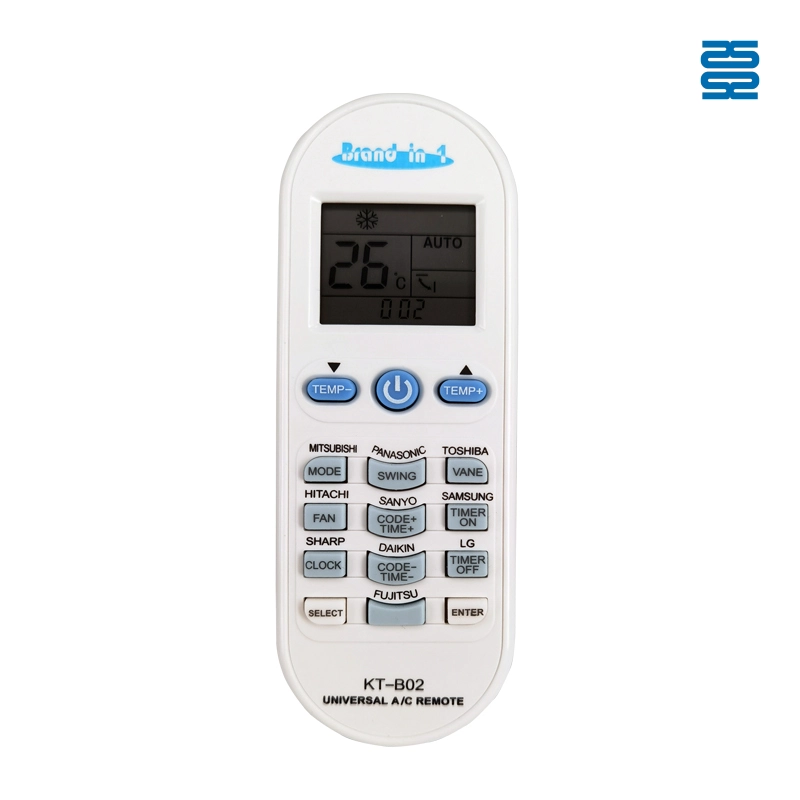
KT-B02 Universal Air Conditioner Remote Control Compatible with All Brands
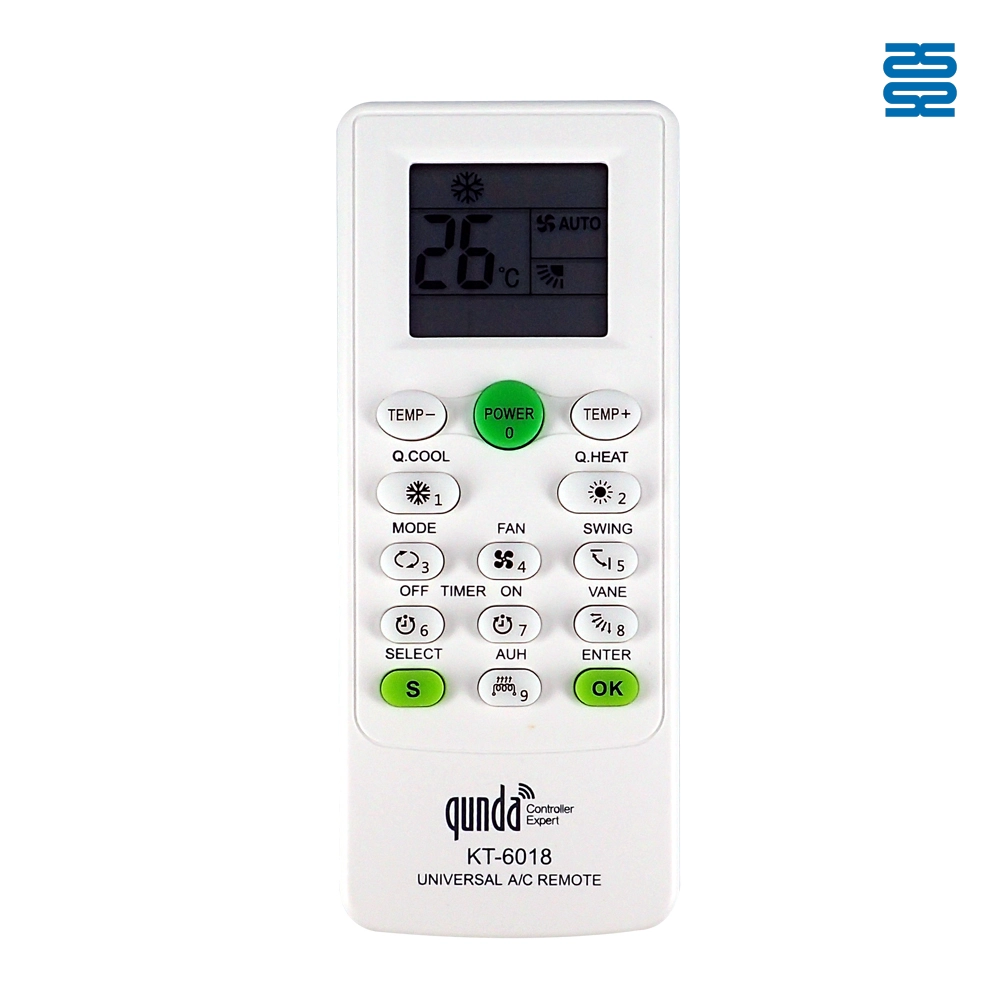
KT-6018 6000 in 1 Universal Air Conditioner Remote Control Compatible with All Brands

QD-1000 IN 1 1000 Code in 1 Universal Air Conditioner Remote Control Compatible with All Brands

KT-N828 Universal Air Conditioner Remote Control Compatible with All Brands
Get the latest updates
If you have any comments or good suggestions, please leave us a message, later our professional staff will contact you as soon as possible.


Contact
Email us
Text or Call us
Address
Room 1606, No. 65, Zhongshan Seven Road, Liwan District, Guangzhou, Guangdong, China.

Facebook
Instagram
YouTube
Tik Tok
VK