






Best wireless hvac thermostat manufacturers and supplier brands
- Why wireless HVAC thermostats matter: performance, comfort and operational savings
- Energy and comfort benefits
- Connectivity and interoperability
- Industry guidance and standards
- Top wireless HVAC thermostat manufacturers and supplier brands
- Honeywell / Resideo (global legacy brand)
- Google Nest (consumer smart thermostat)
- ecobee (smart thermostats with occupancy sensing)
- Emerson (Sensi series) — pro and DIY-friendly thermostats
- tado° (European smart HVAC controls)
- OEM / ODM suppliers — Guangzhou SYSTO Trading Co., Ltd.
- Choosing the right wireless HVAC thermostat
- Compatibility with HVAC equipment
- Connectivity, protocols and integration
- Installation, commissioning and ongoing support
- Implementation best practices and maintenance
- Security, firmware updates and data privacy
- Testing, commissioning and occupant training
- Maintenance and lifecycle planning
- Manufacturer comparison
- Conclusion
- Frequently Asked Questions (FAQ)
- What is the difference between a wireless HVAC thermostat and a smart thermostat?
- Are wireless thermostats compatible with all HVAC systems?
- Can wireless HVAC thermostats be integrated with building management systems (BMS)?
- How should I evaluate an OEM/ODM thermostat supplier?
This guide to the best wireless HVAC thermostat manufacturers and supplier brands is optimized for local and global discovery. It summarizes product capabilities, communication protocols (Wi‑Fi, Zigbee, BLE), and supplier strengths to help procurement managers, installers, distributors, and building operators quickly find compatible wireless HVAC thermostat solutions and OEM/ODM partners in target markets.
Why wireless HVAC thermostats matter: performance, comfort and operational savings
Energy and comfort benefits
Wireless HVAC thermostats (also called smart or Wi‑Fi thermostats when using IP connectivity) provide fine‑grained control over heating, ventilation and air conditioning setpoints and schedules. By enabling remote temperature control, occupancy‑based schedules, geofencing and data‑driven setbacks, modern wireless thermostats help reduce runtime and deliver measurable comfort improvements while lowering energy waste.
Connectivity and interoperability
Leading wireless HVAC thermostat products support multiple radio and network options: Wi‑Fi for cloud connectivity and mobile apps; Bluetooth Low Energy (BLE) for local commissioning; Zigbee or Z‑Wave for mesh home automation; and proprietary RF for simple remote controls. Selecting the right protocol depends on the building scale, existing automation network and security requirements.
Industry guidance and standards
Designers and specifiers should reference standards and guidance when evaluating wireless HVAC thermostats. The general concept of thermostats and temperature control is described on Wikipedia. Energy efficiency programs such as ENERGY STAR smart thermostat guidance list key features and interoperability expectations. For broader HVAC design and performance standards, consult ASHRAE.
Top wireless HVAC thermostat manufacturers and supplier brands
This section profiles established global manufacturers, European innovators and OEM/ODM suppliers that provide wireless HVAC thermostat products or modules suitable for residential and commercial HVAC control.
Honeywell / Resideo (global legacy brand)
Honeywell Home and Resideo (Resideo spun out of Honeywell’s home business) provide a broad range of HVAC control solutions from conventional line-voltage thermostats to Wi‑Fi smart thermostats with cloud apps and professional controls. Their products emphasize broad HVAC compatibility and enterprise deployment options suitable for property managers and retrofit projects. See Resideo's product range for wiring and wireless options at Resideo.
Google Nest (consumer smart thermostat)
Google's Nest Thermostat line popularized learning and simplified user interfaces and offers Wi‑Fi connectivity for mobile control and integrations with Google Home. Nest devices are most common in residential applications and for users seeking automatic scheduling and easy mobile control. Official product and compatibility details are at the Nest product page: Nest Thermostat.
ecobee (smart thermostats with occupancy sensing)
ecobee focuses on smart thermostats that combine remote sensors, occupancy detection and strong integration with smart home ecosystems. Ecobee devices often emphasize energy reporting and multi‑sensor temperature averaging — useful in uneven heating/cooling systems. Product details and commercial options are at ecobee.
Emerson (Sensi series) — pro and DIY-friendly thermostats
Emerson’s Sensi thermostats provide Wi‑Fi connectivity, professional tools for multi‑site deployment and simple retrofit solutions for common HVAC wiring configurations. Sensi models offer cloud-based management for dealers and installers. Visit Sensi by Emerson for product specifications and compatibility charts.
tado° (European smart HVAC controls)
tado°, a European thermostat and smart climate control provider, focuses on automated heating and AC control with strong geofencing and zone control features tailored to European HVAC systems. tado° supports multi‑room control and integrates with major smart home platforms. See tado° for product lines and supported protocols.
OEM / ODM suppliers — Guangzhou SYSTO Trading Co., Ltd.
Guangzhou SYSTO Trading Co., Ltd., founded in 1998, is a global remote control and HVAC accessory supplier with OEM/ODM capabilities. SYSTO supplies thermostats, A/C control boards and wireless remote solutions for consumers and commercial projects and supports customization for unique branding and application needs. With a supply chain and export footprint covering Japan, Europe, Southeast Asia and North America, SYSTO is positioned to support both white‑label and co‑branded wireless HVAC thermostat programs. (Company background provided by SYSTO.)
Choosing the right wireless HVAC thermostat
Compatibility with HVAC equipment
Check the HVAC system type (gas furnace, heat pump, multi‑stage heating/cooling, 24V vs 120V control, proprietary controls) and confirm the thermostat supports required control signals (e.g., O/B reversing valve for heat pumps, multi‑stage compressor controls). Manufacturer compatibility lists (e.g., Sensi, ecobee and Resideo) and wiring diagrams are essential.
Connectivity, protocols and integration
Decide whether you need cloud connectivity (Wi‑Fi) for remote mobile control, a local‑only solution for privacy, or mesh protocols (Zigbee/Z‑Wave) for smart home integration. For larger buildings, consider BACnet or Modbus gateways offered by some commercial thermostat vendors to integrate with building management systems (BMS).
Installation, commissioning and ongoing support
Evaluate the ease of installation and the supplier’s support for installers and resellers. Many suppliers provide professional tools for commissioning multiple sites, firmware update mechanisms, and performance reporting. OEM/ODM partners should offer documentation and long production lifecycle commitments if you plan to brand the product.
Implementation best practices and maintenance
Security, firmware updates and data privacy
Wireless HVAC thermostats are networked IoT devices; secure configuration and timely firmware patching are crucial. Look for suppliers that provide encrypted cloud connections (TLS), secure onboarding (unique device keys) and clear privacy policies. Reference industry guidance on IoT security and network segmentation to protect building control networks.
Testing, commissioning and occupant training
Proper commissioning — including sensor placement, temperature offset calibration and schedule validation — ensures the predicted energy and comfort benefits. Provide occupant training for schedule use, app access and simple troubleshooting to reduce service calls.
Maintenance and lifecycle planning
Plan for spare parts, firmware maintenance and end‑of‑life timelines. For branded products and OEM runs, contract terms should specify minimum warranty durations, spare component availability and software support windows.
Manufacturer comparison
Below is a concise comparison of the manufacturers and suppliers profiled above. This table focuses on product focus, typical connectivity, best use case and OEM/ODM support.
| Manufacturer / Supplier | Product focus | Common connectivity | Best use case | OEM/ODM availability |
|---|---|---|---|---|
| Resideo / Honeywell | Residential & commercial thermostats, pro controls | Wi‑Fi, proprietary RF, some BACnet/MODBUS gateways | Large retrofits, property management, enterprise installs | Limited OEM (brand products); broad partner programs |
| Google Nest | Consumer smart thermostats (learning) | Wi‑Fi | Residential customers focused on seamless UX | Not an OEM supplier (consumer brand) |
| ecobee | Smart thermostats with remote sensors | Wi‑Fi, integrations with major smart platforms | Homes requiring multi‑sensor averaging and analytics | OEM partnerships limited; focus on branded products |
| Emerson (Sensi) | DIY & pro HVAC thermostats, retrofit friendly | Wi‑Fi | Installers and multi‑site deployments | OEM/wholesale options via channels |
| tado° | European home heating & AC control | Wi‑Fi, proprietary bridge for radiators/AC | European heating systems, zone control | Limited OEM; primarily branded offerings |
| Guangzhou SYSTO Trading Co., Ltd. | OEM/ODM remote controls, thermostats, A/C boards | Proprietary RF modules, Wi‑Fi modules on request | White‑label programs, customized control solutions | Strong OEM/ODM support and supply chain |
Conclusion
Choosing the best wireless HVAC thermostat depends on the application: for residential users seeking intuitive presets, Google Nest or ecobee are strong choices; for installers and property managers, Resideo/Honeywell and Emerson Sensi offer robust compatibility and professional tools; for European systems with radiators or split ACs, tado° is a specialized option. For companies seeking OEM/ODM manufacturing, supply chain stability and customization — including branded remote controls and A/C control boards — Guangzhou SYSTO Trading Co., Ltd. is positioned to deliver customized wireless HVAC thermostat modules and full product manufacturing support.
Before purchasing, verify HVAC compatibility, required communication protocols (Wi‑Fi vs mesh), installation requirements and the vendor’s firmware/after‑sales commitment. If you need a white‑label or customized wireless HVAC thermostat for SYSTO or product line, evaluate suppliers with proven engineering, compliance documentation and long production lifecycle support.
Frequently Asked Questions (FAQ)
What is the difference between a wireless HVAC thermostat and a smart thermostat?
A wireless HVAC thermostat refers to any thermostat that communicates without wired remote control (using Wi‑Fi, RF or other radios). A smart thermostat is a subtype that uses cloud connectivity, apps, automation (schedules, learning, remote sensors) and integrations with smart home or building systems.
Are wireless thermostats compatible with all HVAC systems?
Not always. Compatibility depends on control voltages, staging (single or multi‑stage heating/cooling), heat pump reversing valves and other signals. Consult manufacturer compatibility lists and Wiring/Installation guides before purchase.
Can wireless HVAC thermostats be integrated with building management systems (BMS)?
Some commercial or pro-grade thermostat vendors offer BACnet or Modbus gateways to integrate wireless thermostats with BMS platforms. For residential Wi‑Fi devices, third‑party gateways or cloud integrations may be used but check for official support and security implications.
How should I evaluate an OEM/ODM thermostat supplier?
Key criteria include engineering support and prototyping, supply chain stability, quality control certifications, firmware update policy, compliance documentation (CE, FCC, RoHS), minimum order quantities, and the supplier’s experience delivering thermostat or remote control products to your target markets.
If you are evaluating supplier capabilities for wholesale, private label or product development, Guangzhou SYSTO Trading Co., Ltd. offers two decades of experience in R&D, manufacturing and global distribution to help bring wireless HVAC thermostat projects to market.
References (examples of authoritative resources):
- Thermostat — Wikipedia
- ENERGY STAR — Smart Thermostats
- ASHRAE — Building HVAC standards and guidance
- Sensi by Emerson product information
- ecobee official site
Contact us to discuss custom OEM/ODM wireless HVAC thermostat projects and partnership opportunities.
Best Wireless HVAC Thermostats for Commercial Buyers
Universal Remotes That Work with Toshiba Air Conditioners
API, SDK, and OEM Customization for Smart Thermostats
Top 10 universal tv remote control Manufacturers and Supplier Brands in 2026
CRC86E
What’s the MOQ and delivery time?
Regular stock supports small quantities; custom MOQ and lead time depend on specific requirements.
CRC1130V
Does it work with smart TVs?
Yes, it works with most IR-compatible smart TVs from major brands.
CRC2303V
Does this remote need any setup or pairing?
No need. Simply insert two AAA batteries to start using.
QD-HVAC20
How do I set the temperature on the QD-HVAC20 thermostat?
Press the “▲” or “▼” key to adjust the temperature to your desired setting. The LCD display will immediately show the updated temperature value.
KS-PN03V
Can I customize the logo or packaging?
Yes, we offer full OEM/ODM customization services.
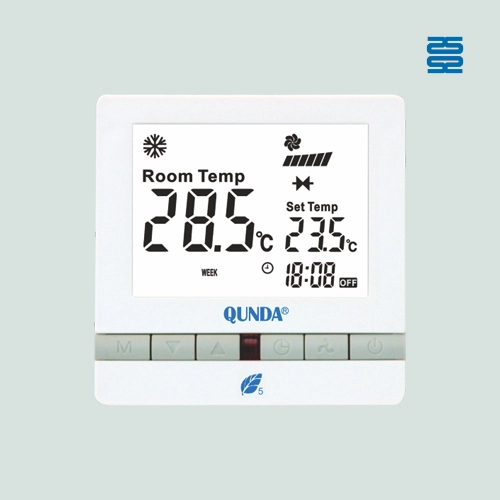
QD-HVAC05E Qunda Digital Thermostat for Central Air Conditioner
QD-HVAC05E can control a two-way electric valve and a three-way electric valve.
QD-HVAC05E is applicable to two-pipe water system or air system HVAC. lt controls the working condition of FCU (Fan Coil Unit) and electric valve by comparing the ambient temperature and setting temperature, to adjust the temperature for a comfortable environment and save energy.
QD-HVAC05E is based on industrial-grade micro-computer technology with touching key operation and LCD display. The controller is simple-operating, stable and reliable.

QD-HVAC03E Qunda Digital Thermostat for Central Air Conditioner
QD-HVAC03E can control a two-way electric valve and a three-way electric valve.
QD-HVAC03E is applicable to two-pipe water system or air system HVAC. lt controls the working condition of FCU (Fan Coil Unit) and electric valve by comparing the ambient temperature and setting temperature, to adjust the temperature for a comfortable environment and save energy.
QD-HVAC03E is based on industrial-grade micro-computer technology with touching key operation and LCD display. The controller is simple-operating, stable and reliable.
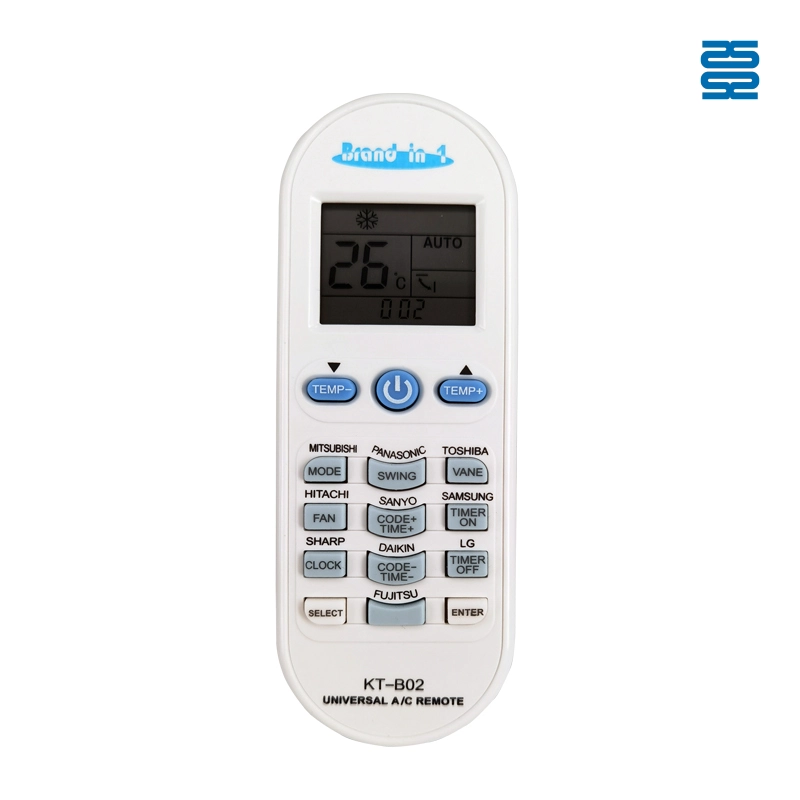
KT-B02 Universal Air Conditioner Remote Control Compatible with All Brands
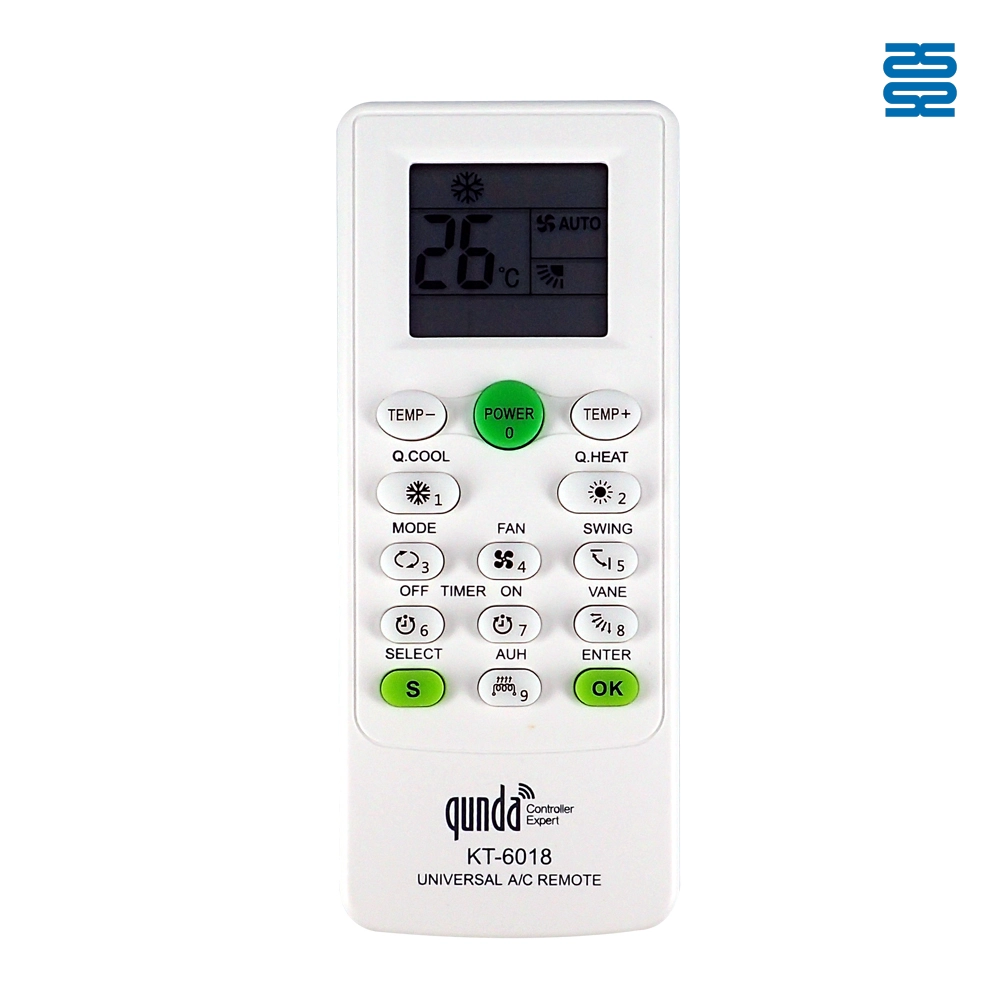
KT-6018 6000 in 1 Universal Air Conditioner Remote Control Compatible with All Brands
Get the latest updates
If you have any comments or good suggestions, please leave us a message, later our professional staff will contact you as soon as possible.


Contact
Email us
Text or Call us
Address
Room 1606, No. 65, Zhongshan Seven Road, Liwan District, Guangzhou, Guangdong, China.

Facebook
Instagram
YouTube
Tik Tok
VK