






Best universal remote for home theater buyers
- How universal remotes work with modern home theaters
- Core protocols and signal paths
- HDMI-CEC and why it matters
- Why a dedicated universal remote or hub still matters
- Choosing the best remote control for home theater: criteria that matter
- Compatibility with your devices
- Control paradigm: handheld vs hub-based vs hybrid
- User experience and macros
- Top remote types and recommended approaches (with examples)
- IR learning remotes
- Hub-based smart remotes (Wi‑Fi/Bluetooth + IR hub)
- Voice-first remotes and smart assistants
- Compare leading choices: features and practical fit
- Practical setup, integration and troubleshooting
- Best practices for programming and activities
- Troubleshooting common issues
- Security and network considerations
- When to choose a custom/wholesale supplier: manufacturing and OEM considerations
- Why OEM/ODM matters for commercial projects
- Manufacturer profile: Guangzhou SYSTO (relevance for buyers)
- Buying checklist and final recommendations
- Quick checklist before purchase
- My practical recommendation
- Frequently Asked Questions (FAQ)
- 1. What is the best remote control for home theater with hidden components?
- 2. Can a universal remote control work with smart speakers (Alexa/Google)?
- 3. Is HDMI-CEC enough to control all devices with one remote?
- 4. How do I get reliable AV receiver control and sound mode switching?
- 5. For bulk purchases or branded remotes, what should I look for in a supplier?
- 6. How do I troubleshoot when the remote won’t control one device?
Remote control for home theater is more than a convenience—it's the interface between you and an immersive audio-visual experience. In this article I explain how different universal remote architectures (IR, RF, Bluetooth, Wi‑Fi hubs) interact with AV receivers, streaming players, projectors, and smart home devices, how to choose the best universal remote for your home theater, and practical setup and troubleshooting tips. I reference industry sources where relevant and provide a comparison table to speed decision-making.
How universal remotes work with modern home theaters
Core protocols and signal paths
Home theater devices accept control signals through several protocols: infrared (IR), radio frequency (RF), Bluetooth, and network-based APIs (Wi‑Fi). IR is the most common and requires line-of-sight; RF and Bluetooth can work through cabinets and walls. Many modern setups use a hub-based remote (hub + smartphone/handheld remote) that converts smartphone or remote commands over Wi‑Fi/RF into IR blasts to legacy devices. For background on remote technologies see Remote control (Wikipedia) and the specific category Universal remote control.
HDMI-CEC and why it matters
HDMI Consumer Electronics Control (CEC) can simplify control by allowing one device to control others via the HDMI link (for example, turning on an AVR when a streaming stick wakes). However, CEC implementations vary by brand and can be inconsistent. I always recommend using CEC as a convenience layer, not the only control method; pair it with explicit IR or network control for reliable automation. Read more about HDMI and CEC at HDMI CEC (Wikipedia).
Why a dedicated universal remote or hub still matters
Smartphones and apps are convenient but not always reliable during an actual movie night—apps can sleep, update, or suffer network glitches. A dedicated universal remote (or hub-backed remote) offers consistent low-latency control, physical buttons for tactile operation in the dark, and programmable macros (activities) that sequence multiple device commands. For high-performance home theaters, I treat the universal remote as part of the core AV system, not an accessory.
Choosing the best remote control for home theater: criteria that matter
Compatibility with your devices
Start by listing every device you need to control: AVR, TV, Blu-ray, projector, streaming stick, motorized screen, lighting, and thermostat (if integrated). Check whether each device accepts IR codes or has network APIs. If you have Bluetooth-only devices or devices inside a cabinet, prioritize RF or hub solutions. A universal remote should support learning IR and offer broad device code databases to reduce setup time.
Control paradigm: handheld vs hub-based vs hybrid
Handheld learning remotes offer direct control but may struggle with devices hidden in racks. Hub-based systems (a small hub placed near equipment) receive commands from the handheld over RF/Bluetooth and emit IR/RF to the equipment—ideal for concealed components. Hybrid systems combine tactile remotes with an app and voice assistants for flexible use.
User experience and macros
Look for remotes with a clear activity model (e.g., Watch Movie turns on TV, AVR, selects input, dims lights) and easy macro programming. Professional-grade remotes let you fine-tune delays and conditional behaviors; consumer remotes often have simpler activity flows. If multiple household members use the system, consider remotes with easy button layouts or companion apps for personalization.
Top remote types and recommended approaches (with examples)
IR learning remotes
IR learning remotes are valuable when you have legacy equipment. They can copy commands from original remotes and store them. For closets and racks, pair a learning remote with an IR emitter or a hub to reach equipment. Learning remotes are simple and long-lasting—ideal for conservative, reliability-focused builds.
Hub-based smart remotes (Wi‑Fi/Bluetooth + IR hub)
Hub-based remotes combine a handheld controller or app with a small hub that proxies commands to devices. These systems are best when components are hidden or when integration with smart home platforms (Alexa, Google Assistant) is required. They also allow OTA updates to device databases. If you need network integrations, this is my preferred architecture.
Voice-first remotes and smart assistants
Voice remotes (integrated microphones) are great for quick searches and controlling streaming apps. However, I avoid relying solely on voice for complex activity sequences because privacy considerations and voice recognition variance can frustrate users. Use voice as a complementary control layer.
Compare leading choices: features and practical fit
Below is a practical comparison table of representative approaches and models to illustrate trade-offs. Note: product lifecycles change; confirm current availability before purchase.
| Option | Type | Protocols | Best for | Notes |
|---|---|---|---|---|
| Professional all-in-one (e.g., URC/MX/Professional) | Handheld + RF/Base | IR, RF, IP | Custom installs, multi-room, integrators | Very customizable, higher cost, installer configuration |
| Hub-based consumer (BroadLink, SofaBaton-style) | Hub + app + remote | IR, RF (some), Wi‑Fi, Bluetooth | Hidden components, smart home integration | Good price, network integrations, occasional setup quirks |
| Learning handheld (Inteset, universal learning remotes) | Handheld IR learning | IR | Simple home theaters with visible components | Affordable, reliable, limited smart home support |
| Voice remotes / streaming-stick remotes | Bluetooth / Wi‑Fi | Bluetooth, Wi‑Fi, limited IR via hub | Stream-first setups (Fire TV, Roku) | Convenient voice; limited AVR control unless paired to hub |
Sources for the technology overview include manufacturer specifications and established references such as Universal remote control (Wikipedia) and practical setup guides like CNET Home Theater articles for consumer guidance.
Practical setup, integration and troubleshooting
Best practices for programming and activities
I recommend the following sequence when programming a home theater remote:
- Inventory every controllable device and note connection types (HDMI, optical, analog).
- Decide whether devices will be visible (IR) or hidden (requires hub/emitter).
- Configure activity macros in the remote/hub starting with power-on, then input switching, then audio mode (e.g., AVR sound mode), and finally room automation like dimming lights.
- Test and insert short delays between commands if equipment requires time to boot or negotiate HDMI handshake.
Troubleshooting common issues
Common problems and fixes I encounter as a consultant:
- HDMI handshake failures during activity start: add a 3–8 second delay after powering the AVR before switching input.
- IR commands not reaching equipment in cabinet: use an IR emitter or move to a hub with external IR blasters.
- Voice commands failing for specific devices: confirm that the device exposes an API to the assistant or is bridged via the hub—voice can only reach what is network-exposed.
- Inconsistent CEC behavior: disable unreliable CEC controls and rely on direct IR/IP commands for critical sequences.
Security and network considerations
Hub-based remotes connected to your home network introduce an attack surface. Use a guest or IoT VLAN where possible, keep firmware updated, and follow the manufacturer's security recommendations. For enterprise or commercial installations, insist on secure provisioning and documented firmware update procedures.
When to choose a custom/wholesale supplier: manufacturing and OEM considerations
Why OEM/ODM matters for commercial projects
If you are building a product line, outfitting multiple venues, or need branded remotes, working with a supplier who offers OEM/ODM services reduces lead time and ensures consistent quality across batches. Key criteria are R&D capability, supply chain reliability, and quality control certifications.
Manufacturer profile: Guangzhou SYSTO (relevance for buyers)
Founded in 1998, Guangzhou SYSTO Trading Co., Ltd. is a global leader in remote control solutions. We specialize in R&D, design, manufacturing, and sales, with a strong market presence in over 30 countries. Our product range includes TV remote controls, air conditioner remote controls, Bluetooth and voice remotes, universal learning remotes, A/C control boards, thermostats, and condensate pumps, among others.
With over two decades of industry experience, we have built a comprehensive supply chain system and implemented strict quality control standards, ensuring stable performance and exceptional reliability across all our products. Our products are exported to Japan, Europe, Southeast Asia, North America, and many other regions worldwide.
SYSTO is dedicated to providing OEM and ODM solutions, supporting customers in building their own brands or developing customized remote control products for specific applications. Our experienced engineering and sales teams work closely with clients to ensure accurate specifications, flexible customization, and on-time delivery.
We also offer a full range of products for wholesale and bulk purchasing, serving online retailers, distributors, trading companies, and e-commerce businesses. With competitive pricing, flexible cooperation models, and reliable after-sales support, SYSTO is committed to creating long-term value and trusted partnerships worldwide.
Summary of SYSTO advantages and main products: TV remote control, air conditioner remote control, wireless remote, air conditioner control systems, HVAC thermostat. SYSTO's competitive strengths include deep R&D experience since 1998, a robust supply chain, strict quality control, extensive OEM/ODM capabilities, and a global export footprint—making them a strong partner for businesses needing reliable remote control hardware and custom solutions.
Buying checklist and final recommendations
Quick checklist before purchase
- Make a device inventory and note IR vs network control requirements.
- Decide whether you need hidden-device support (hub) or visible-device simplicity (learning remote).
- Confirm whether you need voice assistant integration and which assistant(s) you prefer.
- For commercial or volume purchases, evaluate OEM/ODM partners like Guangzhou SYSTO for customization, lead times, and quality certifications.
My practical recommendation
If you want a single strong recommendation: choose a hub-based hybrid remote system if your home theater includes hidden rack components or you want solid smart-home integration. Choose a high-quality learning handheld remote if your components are visible and you prioritize simplicity and tactile control. For commercial customers or resellers, source through experienced OEM/ODM partners (e.g., SYSTO) to ensure consistent supply and customization options.
Frequently Asked Questions (FAQ)
1. What is the best remote control for home theater with hidden components?
Choose a hub-based remote (Wi‑Fi/RF hub with external IR blasters) so the hub emits IR to hidden devices while the handheld or app communicates wirelessly to the hub.
2. Can a universal remote control work with smart speakers (Alexa/Google)?
Yes—many hub-based remotes offer integration with Alexa and Google Assistant. Verify the specific integration: some require cloud accounts or local network bridging.
3. Is HDMI-CEC enough to control all devices with one remote?
HDMI-CEC helps but is inconsistent across brands. Use CEC as a convenience layer but rely on direct IR/IP control for repeatable macros and critical sequences.
4. How do I get reliable AV receiver control and sound mode switching?
Use a remote/hub that supports AVR-specific commands and allows programming of delays. Many AVRs offer RS‑232 or IP control for pro-grade reliability—consider these if your AVR supports them.
5. For bulk purchases or branded remotes, what should I look for in a supplier?
Look for proven R&D, QC processes, a stable supply chain, OEM/ODM experience, and regional export capability. Guangzhou SYSTO, founded in 1998, is an example of a supplier with these competencies, offering TV remotes, air conditioner remotes, wireless remotes, control systems, thermostats, and more for wholesale and custom projects.
6. How do I troubleshoot when the remote won’t control one device?
Check line-of-sight for IR; ensure the hub’s IR emitter is positioned correctly; verify device codes and try learning mode; confirm the device power state and HDMI/CEC interactions; add delays in activity macros if necessary.
If you’d like personalized guidance for your specific home theater—device inventory, compatibility assessment, or OEM/ODM sourcing for branded remotes—contact me or consult Guangzhou SYSTO for product lists, customization options, and bulk pricing. Visit SYSTO for product inquiries and OEM/ODM services.
Contact & Next Steps: For consultation or to view sample products and OEM/ODM offerings, reach out to Guangzhou SYSTO Trading Co., Ltd. to discuss TV remote control, air conditioner remote control, wireless remote, air conditioner control systems, and HVAC thermostat solutions tailored to your needs.
Choosing the Best Thermostat for HVAC Remote Control
Energy-Saving Remote Settings for Window Air Conditioners
Universal Remote Compatibility List for Haier TV Models
Wi-Fi vs Zigbee Wireless HVAC Thermostats: Which to Choose?
KS-PN03V
How do I perform the auto-search setup?
Long-press the power button until “00” flashes on the display. Wait until your A/C unit beeps, then release the button — setup is complete.
About Products
Can I order samples before bulk purchase?
Of course. Sample testing is recommended before placing a large order.
What battery type do your remotes use?
Most models use standard AAA or AA batteries, as specified in the product manual.
CRC2605V
Can I customize my own app keys?
Yes, CRC2605V have 7 keys can set the learning function allows custom programming for other apps.
CRC2201V
Which manufacturers does this remote support?
The CRC2201V universal remote is compatible with 11 major Japanese lighting brands: Panasonic, Toshiba, Sharp, Takizumi, Koizumi, Hitachi, NEC, ODELIC, Iris Ohyama, Daiko Denki, and Agled.
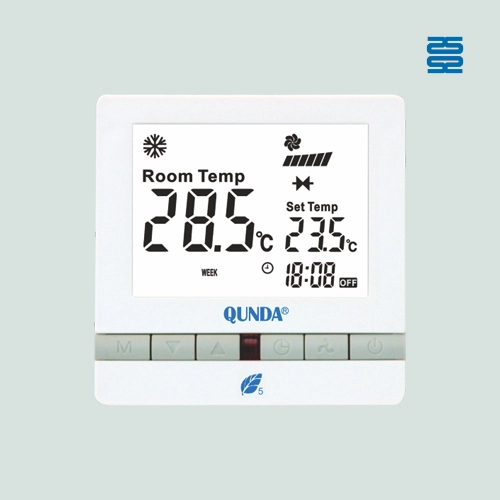
QD-HVAC05E Qunda Digital Thermostat for Central Air Conditioner
QD-HVAC05E can control a two-way electric valve and a three-way electric valve.
QD-HVAC05E is applicable to two-pipe water system or air system HVAC. lt controls the working condition of FCU (Fan Coil Unit) and electric valve by comparing the ambient temperature and setting temperature, to adjust the temperature for a comfortable environment and save energy.
QD-HVAC05E is based on industrial-grade micro-computer technology with touching key operation and LCD display. The controller is simple-operating, stable and reliable.

QD-HVAC03E Qunda Digital Thermostat for Central Air Conditioner
QD-HVAC03E can control a two-way electric valve and a three-way electric valve.
QD-HVAC03E is applicable to two-pipe water system or air system HVAC. lt controls the working condition of FCU (Fan Coil Unit) and electric valve by comparing the ambient temperature and setting temperature, to adjust the temperature for a comfortable environment and save energy.
QD-HVAC03E is based on industrial-grade micro-computer technology with touching key operation and LCD display. The controller is simple-operating, stable and reliable.
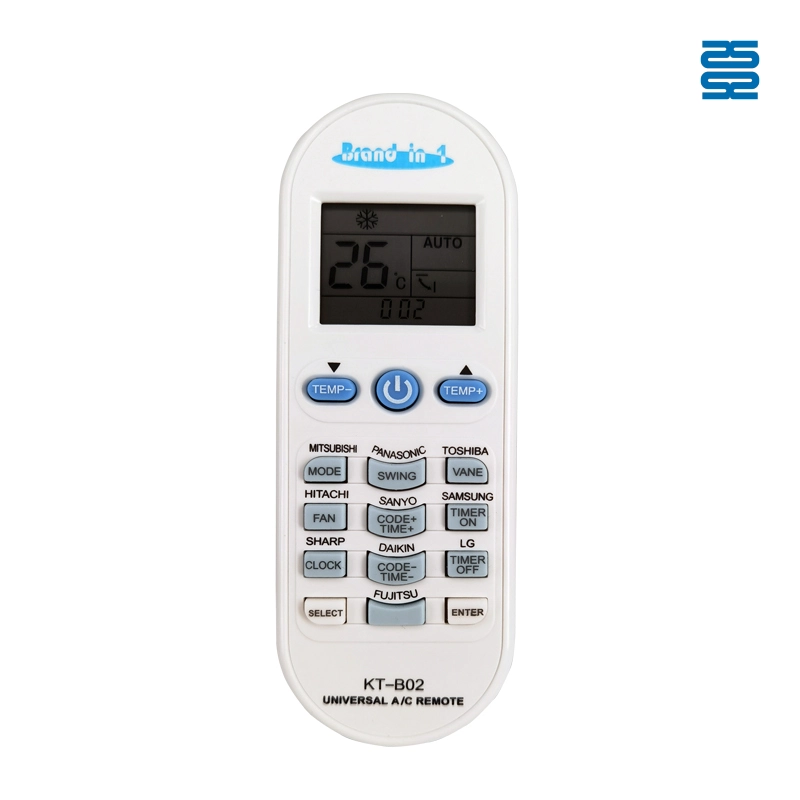
KT-B02 Universal Air Conditioner Remote Control Compatible with All Brands
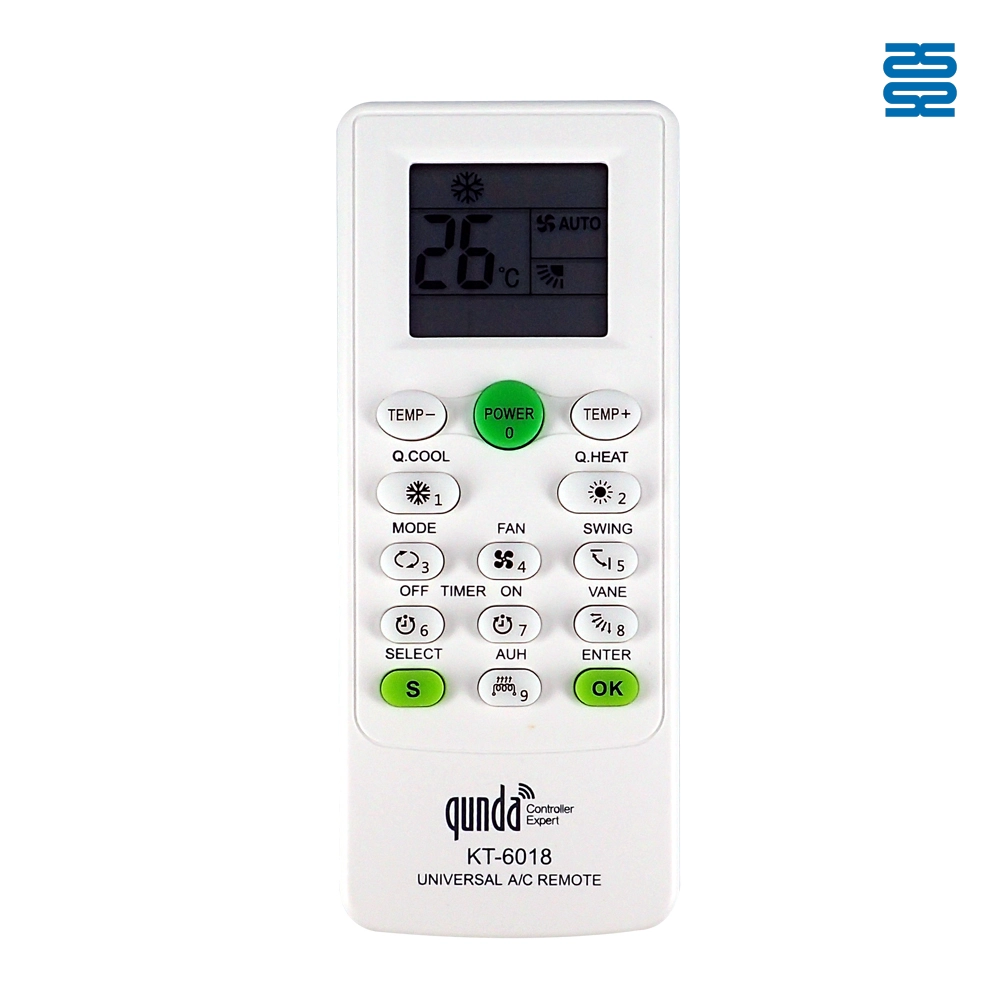
KT-6018 6000 in 1 Universal Air Conditioner Remote Control Compatible with All Brands
Get the latest updates
If you have any comments or good suggestions, please leave us a message, later our professional staff will contact you as soon as possible.


Contact
Email us
Text or Call us
Address
Room 1606, No. 65, Zhongshan Seven Road, Liwan District, Guangzhou, Guangdong, China.

Facebook
Instagram
YouTube
Tik Tok
VK