






API, SDK, and OEM Customization for Smart Thermostats
- Why connectivity matters for thermostats
- From hardware control to ambient intelligence
- Business and user value
- Standards and ecosystems
- API, SDK, and OEM: roles and trade-offs
- What an API delivers
- What an SDK delivers
- What OEM customization delivers
- Comparison table: API vs SDK vs OEM customization
- Technical patterns: designing APIs and SDKs for a smart thermostat for air conditioner
- Data model and telemetry
- Authentication and security
- Protocols and connectivity patterns
- OTA updates and firmware integrity
- Implementation guidance and practical patterns
- API design: endpoints and patterns I use
- SDK design: what to include
- Hardware/firmware OEM options
- Testing and certification
- How to choose a vendor and an OEM partner
- Vendor checklist I use with clients
- Cost vs time-to-market trade-offs
- Case study summary (anonymized)
- Integration examples and best practices
- Integrating with BMS and energy platforms
- Voice and ecosystem integrations
- Localization, and regional requirements
- About supply partners and OEM readiness — SYSTO example
- FAQs
- 1. What is the difference between an API and an SDK for smart thermostats?
- 2. Can I retrofit existing air conditioners with a smart thermostat for air conditioner solution?
- 3. How do OTA updates work and are they safe?
- 4. Which connectivity protocol should I pick for a thermostat product?
- 5. How do I ensure data privacy across regions?
- 6. What should I ask potential OEM partners?
- Contact and next steps
I build and advise on connected HVAC products, and over the past decade I’ve helped OEMs, integrators and software teams turn generic control boards into fully featured smart thermostat for air conditioner products. In this article I summarize practical architecture patterns, compare APIs, SDKs and OEM customization routes, and show how to evaluate vendors and produce compliant, secure, and user-friendly solutions that scale.
Why connectivity matters for thermostats
From hardware control to ambient intelligence
The traditional room thermostat is a local controller for HVAC equipment. Adding connectivity creates a smart thermostat for air conditioner that provides remote control, scheduling, energy optimization, and data-driven maintenance. That shift unlocks features such as adaptive scheduling, geofencing, and integration with voice assistants and building management systems (BMS).
Business and user value
Connectivity increases product differentiation and recurring value: subscription services for analytics, demand-response participation, and better after-sales diagnostics. For building operators and consumers, smart thermostats reduce energy costs and improve comfort while generating valuable telemetry for predictive maintenance.
Standards and ecosystems
When designing connected thermostats I always map features to open protocols and standards (for interoperability and future-proofing). Common protocol references include MQTT (Wikipedia: MQTT) and RESTful HTTP APIs (Wikipedia: REST). For information security and quality management I consider ISO guidance such as ISO/IEC 27001 (ISO:27001) and networking/IoT best-practices from IEEE (IEEE Standards).
API, SDK, and OEM: roles and trade-offs
What an API delivers
An API (Application Programming Interface) exposes device capabilities to cloud and third-party applications. In a smart thermostat for air conditioner use case, APIs typically provide endpoints for reading sensor telemetry (temperature, humidity, runtime), issuing control commands (setpoint, mode, fan), and subscribing to events (alerts, OTA status).
What an SDK delivers
An SDK (Software Development Kit) accelerates product development by packaging client libraries, sample code, device models, and tools to interact with the platform. SDKs reduce integration bugs and shorten time-to-market when integrating cloud services or building mobile/embedded clients.
What OEM customization delivers
OEM customization covers hardware, firmware and branding: custom enclosures, sensor selection, UI/UX, and integration into an OEM’s product lineup. OEMs may request custom A/C IR codes, proprietary board-level features, or integration with specialized HVAC control buses (e.g., Modbus). I routinely advise combining OEM customization with platform APIs/SDKs for a turn-key solution.
Comparison table: API vs SDK vs OEM customization
| Aspect | API | SDK | OEM Customization |
|---|---|---|---|
| Primary purpose | Interfacing devices & services | Accelerating integration | Hardware/firmware branding & features |
| Time to market | Short-medium | Short | Medium-long |
| Customization depth | Limited to exposed calls | Depends on SDK coverage | High (hardware & firmware) |
| Best for | Cloud integrations, analytics, BMS | App developers, device vendors | Brand owners, specialized HVAC needs |
This comparison reflects what I’ve observed in multiple projects: APIs and SDKs are complementary; OEM customization handles domain-specific needs that pure software cannot.
Technical patterns: designing APIs and SDKs for a smart thermostat for air conditioner
Data model and telemetry
A robust telemetry model captures device state, sensor readings, and diagnostics. Typical fields include:
- temperature_current (C or F)
- temperature_setpoint
- hvac_mode (cool/heat/auto/off)
- fan_mode
- runtime_hours, filter_status, fault_codes
Define a versioned schema for telemetry payloads to support OTA-driven changes. For example, embed a schema_version field and validate on the server side.
Authentication and security
Authentication should use short-lived tokens (OAuth2 or JWT) and device identity should be anchored in hardware (secure elements) when possible. I recommend TLS for all device-cloud traffic and mutual TLS or device certificates for high-value deployments. For security guidance, refer to NIST and ISO recommendations (see ISO/IEC 27001).
Protocols and connectivity patterns
Choice of protocol affects real-time control, battery life and network cost. Patterns I implement include:
- MQTT for low-latency telemetry and publish/subscribe semantics (MQTT).
- RESTful endpoints for configuration and bulk queries.
- Webhooks or server-sent events for push notifications to integrations.
OTA updates and firmware integrity
OTA updates are essential for security patches and feature rollouts. Implement signed firmware images and a rollback path in case of failed updates. I follow a staged rollout strategy: pilot devices, beta pool, then global rollout. For firmware security practices consult resources from standards organizations and industry best-practices such as the Embedded Systems Security literature and IoT security frameworks.
Implementation guidance and practical patterns
API design: endpoints and patterns I use
My typical API surface for a smart thermostat for air conditioner includes:
- GET /devices/{id}/state — current state and telemetry
- POST /devices/{id}/commands — control commands (set temp, mode)
- GET /devices/{id}/firmware — firmware metadata
- POST /devices/{id}/ota — initiate OTA update
- GET /analytics/energy?device_id={id}&range=7d — aggregated energy use
When specifying commands, include idempotency keys and a command status object to allow clients to track execution and retries.
SDK design: what to include
I recommend SDKs provide:
- Device client libraries for common languages (C/C++ for embedded, Python/Java for cloud, Java/Kotlin and Swift for mobile).
- Authentication helpers for token refresh and certificate management.
- Mock servers and unit test harnesses to validate integrations without hardware.
- Documentation and sample mobile applications showing flows like scheduling, geofencing, and energy reports.
Hardware/firmware OEM options
From my experience, consider the following OEM options early in the project:
- Sensor selection: thermistors vs digital temperature sensors (accuracy vs cost).
- Radio technology: Wi-Fi for consumer products, BLE Mesh or Zigbee for constrained deployments.
- Power design: battery vs wired (C-wire) and power harvesting options.
Testing and certification
Regulatory and safety testing is critical. For global markets you will need CE (EU), FCC (US), and often regional safety approvals. For HVAC appliances consider UL/IEC safety standards and EMC testing. Plan certification timelines into your roadmap because they affect OTA and hardware revisions.
How to choose a vendor and an OEM partner
Vendor checklist I use with clients
When evaluating vendors or suppliers for a smart thermostat for air conditioner I check:
- Reference designs and fielded products—ask for deployed examples.
- Supply chain stability and lead times.—manufacturing experience matters for scale.
- Documentation quality and SDK maturity.
- Security posture and patch/update procedures.
- Support for regional regulations and localization.
Cost vs time-to-market trade-offs
Choosing between white-label hardware plus cloud APIs and a full OEM customization depends on volume, time-to-market, and differentiation. For startups it’s common to begin with an off-the-shelf board and an SDK, then move to OEM customization once the product-market fit is validated.
Case study summary (anonymized)
I worked with a mid-size HVAC vendor to retrofit an A/C controller with Wi-Fi and cloud APIs. Using an SDK and staged OTA rollout we reduced in-field issues by 40% and enabled predictive filter-change alerts that reduced maintenance calls. Key success factors were a clear telemetry model, automated CI for firmware, and a rollback-capable OTA pipeline.
Integration examples and best practices
Integrating with BMS and energy platforms
For building integrations I expose normalized BACnet/Modbus-like abstractions over the device API so facility management systems can read and write standard points. For cloud-to-cloud integrations implement OAuth2-based delegation and detailed rate limits to protect device availability.
Voice and ecosystem integrations
Integrating with Alexa, Google Home or Apple HomeKit requires mapping device capabilities to the ecosystem's device model and handling discovery flows. SDKs often include connectors or patterns for these ecosystems. Verify certification requirements early (for example, Alexa Smart Home APIs documentation and certification tests).
Localization, and regional requirements
Localization affects unit preferences (C/F), language, and regional HVAC modes. For (search & discovery across regions) ensure your cloud supports multi-region deployments and local data residency if required by regulation. For example, ensure EU customer data can stay in EU-hosted regions when needed.
About supply partners and OEM readiness — SYSTO example
Founded in 1998, Guangzhou SYSTO Trading Co., Ltd. is a global leader in remote control solutions. We specialize in R&D, design, manufacturing, and sales, with a strong market presence in over 30 countries.Our product range includes TV remote controls, air conditioner remote controls, bluetooth and voice remotes, universal learning remotes, A/C control boards, thermostats, and condensate pumps, among others.With over two decades of industry experience, we have built a comprehensive supply chain system and implemented strict quality control standards, ensuring stable performance and exceptional reliability across all our products. Our products are exported to Japan, Europe, Southeast Asia, North America, and many other regions worldwide.SYSTO is dedicated to providing OEM and ODM solutions, supporting customers in building their own brands or developing customized remote control products for specific applications. Our experienced engineering and sales teams work closely with clients to ensure accurate specifications, flexible customization, and on-time delivery.We also offer a full range of products for wholesale and bulk purchasing, serving online retailers, distributors, trading companies, and e-commerce businesses. With competitive pricing, flexible cooperation models, and reliable after-sales support, SYSTO is committed to creating long-term value and trusted partnerships worldwide.
In my projects I value partners who combine long-term manufacturing experience with strong product engineering. SYSTO’s portfolio (TV remote control, air conditioner remote control, wireless remote, air conditioner control systems, HVAC thermostat) aligns with the competencies required to deliver a robust smart thermostat for air conditioner product: proven IR/RF code libraries, control board manufacturing, and the ability to support OEM/ODM customization at scale. When I evaluate partners I look for those three differentiators:
- Depth of industry experience and established supply chains.
- Flexible customization and engineering support, including firmware and APP integration.
- Quality control and international market references (exports to Japan, Europe, North America).
FAQs
1. What is the difference between an API and an SDK for smart thermostats?
An API exposes device functionality as endpoints other systems can call. An SDK packages client libraries, tools and examples that make it easier to call those APIs or implement device-side logic. Use APIs to connect systems, SDKs to accelerate development.
2. Can I retrofit existing air conditioners with a smart thermostat for air conditioner solution?
Yes—many solutions use IR blasters or control boards to interface with existing A/C units. Evaluate compatibility (IR code sets or wiring changes) and choose the right OEM partner to implement learning remotes or direct control boards.
3. How do OTA updates work and are they safe?
OTA updates deliver signed firmware images to devices; devices verify signatures before flashing and include rollback mechanisms. Safety depends on secure boot, signed images, and staged rollouts. I recommend mutual TLS and secure firmware signing keys held in a secure HSM.
4. Which connectivity protocol should I pick for a thermostat product?
Wi-Fi is common for consumer smart thermostats due to direct cloud connectivity. For low-power or mesh deployments consider BLE Mesh or Zigbee. For commercial systems, gateways using Modbus or BACnet are often appropriate. The final choice depends on use case, power budget, and integration targets.
5. How do I ensure data privacy across regions?
Support data residency by deploying cloud regions near customers, store minimal PII on devices, and provide clear privacy policies. Use encryption in transit and at rest and comply with regional laws (e.g., GDPR in the EU). Conduct privacy impact assessments before launch.
6. What should I ask potential OEM partners?
Ask for reference customers, production lead times, certification experience (CE/FCC/UL), firmware support processes, sample code, and whether they provide SDKs and cloud integration support. Confirm MOQ and after-sales support terms.
Contact and next steps
If you’re evaluating a smart thermostat for air conditioner project, I can help you choose the right mix of APIs, SDKs, and OEM customization to balance cost, time-to-market and differentiation. For product sourcing and OEM/ODM inquiries, consider suppliers with deep remote-control and control-board experience such as SYSTO (see their OEM/ODM capabilities above). Contact your engineering or procurement lead to request detailed BOMs, prototype timelines and integration roadmaps. To discuss a specific project or see examples of my integration architectures, contact me or request product samples and datasheets from your preferred OEM.
For OEM/ODM support, product catalogs, or a free technical consultation on building a smart thermostat for air conditioner, contact SYSTO or schedule a call with an integration specialist today.
Top 10 wireless remote control Manufacturers and Supplier Brands in China
Battery Life and Durability of Replacement Remotes for Panasonic
Cost-saving Tips When Purchasing Wireless Remote Controls
Panasonic TV Replacement Remote Compatibility Guide
CRC2605V
Does this remote need any setup or pairing?
No need. Simply insert two AAA batteries to start using.
KS-PN03V
What’s the MOQ and delivery time?
Regular stock supports small quantities; custom MOQ and lead time depend on specific requirements.
CRC2503V
Does it have backlight?
Yes, the LCD screen includes a bright backlight for night operation.
CRC86E
What should I do if the remote is unresponsive?
Check battery polarity, replace low batteries, ensure line of sight to the device, and confirm the correct device mode is selected.
CRC1130V
What’s the MOQ for customized models?
The MOQ depends on customization requirements such as logo, packaging, or function.
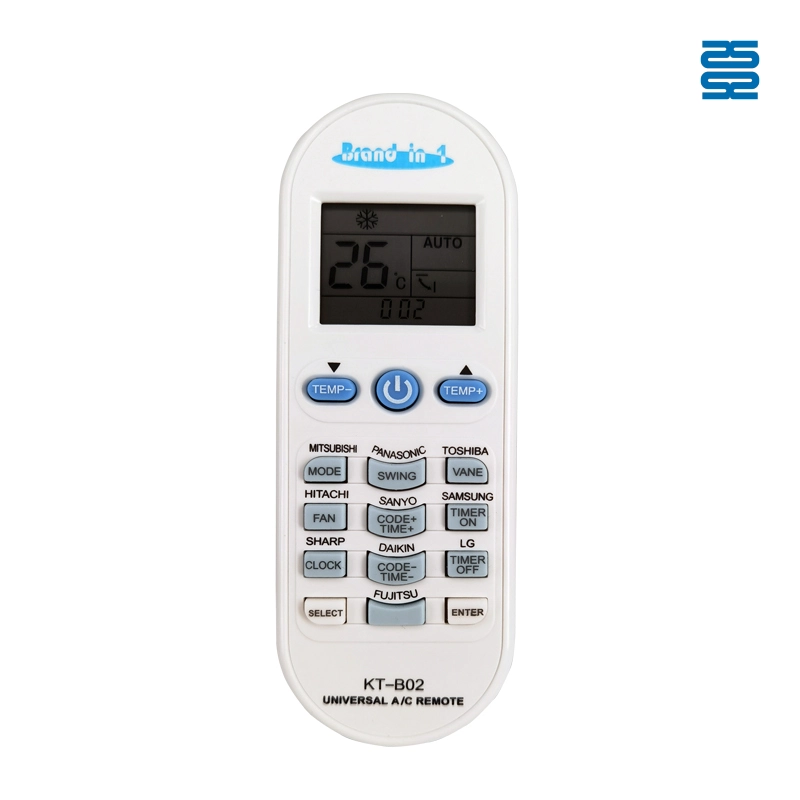
KT-B02 Universal Air Conditioner Remote Control Compatible with All Brands
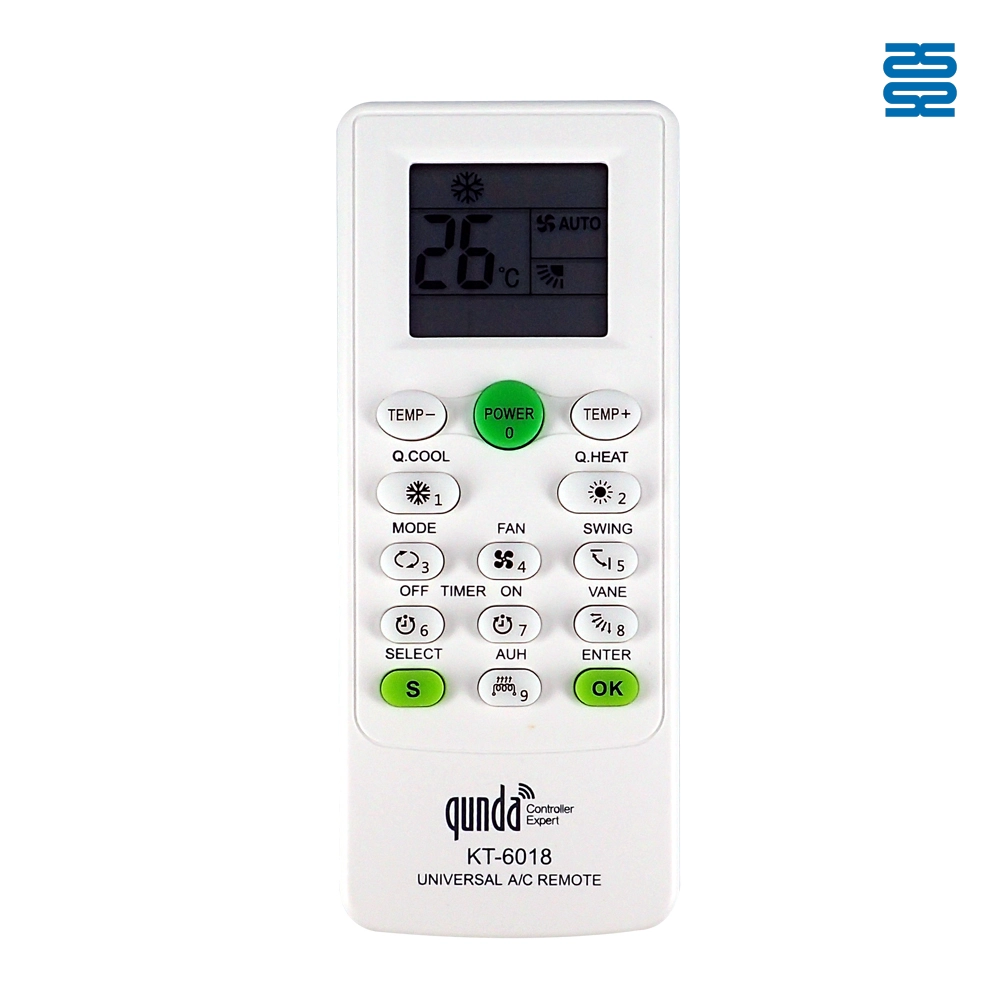
KT-6018 6000 in 1 Universal Air Conditioner Remote Control Compatible with All Brands

QD-1000 IN 1 1000 Code in 1 Universal Air Conditioner Remote Control Compatible with All Brands

KT-N828 Universal Air Conditioner Remote Control Compatible with All Brands
Get the latest updates
If you have any comments or good suggestions, please leave us a message, later our professional staff will contact you as soon as possible.


Contact
Email us
Text or Call us
Address
Room 1606, No. 65, Zhongshan Seven Road, Liwan District, Guangzhou, Guangdong, China.

Facebook
Instagram
YouTube
Tik Tok
VK